Emergency Planning for Apartment and Condo Living
Your Family’s Emergency Plan: Making Apartment Safety Simple and Stress-Free
You know that heart-stopping moment when the smoke detector starts its urgent beeping at 2 AM, or when your phone buzzes with a tornado warning? If you’re like most busy families, your first thought might be, “Okay, what exactly are we supposed to do now?”
Living in an apartment with kids, pets, and all the beautiful chaos of family life adds its own twist to emergency planning. Between work, school pickups, and everything else on your plate, figuring out how to keep everyone safe can feel like just one more overwhelming task.
But here’s the good news: you don’t need to become a survival expert overnight. What you need is a straightforward plan that actually works for your real life—one that turns that moment of panic into confident action.
In this guide, we’ll walk through everything step by step: spotting the risks that matter most to your family, putting together supplies that won’t break the bank, creating a communication plan everyone can remember, and yes—even making emergency drills fun for the kids (trust me, it’s possible!).
Ready to give your family the gift of feeling prepared and confident? Let’s jump in together.
Why Apartment Emergency Plans Matter
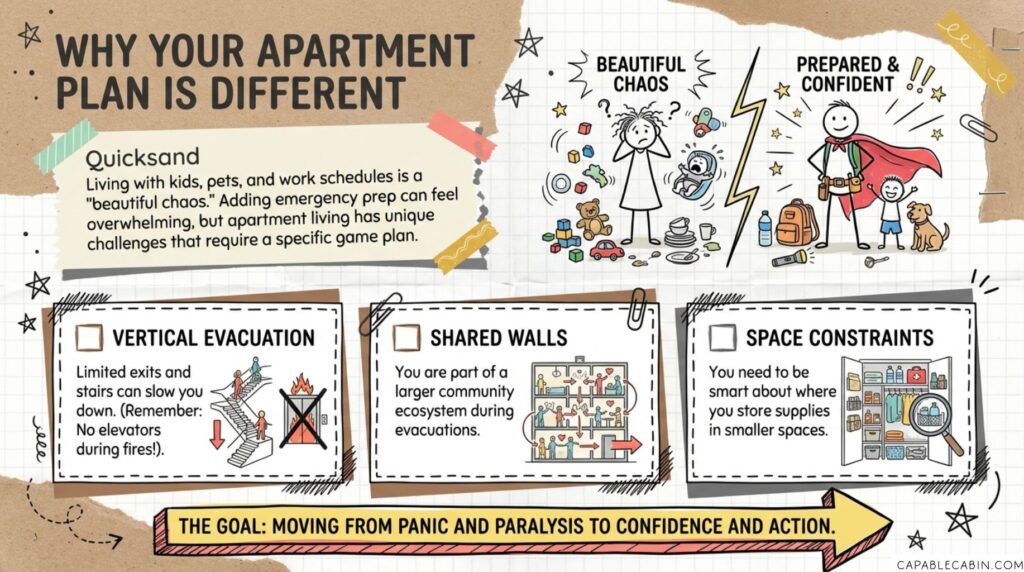
Let’s be honest: living in an apartment or condo brings unique challenges when an emergency strikes. Here’s why carving out a plan is a game-changer:
- Limited exits and vertical evacuation can slow you down in a fire or quake
- Shared walls and hallways mean you’re part of a larger community during evacuations
- Families need clear roles—knowing who grabs the kids, who handles pets, who calls 911
- Quick access to supplies can mean the difference between panic and calm
- A plan eases anxiety, so you can focus on keeping everyone safe
Here’s a thought: by taking a few small steps now, you’ll feel empowered instead of paralyzed if the unexpected happens.
Assess Your Unique Risks
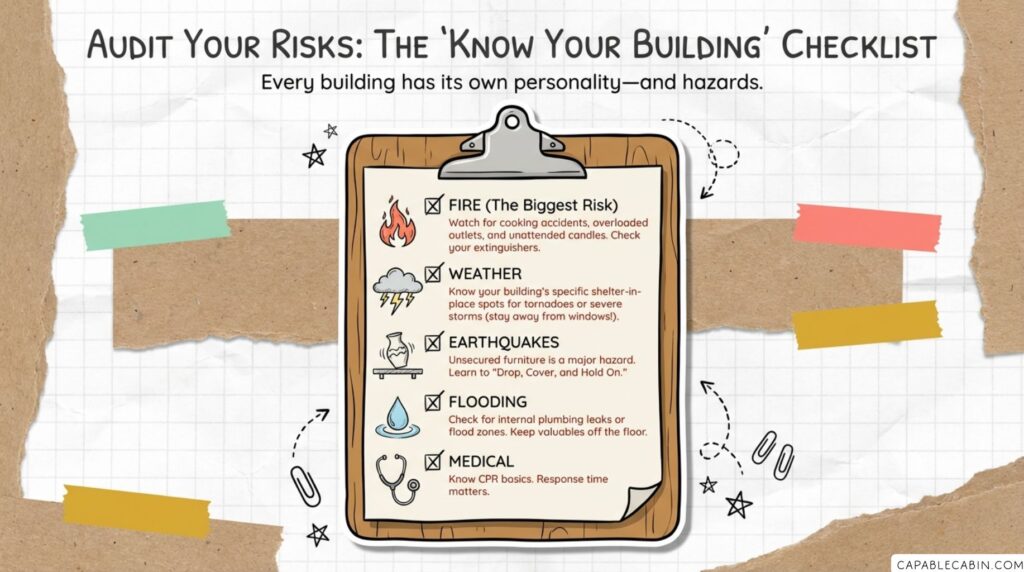
Before you stock up on gear, let’s get curious about what might affect your home and family. Every building and neighborhood carries its own set of hazards.
- Fire Hazards
- Cooking accidents, overloaded outlets, and unattended candles
- Make sure smoke alarms and extinguishers are in working order [1]
- Severe Weather
- Hurricanes, tornadoes, severe thunderstorms—stay tuned to local alerts
- Know your building’s shelter-in-place recommendations
- Earthquakes
- Unsecured furniture and breakable items can injure you or loved ones
- Learn how to “Drop, Cover, and Hold On” when the ground shakes
- Flooding
- Internal leaks, plumbing failures, and rising waters in flood-prone zones
- Keep valuables off the floor and know your evacuation routes
- Medical Emergencies
- Allergic reactions, injuries, sudden illness—everyone can pitch in
- Quick CPR or first-aid response can save lives [2]
Once you map out the biggest threats, you can tailor your plan to fit your family’s needs. For a deeper dive, check out our tips on complete family emergency planning.
Gather Essential Emergency Supplies
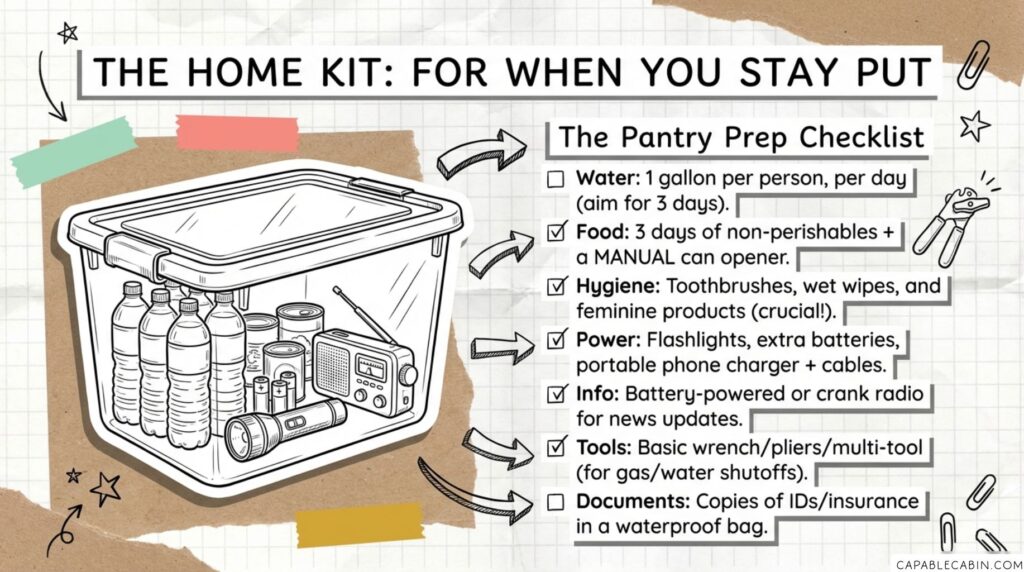
Here’s the thing: having the right supplies on hand turns fear into action. You’ll need two kits—a home kit and a grab-and-go bag.
Home Kit
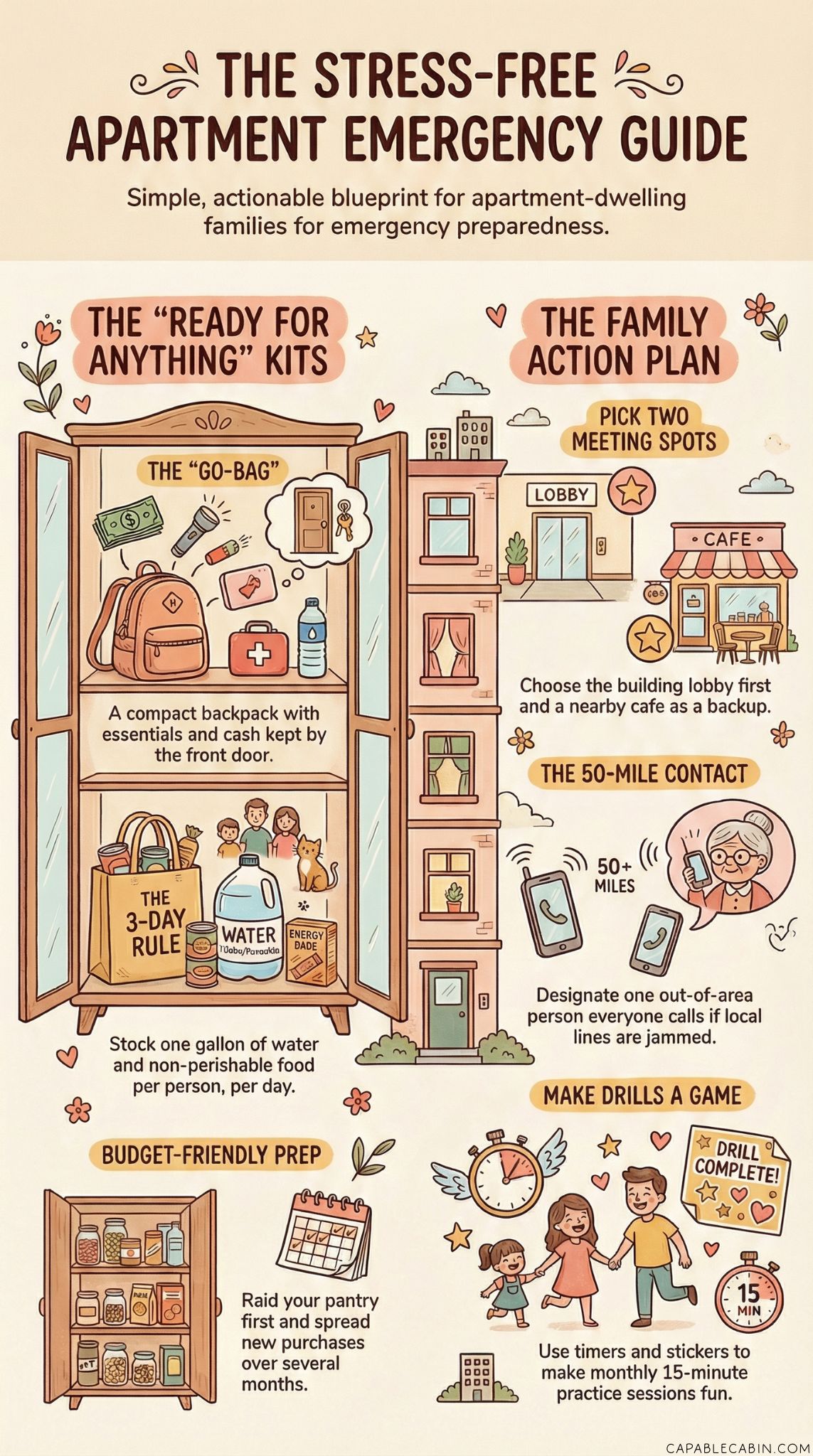
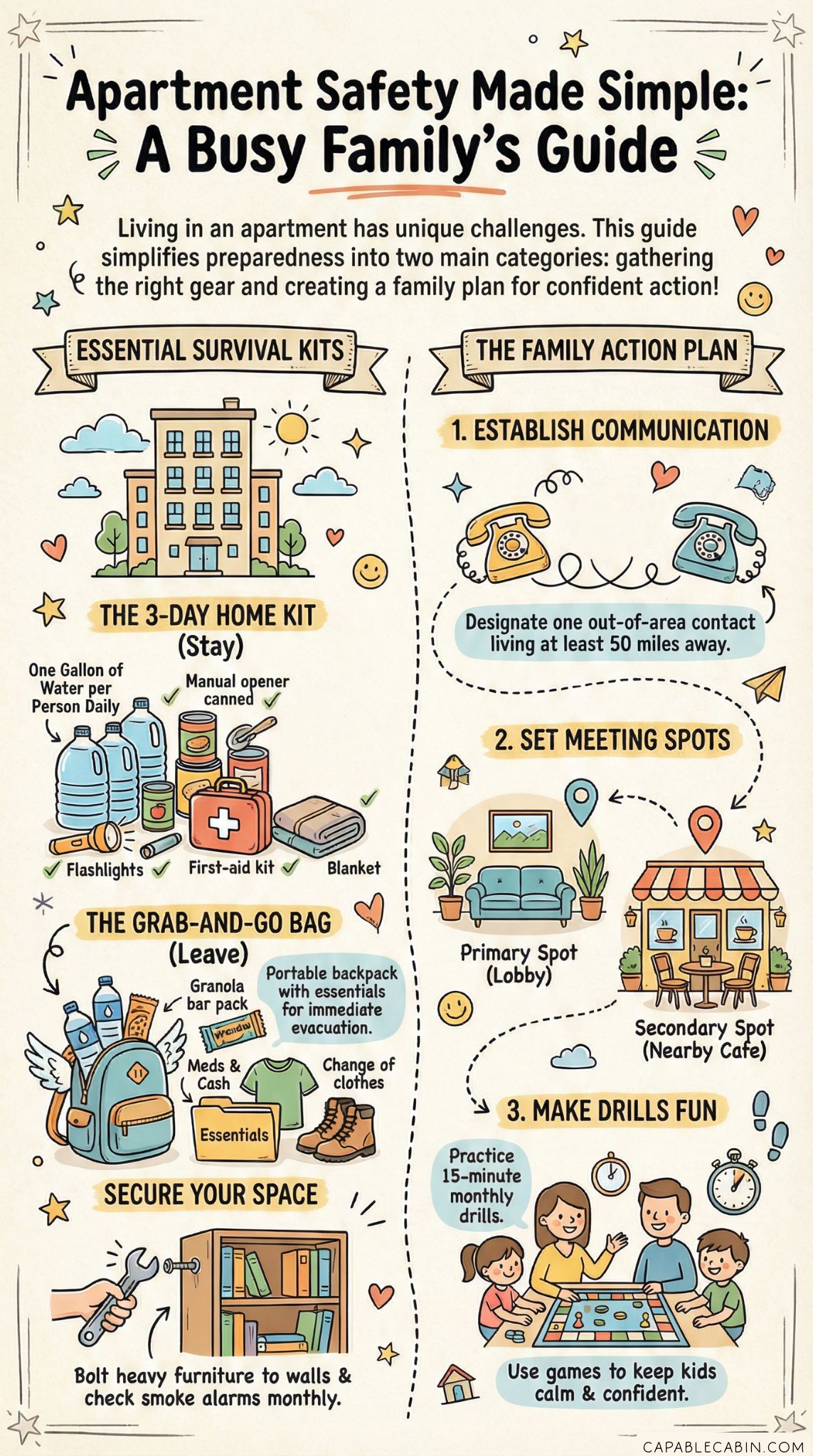
- Water (one gallon per person per day for at least three days)
- Three days of non-perishable food and a manual can opener
- First-aid kit stocked with bandages, antiseptics, and pain relievers
- Flashlights and extra batteries
- Battery-powered or crank radio for weather and news updates
- Portable phone charger and a stash of charging cables
- Whistle, dust masks, emergency blankets
- Basic tools (wrench, pliers, multi-tool)
- Personal hygiene items (toothbrushes, wet wipes, feminine products)
- Copies of personal documents in a waterproof bag [3]
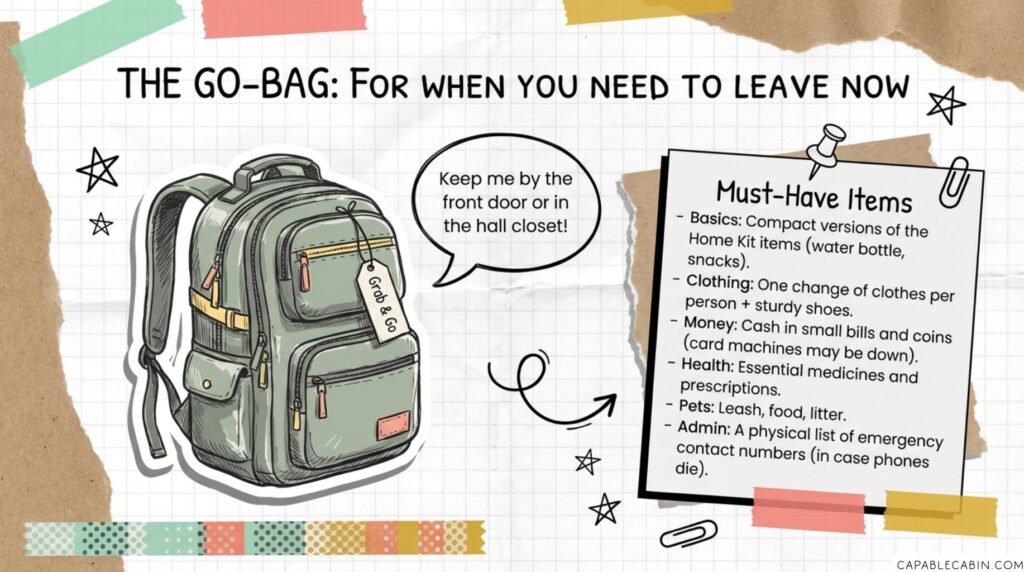
Go-Bag (Grab-and-Go)
- Compact version of the above items in a backpack
- One change of clothes per person and a sturdy pair of shoes
- Cash in small bills and coins
- Essential medicines and prescriptions
- Pet supplies: food, leash, litter
- A list of emergency contact numbers and meeting spots
You might already own many of these—take a look at emergency supplies already own and check off what’s missing. Shopping over time keeps it budget-friendly.
Create A Family Communication Plan
We’ve all been there—your phone lines up, text messages fly, and suddenly nobody knows where the kids are. A clear communication plan keeps everyone on the same page.
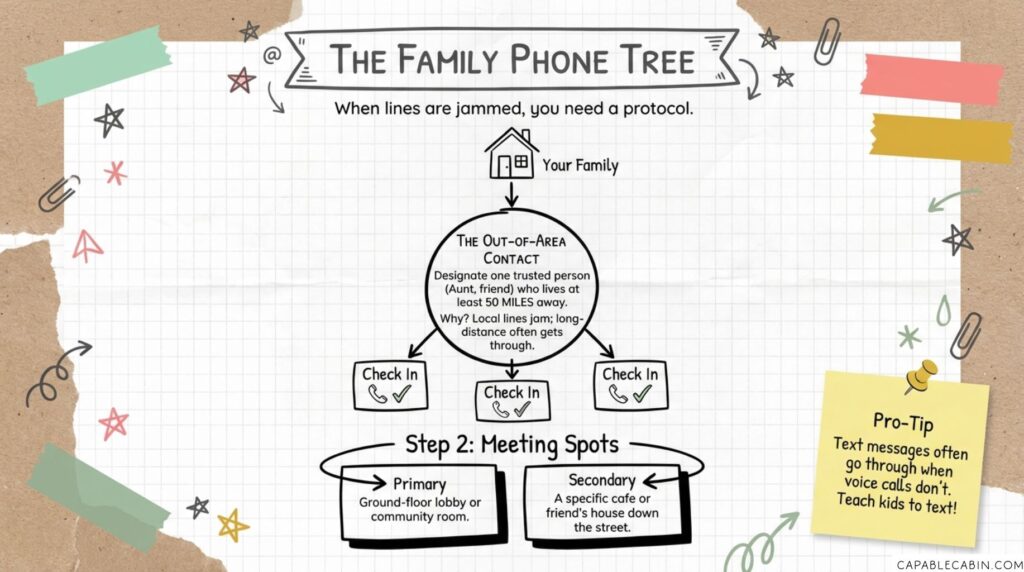
Designate An Out-Of-Area Contact
- Choose a trusted friend or relative who lives at least 50 miles away
- Everyone texts or calls that person if the local lines are jammed
Update Your Emergency Contact List
- Include school, work, doctors, neighbors, and building management [4]
Set Meeting Spots
- Primary spot: ground-floor lobby or community room
- Secondary spot: a nearby café or friend’s house
Agree On Communication Methods
- Texts when possible, social media check-ins, group messaging apps
- Teach kids how to send quick updates if they’re away from home
Practice The Plan
- Review roles: who grabs the go-bag, who escorts pets, who carries the medical kit
- Add notes on special needs for toddlers or elders
That being said, remember: communication is a two-way street. Encourage everyone—especially the little ones—to ask questions and practice these steps until they feel natural.
Secure Your Apartment Home
Trust me, you don’t want to learn this the hard way. Taking a bit of time to fortify your space can prevent injuries and speed up evacuation.
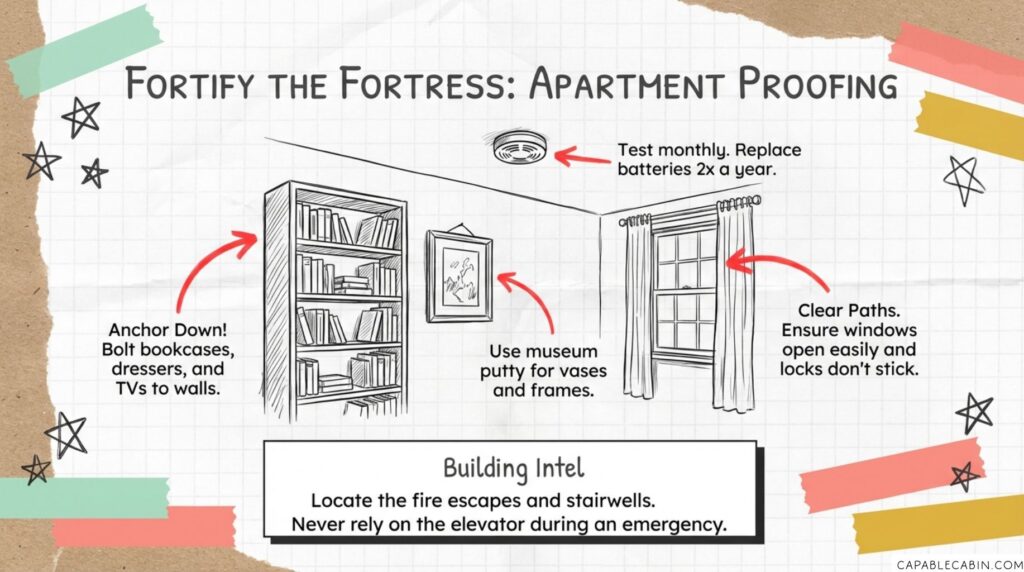
- Anchor Heavy Furniture
- Bolt bookcases, dressers, water heaters, to walls
- Use museum putty to secure vases, picture frames, and electronics
- Test And Maintain Detectors
- Check smoke and carbon monoxide alarms monthly
- Replace batteries at least twice a year [1]
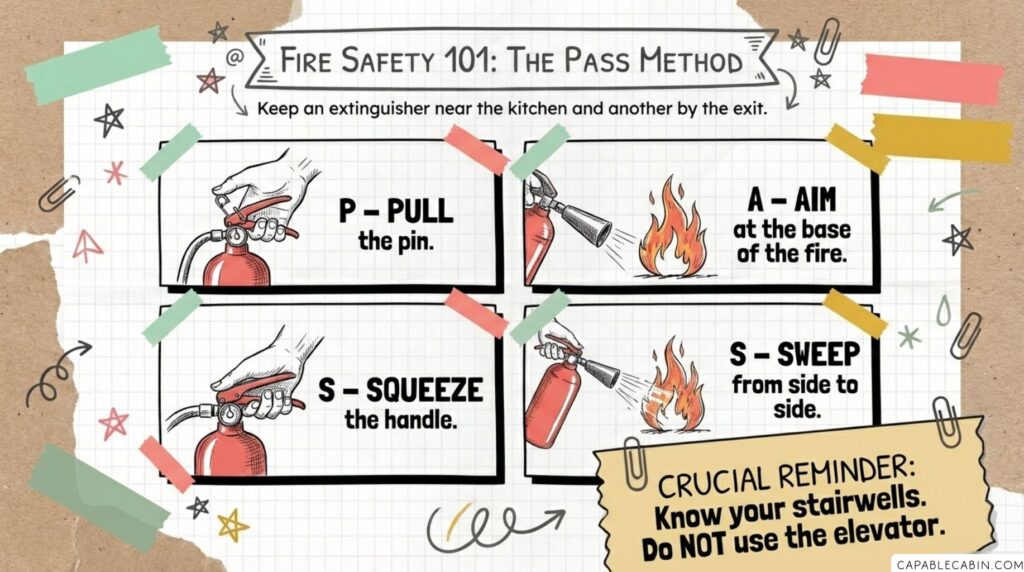
- Keep A Fire Extinguisher Handy
- Store one near the kitchen and another by the exit
- Learn PASS technique: Pull, Aim, Squeeze, Sweep
- Secure Windows And Doors
- Ensure locks work smoothly and windows open easily in a hurry
- Mark escape maps on interior walls for quick reference
- Review Building Systems
- Locate stairwells, fire escapes, and safe rooms
- Understand any community evacuation protocols
Small adjustments now mean fewer hazards later. Plus, you’ll sleep a little easier knowing you’ve got a safer home.
Practice Emergency Drills Together
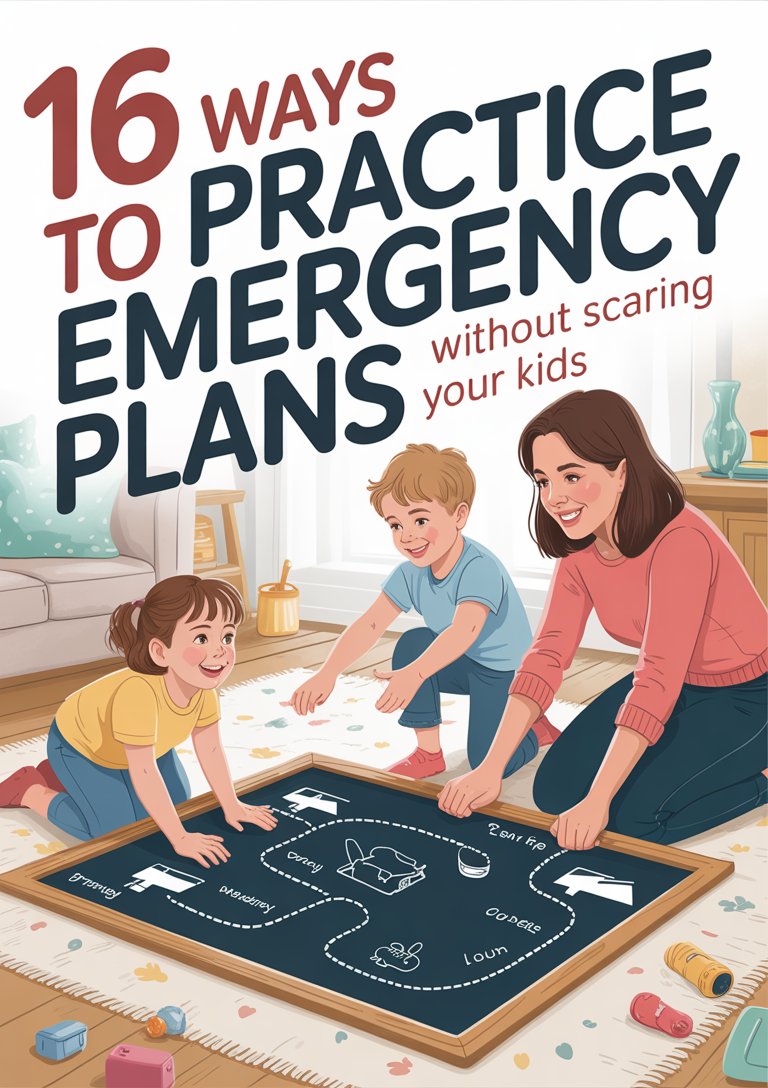
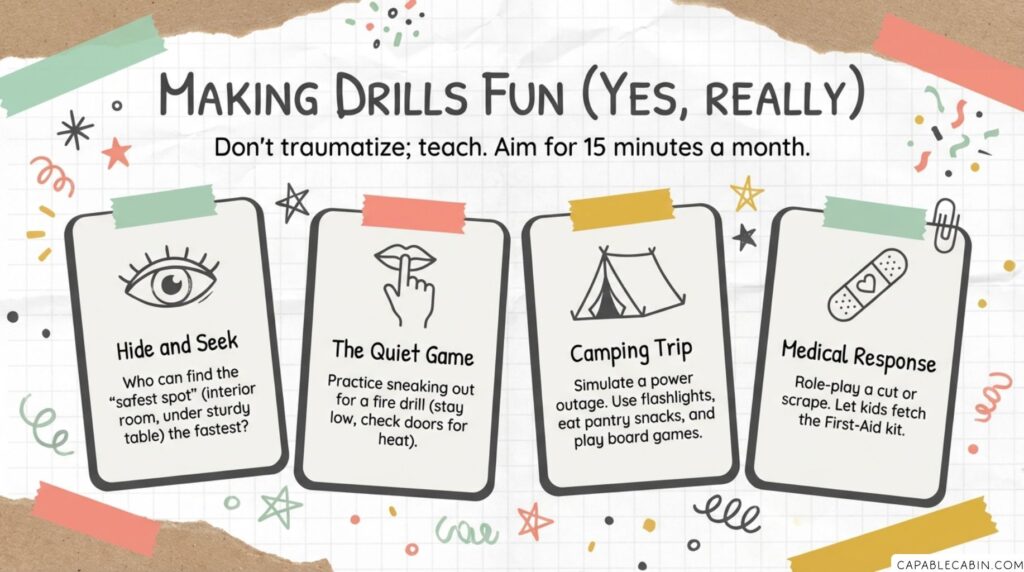
Here’s a thought—if practice makes perfect, then emergency drills make calm. Setting aside just 15 minutes a month can solidify habits.
- Fire Drills
- Sound an alarm (or yell “fire”) and time your exit
- Gather at your primary meeting spot and take attendance
- Earthquake Drills
- Drop, Cover, Hold On under sturdy furniture
- Practice “duck and cover” in hallways and bathrooms
- Severe Weather Drills
- Move to an interior room without windows during a tornado or thunderstorm
- Role-play power-out scenarios with flashlights and board games
- Medical Response Drills
- Simulate a cut or choking incident, review first-aid steps
- Have everyone locate the first-aid kit and emergency numbers
- Debrief And Improve
- Talk about what felt confusing or slow
- Adjust roles or routes based on feedback
We’ve all been there—drills can feel awkward at first. But once your kids know exactly where to go and what to grab, panic stands less of a chance.
Build A Supportive Community Network
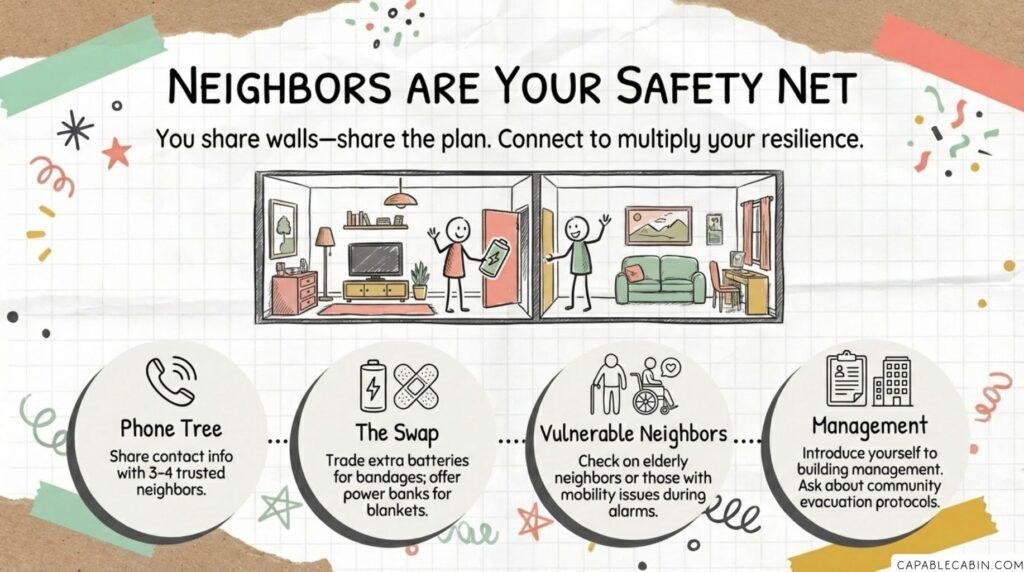
Emergencies rarely respect apartment boundaries. By connecting with neighbors, you multiply your family’s resilience.
- Start A Phone Tree
- Share contact info and check on vulnerable neighbors
- Host A Block-Level Drill
- Invite 3–4 families to practice exits together
- Join Or Create A Neighborhood Watch
- Keep an eye out for suspicious activity and safety hazards
- Swap Supplies And Skills
- Trade extra batteries for medical tape or power banks for blankets
- Collaborate With Local Services
- Introduce yourselves to the building management, the fire department, or the local Red Cross
- They often offer free training sessions and resources [2]
That sense of “we’ve got each other’s backs” is powerful. And if you’ve got a new baby, teen driver, or aging parent, this network can be a literal lifesaver. For tips on juggling all of this when life feels full, check out emergency planning busy families.
Maintain And Update Your Plan
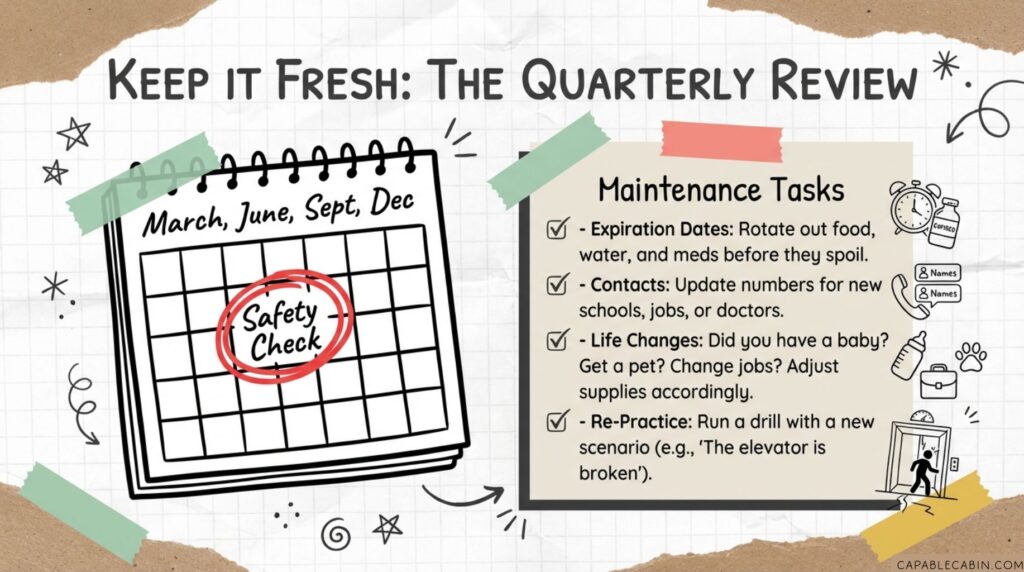
Your family evolves, your home evolves, and so should your emergency plan. A little upkeep goes a long way.
- Review Quarterly
- Schedule calendar reminders to revisit roles, routes, and supplies
- Check Expiration Dates
- Food, water, and meds lose their shelf life—swap them out regularly
- Update Contact Lists
- New phone numbers, new neighbors, new schools or workplaces [5]
- Re-practice Drills
- Add new scenarios: elevator failures, power grid collapses, or flooding
- Adjust For Life Changes
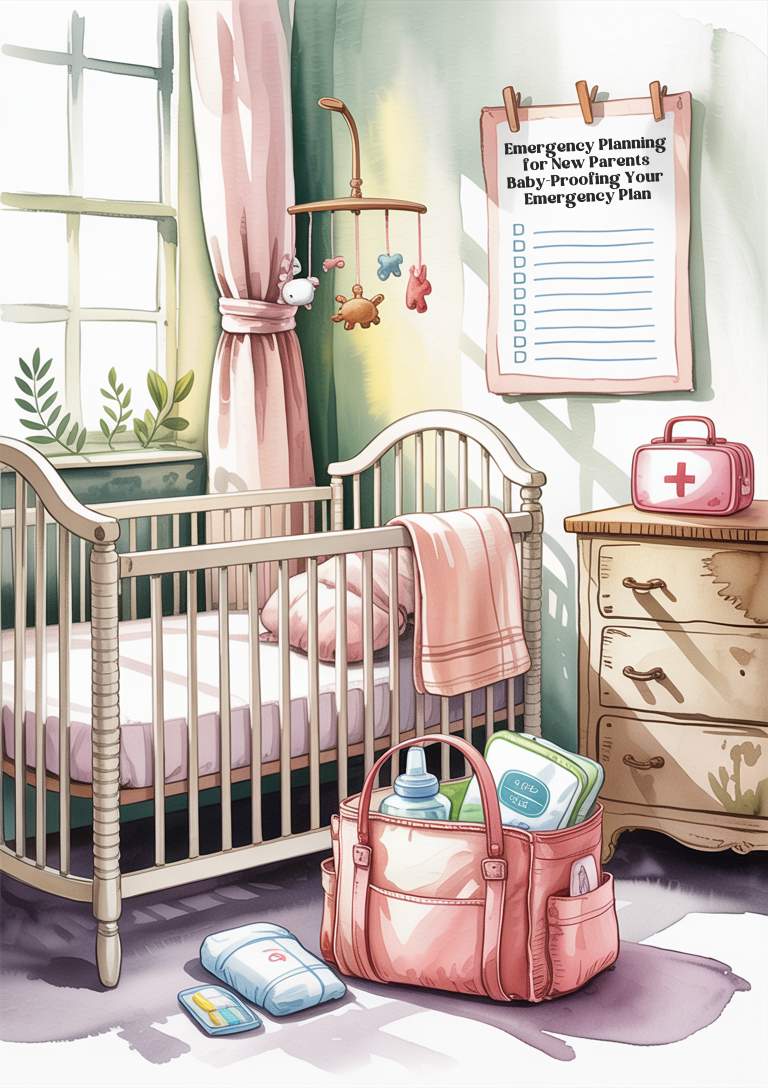
- Babies, pets, aging parents, and remote work setups require fresh considerations
We’re not robots—we change jobs, add family members, and rearrange furniture. Keeping your plan current means it’ll still fit when you need it most.
Keep these tips in mind, and you’ll have a rock-solid emergency plan for your apartment family. Let’s jump into some common questions below.
FAQs
- What Goes In My Go Bag?
Assemble water, snacks, a flashlight, batteries, a phone charger, first-aid basics, important documents, a change of clothes, cash, and any prescription meds. - How Often Should We Run Drills?
Aim for once a month—each drill only needs 10–15 minutes. Rotate scenarios so everyone stays sharp. - Where Should I Store The Go Bag?
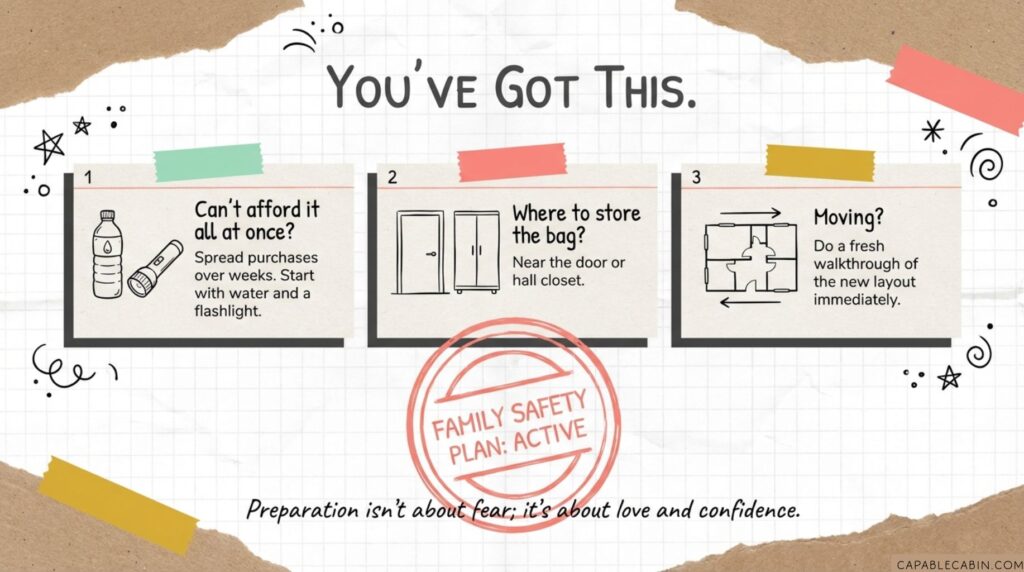
Keep it by your front door or in a hall closet with easy access. Let kids know exactly where it lives. - How Do I Keep Kids Calm During Drills?
Make it a game—set a timer, award stickers, or play “safest spot” hide-and-seek. Positive reinforcement goes a long way. - What If I Can’t Afford All The Supplies At Once?
Spread purchases over weeks or months. Start with high-priority items like water, a flashlight, and first-aid. Raid your pantry for nonperishables. - Who Should Be My Out-Of-Area Contact?
Pick someone reliable who lives a good distance away—an aunt, friend, or coworker. Make sure everyone saves that number in their phones. - Should I Update My Plan After Moving?
Absolutely. New building layouts, different exits, and new neighbors all call for a fresh walkthrough and practice session.
You’ve got the tools, the network, and the plan—so here’s the truth: you’ve got this! Let’s keep our families safe and confident, one small step at a time.