Emergency Prep Without Overthinking: How to Finally Take Action
Have you ever looked at your long list of emergency preparation tasks and felt completely stuck? Maybe you worry about choosing the “right” survival gear, gathering supplies for every scenario, and keeping everything organized. This feeling of being frozen in indecision is often rolled up into what people call “emergency preparedness psychology paralysis.” It’s that sense that, while you’re fully aware of the importance of being ready for life’s twists and turns, the sheer magnitude of it all makes you hesitate. Trust me, you’re not alone.
We’ve all experienced those moments when the stakes are high, yet we’re unsure how to move forward. As busy women, moms, and caregivers, we have enough on our plate without adding the pressure of elaborate emergency plans. So let’s take a gentler approach together. We’ll explore why analysis paralysis happens, how you can shift gears, and which simple steps will help you feel confident in your emergency planning. By the end, you’ll have a clearer path to creating a practical kit, managing your stress levels, and keeping your loved ones safe.
Recognize Analysis Paralysis
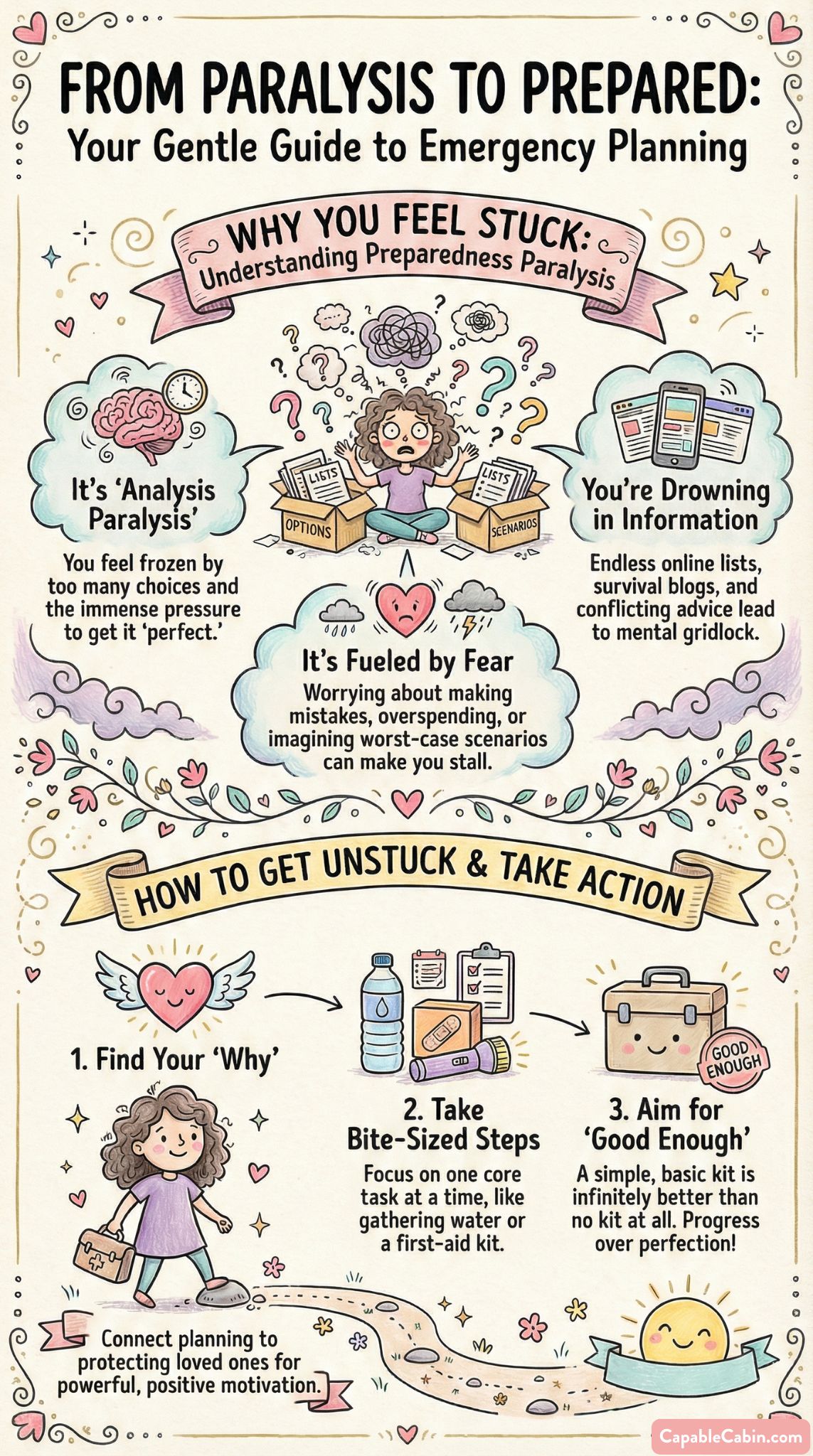
Analysis paralysis is basically the mental traffic jam that occurs when you’re faced with numerous decisions. In the context of emergency preparedness, it often begins with questions like, “Should I store water in bottles or invest in a purification system?” or “Is a full 72 hour emergency kit complete better than a smaller bag for now?” Before you know it, you’re paralyzed by possibilities and end up putting off the entire process.
We get it: you want to do everything “right” the first time, especially when thinking about your family’s safety. But if you dig deeper, you’ll notice that analysis paralysis also tends to stem from fear. Fear of doing it incorrectly, fear of overspending, or fear of discovering a new worry you hadn’t even anticipated. These anxieties can linger in the background, causing you to stall. Sometimes, you might push the whole topic to the back of your mind. It’s understandable—you’re juggling so many other responsibilities.
It helps to give a name to this feeling. Once you label it as analysis paralysis, you can figure out whether it’s about the complexity of gear options, the budget, or the emotional weight of imagining worst-case scenarios. Recognizing the source of the freeze is your first step in breaking the cycle. And here’s the good news: you don’t have to be perfect. Aim for a workable solution rather than the “ultimate” or “ideal” scenario. Some help is always better than none, and one small step can release you from feeling stuck.
When you notice your mind swirling with ifs and buts, pause for a moment. Ask yourself which specific questions are holding you back. Are you worried about your children? Maybe you’re concerned about the cost of a high-end kit. A quick self-check can reveal whether your hesitation is practical—like struggling with finances—or purely a product of pressure. From there, you can make a plan to deal with the real obstacle.
Another reason you might get stuck is that it feels lonely to face these concerns on your own. Many people don’t exactly chat over coffee about which emergency radio brand they prefer, so you might feel like you can’t ask for guidance. Let’s drop that barrier. Talking about emergency preparedness should be as natural as exchanging recipes or parenting tips. You’d be surprised by how many friends or neighbors also want guidance but are too shy to bring it up. Once you recognize the hesitation for what it is, it becomes easier to push through with solutions.
Embrace The Why
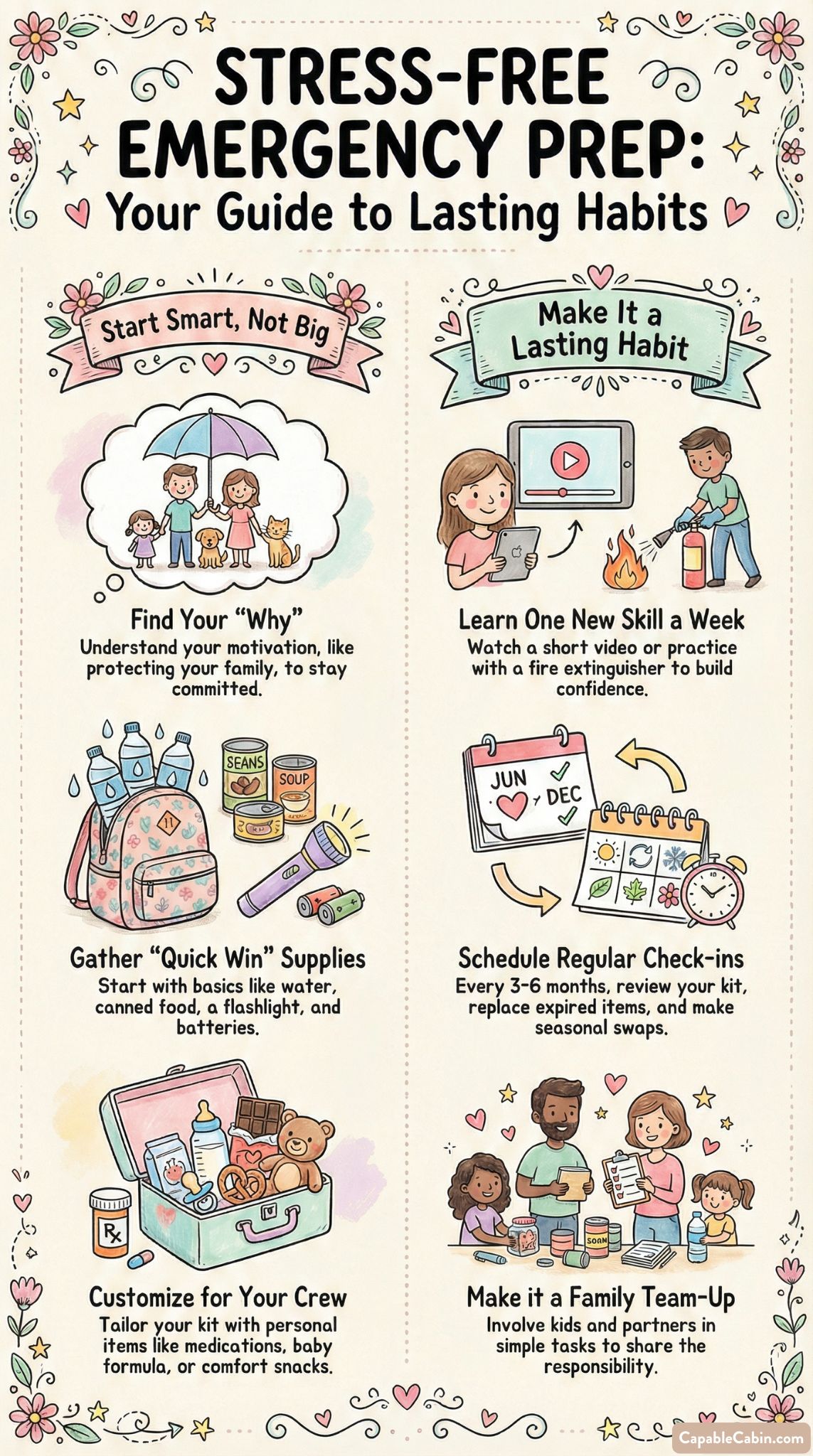
Every big commitment in life flows more easily when you connect it to your reasons for doing it. Emergency preparedness is no exception. The deeper your sense of purpose, the easier it becomes to shrug off that mental freeze and start gathering supplies. Remind yourself that you’re planning for your kids, your parents, or your partner—and yes, for your peace of mind too. This sense of purpose can ground you when everything else feels chaotic.
You might ask, “Why is it so crucial to have an emergency kit on hand?” The short answer is this: emergencies happen suddenly. Electrical blackouts, snowstorms, hurricanes, or even smaller disruptions like unexpected medical needs can throw your entire routine upside-down. Having a plan and the right basics—like flashlights, water filters, first aid kits, and extra medications—can transform a crisis from chaos into something more manageable.
When you embrace the why, you reduce the emotional burden linked to all those decisions you’ve been postponing. Rather than fixating on which brand of water storage bag is best, you’re reminded that having some water plan is far more important than having none. Instead of agonizing over the “perfect” bag, you choose a sturdy backpack to hold your must-have items. By tying each step to your overarching goal—protecting and supporting your loved ones—you’ll notice a sense of determination blossoming.
This sense of purpose also helps you let go of guilt. Too often, we rely on guilt to motivate us: “I should be doing this because good moms do it,” or “I must do this or I’m being irresponsible.” Guilt might get you started, but it isn’t a nurturing motivator. On the flip side, your true “why” is an expression of love and care. It reminds you that, deep down, you want to keep the people in your life secure. That positive energy not only lessens the dread of tackling this project but also protects you from the negativity that so often comes with guilt-based mindsets.
Picture yourself explaining your reasons to a close friend: “I’m putting together an emergency plan because it makes me feel more confident that my kids will be okay in a crisis.” It sounds more uplifting and honest than, “I guess I have to…” or “I’ll just feel terrible if I don’t.” Better yet, tie your reason to a specific scenario. For example, if your area is prone to wildfires, your plan might involve being able to evacuate in under 30 minutes with everything you need. That mental image is powerful, and it’ll keep you moving forward even when you’re uncertain about the details.
Tame The Overwhelm
Once you have a solid grasp on your motivations, the next hurdle is often the mountain of information. You Google “emergency preparedness tips,” and suddenly you’re bombarded with endless lists, preparedness blogs, survival videos, and conflicting advice. It’s no wonder your mind spins. The trick to taming the overwhelm is to break it down into bite-sized tasks.
You don’t have to handle everything at once. Think of it like building a puzzle: you find the corner pieces first. Then the edges. Then you fill in the middle. Identify a few must-have elements to begin with. For instance:
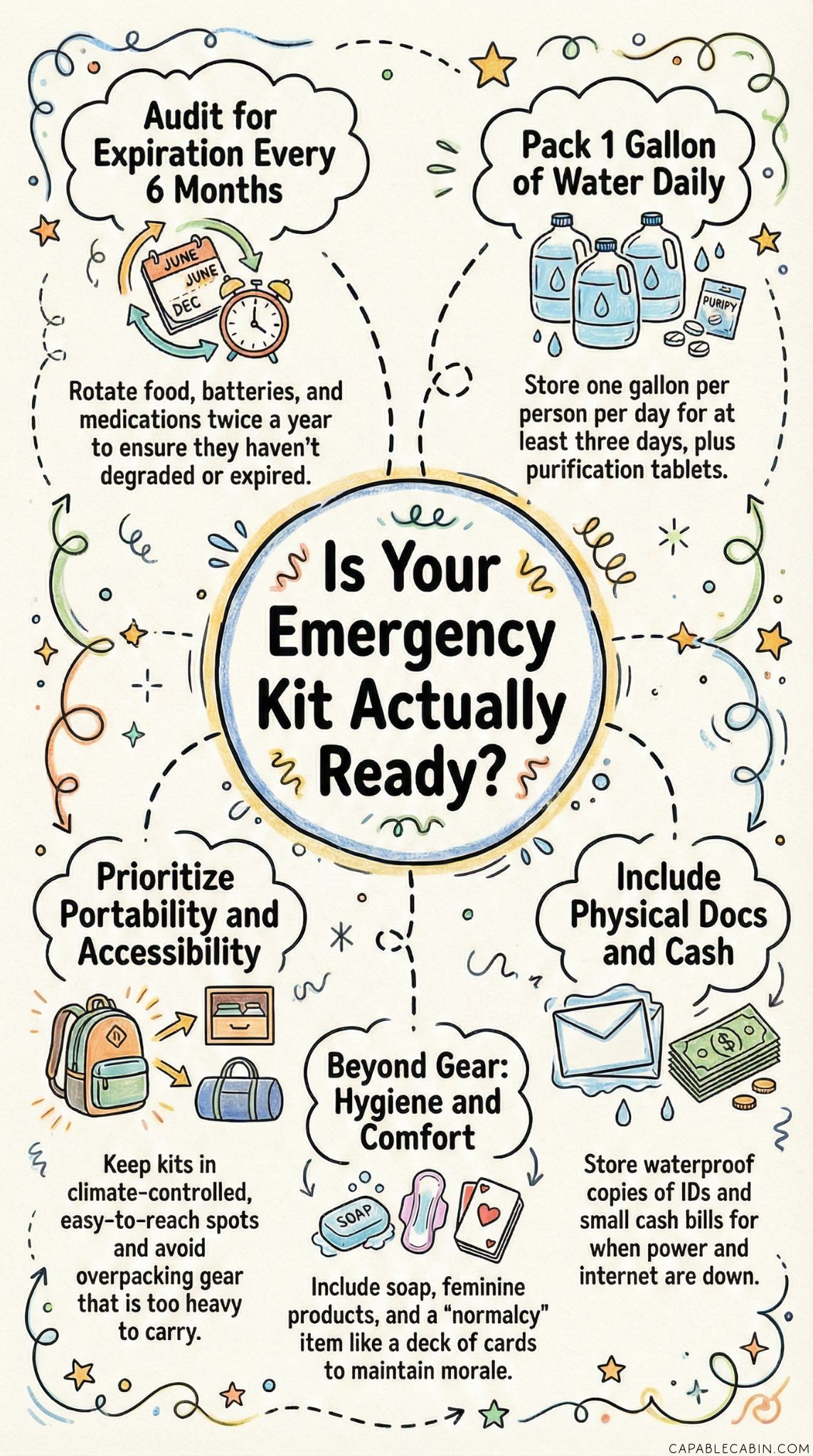
- Stock adequate drinking water (at least one gallon per person per day)
- Pack a first aid medical emergency kit
- Organize staple foods for a few days
- Plan how to communicate with family if cell phones go down
Instead of a mile-long list, focus on these core tasks until they’re done. Once you’re satisfied with those, add another layer. Maybe you’ll invest in a home emergency supply system that carries you through a longer crisis. Or you could look into emergency water storage purification methods to ensure you don’t just rely on store-bought bottles. Tackle tasks in a logical sequence, celebrating small victories as you go.
Speaking of small victories, it’s easy to rush past them in a quest for perfection. Give yourself permission to appreciate each step. That might sound silly, but those tiny triumphs release a sense of achievement that motivates you to keep going. “Hey, I got a sturdy flashlight and extra batteries—check!” can feel like a million bucks when you’re feeling stuck. Write these successes down or mention them to a friend. Positive momentum is a powerhouse against overwhelm.
If you still find yourself drowning in details, consider adopting the “good enough” approach. Are you uncertain whether a certain brand of freeze-dried meals is the best? Focus on whether it’s reliable, safe, and within your budget, rather than overanalyzing every ingredient label. That doesn’t mean you should ignore legitimate concerns or lower your standards drastically. It just means that solving half of your kit’s contents is better than solving none.
Also, keep in mind that you can always upgrade or refine your preparedness over time. You don’t need the ultimate all-in-one solution from the get-go. Start with basics that suit your circumstances, then expand. That might look like assembling a quick budget emergency preparedness kit, then later adding a few more specialized supplies once finances allow. Gradual progress is still progress, and it often helps you avoid burnout.
Pick Practical Starting Points
When you’re ready to gather items, it’s tempting to jump to the store and buy whatever catches your eye. But that can lead to overspending, wasted supplies, or second-guessing everything once you get home. Instead, try laying out a clear plan for the first few essentials. Practical starting points usually revolve around immediate needs—like water, food, light, warmth, and communication.
- Water: Even a couple of sealed water jugs in your closet or under your kitchen sink can be transformative in an emergency. If you’re concerned about space, you could explore small space emergency preparedness for creative ways to store supplies.
- Food: Look for non-perishable items that suit your family’s tastes. Canned soup, granola bars, peanut butter, and instant oatmeal are easy to rotate. If you’re interested in stocking more long-term foods, check out emergency food storage kit.
- Light and Warmth: Flashlights, headlamps, and extra batteries are a must. Don’t forget blankets or sleeping bags if you live in colder areas.
- Communication: A hand-crank or battery-powered radio helps you stay informed. You may also want a portable charger for phones, although remember power might be unavailable if the grid goes down.
- First Aid: For cuts, burns, or basic injuries, a well-stocked medical kit is invaluable. You can learn more in the first aid medical emergency kit guide.
If you’re constantly on the go, think about setting up smaller grab-and-go bags. For instance, you might create a vehicle emergency kit family for your car or a workplace emergency kit guide for your office. That way, you feel secure no matter where you—or your family members—happen to be when an emergency hits.
Another practical tip is to categorize items into short-term and long-term usage. Short-term usage includes a 72-hour window, ideal for evacuations or power outages. Long-term is more about multiple weeks or even months, addressing scenarios like natural disasters that knock out local resources for extended periods. One place to start is with a 72 hour emergency kit complete. This ensures you’re covered for the initial days of any crisis. You can always add more layers—like a generator, water barrels, or advanced outdoor gear—down the road.
It’s also wise to check your overall family situation when picking practical starting points. If you have infants, factor in diapers and formula. If you have pets, set aside extra food, a leash, and a transport crate. Caregivers for relatives with chronic conditions might need additional medications or medical devices. These specialized considerations matter just as much as flashlights and canned beans, if not more.
Stay Motivated Consistently
One common trap: you gather a handful of essentials, toss them in a closet, and then forget about them for years. By the time you remember, the batteries are expired, the food is stale, and some items are missing. Staying motivated and consistent is key to keeping your emergency kit effective. The good news is you don’t have to dedicate lots of time to it every week—just a little check-in now and then.
Try scheduling brief reminders. Maybe you set an alert on your phone every three months to glance over your supplies. Are the expiration dates still reasonable? Do you need to refresh your water stash? Did a family member eat some of the snack bars without you noticing? These tiny, regular reviews keep you from discovering problems too late.
Another way to stay motivated is to tie preparedness to events happening around you. Did you just hear about an upcoming storm alert? That’s a perfect moment to revisit your kit. Or if a neighbor mentions how they couldn’t find batteries during the last hurricane, you can take that as a nudge to check whether yours are still working. These real-life prompts are powerful because they feel immediate.
Consider turning this practice into a family activity. You can talk it through with your kids—age-appropriately, of course. They can help check items or practice using certain tools, which gives them a sense of ownership. Involving your family has a bonus effect: everyone learns where things are and how to use them, which reduces panic if something happens. Plus, kids who help build an emergency plan often feel more secure, because they know there’s a real system in place.
A big motivational boost can also come from keeping track of successes. Just as you might celebrate big milestones like birthdays or graduations, it makes sense to acknowledge progress on your emergency plan. For instance, if you’ve finally learned how to work a water-purification device, pat yourself on the back, send a quick note to a friend about your accomplishment, or treat yourself to a small reward. These mini-celebrations are an antidote to the mental fatigue that sometimes sets in with long-term preparedness efforts.
Finally, if finances are an obstacle, remind yourself that slow and steady is an option. Maybe you add one new item to your kit each payday. Over time, these mini investments accumulate into robust preparedness. If certain gear feels too pricey, focus on creative or budget-friendly solutions, like rummaging sales, using discount stores, or recycling containers. It’s okay if your kit doesn’t look fancy; it only needs to function well enough to keep you and your family safe.
Build A Support System
The entire process of planning for emergencies can feel isolating if you approach it alone. Yet you don’t have to carry it all by yourself. Sometimes, a friendly pep talk from another busy mom can keep you moving when you feel stuck. Building a support system, whether online or in your local community, provides encouragement, resources, and fresh ideas.
Start with your immediate circle. Talk to neighbors about forming a mini preparedness network. Perhaps you all check in on each other during storms or power outages, or share resources like a generator if the need arises. You might also coordinate simple tasks—like someone who’s good at sewing helps patch up broken backpacks, while someone else who loves cooking tests easy shelf-stable recipes. Everyone has strengths, and pooling them reduces individual stress.
Online communities are another great outlet if you’re not sure who to talk to in person. You can find social media groups focused on thrifty preparedness, discussions about local emergency protocols, or specialized groups for families with small children. People share tips, mistakes, and success stories that can spark your own progress.
If you have a friend who’s equally keen on getting started, set mini-challenges for each other. For instance, decide that by next week, you’ll both gather a basic first aid kit or plan a safe rendezvous location in case phone service fails. Pairing up like this injects a friendly accountability that helps you push past inertia. Instead of each weighing the pros and cons alone, you compare notes. Even if you disagree on certain gear or strategies, the conversation can unearth solutions you’d never thought of. It’s a lot like having a workout buddy for your emergency-prep routine.
For those times when life gets especially hectic, it’s important to lean on supportive resources. If your job is all-consuming, you might look into a ready-made kit for a quick fix and then add personal touches when you have time. Or if your schedule is unpredictable, you could delegate tasks to other family members or close friends who are willing to help. The goal is to remind yourself that you’re part of a broader community of people who understand how crucial—and doable—emergency planning can be.
If you realize someone else is also feeling the weight of analysis paralysis, lend them a hand. Walk them through your experiences, share your “why,” and cheer them on as they chip away at their tasks. Sometimes, teaching or guiding someone else is one of the best ways to solidify your own confidence. You become a mentor in a small way, reinforcing that sense of “we’re in this together.”
Cabin Chat Q&A
Below, you’ll find five common questions folks tend to ask when they’re feeling overwhelmed or uncertain. We may be deep in these topics together, but trust me, you’re not alone in wondering about specifics or worrying about mistakes.
- Q: “I’m terrified of starting. How can I calm down?”
A: First, acknowledge the fear. It’s normal to be anxious when imagining worst-case scenarios, especially if you’ve never built an emergency kit before. Begin with the smallest step that feels manageable—like setting aside a few water bottles and a flashlight. Achieving that tiny goal reduces anxiety and shows you that progress is possible. Remind yourself this is an ongoing process, not a one-time performance you pass or fail. - Q: “What if I can’t afford high-end gear?”
A: Don’t worry about having the most expensive or advanced equipment. Focus on basics like bottled water, non-perishable snacks, a decent flashlight, and a straightforward first aid kit. You can upgrade over time. Check thrift shops, discount stores, or rummage sales for items like blankets, jackets, or backpacks. A budget emergency preparedness kit can still offer reliable protection. - Q: “How do I handle specialized needs, like chronic conditions?”
A: If you or a loved one has ongoing medical needs, it’s crucial to factor those in. Gather extra prescriptions, relevant medical equipment, and any supplies needed for daily routines. Keep these items in a dedicated section of your kit so they’re easy to grab in a hurry. For more detailed guidance, you might explore emergency kit chronic conditions. - Q: “Will I have to replace everything all the time?”
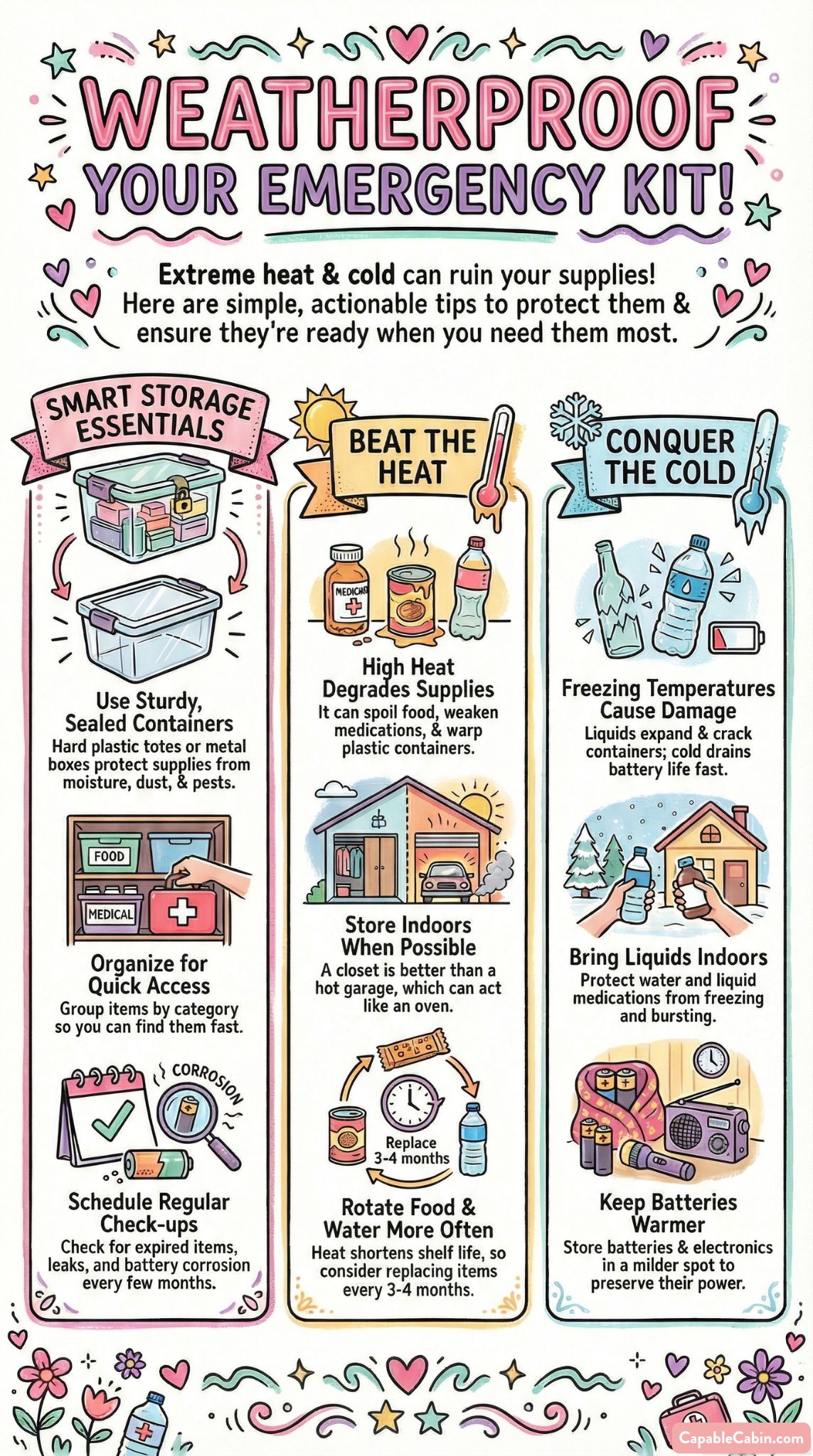
A: Not if you manage it consistently. Make it a habit to rotate out items that expire—canned goods, batteries, even certain medications—so you’re not wasting resources. A quick seasonal check can be a fantastic reminder: for instance, upgrade to winter emergency kit essentials if the colder months are approaching, or rotate to summer emergency kit items when it heats up. - Q: “Where’s the best place to store my kit?”
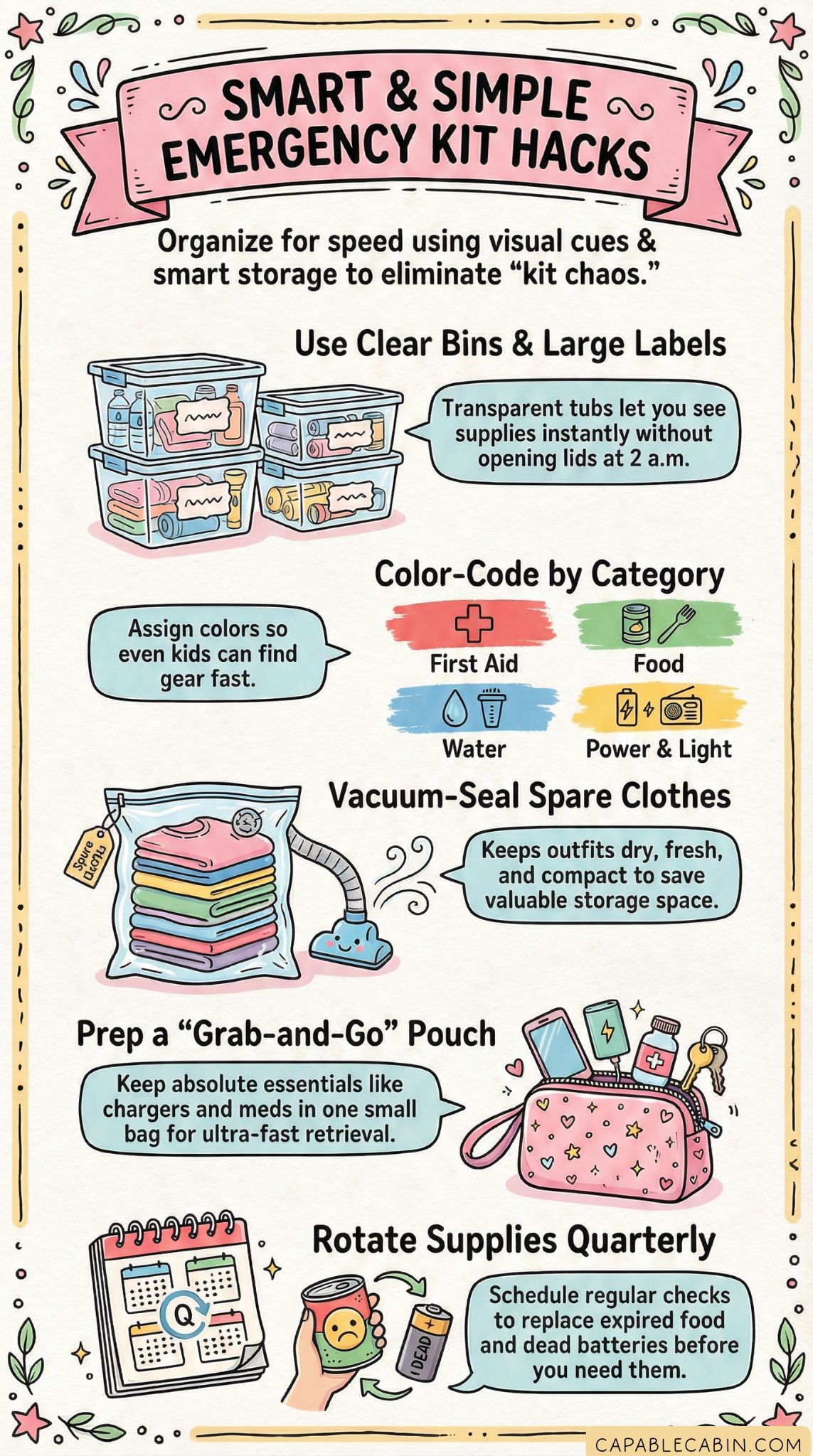
A: Aim for a spot that’s easy to access but not in your way daily. Closets, under-bed storage bins, or garage shelves can all work. If you live in a compact space, look into emergency kit storage solutions for creative stacking and labeling ideas. The key is to know exactly where your supplies are and be able to grab them quickly if you need to evacuate.
Final Thoughts
By identifying why you feel stuck, tapping into personal motivations, and taking action in small steps, you can turn that dreaded “emergency preparedness psychology paralysis” into a manageable plan. It’s not about doing everything at once or doing it perfectly. It’s about stacking one small success on top of another, so you’re steadily moving toward security and confidence.
You have every right to take a deep breath and move at a pace that fits your life. Yes, it might feel like another big project on your to-do list. But remember, we’re in this together—no one gets it perfectly right on day one. Every flashlight you buy or water bottle you stock is a tangible piece of reassurance. You’re doing this for yourself, your loved ones, and your broader community. Trust me, even the tiniest steps add up in a big way.
So let’s keep the momentum going. Embrace the fact that you can learn as you go, shift your plans if needed, and celebrate each milestone. By tackling procrastination in gentle increments, you’ll find that emergency preparedness stops being a scary, overwhelming concept and becomes something you can manage—even appreciate—as part of caring for your family. You’ve totally got this. And if you ever stumble again, remember to give yourself grace. That’s how we all get better—together.