10+ Winter Gardening Secrets: Grow Food Year-Round
Think gardening stops when the first frost hits? Think again! You’re about to discover how to turn your cold-climate garden into a year-round food-producing powerhouse that’ll have your neighbors wondering what kind of magic you’re working out there.
The Cold-Weather Crops That Laugh at Frost
Here’s the truth nobody tells you: some vegetables actually prefer the cold. They’re like the winter warriors of the plant world, getting sweeter and more delicious after a good freeze.
Your Frost-Fighting Vegetable Squad:
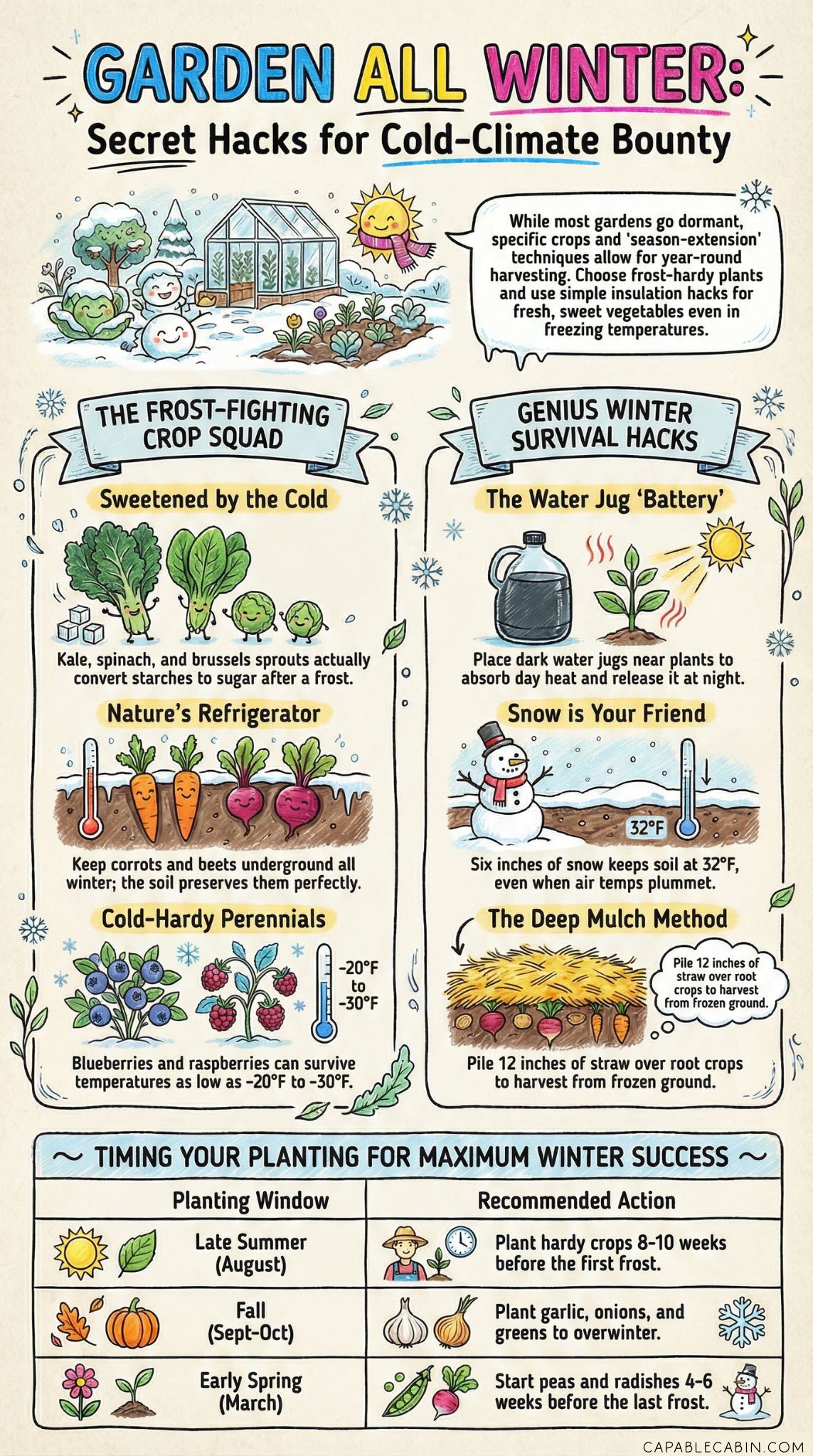
Kale – This leafy champion actually tastes better after frost converts its starches to sugar. Plant it in September (zones 5-7) and harvest through December… or even February if you’re strategic!
Spinach – The ultimate cold-weather survivor. It’ll handle temperatures down to 15°F with minimal protection and keeps producing when everything else has given up.
Carrots – Leave these underground until you’re ready to eat them. The soil is literally nature’s refrigerator! Some varieties can overwinter directly in the ground and taste incredibly sweet after cold exposure.
Brussels Sprouts – These compact cabbages on a stalk need frost to develop their best flavor. Seriously – harvest them after a hard freeze for maximum deliciousness.
Cold-Hardy Fruits That Defy Winter
Blueberries – Many varieties handle -20°F like champs. Once established, they’ll produce for 20+ years with minimal fuss.
Raspberries – Fall-bearing varieties give you a September harvest, and some can handle winter temperatures down to -30°F.
Hardy Kiwi – Yes, kiwi! These grape-sized fruits thrive in zones 4-8 and can handle serious cold once mature.
The Game-Changing Timing Strategy
Forget everything you thought you knew about when to plant. Cold-climate gardening runs on a completely different calendar:
Late Summer (August) – This is your secret weapon! Plant cold-hardy crops 8-10 weeks before your first frost date. They’ll establish while it’s still warm, then coast through winter.
Early Spring (March-April) – Get peas, spinach, and radishes in the ground 4-6 weeks before your last frost. They’ll thrive in the cool temperatures that would stress summer crops.
Fall (September-October) – Plant garlic, multiply onions, and certain greens that will overwinter and explode with growth in early spring.
Your Season-Extension Arsenal
Ready for the techniques that’ll make you feel like you’re cheating at gardening?
Row Covers: Your Instant 5-Degree Advantage
These lightweight fabrics create a microclimate that’s 4-10°F warmer than the surrounding air. Drape them over hoops, and you’ve got instant frost protection. Best part? They let light and water through, so you don’t have to constantly remove them.
Cold Frames: The Winter Greenhouse Alternative
Think of cold frames as miniature greenhouses without the heating bill. A simple box with a clear lid (old windows work perfectly!) can extend your season by 6-8 weeks on both ends. Position them facing south, and watch your greens thrive even when there’s snow on the ground.
Pro move: On sunny winter days, cold frames can get surprisingly hot. Prop the lid open when temps rise above 50°F to prevent cooking your crops.
The Deep Mulch Method
Here’s where it gets really exciting: pile 10-12 inches of straw or leaves over root vegetables like carrots, beets, and turnips. You can literally push aside the mulch and harvest fresh vegetables from frozen ground all winter long. It’s like having an outdoor refrigerator that requires zero electricity!
Unexpected Winter Gardening Hacks That Change Everything
Ready for the solutions that’ll make you feel like a cold-climate gardening genius?
The Black Plastic Secret Nobody Talks About
Here’s a game-changer: lay black plastic sheeting or black landscape fabric on your planting beds 2-3 weeks before your early spring planting. The dark surface absorbs solar heat and can warm your soil up to 10°F faster than uncovered ground. You’ll be planting spinach and peas while everyone else is still waiting for the ground to thaw! Just remove it before planting or cut X-shaped slits to plant through it.
The Water Jug Heat Battery Trick
This one sounds too simple to work, but it’s brilliantly effective: place gallon jugs filled with water inside your cold frames or around vulnerable plants. During the day, the water absorbs heat. At night, it slowly releases that warmth, preventing temperature crashes that kill plants. It’s like giving your garden a thermal blanket made of science! Dark-colored jugs work even better because they absorb more heat.
The Opposite-Season Planting Strategy
Most gardeners plant in spring and fall. You? You’re going to do something completely counterintuitive: plant your most cold-hardy crops (like spinach, mâche, and certain lettuce varieties) in late November or early December, right before the ground freezes solid. They’ll germinate in spring weeks earlier than anything planted after thaw, giving you the earliest harvest possible. This technique is called “winter sowing,” and it’s like time-traveling your spring harvest!
The Snow-as-Insulation Method
Stop clearing snow off your garden beds! Fresh snow is actually an incredible insulator with tiny air pockets that protect plants from extreme temperature swings. A 6-inch layer of snow can keep the soil underneath at a steady 32°F even when air temps plummet to -20°F. Your garlic, onions, and overwintered greens are actually safer under that white blanket. Only clear heavy, wet snow that might crush plants.
The Garage Transition Zone
Here’s what experienced cold-climate gardeners know: your unheated garage (or shed) is the perfect “hardening off” space in reverse. In late fall, move potted herbs like rosemary, parsley, and chives into this protected zone. It’s too cold for active growth but not cold enough to kill them. They’ll go dormant and survive winter, then explode with growth when you move them back outside in spring. You just saved $30+ on replacement herbs!
The Windowsill Microgreens Revelation
When outdoor growing truly stops, pivot to the fastest-growing crops on Earth: microgreens. These nutrient-dense baby plants grow from seed to harvest in 7-14 days on a sunny windowsill. No soil needed – just use sprouting trays with water. Radish, broccoli, and sunflower microgreens pack more vitamins per ounce than their full-grown versions. You’re not giving up on fresh greens; you’re just moving the operation indoors!
Soil Prep That Sets You Up for Success
Your cold-climate soil needs some serious TLC to perform in challenging conditions:
Fall is prime time – Add 2-4 inches of finished compost in September. It’ll break down slowly over winter, creating a nutrient-rich foundation by spring.
Drainage is everything – Cold, waterlogged soil equals dead roots. If water pools after rain, work in compost and consider building raised beds (even 6 inches makes a huge difference).
The pH sweet spot – Most cold-hardy veggies love slightly acidic soil (6.0-6.8). Test it, adjust it, succeed with it.
Winter Harvest Wisdom
Harvesting in freezing weather requires strategy:
- Pick on warmer days (above 35°F) when plants are less brittle
- Harvest in late morning after frost has melted but before afternoon temperature swings
- Cut, don’t pull – frozen plants are fragile and roots can tear easily
- Leave some leaves on kale and chard – they’ll keep producing if you don’t strip them bare
Storage Secrets for Maximum Freshness
Root cellar magic: Store unwashed root veggies in bins of barely damp sand at 32-40°F. They’ll last 3-6 months!
The refrigerator trick: Greens stay crisp for weeks when wrapped in damp towels inside plastic bags.
Your Cold-Climate Confidence Boosters
Start small – Pick 3-4 crops your first winter. Master those, then expand.
Track everything – Note what you planted when, first/last harvest dates, and what worked. You’ll build your own personalized cold-climate playbook.
Embrace experimentation – Try one “challenge crop” each season. You might be surprised what thrives in your specific microclimate!
The Truth About Cold-Climate Growing
Here’s what makes this so powerful: while everyone else is buying expensive, shipped-from-across-the-country produce, you’re harvesting incredibly fresh, nutrient-dense food steps from your door.
Those $6 boxes of organic spring mix at the store? You’re growing better quality for pennies. That satisfaction of making a fresh salad in January with greens you grew yourself? Priceless.
You don’t need a massive greenhouse or expensive equipment. You need the right crops, smart timing, and simple season-extension techniques.
The growing season doesn’t end when temperatures drop – it just shifts into a different, equally productive mode. And now you know exactly how to work it.
Ready to become the person who grows fresh food year-round while everyone else thinks it’s impossible? Your cold-climate garden adventure starts now!