Why Smart Preppers Pack These 12 Comfort Items (Hint: It’s Not About Survival)
Sometimes, we focus so much on essentials like flashlights and bottled water that we forget about those cozy extras that keep spirits high during tough situations. If you’ve ever wondered how to keep your loved ones calm and comforted when tensions run high, you’re in the right place. Let’s explore 12 emergency kit comfort items that can boost your family’s morale. After all, in moments of uncertainty, having a few familiar and uplifting items in your emergency kit can go a long way.
We’re talking about “emergency kit comfort items” that turn a stressful scenario into something a little warmer and more reassuring. Remember, it’s not just about survival, it’s about feeling safe and supported. Let’s dive in and look at some practical yet heartfelt additions to your stash.
Bring Favorite Family Photos
There’s something about a cherished snapshot that reminds us of good times, shared laughter, and the warm bond we have with each other. During an emergency, the comfort of seeing your loved ones smiling can ease tension almost instantly.
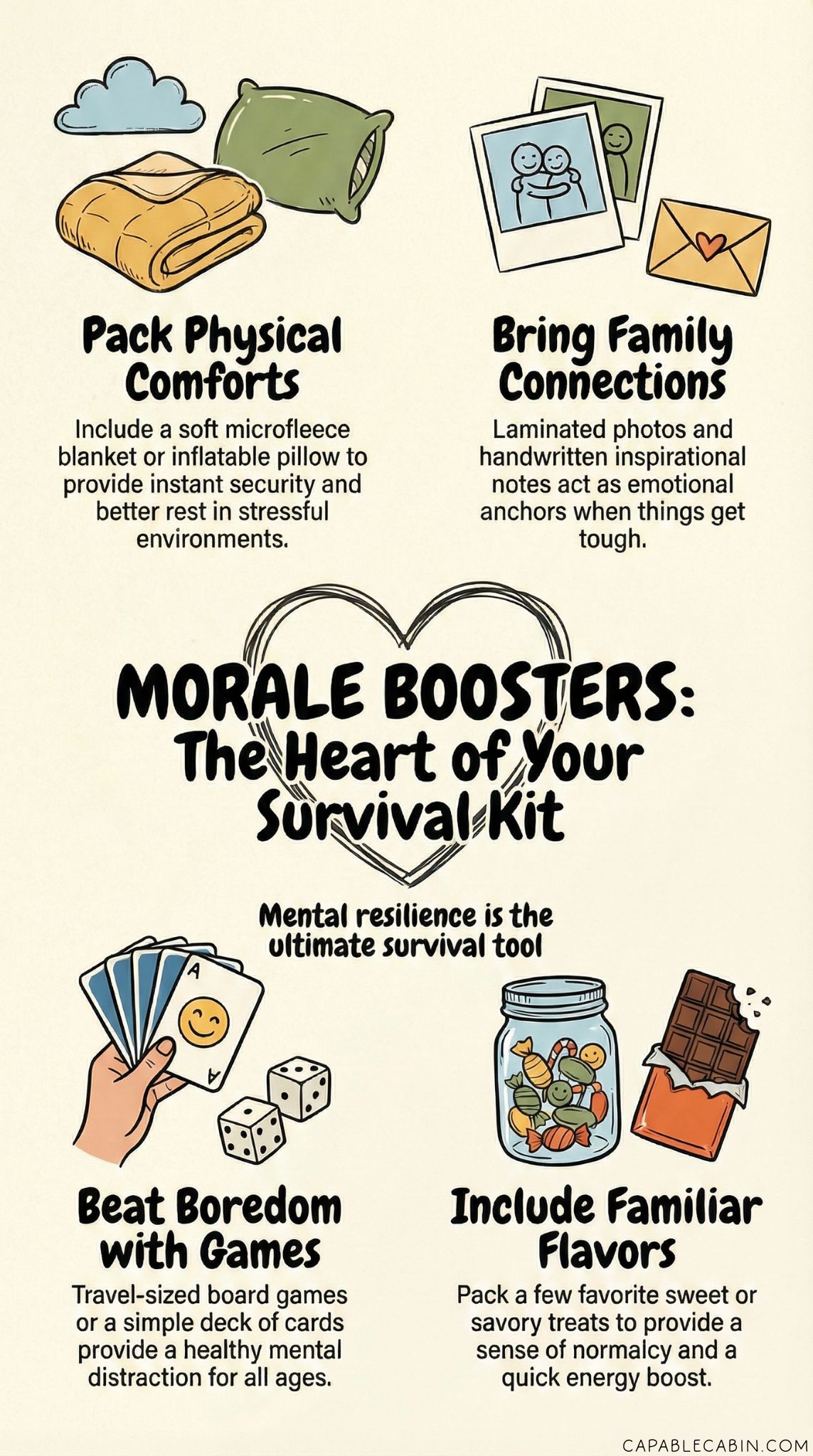
- Why It Works: Photos are easy to pack and weigh almost nothing, but they bring a huge emotional boost. It’s a quick reminder of happier days and a doorway to gratitude in the midst of chaos.
- How to Store Them: Laminate or keep them in a small, waterproof sleeve to protect from damage.
- Personal Touch: You could even jot a little note on the back, like a short message or a funny memory.
When you’re pulling together items for your family emergency preparedness kit, consider slipping in two or three photos that have special meaning to you. If you have little ones, let them pick which pictures they’d love to see if things got tough. That sense of ownership can help them feel more secure.
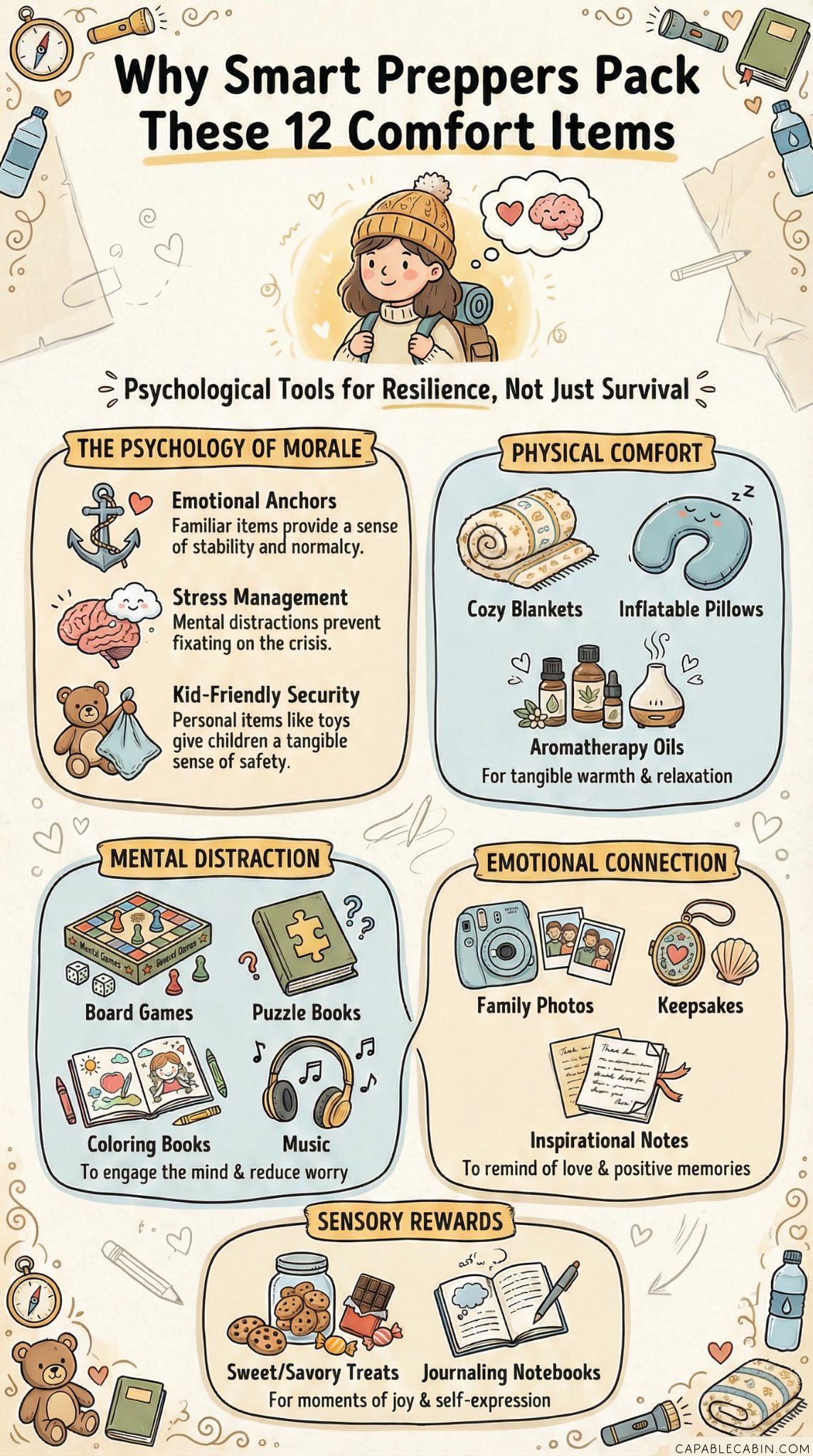
Include Cozy Blankets Or Throws
No one likes being cold or uncomfortable when stress is already high. A small, soft blanket or throw can instantly create a snug feeling anywhere you go.
- Quick Warmth and Comfort: Whether it’s a chilly car ride or a drafty emergency shelter, a blanket can stabilize body temperature and soothe nerves.
- Space-Saving Tip: Go for those compact, microfleece throws that roll up tight. They’re lightweight, wash easily, and dry quickly.
- Family Bonding: Don’t underestimate how a simple act like cozying up together under one blanket can bring everyone closer, emotionally and literally.
If you’re building multiple kit versions—like a vehicle emergency kit family stash—consider having one blanket in each. That way, whether you’re at home or on the road, you’ll always have that extra layer of comfort ready.
Pack Sweet Or Savory Treats
Let’s be honest, a tasty snack can make a tough day a bit brighter. Including a stash of easy-to-store treats can be a game-changer for morale, especially if you have kids.
- Examples: Granola bars, fruit leather, hard candy, or even a small tin of cookies.
- Manage Shelf Life: Check expiration dates regularly, and rotate them out if you notice they’re reaching the end of their shelf life.
- Mood Booster: Familiar flavors can ground people, reminding them of routine and normalcy, which can be calming in a crisis.
Just remember not to rely solely on sugary treats. Light, healthy options like dried fruit or nuts can provide a quick energy boost, so balance your comfort foods with nutritious picks. You might store some items in sealed containers to keep them fresh, which also helps avoid the classic “emergency kit mistakes avoid” scenario of spoiled or stale food.
Add Travel-Sized Board Games
Entertainment is a big factor in keeping everyone’s spirits up when you’re cooped up or stuck waiting things out. Small board games or card games can keep minds off the stress and add a little healthy distraction.
- Easy to Access: Travel versions of popular board games are usually compact, with mini pieces and folding boards.
- Variety: Classic card decks, UNO, or quick puzzle games can engage all age groups.
- Shared Fun: Games foster teamwork or friendly competition, helping loved ones stay optimistic.
If your space is really tight, try a single deck of playing cards. There are dozens of games you can play with one deck—plenty to keep boredom at bay.
Carry Comfy Pillows Or Cushions
An inflatable neck pillow or a small plush cushion can make sleeping rough a little more bearable. Whether you’re in a busy evacuation center or cramped inside a car, having a dedicated pillow can mean the difference between rest and restlessness.
- Compact Solutions: Inflatable pillows fold down to practically nothing and can be blown up in seconds.
- Ease Muscle Tension: Proper neck support can help minimize headaches or shoulder aches that come from stress or poor sleep posture.
- Kid-Friendly: Children especially might find it soothing to have a pillow they associate with home, complete with their favorite pillowcase.
Combine a comfy pillow with that soft blanket we mentioned earlier, and you’re well on your way to creating a semblance of home even in less-than-ideal conditions.
Use Aromatherapy Oils Or Items
The sense of smell is powerful, and certain aromas have a calming effect. While it might sound fancy, adding a small vial of soothing essential oils can be a game-changer for tense situations.
- Top Choices: Lavender, chamomile, or even a comforting “stress relief” blend.
- Safety First: If you have family members with allergies, be sure to pick scents that won’t irritate anyone.
- How to Use: Put a few drops on a handkerchief or cotton ball. Inhale gently to foster relaxation.
For a simple DIY approach, tuck a few scented dryer sheets into your kit. They won’t last forever, but they’re cheap, easy to replace, and can freshen up the entire bag.
Include Coloring Books And Crayons
You might be surprised how calming coloring can be—for kids and adults alike. A simple coloring book or puzzle book can help channel anxiety into creativity.
- Why It Helps: Coloring is known to reduce stress and promote mindfulness.
- Compact Choice: Travel-sized coloring books with mini colored pencils or crayons fit nicely in even a small kit.
- Family Bonding: Turn an emergency situation into a mini art session, and you might be amazed at how quickly the mood lifts.
If you’re looking to save space, consider coloring pages that you print off and fold neatly. A small plastic bag can hold crayons and keep them from rolling all over.
Keep Familiar Toys Or Keepsakes
For children, a favorite teddy or a small stuffed animal can be a major morale booster. Even older kids (and adults) sometimes benefit from having a small plush or sentimental token on hand.
- Emotional Security: Familiar objects give kids a tangible sense of stability in a new environment.
- Travel Size: Opt for smaller versions of beloved items, so they don’t crowd your kit.
- Memory Lane: A keepsake doesn’t have to be a toy. It could be a lucky charm, a shell from a family beach trip, or anything that sparks positive memories.
Remember that sense of home can be recreated, even if you’re in a temporary shelter. You’re simply using small but meaningful reminders to anchor everyone and reduce fear.
Try Puzzle Books Or Brain Teasers
Sometimes, you just need something to occupy your mind when there’s little else to do. Crosswords, Sudoku, or word searches can keep people—young and old—from fixating on the situation at hand.
- Mental Distraction: Solving even simple puzzles can cut through worry and restless thinking.
- Educational Fun: If you have older kids, puzzle books can encourage them to keep learning or practicing logic skills.
- Inexpensive: Dollar stores often carry these mini puzzle books, so you can toss in a couple without breaking the bank.
It’s amazing how a little pen-and-paper challenge can bring a sense of normalcy and focus. After all, mental resilience is part of any strong emergency plan.
Share Small Inspirational Notes
In times of crisis, a few comforting words can do wonders. Consider handwriting little notes or affirmations that you store in your emergency kit, ready to be pulled out when morale needs a lift.
- Examples: Messages like “You’re braver than you think” or “We’ll get through this together.”
- Personalization: If you have kids, let them write notes to themselves—or to siblings—so they can open them when they’re scared.
- Fast Comfort: You can reread these notes whenever you feel overwhelmed.
It sounds simple, but a heartfelt phrase that comes from family can be exceptionally grounding. If you want to go the extra mile, place each note in a colorful envelope so it feels like a special treat.
Enjoy Portable Music Devices
Music soothes the soul, right? Adding a small MP3 player or extra batteries for your phone so you can play stored music files helps maintain a connection to the tunes that help you relax.
- Offline Playlists: Not all emergencies will allow internet access, so consider non-streaming methods.
- Earbuds: Keep a spare set of earbuds so you can listen without disturbing anyone else in a crowded setting.
- Uplift and Calm: Choose playlists that are either fun sing-alongs for kids or calming for moments when anxiety spikes.
Don’t forget to periodically check those batteries or power banks. A drained device won’t help much, so keep your gear charged and tested.
Create Quick Journaling Moments
A small notebook and pen can be massively therapeutic. Whether you record the day’s events, doodle, or just write down your worries, journaling can help manage stress.
- Why It Matters: Putting pen to paper gives your thoughts a place to land, especially if you’re feeling overwhelmed.
- Kid-Friendly Option: Ask younger children to draw how they feel. It might become a shared activity that kicks off a supportive family chat.
- Compact Storage: Throw in a mini notepad and a pen with a cap (or a mechanical pencil), and you’re set.
Journaling doesn’t require a charging cord or good cell signal. It’s something you can do anytime, anywhere. In a way, it captures memories and moments you can reflect on after the crisis passes.
Cabin Chat
Below are some common questions people ask about including these comfort items in their kits. Think of it as a casual talk around the fireplace, where we swap tips and experiences without any judgment.
- How do I prevent my comfort items from taking up too much space?
Choose compact versions whenever possible. For instance, a mini teddy bear instead of a huge one, or travel-sized board games instead of the full-size version. Vacuum-seal plush blankets or clothes if that helps. - Should I regularly swap out my snacks and treats?
Yes, definitely. Items like granola bars have limited shelf life. Rotating your treats every six months helps ensure they’re fresh and ready to go. - What if my child wants a big toy to feel safe?
Work with them to find a smaller object that represents the same comfort. You might explain how every inch matters, but reassure them that the toy of choice will still make it into your emergency kit in a more portable form. - Where do I store these comfort items so I don’t accidentally use them on regular days?
You can keep them in a dedicated container with your other emergency gear. If you’re looking for tidy ideas, check out emergency kit storage solutions. Label the container clearly so family members know these items are “for emergencies only.” - Can I include tech-based distractions if I have portable chargers?
Absolutely, as long as you can keep them powered. Be sure to maintain battery backups and consider how long you might be without power. Physical items like coloring books or puzzle magazines don’t rely on electricity, so it’s good to have both options. - How many comfort items are too many?
That’s up to you. If carrying them begins to interfere with real necessities—like water, first aid, or medications—then it’s time to pare down. Otherwise, a few morale boosters can genuinely go a long way. - Should everyone have their own personal comfort stash?
Ideally, yes. Give each family member a small bag (if possible) with one or two comfort items they’ve chosen. Having full control over “their” items can help minimize arguments and maximize emotional support.
Bringing It All Together
Emergencies aren’t just about survival, they’re about maintaining a healthy mindset too. When you pack these emergency kit comfort items, you give yourself and your family the gift of familiarity and warmth in the face of the unknown. You can mix and match what suits your household best, knowing that each little item adds another layer of reassurance.
Even if you’re working with a budget emergency preparedness kit, there are plenty of low-cost or even free ways to provide comfort. A heartfelt note, a well-loved plush toy, or a few puzzle pages can make an incredible difference when tensions rise.
If there’s anything you take away from this, let it be that your emergency kit doesn’t have to feel sterile. It should have bits of your personality, bits of your family’s history, and bits of the life you normally live. That familiarity is priceless when you’re trying to keep morale up. Whether you’re dealing with a brief evacuation or a longer shelter-in-place scenario, personal touches can help everyone feel a sense of “home” wherever you land.
You’ve got this. And if you need more insight on keeping your emergency supplies organized, don’t forget to look for resources like emergency kit mistakes avoid or emergency preparedness maintenance. With each thoughtful addition to your planning, you’ll be better equipped not only to survive an emergency, but to face it with confidence and calm. Here’s to building a kit that reflects your family’s spirit, keeps everyone’s hearts lighter, and shows that even when the going gets tough, you’re ready to tackle it as a team.