Emergency Planning for Blended Families: Unity in Crisis Management
Emergency Planning for Blended Families: Because Life’s Already Complicated Enough
Let’s be honest—you’re already a master juggler.
Between custody schedules that require a PhD in logistics, remembering which kid has which allergy, and navigating the delicate dance of co-parenting communication, you’ve basically earned an honorary degree in Family Management Studies. The last thing you need is to worry about what happens when life decides to throw a curveball during your already perfectly choreographed chaos.
But here’s the thing: emergency planning for blended families doesn’t have to be another stress-inducing item on your endless to-do list. In fact, once you get the hang of it, you might even find it oddly satisfying—like finally organizing that junk drawer, but with the added bonus of keeping everyone safe.
This guide will walk you through creating a practical, budget-friendly emergency plan that actually works for the beautiful complexity that is your blended family.
No judgment if your idea of “emergency supplies” currently consists of leftover Halloween candy and that flashlight that may or may not have working batteries.
Blended Family Preparedness Basics
Sixteen percent of children live in blended families Blended Family Statistics: A Deeper Look Into the Structure | LoveToKnow, and if you’re reading this, congratulations—you’re part of a pretty significant club! When you factor in the adults, pets, and the occasional visiting relative who somehow always shows up during a storm, blended families represent a fascinating exercise in organized chaos.
The thing about blended families is that what makes us wonderfully unique in daily life—multiple households, different parenting styles, complex schedules, and relationships that require their own organizational chart—can become genuinely confusing when everyone’s adrenaline is pumping and decisions need to be made fast.
Understanding these dynamics is actually your secret weapon for effective emergency preparedness:
Role Clarity: When the smoke alarm goes off, nobody has time for a family meeting about who’s in charge. Knowing whether Mom, Stepmom, Dad, or the teenager with the driver’s license is calling the shots can prevent those awkward “I thought you were handling that” moments.
Communication Coordination: Your family probably already has more group chats than a small corporation. The trick is making sure your emergency communication plan doesn’t require everyone to remember which app you’re supposed to use when the Wi-Fi goes down.
Resource Management: Between all the different households, someone definitely has jumper cables, someone else has the good flashlights, and somebody’s ex-mother-in-law probably has enough canned goods to survive the apocalypse. Knowing who has what can turn your extended family network into your emergency preparedness dream team.
Child Involvement: Kids are surprisingly good at this stuff—they love having important jobs, they remember details adults forget, and they’re excellent at spreading the word. Plus, giving them age-appropriate responsibilities in the plan means they’ll feel more confident and less worried when emergencies actually happen.
Blended Family Preparedness Basics
Before diving into supplies and drills, let’s paint the big picture. Nearly 40% of families in the United States are blended families, navigating complex relationships and loyalties [1]. Add pets, aging grandparents, and differing parenting styles, and you’ve got a recipe for confusion when time is of the essence.
Here’s a thought: the sooner we recognize those unique dynamics, the smoother our plan will roll out. Start by acknowledging:
- Role Clarity: Stepparents, biological parents, kids, and exes all have a part to play.
- Emotional Balance: Loyalty conflicts or sibling rivalries might surface under stress.
- Communication Channels: Different households may favor different ways of staying in touch.
- Resource Sharing: From emergency contacts to spare rooms, knowing who offers what helps everyone.
And here’s the kicker—children aren’t just passive observers. They make up about a quarter of the U.S. population and can become powerful messengers of preparedness, bringing crucial tips home to the rest of us [2]. When you involve them early, you’re not just checking a box—you’re creating young leaders who boost the whole family’s readiness.
Assess Family Needs
So here’s the thing: every blended household is unique. What works for your cousin’s family of five might not fit your crew of seven. Let’s map out what makes your household tick.
List Household Members
- Names, ages, and relationships: biological kids, stepkids, half-siblings, grandparents, live-in friends.
- Special considerations: allergies, medical conditions, disabilities, and language preferences.
- Pets and service animals: type, food brand, vet info, behavior notes.
Identify Local Risks
- Natural hazards: floods, wildfires, hurricanes, earthquakes.
- Neighborhood factors: distance to hospitals, evacuation routes, and public shelters.
Pinpoint Resources
- Shared supplies: first-aid kits, power banks, walkie-talkies.
- Skills and strengths: who’s CPR-certified? Who has a high-clearance vehicle?
- Community contacts: neighbors, friends, backup caregivers [3].
By taking stock of who’s in the mix and what you already have, you’ll spot gaps before they become headaches. Plus, it gives everyone a sense of ownership—because when you see your name on the list, you’re more likely to step up.
Create Your Communication Plan
Communication is the glue that holds a plan together. When nerves run high, a simple group text or a well-practiced signal can make all the difference. Let’s build a plan that you and everyone else can actually follow.
- Choose Primary Channels
- Group chat apps for quick updates.
- Phone trees for backup when data is down.
- Walkie-talkies for close quarters or low-signal spots.
- Compile Contact Lists
- Immediate family, co-parents, relatives, and trusted neighbors.
- Schools, daycare, after-school programs, and pet sitters.
- Local emergency services: fire, police, poison control.
- Define Meeting Spots
- Home rally point: front yard, garage, safe corner.
- Neighborhood fallback: a friend’s house or street corner.
- Citywide location: library, community center, official shelter.
- Plan for Special Needs
- Individuals with disabilities should have a personal support network and backup solution for key plan elements [4].
- Service animals and medications need a seat at the planning table too.
Keep this blueprint handy—in printed form tucked into your emergency planning documents binder and digitally on everyone’s phone. That way, even if power or Wi-Fi vanishes, you still have the roadmap.
Build an Emergency Supplies Kit
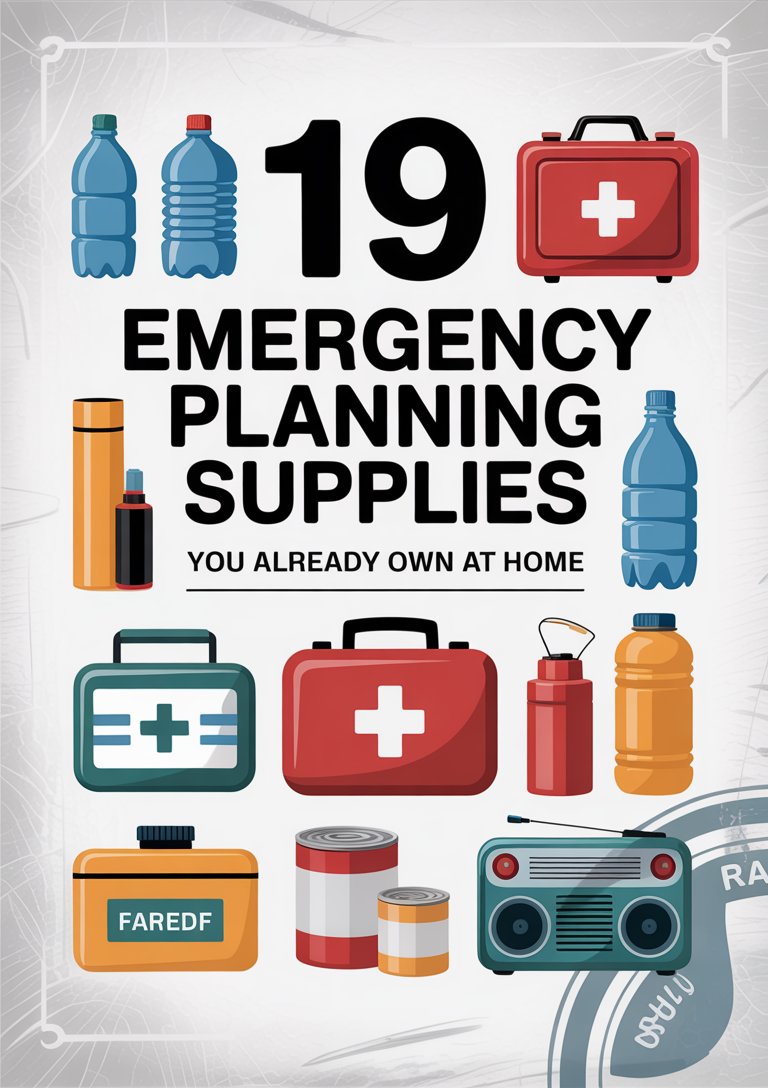
Alright, let’s tackle the fun—or at least rewarding—part: rounding up supplies. You don’t need to break the bank. In fact, you probably already own a bunch of what you need [5]. Here’s a starter checklist:
- Water (1 gallon per person per day for 3 days minimum)
- Nonperishable food (canned goods, energy bars, formula, pet food)
- Battery-powered or hand-crank radio and extra batteries
- Flashlights or headlamps for each family member
- First-aid kit (bandages, antiseptic wipes, tweezers, personal meds)
- Multi-tool or basic toolkit (screwdrivers, pliers, duct tape)
- Copies of important documents in a waterproof pouch
- Phone chargers, power banks, and a printed contact list
- Comfort items for kids (favorite toy, book, blanket)
- Pet kit: leash, carrier, vaccination records, extra water bowl
Wondering where to stash it all? Aim for easy access—a garage shelf, hall closet, or a sturdy bin in the foyer. Keep a smaller “go bag” by the door with essentials you’ll grab if you need to exit fast [6].
Assign Roles And Responsibilities
Trust me, when every hand knows its job, panic takes a back seat. Let’s divvy up tasks so nobody is guessing what to do when the sirens go off.
- Who Packs Go Bags?
- Maybe your teen preps the kids’ backpacks while you organize snacks.
- Who Manages Pets?
- Designate someone to leash the dog, pack the cat carrier, and grab extra food.
- Who Coordinates Communication?
- A tech-savvy family member can handle group texts, social media updates, or checking in with relatives.
- Who Checks on Neighbors?
- This can boost community morale and ensure no one nearby is overlooked.
- Who Drives Evacuation?
- Assign a primary and secondary driver—especially handy if someone’s unavailable.
In blended families, it’s smart to review roles with all adults involved, including co-parents or step-relatives. Being proactive about potential conflicts—like overlapping authority or mixed messages—helps minimize stress when every second counts.
Practice Your Plan Regularly
We’re not robots, and emergencies don’t follow schedules. But setting aside a little time for drills can make a world of difference. Think of it like a fire drill with heart—you’re not just rehearsing exits, you’re building confidence.
Schedule Quarterly Drills
- Pick different times: morning, afternoon, evening—to see how routines shift.
Role-Play Scenarios
- Fire, severe weather, power outage, a car breakdown while on route to school.
Test Communication Paths
- Send a “check-in” ping via group chat, walkie-talkie, or old-fashioned call tree.
Review and Revise
- After each run-through, gather feedback: What surprised you? What felt smooth?
- Update contacts, change meeting spots if roads are closed, and swap expired supplies.
Pro tip: Turn practice into a family game—offer small rewards or themed snacks. That way, we’re all more eager to show up and participate [7].
Address Special Needs
Emergencies can be hard enough, but when you layer in disabilities, medical needs, or emotional triggers, having an inclusive plan is critical.
- Disabilities and Medical Conditions
- Draft a personal assessment: mobility issues, communication aids, and medication schedule.
- Create a personal support network: a neighbor, a friend, a caregiver who can step in.
- Plan evacuation with service animals: choose pet-friendly shelters or trusted hosts [4].
- Children’s Emotional Well-Being
- Tailor conversations to their age: use simple language and reassure them it’s okay to be scared.
- Involve them in packing comfort items: a favorite stuffed animal, a coloring book.
- Pets and Livestock
- Practice loading drills with carriers and gates.
- Keep a stash of familiar bedding and toys to ease stress.
By accounting for these special considerations, you’re not only following best practices—you’re showing every member of your blended household that their safety and comfort matter just as much.
Review And Update Plan
Here’s a reality check: life changes, and so should your plan. A new job schedule, a baby on the way, a move to a different neighborhood—all these shifts can throw a wrench in your emergency blueprint.
- Set Annual Review Dates
- Pick a family “planiversary”—maybe the day you moved in or a kid’s birthday.
- Update After Major Changes
- New members join the household, pets arrive, and health needs evolve.
- Refresh Supplies
- Check expiration dates on food, batteries, and medications.
- Verify Contacts
- Ensure phone numbers, emails, and meeting spots are still valid [8].
Keep a quick checklist pinned on the fridge or added to your digital calendar. That gentle nudge once a year keeps the plan feeling fresh and relevant.
Seek Support And Resources
You don’t have to go it alone. There’s a whole community of experts and programs eager to lend a hand.
- Youth Preparedness Programs
- Kids can join community groups or school drills and bring those skills home [2].
- Local Agencies and Workshops
- Check Red Cross chapters, community centers, and parenting groups for free classes.
- Online Toolkits and Templates
- Download printable family plans, checklists, and communication charts [9].
- Peer Support
- Join blended-family or parenting forums to swap stories and tips—sometimes the best advice comes from someone who’s walked in your shoes.
Trust me, pooling knowledge not only lightens your load but helps you discover shortcuts or budget hacks you might’ve missed.
Cabin Chat
Here’s where we cozy up by the firepit and chat through your burning questions. No judgment—just real talk from our blended-family tribe.
Q: My teen rolls their eyes at drills—how do I get buy-in?
A: Involve them in creating the plan. Let them pick the meeting spot or design the go-bag patch. Ownership sparks motivation.
Q: Co-parents live out of state—how can they stay in the loop?
A: Set up a shared digital folder with key contacts and a recorded video walkthrough. Regular group calls keep everyone engaged.
Q: What if budgets are tight for supplies?
A: Raid pantry staples and use DIY kits—fill empty water jugs, repurpose backpacks, ask for expired batteries from neighbors.
Q: How often should we actually run drills?
A: Aim for every three months, but even twice a year beats letting the plan gather dust.
Q: Our pets freak out—any tips for calmer evacuations?
A: Practice loading carriers on non-stress days, reward good behavior, and include a favorite blanket or toy.
Q: What about when schedules clash—school, sports, work?
A: Build multiple scenarios into your plan: daytime, nighttime, weekend. Having options reduces friction.
Q: How do I address loyalty conflicts with stepkids?
A: Hold a family meeting—quietly listen to their fears, validate feelings, and stress that safety is a team effort, no matter what.
Remember, there’s no perfect plan—only the one you keep practicing, updating, and owning together. You’ve already taken the hardest step by caring enough to read this. Now let’s keep moving forward, one confident, connected step at a time. You’ve got this!