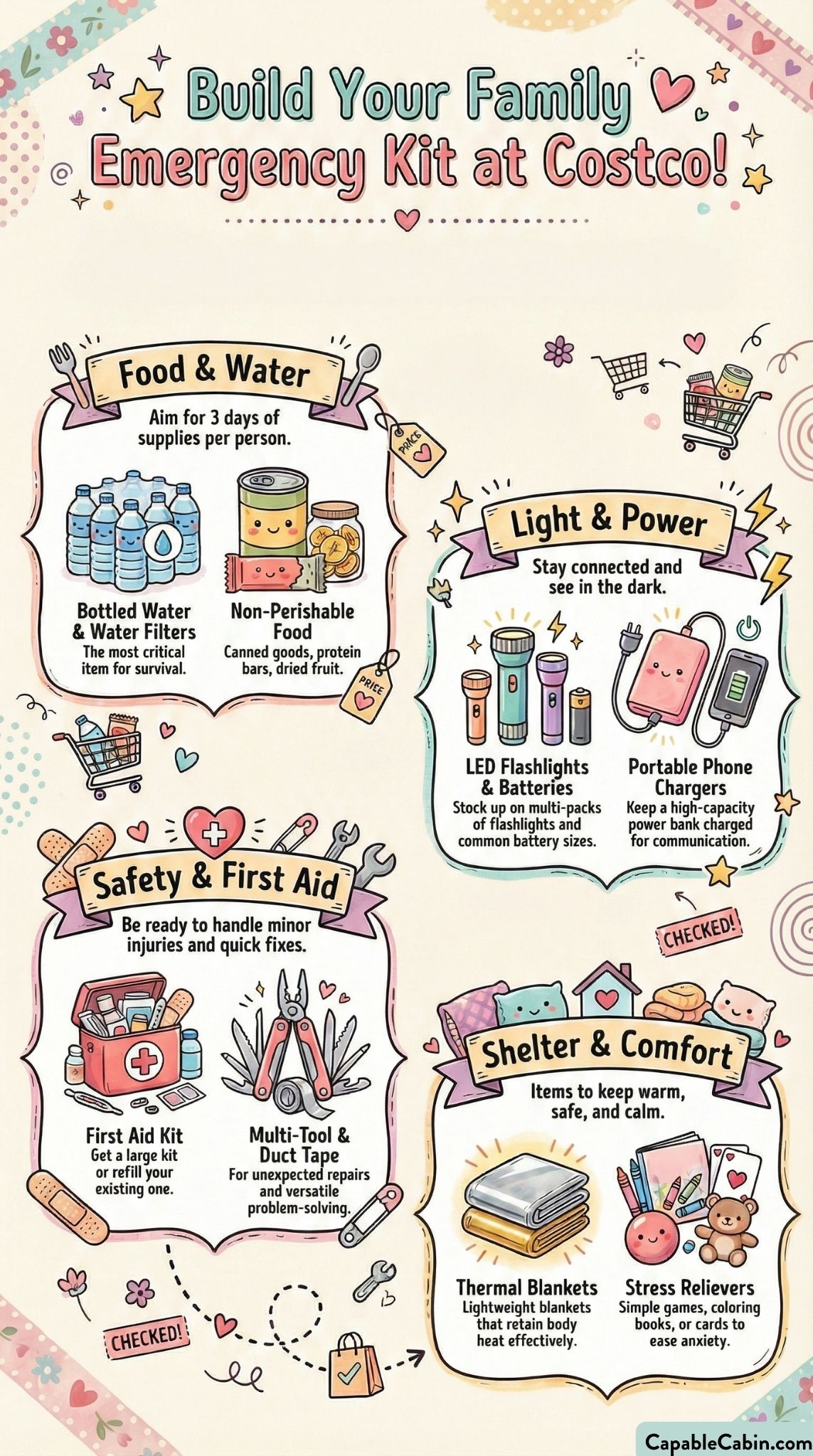
Family Car Emergency Kit: 20 Essentials for Roadside Emergencies
The difference between a roadside inconvenience and a life-threatening disaster?
Preparation.
A strategic family car emergency kit transforms you from vulnerable traveler to capable survivor when emergencies strike without warning. Every day, thousands of families face roadside emergencies unprepared.
Don’t be one of them.
Your vehicle needs more than insurance papers and a spare tire. It demands a tactical collection of tools, medical supplies, and survival gear specifically engineered to protect your loved ones when conventional support systems fail.
Are you ready to transform your family vehicle from vulnerability into a mobile survival platform? Let’s build your roadside resilience strategy.
QUICK ACTION: Get the free printable checklist that accompanies this guide. Print it now and check off items as you read. Download Here →
The 7-Minute Window That Changes Everything
When roadside emergencies strike, the first 7 minutes determine everything: your safety margin, decision quality, and family’s psychological stability.
Studies show panic sets in within 3-5 minutes when unprepared travelers face vehicle emergencies. Your heart rate escalates, cognitive function narrows, and decision-making deteriorates precisely when you need optimal performance.
Your emergency kit isn’t just equipment—it’s your psychological edge that prevents this downward spiral. Each item represents a capability that maintains your control when external circumstances threaten to overwhelm you.
Are you equipped to remain the capable protector your family needs during those critical first minutes?
Plan – Prepare – Protect: Your Emergency Readiness Framework
Tactical Equipment Essentials
- Jumper cables (8-gauge, 20-foot length), digital tire pressure gauge, and flashlight with extra batteries for immediate vehicle recovery
- Multi-tool kit, adjustable wrench, and screwdrivers for quick mechanical interventions
- Road flares or LED electronic alternatives strategically placed to create a safety perimeter
- Fire extinguisher (Class B-C rated) mounted within driver’s reach for rapid response
Family-Specific Medical Preparedness
- Customized first aid supplies addressing each family member’s specific conditions
- Prescription medications stored in temperature-controlled containers with clear dosage instructions
- Emergency contact and medical information cards detailing allergies and treatment protocols
- Hand sanitizer (60%+ alcohol) and hygiene supplies to maintain health barriers
Psychological Stability Resources
- Portable power bank (10,000+ mAh), charging cables, and communication tools to maintain connection
- Two gallons of water and protein-rich emergency rations to prevent stress from hunger and thirst
- Children’s entertainment items strategically selected to manage anxiety during extended waits
- Emergency blankets, extra clothing, and weather protection to maintain physical comfort
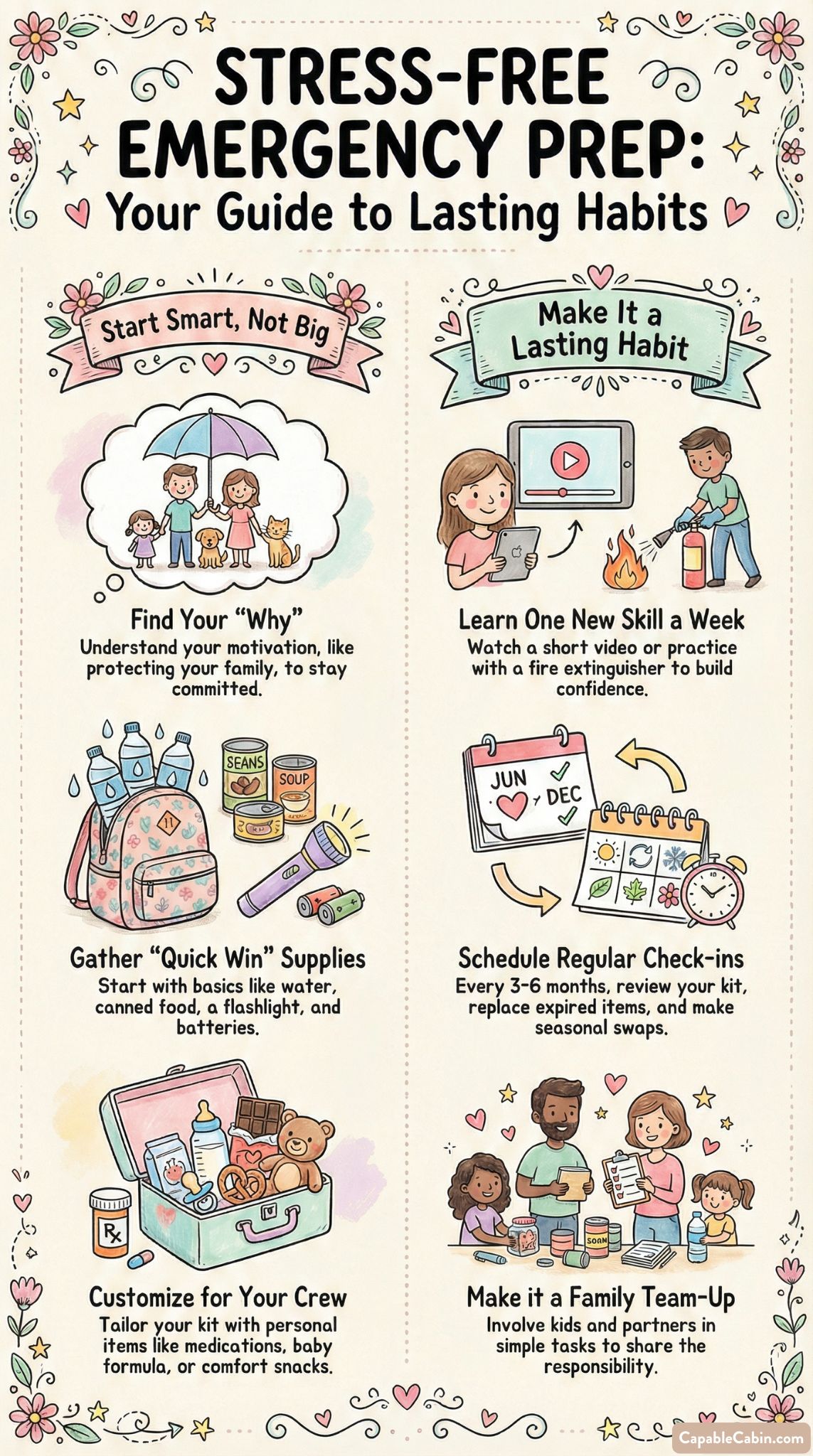
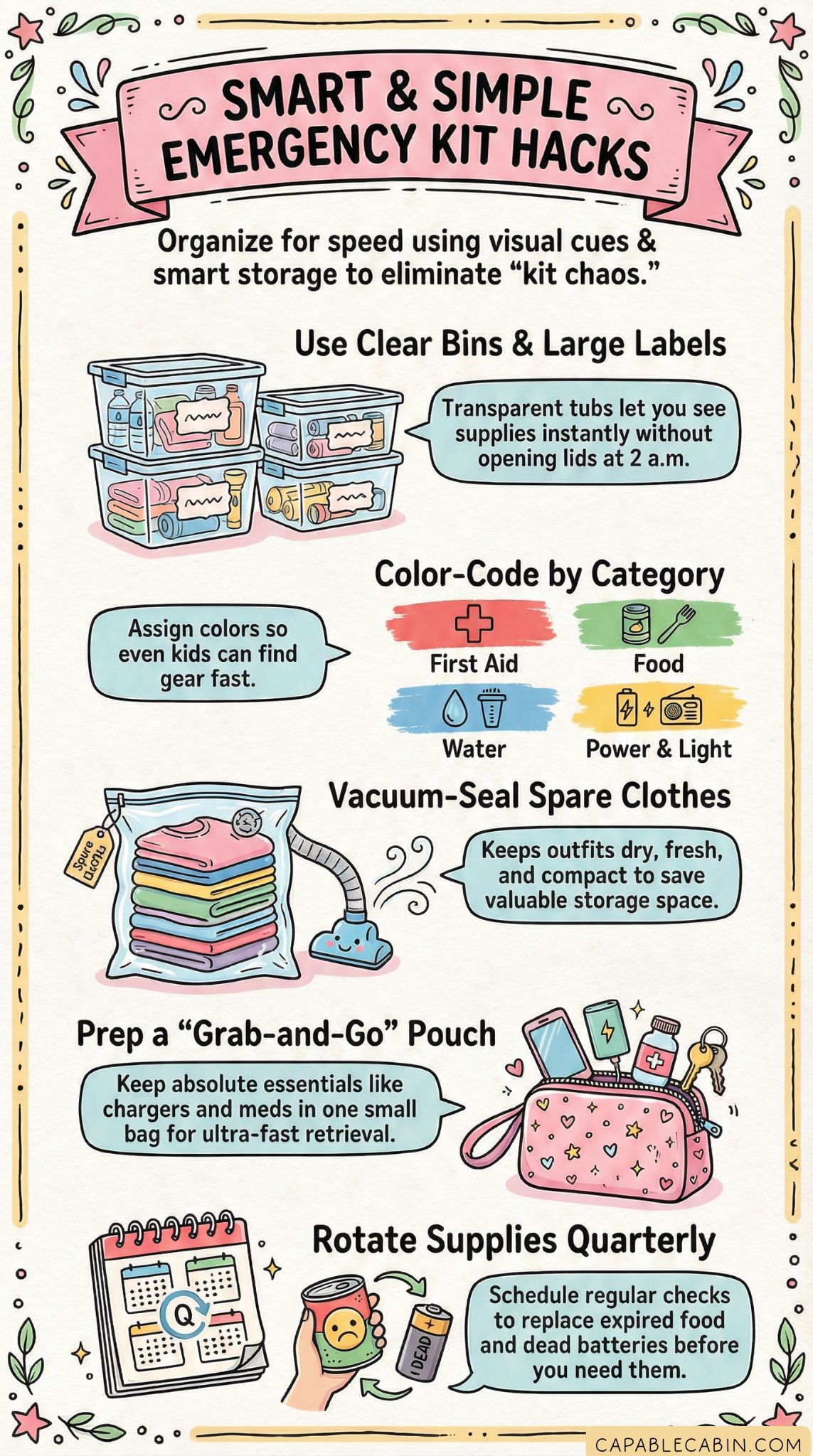
Check your kit quarterly, replacing expired items and adjusting for seasonal challenges ahead.
Transform Roadside Disasters Into Manageable Situations
Preparation represents your psychological edge against roadside emergencies. When properly equipped, your mindset transforms from helpless victim to capable problem-solver—a crucial shift that impacts decision-making during crises.
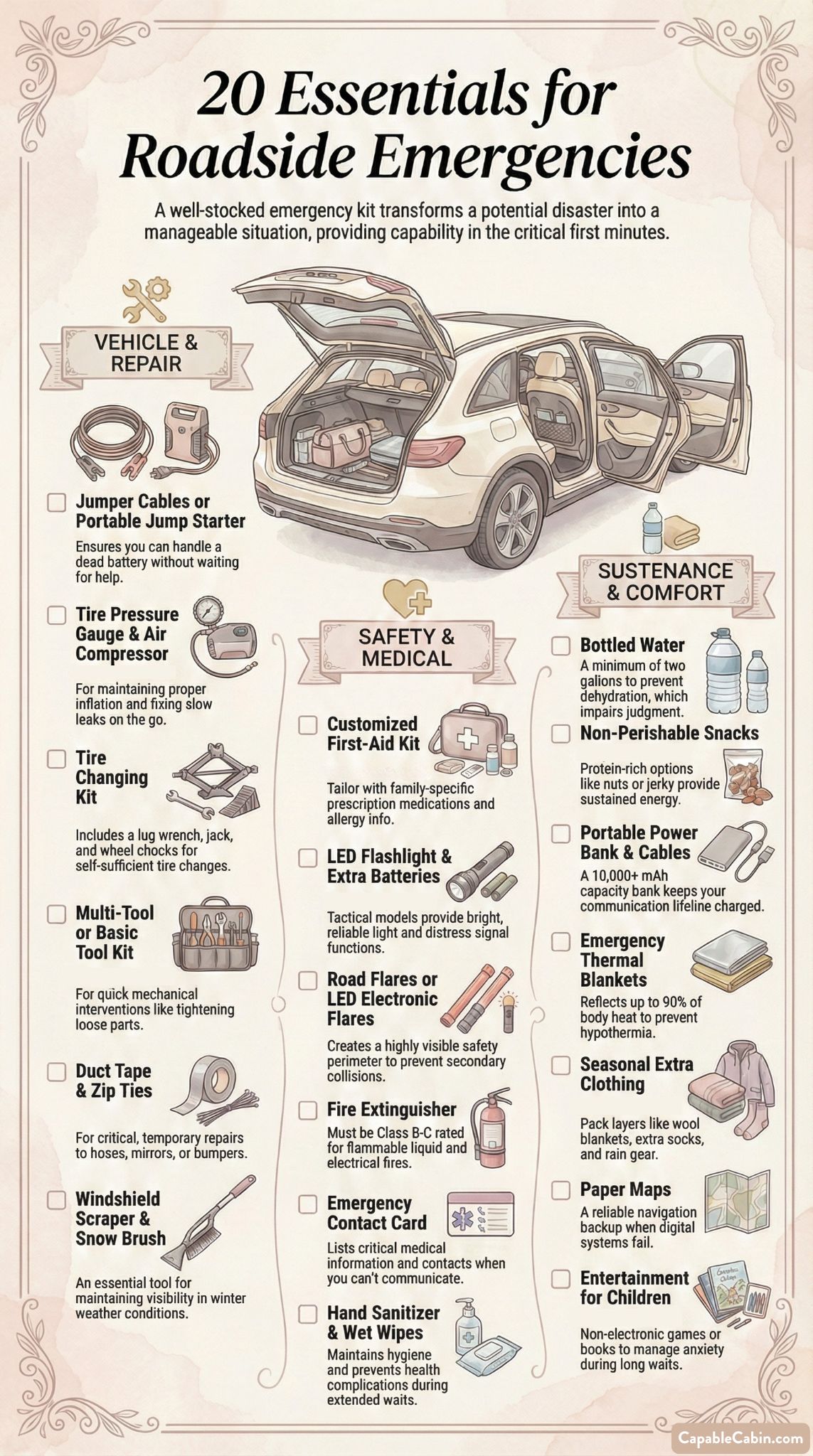
Your extensive kit must address three critical domains: vehicle repair capabilities, medical response readiness, and environmental protection.
Being prepared doesn’t just reduce risk—it transforms roadside emergencies from potential disasters into solvable problems that you control.
Start by building your mechanical intervention toolkit: include jumper cables, tire pressure gauge, and functional spare tire. Add a high-intensity flashlight, multi-tool, and repair materials like duct tape for immediate fixes.
Don’t neglect your medical response capability. Pack a first aid kit containing prescription medications, emergency contact protocols, and water-resistant documentation of medical conditions.
Environmental protection remains equally crucial. Equip your vehicle with thermal blankets, chemical hand warmers, and adaptable clothing layers to shield your family from weather extremes.
When your vehicle’s battery fails unexpectedly, having reliable power restoration options transforms a potential stranding into a minor inconvenience. Your choice between traditional cables or portable devices impacts your self-sufficiency during crises.
Power Resurrection: How to Never Be Stranded with a Dead Battery Again
Traditional Jumper Cable Advantages
- Cost-effective ($20-40) with no maintenance or charging requirements
- Never lose functionality from battery depletion
- Minimum 8-gauge thickness and 20-foot length provides optimal power transfer
Master proper jump start techniques—connecting positive to positive, negative to engine block—to prevent dangerous sparks or battery damage. Practice this procedure before emergencies strike.
Portable Jump Starter Benefits
- Complete self-sufficiency without requiring another vehicle
- Modern lithium-ion models provide multiple starts on single charge
- Integrated USB ports and emergency lights for additional functionality
- Compact design saves valuable space in your emergency kit
Consider your typical driving environment when selecting equipment. Extreme temperature conditions affect both jump starters and vehicle batteries, potentially requiring specialized equipment rated for these challenges.
A thorough first aid kit serves as your front-line medical defense system during roadside emergencies. Generic kits provide basic coverage, but truly effective emergency medical preparedness requires customization for your family’s specific needs.
Medical Command Center: Family-Specific First Aid That Could Save a Life
Essential Medical Components
- Basic wound care: sterile gauze, adhesive bandages, antiseptic wipes, medical tape
- Treatment tools: tweezers, scissors, instant cold packs, digital thermometer
- Pain management: age-appropriate analgesics for adults and children
Transform your standard kit by adding prescription medications each family member requires. Ensure all are clearly labeled with dosage instructions and expiration dates. Include epinephrine injectors, insulin supplies, or asthma rescue inhalers based on family needs.
Store these medications in temperature-controlled containers to maintain effectiveness through seasonal temperature fluctuations. Vacuum-sealed bags with insulating materials provide additional protection against humidity and temperature extremes.
Create medical information cards detailing each person’s conditions, medications, allergies, and emergency contacts. This information becomes invaluable when you’re unable to communicate with first responders.
Visibility becomes your primary safety asset during nighttime emergencies. A reliable illumination system allows you to inspect mechanical issues, signal for assistance, or navigate treacherous roadside terrain.
Night Vision Strategy: Why Your Flashlight Choice Matters More Than You Think
Strategic Flashlight Selection
- LED flashlights provide superior brightness with minimal battery drain
- Multiple brightness settings conserve power during extended emergencies
- Strobe function creates high-visibility distress signals visible at considerable distances
- Tactical models offer water and impact resistance—crucial during adverse conditions
LED flashlights outlast and outshine traditional options, while tactical models withstand the harshest conditions when you need them most.
Create a dual-battery strategy using both alkaline and lithium power sources. Lithium batteries maintain performance in extreme temperatures and offer extended shelf life (up to 10 years), while alkaline batteries provide cost-effective backup when primary batteries fail.
Consider adding rechargeable flashlights with hand-crank or solar charging capabilities to eliminate battery dependency entirely. These systems provide psychological security knowing your light source won’t fail during extended emergencies.
Position your flashlight strategically—in a door pocket or center console—ensuring immediate access without digging through emergency supplies. Conduct quarterly battery checks and annual replacements regardless of use history.
Visibility during roadside emergencies represents your first line of defense against catastrophic secondary collisions. When your vehicle becomes disabled, particularly at night or in adverse weather, strategic warning systems alert approaching drivers to your vulnerable position.
Invisible Shield: Creating a Safety Perimeter That Prevents Secondary Collisions
Traditional Road Flare Deployment
- Burns intensely for 15-30 minutes with visibility up to one mile
- Position at 50, 100, and 150 feet behind vehicle on highways
- Store in waterproof containers to maintain functionality
- Creates unmistakable warning signal for approaching traffic
Traditional flares create potential fire hazards around fuel leaks, requiring careful deployment consideration.
LED Electronic Flare Advantages
- Reusable design eliminates replacement costs
- Weather-resistant construction withstands adverse conditions
- Visibility up to 3,000 feet with flashing patterns
- Eliminates fire risk around fuel spills
For comprehensive protection, reflective warning triangles create a visual funnel that guides traffic away from your position during extended roadside stops. Their reflective surfaces provide passive protection that continues working long after flares extinguish.
Strategically position both warning systems to create maximum visibility without requiring your continued presence near traffic flow—allowing you to focus on vehicle repairs or family comfort.
Mechanical Intervention: Multi-Tool or Basic Tool Kit
When mechanical failures strand you miles from professional assistance, your ability to implement temporary repairs transforms helplessness into empowered action. A quality multi-tool or compact tool kit provides this critical capability.
Essential Tool Components
- Adjustable wrenches for various fastener sizes
- Screwdrivers (both Phillips and flathead) for access panels
- Needle-nose pliers for electrical and tight-space work
- Electrical tape for temporary wire repairs
Multi-tool versatility offers maximum functionality in minimal space, often incorporating knife blades, wire cutters, and multiple screwdriver types in a pocket-sized package. This space efficiency proves particularly valuable in smaller vehicles with limited storage.
For vehicles with specialized requirements, add manufacturer-specific tools matching your car’s unique needs. Older vehicles often require particular wrench sizes or specialty disconnect tools not found in universal kits.
Store your mechanical intervention tools in a water-resistant case to prevent corrosion and ensure functionality when needed. Position this case for easy access without requiring complete unpacking of your emergency supplies.
Communication Lifeline: Portable Phone Charger and Extra Cables
Your communication system represents your lifeline to emergency services during roadside crises. This system requires three critical components: a functional phone, consistent power source, and reliable connection cables.
Strategic Power Supply Options
- High-capacity power bank (10,000+ mAh) provides multiple full phone charges
- Solar-powered backup offers sustainable power during extended emergencies
- Hand-crank emergency charger ensures communication in extreme situations
Test these devices quarterly and maintain them at minimum 50% charge level. Remember that extreme temperatures significantly degrade battery performance—store power banks in temperature-moderated locations within your vehicle.
Cable Management System
- Include duplicate cables for redundancy when primary connections fail
- Cover all potential connection types: USB-C, Lightning, and Micro-USB
- Select braided nylon cables for superior durability during emergency handling
- Store in waterproof containers with clear labeling for stress-free identification
Position your communication system components for immediate access during emergencies. Seconds matter when reporting your location or requesting specific emergency services.
Nutrition Strategy: Bottled Water and Non-Perishable Snacks
Dehydration and hunger rapidly degrade cognitive function during stressful situations. Maintaining proper hydration and blood sugar levels ensures clear decision-making when you need it most.
Water Storage Protocol
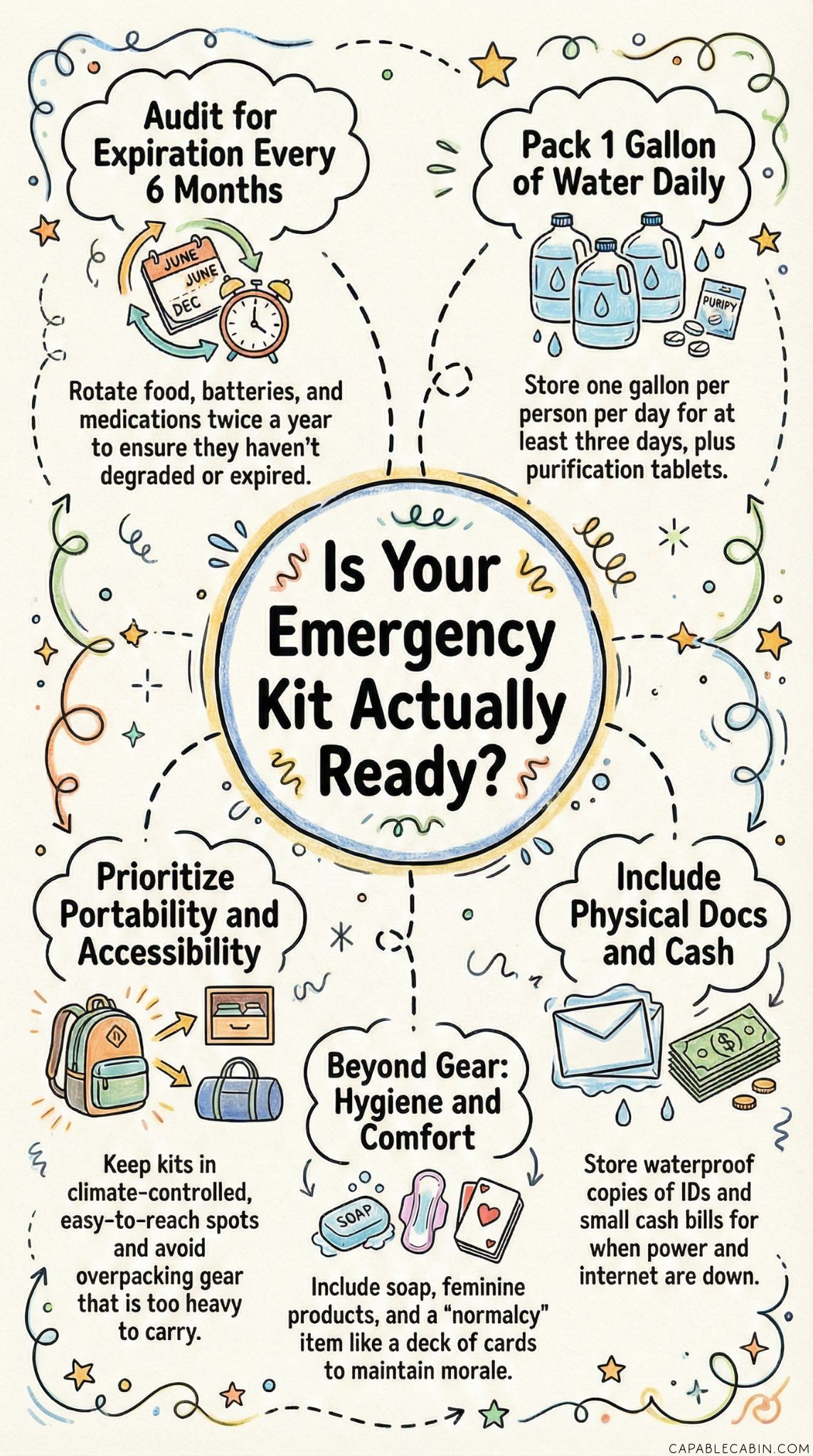
- Maintain minimum of two gallons (one gallon per person per day)
- Store in BPA-free containers designed for long-term water storage
- Replace supply every six months to prevent contamination
- Position away from direct sunlight to prevent algae growth
The hydration importance extends beyond basic survival—even mild dehydration impairs judgment and increases anxiety during emergency situations.
Strategic Food Selection
- Choose nutrient-dense, non-perishable snacks that withstand temperature fluctuations
- Prioritize protein-rich options (jerky, sealed nuts) that provide sustained energy
- Select items with extended shelf lives (12+ months) to reduce replacement frequency
- Include comfort foods that provide psychological benefits during stressful situations
Document expiration dates and implement a quarterly inspection routine to ensure freshness. Rotate emergency food supplies into your regular consumption pattern before expiration and replace with fresh items.
Temperature Management: Blankets and Extra Clothing
Exposure represents a significant threat during roadside emergencies, particularly when vehicle heating or cooling systems become inoperable. Effective temperature regulation prevents hypothermia and heat-related illnesses that compromise survival.
Cold Weather Protection System
- One thermal emergency blanket per passenger reflects 90% of body heat
- Wool or fleece blankets maintain insulating properties even when damp
- Moisture-wicking base layers prevent sweat accumulation against skin
- Insulating mid-layers (fleece or wool) create temperature-regulating air pockets
- Waterproof outer shells block wind and precipitation
Children require additional clothing layers as they lose body heat faster than adults due to their higher surface-area-to-volume ratio. Pack extra insulation for younger family members.
Hot Weather Management Tools
- Lightweight, breathable clothing for temperature regulation
- Wide-brimmed hats and sunglasses for solar protection
- Cooling towels that activate with minimal water
- Portable battery-powered fans for air circulation
Position temperature management supplies for rapid deployment during emergencies, allowing immediate protection before environmental stressors impact family safety.
Tire Safety: Pressure Gauge and Portable Air Compressor
Proper tire inflation represents one of the most critical yet overlooked aspects of vehicle safety. Underinflated tires increase stopping distances by up to 10% while simultaneously reducing fuel efficiency by approximately 3% per 10 PSI below recommendation.
Neglecting proper tire inflation simultaneously compromises safety and wastes fuel—a dangerous and costly oversight too many drivers make.
Tire Monitoring Protocol
- Invest in digital tire pressure gauge with accuracy within ±0.5 PSI
- Check pressure when tires are cold for accurate readings
- Test monthly and before long trips as preventative maintenance
- Document manufacturer-recommended pressure levels for easy reference
Air Compressor Selection Criteria
- 12V power connection for vehicle operation
- Sufficient CFM (cubic feet per minute) rating for passenger vehicle tires
- Auto-shutoff features that prevent dangerous over-inflation
- Built-in LED lighting for nighttime emergencies
- Multiple adapters for versatility with recreational equipment
Position these tools together in an easily accessible container within your emergency kit, allowing immediate deployment when tire issues develop during travel.
Tire Change Capability: Tools and Knowledge
Despite widespread roadside assistance availability, self-sufficient tire changing capability remains essential when traveling through areas with poor cellular reception or during extreme weather events that delay professional help.
Essential Tire Change Equipment
- Properly sized lug wrench with leverage extension
- Jack meeting vehicle weight specifications
- Wheel chocks for stabilization
- Work gloves for hand protection
- Kneeling pad for comfort during extended procedures
- Tire repair kit for temporary puncture sealing
Practice tire changing techniques in controlled environments before emergencies occur. Document critical information: jack points, lug nut torque specifications, and proper tightening sequence for your specific vehicle.
Create a waterproof quick-reference card detailing these specifications and store it with your tire changing equipment. Pay particular attention to manufacturer-recommended procedures to prevent component damage or safety compromise.
Position tire changing equipment for accessibility even when your vehicle carries full passenger load and luggage. Consider how you’ll access these tools when your vehicle is fully packed for family travel.
Emergency Repairs: Duct Tape and Zip Ties
When mechanical failures occur miles from professional assistance, improvised repairs using duct tape and zip ties can transform a trip-ending breakdown into a temporary fix that gets your family to safety.
Strategic Duct Tape Applications
- Sealing leaking radiator or heater hoses temporarily
- Securing damaged mirrors or lights in functional position
- Reattaching loose interior components affecting driving
- Creating temporary window seals after glass breakage
- Patching torn hoses or fluid lines in emergency situations
Select automotive-grade tape with waterproof backing and high-temperature adhesive properties for maximum effectiveness in vehicle repair situations.
Critical Zip Tie Functions
- Securing displaced bumper components after minor collisions
- Fastening exhaust components that have separated from mounting brackets
- Reattaching interior panels or components affecting passenger comfort
- Creating temporary fastening solutions for fluid lines or electrical components
Choose assorted lengths (4″-14″) with UV-resistant construction to prevent degradation from sun exposure. Include at least 20-30 zip ties of various sizes to handle diverse emergency repair scenarios.
Winter Preparedness: Windshield Scraper and Snow Brush
Winter weather creates unique emergency challenges requiring specialized equipment. Every family vehicle operating in cold-weather regions must include quality windshield scraper and snow brush combination tools.
Winter Tool Selection Criteria
- Extendable handle reaching across wide windshields
- Durable plastic scraper edge preventing glass scratching
- Brush head with angled bristles for efficient snow removal
- Comfortable grip allowing extended use with gloved hands
Master proper ice scraper techniques using 45-degree angle approaches with short, controlled strokes from edges inward. This method prevents tool breakage while efficiently removing ice without damaging window defrosting elements.
Store winter tools inside passenger compartment rather than trunk—preventing accessibility issues when frozen precipitation seals doors shut. Position these tools for immediate access when unexpected winter weather develops during travel.
Implement regular snow brush maintenance by rinsing bristles after use in salty or chemical-treated snow conditions. Allow complete drying before storage to prevent mildew development and bristle deterioration.
REAL EMERGENCY SCENARIO: The Winter Stranding
The Peterson family’s SUV slid off an isolated mountain road during a sudden snowstorm. With temperatures dropping below freezing and no cell service, their situation deteriorated rapidly.
Their emergency kit turned a life-threatening scenario into a 14-hour inconvenience:
- LED road flares created a visible signal for rescuers
- Thermal blankets and extra clothing maintained core body temperatures
- Portable phone charger preserved battery for when service returned
- High-calorie emergency rations maintained energy and morale
- Pre-downloaded entertainment prevented children’s psychological distress
“Without our emergency kit, I honestly don’t know if we would have made it through the night,” Mrs. Peterson later reported.
Fire Safety: Fire Extinguisher
Vehicle fires progress with alarming speed, doubling in size approximately every 30 seconds. A properly selected and positioned fire extinguisher provides critical intervention capability during these rapidly escalating emergencies.
Fire Extinguisher Selection Protocol
- Choose Class B-C or ABC-rated units designed for automotive use
- Select size balancing portability with sufficient suppression capability
- Verify rating covers flammable liquids and electrical fires
- Ensure pressure gauge provides clear status indication
Mount your extinguisher within driver’s reach using proper brackets—not loose in compartments where it becomes projectile during accidents. This positioning allows immediate deployment without exiting the vehicle during early fire stages.
Implement monthly fire extinguisher maintenance checks: verify pressure gauge shows proper levels, safety pin remains intact, and no physical damage exists. Replace units older than 12 years regardless of apparent condition, as internal components degrade over time.
Remember that vehicle fire extinguishers provide escape time—not vehicle salvation. Focus on passenger evacuation rather than property preservation when fires develop.
Family Communication: Emergency Contact Information Card
During high-stress emergencies, even well-memorized phone numbers and medical details become difficult to recall. A comprehensive emergency contact information card provides critical information when you’re unable to communicate effectively.
Critical Card Components
- Primary contacts (names, relationships, phone numbers) for immediate notification
- Out-of-state contact serving as family communication hub during regional emergencies
- Critical medical information affecting emergency treatment decisions
- Insurance policy details expediting administrative processes
- Primary care physician contacts for medical history access
Create waterproof cards for each family member using durable materials resistant to deterioration. Update these resources quarterly or whenever significant changes occur to family information or medical conditions.
Position copies strategically throughout your vehicle: glove compartment, emergency kit, wallet/purse, and attached to child safety seats. This redundancy ensures information availability regardless which vehicle areas remain accessible during emergencies.
Navigation Backup: Paper Maps of Your Route and Region
Digital navigation systems fail precisely when you need them most—during emergencies with power loss or cellular service disruption. Physical paper maps provide reliable navigation capability regardless of technological functionality.
Map Selection Strategy
- Regional maps covering planned route plus 100-mile detour radius
- Waterproof maps maintaining integrity during adverse conditions
- Pre-marked alternative routes for common travel corridors
- Highlighted emergency service locations and rest areas
Store maps in dedicated folder or sleeve preventing damage during normal vehicle operation. Position this navigation backup for immediate access without requiring extensive emergency kit unpacking.
Maintain basic map reading skills through regular practice sessions with all adult passengers. Teach children fundamental navigational skills appropriate for their age—creating redundant navigation capability within your family unit.
Remember that unlike digital systems, physical maps provide instant geographical context without zooming or scrolling—allowing rapid route planning during stressful situations.
Psychological Support: Entertainment Items for Children
Extended roadside emergencies create significant psychological stress for children, potentially escalating from mild frustration to acute anxiety without proper management tools. Strategically selected entertainment items stabilize emotional states while awaiting assistance.
Children’s Emergency Entertainment Kit
- Non-electronic interactive games functioning without power sources
- Comfort objects providing psychological security during stressful situations
- Art supplies allowing creative expression of emotions
- Age-appropriate books encouraging mental engagement
Prepare pre-downloaded travel playlists on devices with dedicated backup power supplies. Include content specifically selected for anxiety reduction and emotional regulation during stressful situations.
Pack small stuffed animals or blankets serving dual purposes—comfort objects and makeshift play environments. These multi-functional items maximize psychological benefit while minimizing storage requirements.
Position children’s psychological support items for immediate access at first signs of emotional distress. Early intervention prevents escalation to higher anxiety states that become increasingly difficult to manage.
Sanitation System: Toilet Paper and Wet Wipes
Extended roadside emergencies quickly transform from mechanical inconveniences to sanitation challenges. Proper waste management and hygiene maintenance prevents additional health complications during already stressful situations.
Essential Sanitation Components
- Compact toilet paper rolls in waterproof containers
- Biodegradable wet wipes for multiple hygiene applications
- Disposal bags with secure closure systems
- Hand sanitizer containing minimum 60% alcohol content
Consider toilet paper alternatives such as compressed tablets expanding with minimal water or quarter-folded paper towels treated with antibacterial solution. These alternatives provide superior durability in humid conditions while occupying reduced storage space.
Position sanitation supplies in easily accessible compartment separate from food and water storage to prevent cross-contamination. This separation maintains psychological comfort barriers between consumption and waste management activities.
Strategic Kit Building: Budget, Premium, and Ultimate Protection Levels
Foundational Protection Kit ($100-150)
Essential tools and basic supplies that provide minimum viable protection during common emergencies. Includes standard jumper cables, basic first aid, and core survival items.
Enhanced Security Kit ($175-225)
Upgraded components with superior performance and additional capabilities. Features lithium jump starter, expanded medical supplies, and weather-specific protection gear.
Complete Family Protection System ($250-300)
Comprehensive emergency coverage addressing virtually all roadside scenarios. Includes professional-grade tools, specialized medical components, and extended survival capabilities.
Strategic Kit Building: Budget, Premium, and Ultimate Protection Levels
[Your existing budget content…]
📋 Get Your FREE Emergency Kit Action Checklist
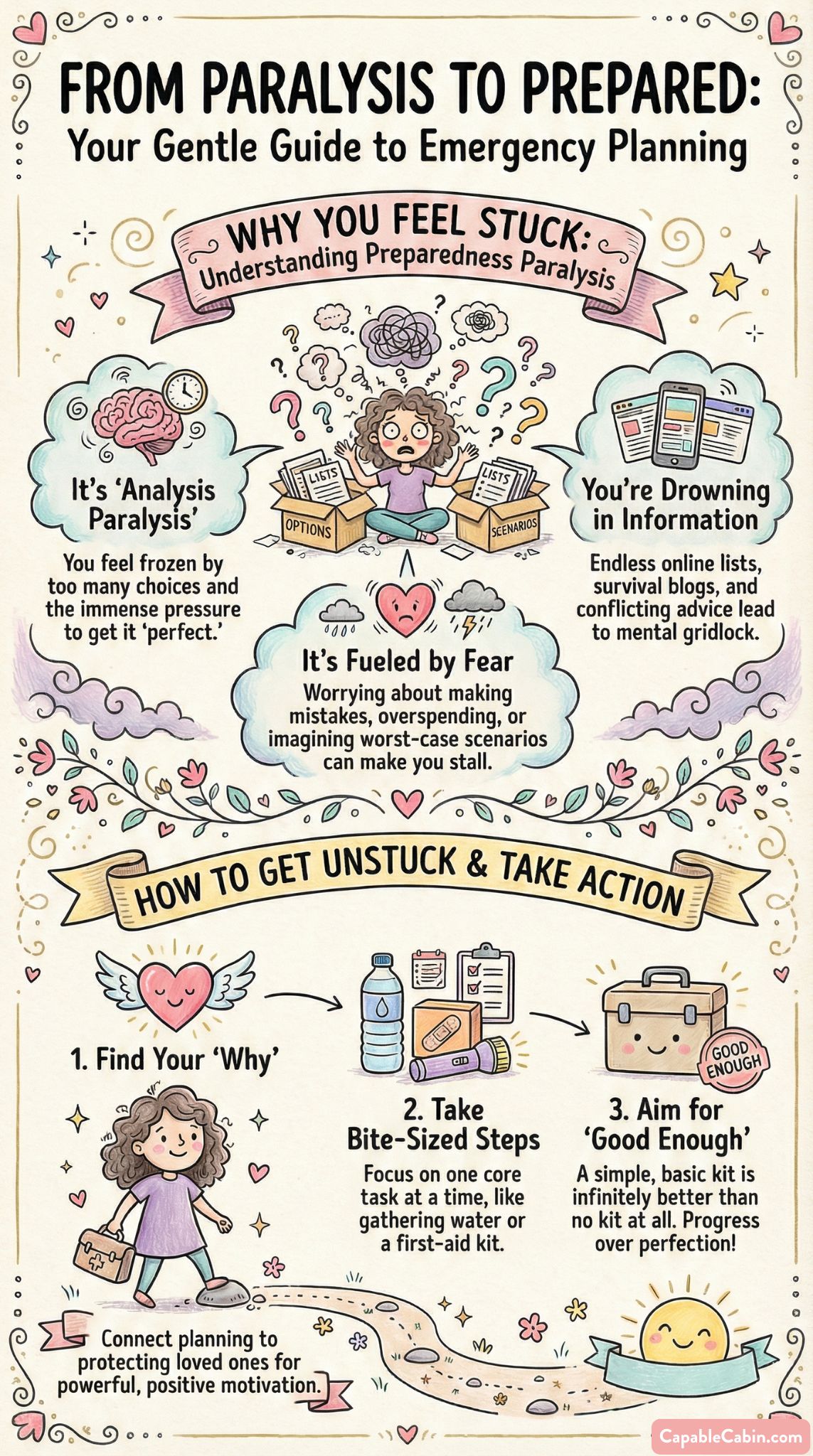
Ready to transform this knowledge into action? Don’t let analysis paralysis prevent you from protecting your family. Our professionally designed checklist eliminates overwhelm and creates a clear path to complete preparedness.
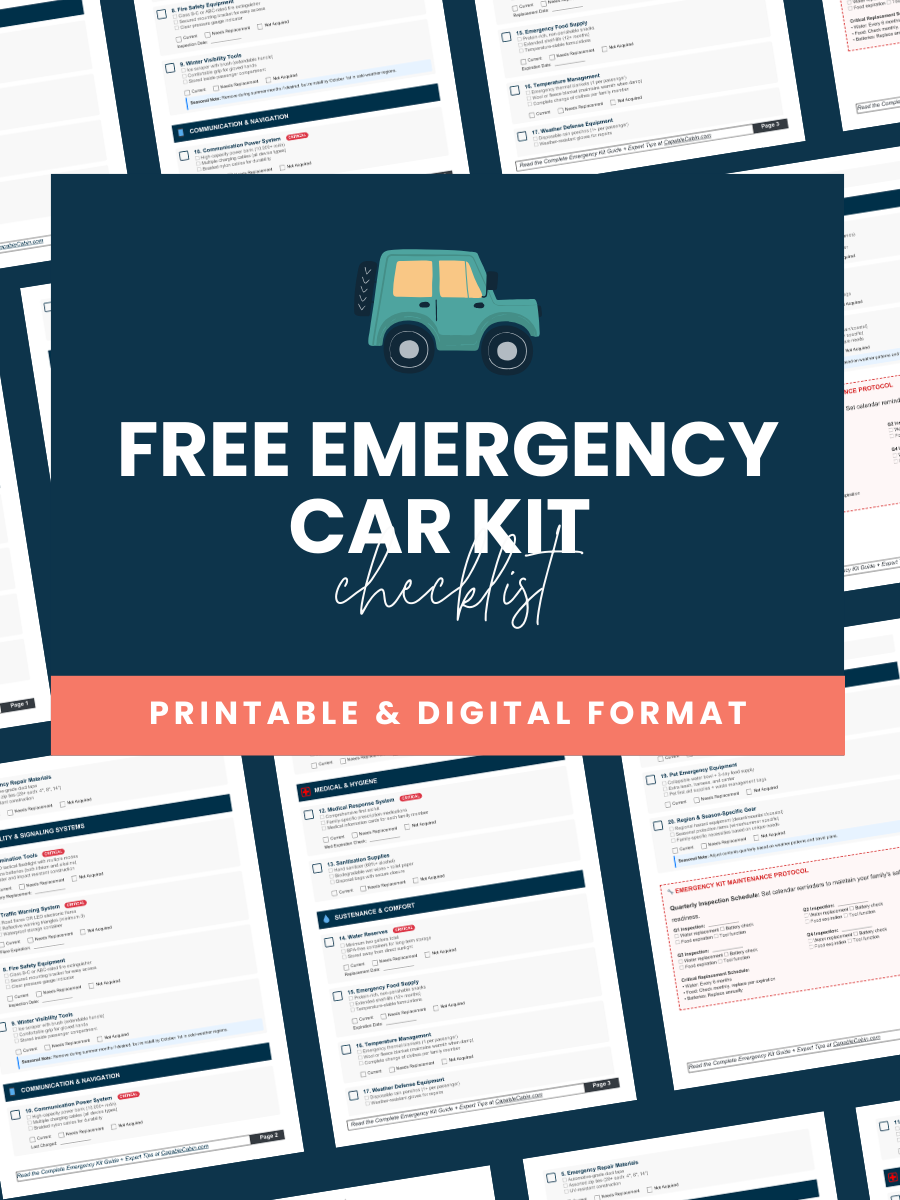
This isn’t just another generic list—it’s your strategic implementation tool:
- ✅ All 20 essential items with specific selection criteria and brand recommendations
- ✅ Progress tracking system with status boxes (Current/Needs Replacement/Not Acquired)
- ✅ Maintenance scheduling with fill-in date fields for quarterly inspections
- ✅ Priority markers showing which items to acquire first when budget is tight
- ✅ Print-ready professional format for vehicle, garage, and family reference
- ✅ Seasonal adjustment reminders to keep your kit optimized year-round
Print multiple copies. One for your glove compartment, one for your garage workspace, and one to share with family members who might need to access your emergency supplies.
Family Prep Questions Answered
How Often Should I Check and Replace Items in My Emergency Kit?
Implement a systematic check frequency for your emergency kit—quarterly inspections plus checks before major travel events. Create a digital calendar reminder system ensuring consistent maintenance.
Many emergency items have fixed lifespans: batteries typically expire annually, food and medications last 6-12 months depending on formulation, and water requires replacement every six months. After using any component, replace it immediately rather than waiting for scheduled maintenance.
Extreme temperature fluctuations accelerate item degradation, potentially requiring monthly inspections if your vehicle experiences harsh environmental conditions. Document inspection activities and replacement dates to maintain accountability.
Where Is the Best Place to Store My Emergency Kit in the Car?
Position your primary emergency kit in trunk storage for maximum protection and accessibility during roadside emergencies. This location prevents items becoming dangerous projectiles during sudden stops while keeping essential supplies organized.
Reserve your glove compartment for critical emergency items requiring immediate access: flashlight, multi-tool, emergency contact information, and medical cards. This strategic positioning allows access without exiting the vehicle during potentially dangerous situations.
Maintain clear access paths to emergency supplies even when your vehicle contains maximum passenger and luggage loads. Consider how you’ll reach critical components during various emergency scenarios.
Should I Have Different Kits for Different Seasons or Climates?
Implement strategic seasonal adjustments to your emergency kit based on anticipated environmental challenges. Maintain core emergency components year-round while rotating seasonal items reflecting current threats.
During winter months, add thermal blankets, chemical hand warmers, additional high-calorie food, and snow removal tools. Summer adaptations include extra water, electrolyte replacement drinks, cooling packs, and sun protection.
This targeted approach optimizes your kit’s effectiveness while minimizing unnecessary weight and volume. Create a seasonal transition checklist ensuring complete kit transformation during weather pattern changes.
What’s the Approximate Cost to Assemble a Complete Emergency Car Kit?
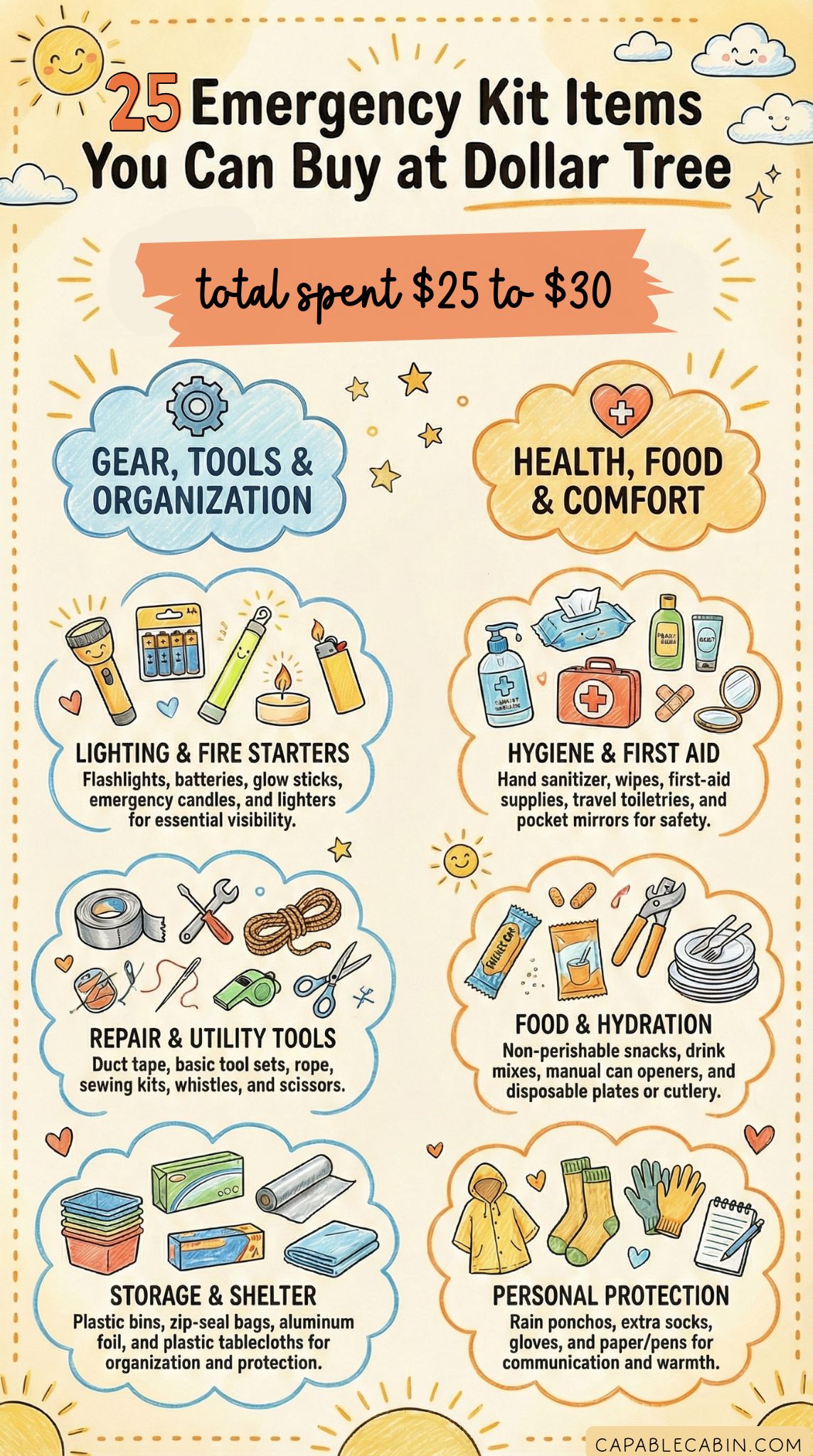
Budget $100-250 for a comprehensive emergency car kit depending on quality level and completeness. Strategic investment in critical components provides significant safety return on modest financial outlay.
Breakdown your budget into functional categories:
- $30-50 for basic tools and repair equipment
- $20-40 for first aid and medical supplies
- $30-60 for emergency lighting and power systems
- $20-50 for survival and comfort items
- $20-50 for vehicle recovery equipment
When implementing budget planning, prioritize safety-critical components before convenience items. Never compromise quality on life-safety equipment like jumper cables, flashlights, and first aid supplies.
Are There Specific Items I Need When Traveling With Pets?
Pets require specialized emergency equipment addressing their unique needs during roadside emergencies. Their limited self-regulation capabilities make them particularly vulnerable during vehicular crises.
Essential pet emergency components include:
- Collapsible water bowls and dedicated water supply
- Extra food in waterproof containers
- Pet-specific first aid supplies including bandages and tick removal tools
- Waste management bags and absorbent pads
- Comfort items reducing anxiety during stressful situations
Include copies of vaccination records and medication instructions should your pet require veterinary care during extended travel disruptions. Consider microchip information and recent photos facilitating recovery if separation occurs during emergency situations.
Conclusion
Your comprehensive car emergency kit transforms your family vehicle from vulnerability into a self-contained survival system during roadside emergencies. By addressing mechanical failures, medical issues, and psychological needs, you’ve created a strategic defense against unpredictable travel disruptions.
Have you considered how quickly these preparations could transform a potentially traumatic experience into a manageable inconvenience? Don’t wait for crisis to test your readiness.
Conduct regular kit inspections, replace expired items, and adjust contents seasonally—ensuring your family benefits from maximum protection during unexpected roadside emergencies. Your preparation today creates safety tomorrow.