How to Store Emergency Supplies in Extreme Climates
Sometimes it feels like keeping your family prepared is tough enough without adding extreme weather to the mix. But if you need to store emergency supplies in extreme climates, trust me, you’re not alone. Maybe you’re facing blistering heat out West, or frigid winters in the far North, or a place where temperatures swing wildly from season to season. We all want our emergency kits to actually remain useful when the moment comes. And the good news? With the right moves, you can protect the supplies you’ve invested in, no matter how unpredictable the forecast.
Sure, it takes a little effort to think through moisture levels, temperature spikes, and the general wear-and-tear that comes with storing items over time. But we’re in this together, and I promise you can breathe a little easier once you have some practical strategies in place. Let’s explore how to keep your emergency stash safe, functional, and ready when you need it most.
Recognize Extreme Temperature Challenges
It’s easy to underestimate how powerful temperature extremes can be—until you open up your kit and discover heat-warped batteries or a protein bar turned into a rock-like mass. Our goal here is to stay a step ahead of Mother Nature and create an environment where each item remains usable.
- High Heat Dilemmas: When temps soar above 100°F, items like first-aid ointments, snacks, and certain bottled water containers may degrade more quickly. Medications can also lose their potency if exposed to high heat for too long.
- Freezing Weather Woes: In extra-cold climates, liquids freeze, containers crack, and electronics (like flashlights) may temporarily stop working. Even if something thaws later, repeated cycles of freezing and thawing can damage your supplies over time.
- Rapid Temperature Swings: If you live in an area that gets scorching days and chilly nights, the constant fluctuation can create condensation. Over time, moisture encourages mold or rust in your kit.
When you’re mapping out storage spots, think beyond the obvious. Garages, sheds, and basements might be convenient, but they can also trap extreme heat and cold. A stuffy garage can quickly reach well over 110°F, even if it’s only 90°F outside. Similarly, an uninsulated shed might feel like an icebox in winter.
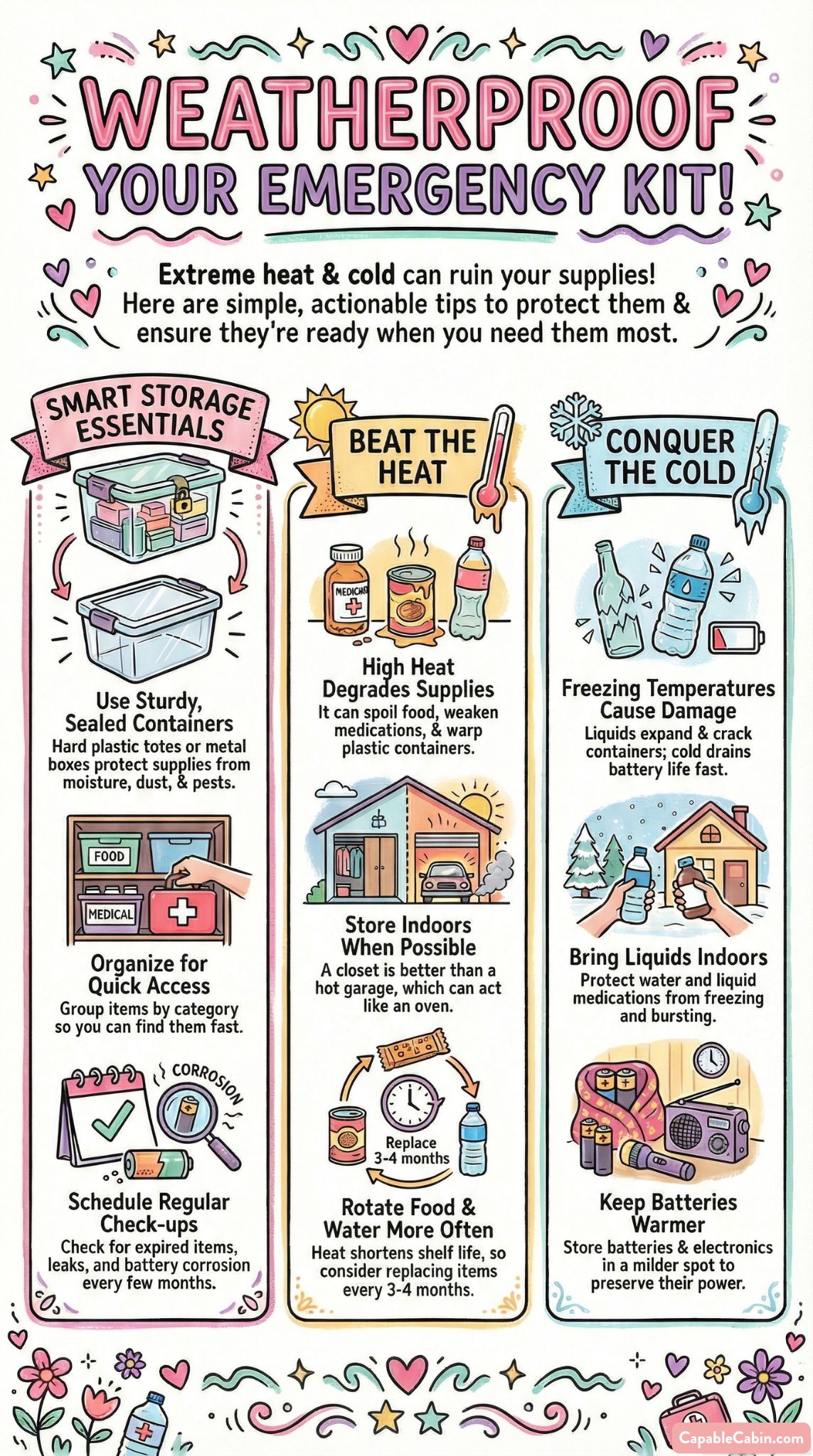
Still, these locations can sometimes be your only option. If that’s the case, see if you can improve ventilation or add some temperature moderation—like installing a simple fan or using insulated containers. We’ll talk more about containers in a bit, but keep in mind that controlling temperature is all about layering protective strategies. The more layers you have, the less vulnerable your supplies become.
Pick Suitable Storage Containers
Now that you know just how challenging extreme climates can be, it’s time to find storage solutions that make the most of your space and environment. After all, you don’t want to open your kit one day and see melted plastic or water-damaged bandages.
Aim for Sturdy, Weather-Resistant Options
- Hard Plastic Bins: Durable plastic totes with tight-fitting lids work well because they seal out moisture and keep dust or bugs from sneaking in. Look for containers labeled “weather-resistant” or “heavy-duty,” as these are often thicker and better designed.
- Metal Ammunition Boxes: If you’re storing smaller essentials—like matches, compact first-aid kits, or batteries—military surplus ammo boxes can be a win. They’re typically metal, have robust sealing mechanisms, and keep out humidity.
Consider Insulation Layers
Even after picking a sturdy tote, you can go one step further by adding insulation on the inside. For instance, some folks put foam padding or bubble wrap around sensitive items, especially electronics. The aim isn’t to keep your cooler at a perfect temperature 24/7, but rather to soften the impact of big temperature swings.
If you have to keep supplies in a scorching spot, consider placing freezer packs around them for short-term solutions (for example, if you know a heat wave is coming), then rotate them out. It’s an extra step, but it might save you from discovering half of your kit is ruined by the time you really need it.
Ventilation for Certain Items
Not everything is best kept under a sealed lid. If you’ve got gas-powered equipment (like a small camping stove or portable lantern with fuel canisters), see if you can store those away from direct heat sources and with some ventilation. That might mean keeping them in a container with built-in vents or in a secure cabinet that doesn’t trap too much hot air.
Organize for Quick Access
A wise trick is grouping supplies by category so you’re not digging through layers of gear. You might have one bin labeled “Food and Water,” another for “Medical,” and another for “Tools and Lighting.” Clear labeling ensures you can grab what you need fast—especially if you’re already dealing with a stressful situation. If you’re looking for more ideas, check out emergency kit storage solutions to see what might suit your space.
Safeguard Food and Water
When planning an emergency kit, food and water are crucial. The last thing you want is to open your stash and find that your water tastes like plastic or your granola bars are so stale you can’t chew them. If you live where the sun scorches or the frost bites, protecting these essentials takes a bit of creativity.
Food Storage Tips
- Opt for Shelf-Stable Items: Canned goods, dehydrated meals, and vacuum-sealed snacks usually hold up better in a range of temperatures. Even so, keep an eye on the expiration dates. High heat can shorten shelf life faster than you’d expect.
- Rotate Plans for Warm Climates: If you’re in a perpetually hot area, try rotating your stock more often—maybe every three or four months. You’ll thank yourself later when you’re not forced to eat questionable canned soup in an emergency.
- Avoid Direct Sunlight: Whether indoors or outdoors, sunlight can raise the temperature inside a container. Find a shady spot if you must store supplies outside. Indoors, aim for a cabinet far from windows or appliances that give off heat.
Water Storage Tips
- Use Food-Grade Containers: Plastic water bottles can degrade over time, especially when temperatures spike. Many folks switch to thicker, BPA-free water storage jugs or even stainless steel containers. For thorough guidance on water safety, see emergency water storage purification.
- Keep It Cool When Possible: Even if that means stashing the water container under a bed or in a closet that’s less prone to temperature swings. If your only option is a hot garage, make sure your containers are well-sealed and consider placing them inside a cooler or insulated bin.
- Check for Leaks and Cracks: Heating and cooling cycles can cause materials to expand and contract, so your containers might develop small cracks or leaks. Every few months, inspect them for damage.
Small Steps, Big Payoff
When your environment is consistently hot or cold, it can be tempting to think, “What’s the point?” But every little tweak helps. Swapping simpler plastic containers for ones designed to withstand temperature stress, rotating your food supply more frequently, using a second layer of insulation—these steps all add up to keep your family nourished in a crisis. And you’ll have one less thing to worry about when you’re already feeling the pressure.
Preserve Medical Items Safely
Medical supplies are some of the most sensitive components in any emergency kit, and they’re often the first to degrade when stored under harsh conditions. That’s because many medications and first-aid tools don’t handle temperature fluctuations well. You want to be confident that your pain relievers, bandages, and antibiotic ointments will be there for you in top shape.
Watch Medication Shelf Life
Medications can lose potency if exposed to too much heat or cold. If you keep prescription meds on hand for emergencies, talk to your pharmacist about the best storage methods. Some meds are okay in moderate heat, while others absolutely need cooler temperatures. You might need to store them in a small temperature-controlled pouch or keep them in an indoor area (like a bedroom closet) rather than a garage.
First-Aid Kit Essentials
- Keep Ointments Fresh: Hear the dreaded “pop” when opening an ointment tube that’s been left in a super-hot location? That’s a sign the product inside may have separated or deteriorated. Keep these in a stable, cool place whenever possible.
- Sterile Bandages and Gauze: Humidity and heat can compromise the packaging of bandages, causing them to lose sterility. Perform a quick check regularly to ensure the packaging is still intact.
- Specialized Items: If you have unique health concerns—such as an EpiPen for severe allergies—you’ll need to store it carefully. Check the manufacturer’s guidelines for the recommended temperature range. For more on specialized medical needs, see first aid medical emergency kit or consult with a healthcare professional.
Backup Options for Extreme Situations
In scorching conditions, consider short-term solutions like portable cooler bags if you need to keep certain items at a more moderate temperature. Try adding a small ice pack when you know a heat wave is rolling in, but remember you’ll have to replace or refresh it regularly.
If your region experiences brutally cold winters, keep medical supplies closer to your home’s living spaces. Sometimes, just tucking them away in an interior closet is enough to spare them from outdoor-level frosts.
Maintain Your Supplies Regularly
No matter how careful you are, storing items in extreme climates often means they need more frequent checkups. Think of your emergency kit like a car—you wouldn’t drive the same vehicle for years without a tune-up, right?
Set a Schedule
It helps to create a calendar reminder or phone alert to pop up every few months. During these quick check-ins, look for:
- Leaking or swelling containers
- Visible mold or discoloration
- Expiration date changes (especially if you’ve rearranged or replaced items)
- Battery corrosion in flashlights or radios
A regular routine might sound like extra work, but it’s usually just an hour or so every season. And if you spot issues early, you can fix them before you’re stuck dealing with a ruined kit when crisis calls.
Rotate Items to Prevent Waste
For areas with scorching summers or freezing winters, even packaged goods can degrade faster. If you notice your canned soup has only a few months left on its best-by date, move it into your pantry for daily use, and replace it with a fresh can. It’s a perfect way to avoid throwing away good food. For more tips, see rotate emergency supplies no waste to keep your stash and your budget in balance.
Keep Tabs on Tools and Gadgets
Flashlights, batteries, radios—these can all suffer from extreme heat or cold. Store your batteries separately if possible and rotate them as needed. A battery checker can help ensure you don’t rely on half-depleted ones in a real emergency. If you’re using rechargeable battery packs, keep them at a partial charge rather than fully charged or fully drained.
Document Your Steps
It might feel like a hassle, but jotting down quick notes each time you do a checkup can be a lifesaver. You’ll know exactly when you replaced supplies, how you stored them, and what you need to keep an eye on next time around. This info will also come in handy if you decide to expand your kit or try out a home emergency supply system and want a reference for what’s already working.
Prepare for Extreme Heat
Some places might only see occasional heatwaves, while others deal with scorching temps for months on end. Either way, it’s smart to plan ahead so your emergency kit doesn’t get cooked.
Tips for High Temperatures
- Indoor Storage Is Best: If you can manage it, keep your kit in a climate-controlled area—under a bed, in a closet, or even a dedicated storage bench inside your home. Garages and sheds can become ovens, but sometimes that’s your only option, so look for any spot with shade or cross-ventilation.
- Insulated Containers: Treat your kit like you would a cooler, even if it’s a simple design. Adding reflective insulation or foam inside your storage container can help keep contents more stable.
- Split Your Supplies: If you have room, separate your essentials so not everything is in one high-heat zone. For instance, keep critical meds and perishable foods indoors, while tools and blankets might tough it out in the garage.
- Beware of Plastics: Cheap plastics can warp or crack under intense heat. It may be worth upgrading to higher-grade materials. If your water bottles feel flimsy, switch them out for stronger, BPA-free containers or, if you can swing it, stainless steel.
Seasonal Considerations
When a heatwave hits, do a quick check. Have you changed out your ice packs recently, if you’re using them? Are your perishables nearing their end? This small habit goes a long way. One or two quick glances every so often can prevent you from having to toss out half your supply.
Emergency Cooling Methods
It never hurts to think of personal comfort, too. If you’re enduring extreme heat, you’ll want a fan, cooling towels, or even a portable air conditioning unit—if that’s feasible. Those items need care as well. Keep the fan clean and the cooling towels in a place that won’t grow mold. Think of it as part of your overall approach: protecting your supplies while ensuring you’re protecting yourself.
Prepare for Extreme Cold
If summer is all about shade and keeping things cool, winter is the flip side—fighting frost and freezing conditions that can render your gear useless.
Tips for Winter Storage
- Bring Gear Inside: Even though you might be short on indoor space, do what you can to store the most temperature-sensitive items in a moderately heated spot. Perhaps a basement, interior closet, or even beneath your stairs—anywhere that doesn’t mimic the Arctic outdoors.
- Protect Liquids from Freezing: Water bottles, liquid medications, or moisture-based food pouches can burst if the liquid expands in freezing temperatures. If you must keep these items outside, think about insulating them (like adding old blankets around sealed containers). Just be sure there’s no risk of them leaking inside the blankets, creating a wet, freezing mess.
- Monitor Battery Devices: Cold can zap battery life in a flash. Keep batteries or battery-powered devices in a slightly milder spot—maybe near your home’s main floor. Some folks even store them in a small insulated box with a hand warmer packet (activated only when needed), but that might be overkill if your climate is just somewhat chilly.
Check for Condensation
You may notice more condensation inside plastic bins when you bring them back indoors or move them around. Wipe it away as soon as you can, and let things air out to prevent mold. Even a short drive with your “go bag” in the frigid trunk can create moisture buildup once you bring it back home.
Swap Out Seasonal Supplies
Cold weather demands a few specialized items—think extra blankets, thermal socks, or even chemical hand warmers. If you’re storing these items long-term, remember that hand warmers do expire. Rotate them in the same way you would any other consumable. And if winter extremes aren’t your only worry, keep a separate stash of warm-weather items as well. For ideas on what to stash in those frosty months, feel free to check winter emergency kit essentials.
Cabin Chat
Let’s talk through a few questions folks often ask when it comes to extreme weather and emergency storage. You’re not alone if you’ve wondered about these!
- How do I store emergency supplies in extreme climates if I have no indoor space?
If inside storage is limited, try to find the most stable temperature area possible—like a closet near the laundry room or an interior corner of a garage. Use insulated bins, add bubble wrap, or even place your kit on a shelf instead of the concrete floor, which can get extremely hot or cold. - How often should I check my kit if temperatures are always high or low?
In extreme climates, consider a quick monthly glance. It might sound like a lot, but a five-minute peek to see if anything melted, cracked, or expired can save you tons of stress later. - Is it okay to keep medication in a hot car?
Generally, no. Heat can degrade many meds, so it’s best to keep them inside your home or on your person when traveling. If you must keep backups in your vehicle, rotate them often or use a cooling pouch during hot spells. You might also look into some of the simple tips at vehicle emergency kit family for safe car storage. - Do insulated containers really make that big a difference in scorching or freezing conditions?
They can help maintain a more consistent internal temperature, preventing extreme fluctuations. They won’t work miracles if you’re in a 120°F desert, but they do give your gear a better chance of staying intact, especially together with other protective steps. - Should I alter the types of foods in my kit if I live in a place with wild temperature swings?
Absolutely. While all foods benefit from proper storage temperatures, some handle extremes better than others. Go for canned goods, freeze-dried meals, and other shelf-stable options known for resilience. If you’ve got an emergency food storage kit, keep an eye out for packaging designed for hot or cold climates too. - Can I use the same supplies year-round, even if I live somewhere that hits both scorching summers and freezing winters?
In many cases, yes—just be diligent with maintenance. You’ll need to rotate items more frequently, possibly store foods and meds in two different spots, and take extra steps like insulating containers in winter or using reflective covers in summer. It’s about layering on the solutions. - What about water purification methods in extreme climates?
Freezing temperatures can damage certain water filters, and heat can degrade chemicals used in purification tablets. You might swap out chemical treatments if they’re past their prime, and store filters inside where it’s milder. For further details, head over to emergency water storage purification and see which methods might work best in your particular climate.
Even though it can feel daunting to keep up with extreme weather conditions, remember: you’ve already taken a huge step by focusing on preparedness. Every small update to your kit, every rotation of supplies, and every protective measure makes a real difference when a crisis hits. We’re on this journey together, and you’re doing amazing by simply staying intentional about your family’s safety.
So give yourself a quick pat on the back for investing in peace of mind. Keep adjusting as you learn what works best for your environment, and trust that these steady efforts will pay off. Sure, the weather might be unpredictable, but you’ve got the power to protect your emergency stash so it’s ready whenever you need it—and that’s some serious peace of mind. You’ve got this!