Survival Garden Planning Made Easy for Beginners
Planning Your Survival Garden
Kicking off your survival garden isn’t just about planting seeds—it’s an investment in your future meals. You gotta think about how long you can grow stuff and what exactly you want in your backyard grocery store. Here’s a little how-to for getting started.
Determining Your Growing Season
Alright, first things first. You need to know your growing season like the back of your hand. If you’re in a place with mild weather, you’ve got about eight months of plant-friendly conditions. Most spots in Europe and the Americas are like this, though if you’re too cozy with the poles, expect a meager two-month season.
If you’re chilling up in the Sierra Nevada in California, you might only get a 50-day window thanks to those brisk temps. But if you’re along Cali’s southern coast, you’re living the dream with plants that can grow year-round.
| Type of Area | Typical Growing Time |
|---|---|
| Mild Zones | Up to 8 months |
| Polar Areas | Less than 2 months |
| High Mountains | About 50 days |
| Southern Cali | 365 days |
Once you’ve got your season figured out, you can start scribbling your planting schedule on the calendar.
Selecting the Right Crops
With your timeline sorted, move on to your menu by picking crops that will fill you up and not just look pretty. Go for those calorie-packed, nutrient-rich contenders for a satisfying harvest.
Make friends at the farmers market or look into local farm shares (Community Supported Agriculture, if you’re fancy) to get the lowdown on what grows best in your neck of the woods. Pro tip: ask early and often.
Sunshine is your garden’s best buddy. Plants need it badly. Depending on the time of year, the amount of available sunlight changes. You can tweak how much sun your plants get by reflecting more light their way or by using shades when they’re about to fry out there.
To give you the big picture, check out this table of go-to garden crops:
| Crop | Why It’s Great | Best Time to Grow |
|---|---|---|
| Carrots | Nutrients galore, simple | Late spring to early fall |
| Potatoes | Tons of calories, yield | Late spring to mid-summer |
| Beans | Protein-packed, fixes soil | Late spring to summer |
| Spinach | Quick, vitamin-rich | Early spring to late fall |
Pick your crops smartly for your situation, and you’ll have a reliable spread. For more gardening nuggets, swing by our guides on how to start a survival garden and emergency prepping with plants.
Sizing Your Garden
Getting the right size for your survival garden is like picking the perfect pair of shoes – not too big, not too small, but just right to keep you fed when things get rough. Knowing how much space you need and picking the best plot sizes can make your gardening a home run.
Calculating Garden Space Needs
To figure out how much garden space you need, think about who’s living in your house and what they like to eat. If your gang’s as big as a family of four, you’ll need at least 800 square feet.
Here’s a quick cheat sheet to guide you:
| Household Size | Minimum Garden Size |
|---|---|
| 1 Person | 200–400 square feet |
| 2 People | 400–800 square feet |
| 4 People | 800 – 1500 square feet |
Essential Crops for Survival
Picking the right plants for your survival garden? You want ’em tough, tasty, and store-ready. Here are a few must-haves to seed in your plot.
Rhubarb and Carrots
These garden gems are worth sowing in your survival patch:
- Rhubarb is a survivor. It’s pretty low-maintenance, thriving even in less-than-ideal conditions. Whip it up into pies, jams, or anything your sweet tooth fancies.
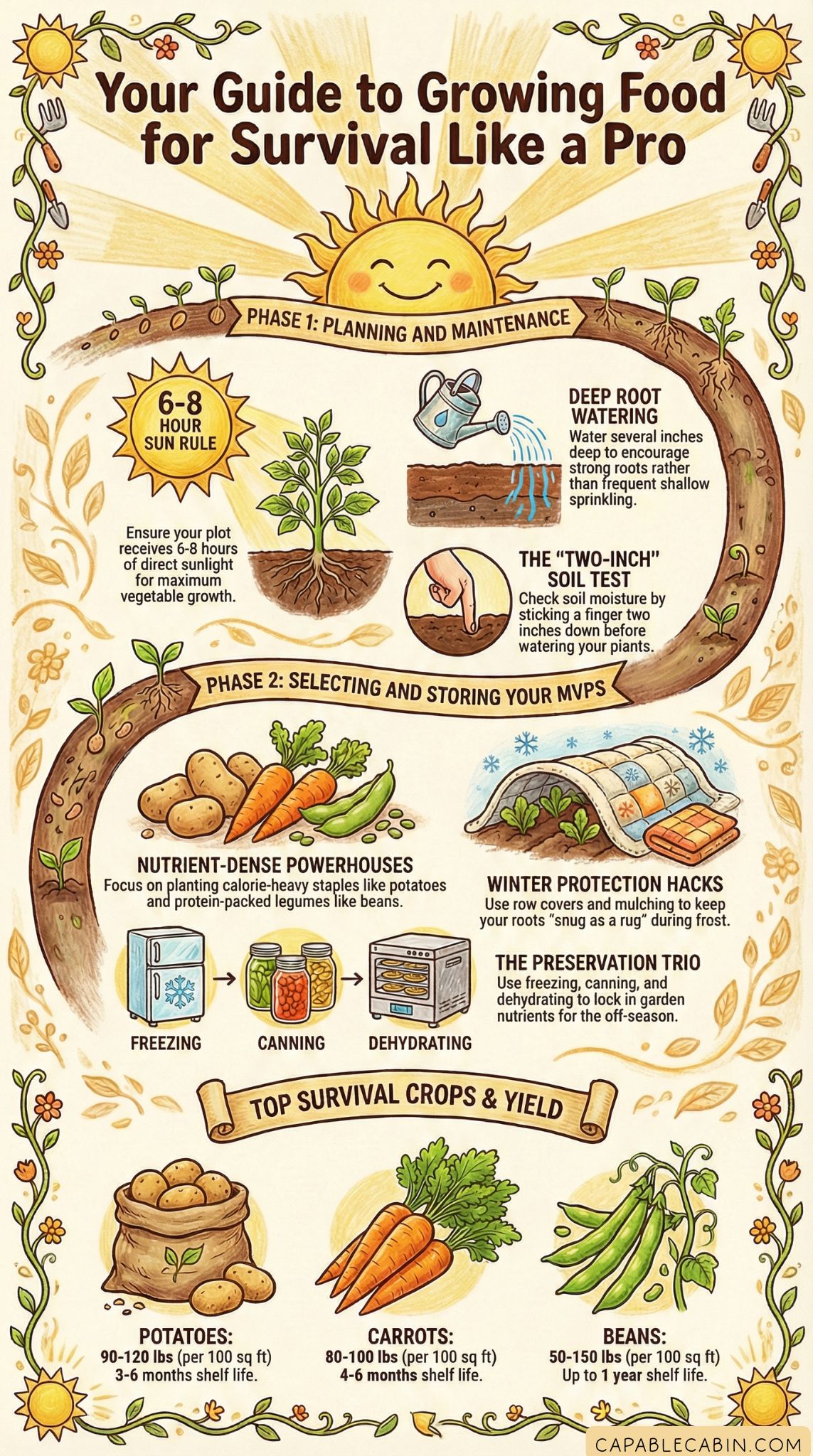
- Carrots pack a punch with their vitamin A from beta-carotene, great for your eyes and skin. Easy to grow, and they keep nicely, too. Preserve ’em by canning, freeze-drying, or even tossing ’em in the freezer.
| Crop | Nutritional Benefits | Storage Options |
|---|---|---|
| Rhubarb | Low-calorie, versatile | Canned or frozen |
| Carrots | Loaded with vitamin A | Canned, freeze-dried, frozen |
Potatoes and Onions
Can’t forget these hearty basics. They’re the foundation of any solid food stash:
- Potatoes are energy powerhouses, loaded with potassium and vitamins C and B6. Grow them in buckets if you’re short on space, and they’ll keep you fueled (Epic Gardening).
- Onions bring the flavor and some much-needed vitamins. They’re long-lasting, so you can stockpile without worry.
| Crop | Nutritional Benefits | Storage Options |
|---|---|---|
| Potatoes | Energy-rich, loaded | Cool, dark place for a long haul |
| Onions | Adds flavor, vitamins | Dry and cool storage to keep fresh |
Beans and Spinach
A match made for survival meals. Here’s why they deserve a spot:
- Beans are your plant-based protein pals, full of fiber and perfect for trading during tough times. Store ’em dried and you’re set.
- Spinach is a leafy green legend, giving you iron, calcium, and loads of vitamins. Quick to grow and keeps on giving throughout the season.
| Crop | Nutritional Benefits | Storage Options |
|---|---|---|
| Beans | Full of protein, fiber | Dried for longevity |
| Spinach | Rich in iron, calcium | Freeze or can to last longer |
Plant these vital crops and you’ll have a food supply that’s as varied as it is nutritious. For more how-tos on starting your survival garden and getting prepped for emergencies, check out these handy tips on how to start a survival garden and emergency preparedness gardening!
Maximizing Garden Buzz
To keep your survival patch rocking, you’ll need to pay attention to a number of things that make gardening a win. Getting the hang of the best growing vibes, keeping your soil full of life, and feeding your plants right are the biggies for nailing a survival garden plan.
Getting the Vibe Right
Setting the stage for your plants needs some thinking. These are the must-knows:
| Condition | What to Do |
|---|---|
| Temperature | Most plants need about 90 days of warmth to really do their thing. Temperatures affect big plant jobs like soaking up sunshine, popping out of the soil, and showing off flowers. Too much heat might turn your lettuce bitter, while some buddies thrive under specific cool vibes. |
| Water | Keeping your plants quenched is key, even when it’s chilly. Dryness can spell trouble, but regular, steady drinks help them stay strong through the seasons. |
| Sunlight | They love about 6-8 hours under the sun each day. Check out how much light your spot gets and think about shiny sheets if they’re stuck in the shadows. |
Feeding the Hunger
To get your garden showing off its best, you gotta feed it right. Here are the insider tips:
| Fertilizer Type | How to Use It |
|---|---|
| Good Ol’ Organics | Stuff like compost, aged manure, and fish stuff. Throw it in before you pop in the seeds to juice up the dirt. |
| Store Bought | The N-P-K gang (Nitrogen, Phosphorus, Potassium) is great for pinpointing what your soil is craving. Stick to the label to nail the right amounts. |
Keep an eye out for stuff like yellow leaves or midget plants—these might be your soil screaming for something it’s missing. Tweak your plan if you spot these signs.
Keeping Soil on Top Form
A garden’s vibe starts with the dirt. Boosting your soil’s mojo makes your plants tough cookies against nasty bugs and plant flu. Here’s how to keep your earth in shape:
- Check the Dirt: Use tests to figure out the nutrients and pH balance. They’ll tell you what’s missing.
- Compost is Gold: This stuff makes your soil better. It packs nutrients and holds onto water like a champ.
- Playing Musical Plants: Changing up the spots for different plants each round prevents the dirt from getting too tired and helps break the bad guy cycle.
For tips and tricks on sustainable munchies, dive into our pages on growing food for survival and boost your emergency preparedness gardening game. Use these tips to keep your survival garden on point and reap heaps of homegrown goodness, rain or shine!
Small-Space Survival Gardening
Growing a garden in the city or in tight quarters might seem a bit tricky, but yes, you can totally make it work! You can turn even a tiny patch into a thriving survival garden using clever strategies. Let’s uncover some nifty urban gardening tricks and the perks of growing stuff in containers—all to boost your gardening game.
Urban Gardening Techniques
Squeezing food growth into limited spaces requires some crafty ideas. Look to plant all-stars like tomatoes and peas since they’re compact and offer a sweet payoff for your hard work.
One solid trick to make the most of your garden space is square foot gardening. It’s all about breaking your area into small squares, each with its own crop party. This method helps you churn out more crop goodies without wasting an inch.
| Crop | Suggested Squares | Handy Tips |
|---|---|---|
| Tomatoes | 1 | Needs some support |
| Peas | 1 | Stick-in some supports |
| Spinach | 4 | Thrives in wee spaces |
| Carrots | 9 | Loves deep soil |
Don’t miss out on the buddy system—companion planting. Plant friends can boost each other’s growth and fend off annoying pests together. For instance, matching tomatoes with basil—they grow happy and might just taste better too!
Growing in Containers
Got no ground? No problem! Container gardening is your friend. Using pots, buckets, or even some old DIY containers, you can nurture a bunch of healthy crops. Containers give you the freedom to chase the sun or duck indoors when the weather’s acting up.
When picking out your containers, make sure they’ve got holes for drainage and are heat-friendly but still keep the moisture right. Keep these tips in mind for killer container gardening:
- Pick the Right Size: Big containers for tomato roots; small ones for herbs or greens.
- Go for Good Soil: Use rich potting mix that locks in moisture while feeding your plants.
- Watch the Water: Container plants can dry out fast, so keep ‘em hydrated, especially when it’s toasty.
Here’s a quickie chart for what works best in containers:
| Container Size | Top Crops |
|---|---|
| 5 gallons & up | Tomatoes, Peppers, Cucumbers |
| 2-3 gallons | Lettuce, Spinach, Herbs |
| 1 gallon | Radishes, Green Onions |
Embracing these small-space gardening tricks not only turns you into a mini farmer but also boosts your self-reliance game—super handy in a pinch. Curious to dig deeper? Check out our tips on starting a survival garden and other cool emergency gardening hacks.
Critical Factors for Survival Gardens
Planning a survival garden ain’t just plopping seeds and hoping for the best. There’s a bunch of things you gotta think about to turn that patch of dirt into a food goldmine. Let’s break down the good stuff like crop rotation, keeping your plants watered, and making sure they’re soaking up the rays.
Crop Rotation Benefits
Rotating where you plant your veggies each year is like giving your soil a spa day. It’ll do wonders and here’s how:
- Boost Soil Mojo: Different crops munch on different nutrients, so moving them around mixed with plants like beans that pump nitrogen back into the soil is a no-brainer win.
- Keep Bugs Guessing: Critters and diseases love predictability. Shake things up and they’ll hit the road, leaving your green things to flourish.
- Bumper Crops: Happy soil and fewer pest hangouts mean more goodies at harvest.
| Crop Combo | Perk |
|---|---|
| Beans and Corn | Beans do the heavy lifting by adding nitrogen for corn |
| Cabbage Family and Carrots | Slashes pest woes and richens the soil |
Need more dirt on survival planting? Dive into our survival gardening techniques.
Water Accessibility and Irrigation
Plants need more than love—they need H2O. Gettin’ the right stuff to your greenery is mission critical. Check this out:
- Pick a Wet Spot: Stick your garden near your water supply. Could be a spigot, a rain barrel, or even a creek if you’re lucky.
- Go High-Tech with Watering: Slap in some drip irrigation or soaker hoses—these babies quench roots’ thirst directly and save water.
- Seasonal Sips: Change up water habits with the seasons. Some plants get thirsty when it’s warm, others need a midwinter chug to avoid drying out (OSU Extension).
Wanna shrink water usage even more? Hitch a ride to our page on emergency preparedness gardening.
Sunlight Exposure and Layout Planning
Your plants are sun-worshipers. Get them soaked in sunshine for at least eight hours a day, all growing season long (University of Missouri Extension). Here’s how to play it smart:
- Tune into Sun Patterns: Clock where the sun throws its shine in your garden all day. Spot with max sunlight and minimum shade is jackpot territory.
- Plant with Purpose: Let the sun kiss all your plants evenly. No skyscrapers blocking the squatter’s light!
- Mind the Micro-climates: Ebb and flow of heat and sunlight might vary with your backyard terrain—tailor your setup for peak performance.
These tips can turbocharge your survival garden. Green thumbs new and old should head to our guide on how to start a survival garden to dig deeper.
Planting for Caloric Density
Hey there, plant enthusiast! Looking to make your backyard work for you? When you set up your survival garden, you’ll wanna pick crops that pack a punch in calories and nutrients for you and your loved ones. We’ll dive into two groups: those starchy and sugary ones, plus veggies and fruits full of nutrients. Let’s break it down, shall we?
Starchy and Sugary Foods
These starchy buddies are the MVPs in your garden because they bring the energy your body craves. Check out some must-have crops:
| Crop | Calories per 100g | Why They’re Good for You |
|---|---|---|
| Potatoes | 77 | Loads of potassium and vitamins C and B6 for daily goodness |
| Garlic | 149 | Takes care of pests and is a nutrient powerhouse |
| Beans | 347 | Protein-packed, full of fiber, and lasts long on the shelf |
Potatoes are your go-to heroes; they grow like champs, even if you’ve only got a small patio to work with. Those versatile spuds can thrive in stuff like five-gallon buckets (Epic Gardening). Garlic isn’t just for keeping vampires away; it adds flavor to dishes and keeps bugs at bay. Then there are beans – think of them as long-lasting protein nuggets perfect for those canned bean stews (Gubba Homestead).
Nutrient-Rich Vegetables and Fruits
Of course, you can’t live on starch alone. Add a splash of color and nutrition with these veggies and fruits. They’re like a vitamin shop in your backyard.
| Crop | Why They’re Good for You |
|---|---|
| Carrots | Stuffed with beta-carotene, they help you see and fight off bugs (Gubba Homestead) |
| Lentils | Roughly 18 grams of protein per serving, they’re great in all kinds of meals (Epic Gardening) |
| Spinach | Loaded with iron and A, C, and K vitamins; Popeye’s fave for a reason |
Carrots hop right into your meals and snacks, and they’re a breeze to stash away through canning or freezing. Lentils are like the Swiss army knife of the pantry – toss them in anything for a protein boost. For tips on getting your survival garden off the ground, peek at our guide on how to start a survival garden.
By planting these starch and nutrient stars, you’re basically setting your garden up to be a buffet of calories and vitamins. Mixing it up with these goodies makes you more self-reliant and keeps you in tip-top shape when times are tough. Don’t miss out on more gardening ninja tricks in our piece on emergency preparedness gardening.
Current Trends and Considerations
Victory Gardens Resurgence
You might’ve noticed, folks are getting back into victory gardens these days. It’s not just about digging around in the dirt; it’s about feeling a little more secure when you can snack on a tomato that grew from your own labor. With global events stirring up changes, like the ongoing US and Russia squabble, more people are feeling the itch to plant these gardens and have a fresh backup in the pantry (Valley Food Storage). Imagine grabbing a crunchy carrot from your backyard — a tasty piece of independence.
Starting one of these gardens doesn’t have to be as complex as calculus. Grab yourself some old-fashioned heirloom garden seeds — they’re cheap and pack a punch season after season. Getting into gardening is an easy way to flex your muscles in self-sufficiency and enjoy the sweet taste that says, “I grew this.”
Addressing Food Shortage Concerns
Food shortages are the current hot topic, especially after some unexpected plant disasters in 2022 left the food scene in a bit of a twist (Valley Food Storage). It’s no surprise more people are considering survival gardens to keep their shelves stocked. Planning really pays off — scope out water access, chase the sun, and check out that soil before getting your hands dirty in the garden.
Sketching your garden’s layout can really help spruce things up — pen down those planting times and figure out where each veggie likes to soak up the sun.
| Crop | Growing Season | Sunlight Requirements | Water Needs |
|---|---|---|---|
| Tomatoes | Summer | Full sun | Moderate |
| Carrots | Spring/Fall | Full sun | Low |
| Spinach | Spring/Fall | Partial shade | Moderate |
| Potatoes | Summer | Full sun | Moderate |
Starting Your Survival Garden Journey
Ready to get down and garden? Here are a few trusty nuggets to set you on the path:
Pick the Right Seeds: Go with heirloom survival garden seeds for sturdy and reliable plants. Save them seeds for next year — they’ll sparkle again.
Think Water: Make sure your garden can reach out and grab a drink when it needs one. A smart watering setup is like having a secret to your garden’s good health.
Picture the Layout: Aim for good sun, shelter from the wind, and maybe even plant buddies that get along to boost growth.
For more juicy tips, check out our deep dives into growing food for survival and the lowdown on how to start a survival garden. Whether it’s your first go-around with planting or you’re sprucing up your prepper gardening game, these insights will point you towards success with your flourishing, durable garden.