20 Emergency Planning Mistakes That Leave Families Vulnerable
Picture this: A sudden storm knocks out power as your kids ask what to do next. You realize a key detail in your plan is missing, leaving everyone scrambling. You’re not alone; busy families often overlook small but crucial steps in their emergency preparations.
In this post, you’ll spot 20 emergency planning mistakes that can leave your loved ones vulnerable. Then we’ll share simple fixes that fit your busy schedule and budget. Let’s go!
Ignoring Communication Planning
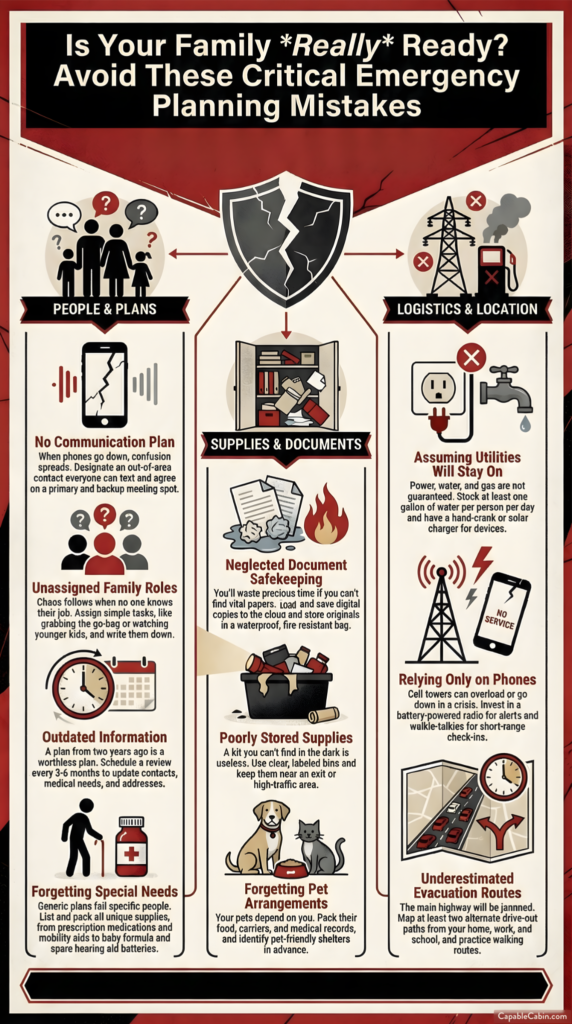
A clear way to share information can make or break your response when phones go dead. If you haven’t mapped out who contacts whom, confusion spreads fast.
- List at least two emergency contacts for every family member.
- Agree on a primary meeting spot and a backup location.
- Practice text-based check-ins in case calls fail.
- You can dive deeper into emergency communication planning for step-by-step tips.
Skipping Family Roles
When nobody knows their responsibilities, chaos follows. Assign simple tasks—like grabbing the go bag or watching younger kids—to specific people.
- Write a one-page task chart everyone can follow.
- Include backups in case your first helper is unavailable.
- Rotate roles quarterly so everyone learns new skills.
- Review assignments before every drill or practice.
Overlooking Emergency Supplies
Stashing a couple of flashlights and canned goods isn’t enough for a full household. You need to tailor your kit to your family’s size, ages, and needs.
- Check your kit monthly and note which items are running low.
- Include essentials like baby formula, extra glasses, or pet food.
- Keep a manual can opener and spare batteries in labeled pouches.
- Store a simple first aid kit within easy reach of common areas.
Neglecting Document Safekeeping
Vital papers go missing when you need them most. If you don’t secure IDs, insurance info, and medical records, you’ll waste precious time tracking them down.
- Scan and save copies of important documents to the cloud.
- Store originals in a waterproof, fire-resistant bag or box.
- Keep a USB drive backup in a separate location.
- Check out our guide to emergency planning documents for more tips.
Assuming Phone Signals
Cell towers can go down or overload during a crisis. Counting on your smartphone alone risks leaving you off the grid.
- Invest in battery-powered or hand-crank radios for local alerts.
- Try walkie-talkies for short-range family check-ins.
- Agree on an out-of-area contact everyone can text.
- Mark a neighborhood meeting point if electronic comms fail.
Failing To Update Plans
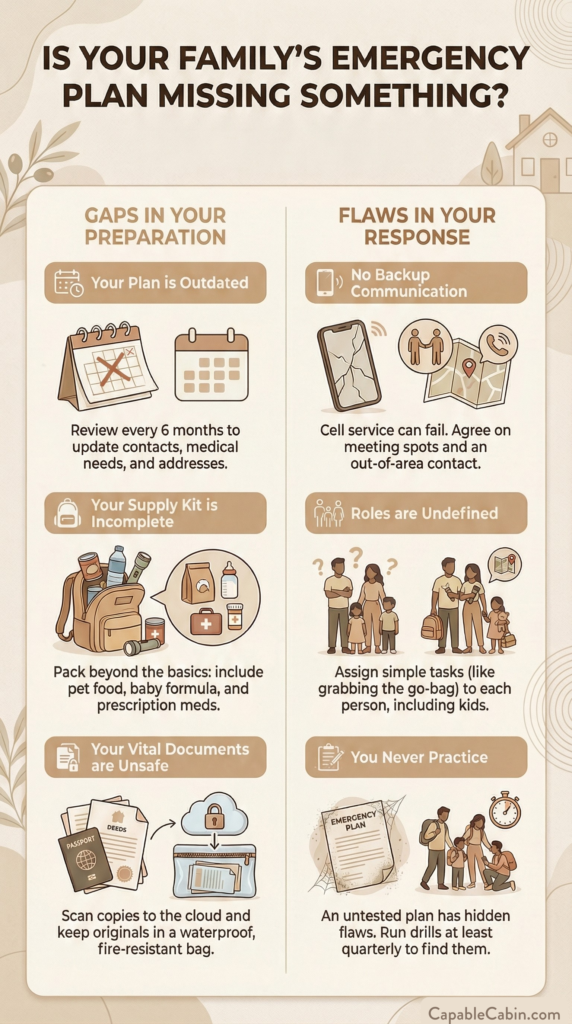
A plan gathering dust on a shelf is almost as bad as having none at all. Life changes—new addresses, added family members, swapped cars—should all be reflected in your plan.
- Schedule reviews every three to six months.
- Swap outdated phone numbers and emergency contacts.
- Note any new medical needs or school changes.
- For timing ideas, follow our guide on how often to update emergency plans.
Storing Items Poorly
Tossing supplies into a dark closet defeats the whole purpose. If you can’t find your kit in a hurry, it’s useless.
- Use clear, labeled bins so you see contents at a glance.
- Keep kits near exits or high-traffic zones.
- Test accessibility in low-light conditions.
- Replace worn-out bags or splitters before they fail.
Forgetting Special Needs
Every family has unique considerations—medications, mobility aids, dietary restrictions. Ignoring these details leaves someone especially vulnerable.
- List all special supplies, from prescription meds to baby formula.
- Store extra batteries for hearing aids or flashlights.
- Include mobility-support items like canes or walkers.
- Check out emergency planning caregivers for tailored tips.
Underestimating Evacuation Routes
Heading north on the same highway as every other neighbor can lead to gridlock. Knowing alternate routes keeps you moving when time is of the essence.
- Map at least two drive-out paths from home and school.
- Mark potential road closures or flood-prone bridges.
- Practice walking routes if roads are blocked.
- Store printed and digital route maps in your glove box.
Relying Only on Adults
Kids can panic if they don’t know what to do. Assuming grown-ups handle everything overlooks valuable help from teens and older children.
- Teach kids to grab their personalized go-bag.
- Assign teens simple tasks like radio checks or flashlights.
- Run a quick role-play so everyone knows the plan.
- Celebrate their contributions to build confidence.
Delaying Practice Drills
Talking through a plan is great, but not enough to reveal hidden gaps. Without regular drills, you won’t know if your plan actually works.
- Schedule quarterly drills at different times of day.
- Simulate blocked exits or power-out scenarios.
- Debrief afterward to spot what needs tweaking.
- Try our tips for practice emergency plans kids to keep drills fun and stress-free.
Poor Medication Storage
Heat, humidity, and light can ruin vital drugs quickly. Plus it’s easy to forget to check expiration dates if meds are tucked away.
- Store medications in a cool, dark container with clear labels.
- Rotate supplies and toss expired items regularly.
- Keep a duplicate small supply near your grab-and-go kit.
- List dosages and physician contacts in your plan binder.
Overcomplicating Your Plan
A 10-page binder sounds thorough but may never see daylight when you need it. Simple, clear instructions help you act fast under pressure.
- Condense key steps to a one-page sheet.
- Use bullet lists and bolded headers for clarity.
- Store detailed info digitally for reference.
- Test that everyone can find and follow the one-pager.
Neglecting Financial Preparation
Disasters often come with surprise expenses—hotel stays, extra fuel, or emergency vet bills. If you rely only on credit cards, you might be stuck.
- Build an emergency fund with three months of basic expenses.
- Keep small bills and coins in your go bag.
- Review your insurance coverage for gaps.
- Learn basics of financial emergency planning to strengthen your backup.
Ignoring Pet Arrangements
Your pets depend on you for safety too. Leaving them out of your plan adds stress to an already chaotic time.
- Pack food, bowls, leashes, and carriers for each animal.
- Keep vaccination records and medical info handy.
- Identify pet-friendly shelters or hotels in advance.
- Prepare a “pet first aid kit” with essentials.
Overlooking Mental Health
Fear and confusion can overwhelm even the toughest families. Addressing emotional needs helps everyone stay calm and focused.
- Talk openly about what might happen and answer questions.
- Include comfort items like favorite toys or blankets.
- Practice simple breathing exercises together.
- Check in with kids after drills to hear their concerns.
Rushing Emergency Shopping
Buying everything in one go means impulse buys or missed must-haves. Spacing purchases over weeks makes your budget and your brain breathe easier.
- Break your shopping into manageable weekend tasks.
- Focus each trip on a category—water, food, tools, or hygiene.
- Track purchases in a shared list so you avoid duplicates.
- Refer to our weekend emergency planning tasks for a ready-made schedule.
Assuming Utilities Stay On
Water, power, and gas aren’t guaranteed during a crisis. Not planning for outages leaves you literally in the dark.
- Stock a solar-powered or hand-crank charger for small devices.
- Store at least one gallon of water per person per day.
- Consider a portable water filter or purification tablets.
- Evaluate a budget-friendly generator if outages are frequent.
Underplanning Remote Living
Rural and mountain families face longer emergency response times. Applying city-centric plans can leave you stranded in critical moments.
- Discuss satellite or two-way radio options for backup comms.
- Keep extra fuel stored safely for longer trips.
- Partner with nearby neighbors for mutual aid.
- Pack extra nonperishable rations and blankets.
Skipping Plan Reviews
Your family evolves—kids grow up, addresses change, new pets arrive. Without regular check-ins, your plan becomes outdated fast.
- Set an annual review date with calendar reminders.
- Celebrate small wins like updated contact lists.
- Replace expired gear and refresh your checklists.
- Keep everyone in the loop on changes.
You’ve covered 20 common emergency planning mistakes that can leave families vulnerable. Now pick one fix to tackle this week and share your success in the comments below. Your experience could help another busy parent feel confident when it matters most.
Cabin Chat
Q: How often should I update my emergency plan?
Aim for twice a year or whenever a big change happens, like a move or new baby.
Q: What’s a fun way to teach kids about drills?
Turn it into a treasure hunt with small rewards for following the steps.
Q: Where should I store digital copies of documents?
Use a secure cloud service you can access from any device, plus an encrypted USB if you need offline access.
Q: How do I include my pet in the plan?
Pack food, meds, and a familiar blanket. Research pet-friendly shelters ahead of time.
Q: Can I shop for supplies on a tight budget?
Yes, spread purchases over weeks, reuse pantry staples, and look for sales on long-shelf-life items.
Q: Should teens have their own emergency roles?
Absolutely, teach them first aid basics and give them a communication responsibility so they feel empowered.