19 Pet Emergency Preparedness Tasks for Pet Parents
Sometimes, preparing for emergencies feels intimidating—especially when you realize your pets depend on you even more in a crisis. But guess what? You’re not alone in figuring this out. We all want to keep our furry (or scaly, or feathered) friends safe, and that’s exactly why we’re walking through these pet emergency prep tasks together. Let’s keep the mood calm and supportive. By the end of this list, you’ll have a practical, approachable plan to help ensure your beloved companions are as protected as possible when the unexpected hits.
Worried about budget or logistics? Trust me, we’ve all been there, wondering if we’re doing enough or if we’ll remember every last detail. But each small step adds up to stronger peace of mind. So take this one task at a time, and before you know it, you’ll have a well-rounded, confidence-boosting plan for your pets. Let’s dive in.
1. Gather A Rescue Sticker
Picture this: an emergency situation where rescuers arrive at your home, or a neighbor checks in, and they don’t know you have pets inside. A rescue sticker clues them in. Organizations like the ASPCA suggest posting a sticker in a front-facing window or near a main entrance so it’s clearly visible [1]. On that sticker, note the types and number of pets you have, plus your veterinarian’s phone number. If you ever do evacuate with your pets, write “EVACUATED” across the sticker so folks know no animals remain inside.
These small stickers can be found online or at local pet stores. It’s worth the minimal effort to acquire one, because it provides crucial info if you’re momentarily unreachable. Take a few minutes to fill it out accurately. That slight step can save precious minutes in a rescue scenario, helping first responders figure out if they need to look for furry stragglers who may be hiding.
2. Assemble A Disaster Kit
Think of your pet’s disaster kit as their personal “go bag.” Water, food, and medications are must-haves, but organizations like the CDC also recommend placing items such as medical documents, vaccination records, and comfort items in a sturdy container [2]. That way, everything is easy to carry if you need to get out fast. If you’re unsure about quantities, consult your vet for guidance on how much medication and food to store.
When storing these supplies, it’s often helpful to keep them near a doorway or in a central location so you can grab them quickly. Also, consider labeling the container with your pet’s name and basic health info. That might seem like a small detail, but it’s so helpful if someone else needs to care for your pet.
3. Create An Evacuation Plan
Emergencies can happen in the blink of an eye, and panic can easily set in if you don’t have a solid exit strategy. Make sure you plot out a few different escape routes from your home—especially if you live in an apartment, where hallways and shared exits might get crowded. Then, choose a safe haven that welcomes animals. Some shelters only permit service animals, so call ahead to hotels or nearby shelters to confirm their pet-friendly status [3].
Before you finalize anything, jot down a quick map or instructions your family can follow. If you have time, it’s also wise to keep a carrier or leash near the main exit. Looking for more guidance on planning out routes? You might find extra tips in pet evacuation planning, which dives deeper into staying organized on the go.
4. Secure Vital Pet Records
Being able to prove your pet’s vaccinations and medical needs can make a world of difference in an emergency. Keep essential documents—like proof of rabies shots, spay/neuter records, and microchip info—together. Make photocopies or take clear photos of these records and upload them to a secure cloud folder as an extra backup [4].
If your pet has any allergies or special requirements, write those down too. In a pinch, you might need to rely on a shelter, a brave neighbor, or a friend to care for your companion. Having all that info ready to go saves time, prevents confusion, and makes sure your pet gets the right treatment no matter where they end up.
5. Practice Safe Transport Steps
Whether you have a timid cat or an excited dog, transportation can get tricky if you’re both stressed. Make sure you have a sturdy, appropriately sized carrier, harness, or pet seatbelt in the car [4]. If your pet isn’t used to it, practice short rides around the neighborhood. Give them a treat once they calmly settle inside the carrier or seatbelt harness.
It’s also helpful to keep extra water, a travel bowl, and calming aids (like a favorite blanket) in the trunk. If you ever have to travel a long distance to reach a safe place, or even just shift to a friend’s home, these small comforts can ease your pet’s nerves. By practicing now, you’ll reduce the chaos if an evacuation or sudden move becomes necessary.
6. Microchip And Update Info
This one can be a lifesaver. Microchipping is an easy procedure that allows vets or shelters to scan your pet and pull up your contact info if you ever get separated [4]. The key is to register the microchip with the manufacturer and keep your address and phone number current. If you move, remember to update this info right away.
If your pet wears a collar with ID tags, double-check that information as well. Over time, phone numbers change or addresses get outdated, and we forget to do a quick replacement of ID tags. Do it now—before an emergency arises—and give yourself that extra peace of mind. It’s a small admin task that can make a huge difference.
7. Set Up A Buddy System
Sometimes, life hits us with curveballs, like being away when disaster strikes. That’s why having a buddy system with a friend or neighbor is so helpful [4]. Ask someone you trust if they’d be willing to rescue or care for your pets in a pinch, and offer to do the same for them. This works especially well if you both live fairly close to each other.
Share a set of keys, or make sure they know your home’s entry code, so they can access your pets quickly. Having a partner in preparedness relieves you of the stress that your pets might be stranded. And if you want to build that support system further, consider connecting with your local community or neighborhood watch group. Some folks even share text trees or group chats to provide real-time updates in a crisis.
8. Prepare For Shelter Limits
Not every emergency shelter or hotel can allow animals (beyond service pets), so it’s best to research your options in advance [3]. Keep a list of places that do take pets and note any restrictions (e.g., size limits or specific species allowed). If you can’t find a pet-friendly shelter, reach out to a friend, family member, or local boarding facility to see if they can temporarily house your pet.
Also, many communities have pet-specific shelters set up during major hurricanes or wildfires. Make sure you know the location and have directions. If you’re leaning on a friend’s spare room, chat through the details—like whether your cat will be allowed on furniture or if your big dog can handle the backyard fence. These little clarifications may seem minor, but they smooth out any tension once you arrive.
9. Stock Extra Food And Water
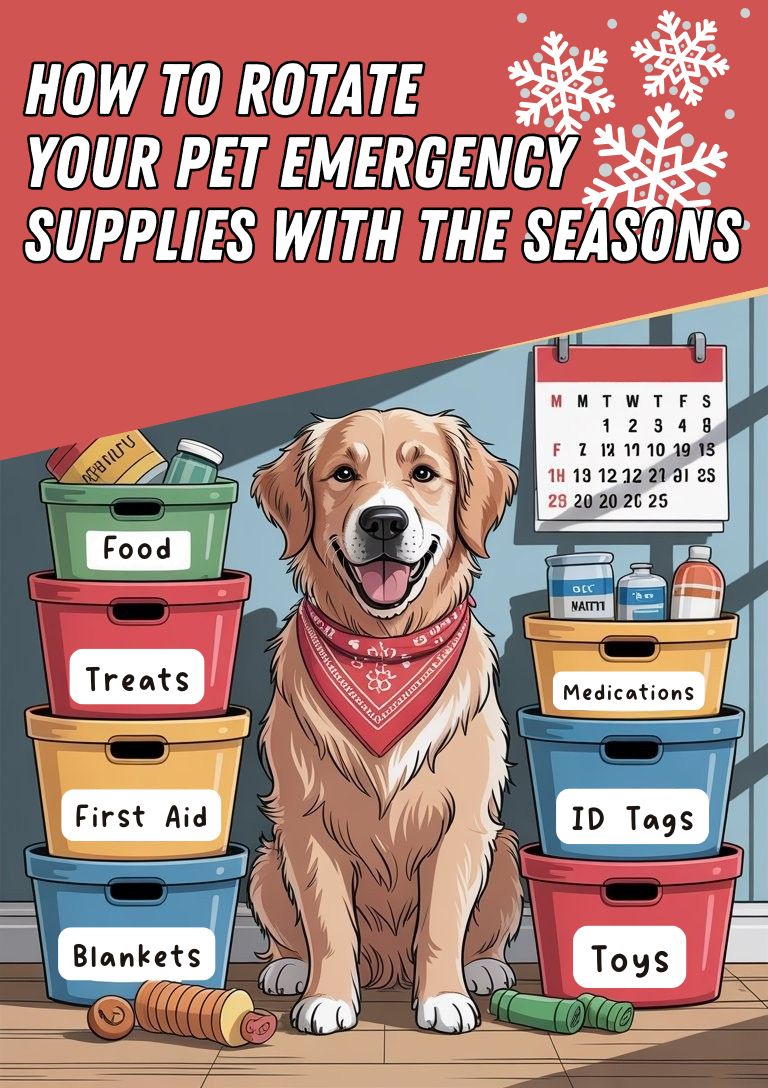
In an emergency, food and water can become precious resources. Pets need their own stash, separate from your family’s supply. The CDC advises having at least a few days’ worth of food and a gallon of water per pet per day [2]. This might mean storing cans or sealed bags of dry food in waterproof containers. Rotate them periodically so nothing expires. Having an extra bag of your pet’s favorite treats can lift their spirits too.
Plan for different scenarios. If the power goes out, can you still open the can or warm up the food? A manual can opener or freeze-dried alternatives might come in handy. Even if you’re on a tight budget, store whatever you can now. A day’s worth of nutrition can make a big difference in reducing stress for you and your pets.
10. Pack Comfort And First Aid
Ever notice how a favorite plush toy or blanket can calm your pet when they’re anxious? Tucking a small comfort item into your disaster kit can help them feel safe in unfamiliar surroundings. Also, include a pet-specific first aid kit with items like gauze, bandages, and an antiseptic solution. This ensures you can handle minor cuts and scrapes on the go [3].
While you’re at it, think about any meds your furry friend may need—like anxiety medications or joint supplements. Keep a small supply clearly labeled and check the expiration dates every now and then. For more details on medical must-haves and how to handle pet injuries, pet emergency medical preparedness offers additional insights you might find helpful.
11. Train For Emergencies
You might already know some basic commands like “sit” or “stay,” but a few specialized emergency cues can help. Some pet owners practice commands like “quiet” to help calm a barking dog, or “come” for a quick recall if you need to exit a chaotic space [5]. If your pet can reliably come when called, you’re already primed for smoother evacuations. Think about adding a command to guide them out from under furniture if they tend to hide during storms.
A gentle approach works best. Use tasty treats, short training sessions, and plenty of praise—turning each lesson into a positive bonding moment. Practicing these moves when everything’s calm helps your pet respond better when tension is high. If you want more structured activities, local humane societies or even online courses sometimes offer “disaster-specific” training.
12. Plan For Behavior Changes
Even the sweetest cat or happiest dog can act out after a major scare. Stress hormones can trigger defensiveness, so you’ll want to watch for signs like growling, hissing, cowering, or unusual aggression when the environment shifts [3]. If your pet suddenly seems spooked or defensive, give them space to decompress.
Don’t force them into unfamiliar corners or large groups of people until they re-acclimate. Ease them back into normal routines by maintaining consistent feeding times, walks, or cuddle breaks. If the behavior persists, consult your vet. Sometimes a calm environment, a comfy crate, or even a mild vet-prescribed medication can help them readjust. Patience is key—your pet needs time to process the disruption, just like we do.
13. Keep Carriers Near Exits
Let’s be honest, trying to round up your frightened cat or anxious pup while rummaging in the basement for a dusty carrier is the worst. If you can, stash your carrier, leash, or harness by your most common exit. If you have a multi-floor home, consider one on each level. That way, if you need to evacuate in a hurry, you’re not scrambling around at the last minute.
If you don’t have a lot of closet space, try tucking the carrier behind a door or under a sturdy table. The goal is to cut down on the time—and stress—you’ll spend tracking it down when every second might matter. If you have multiple pets, gather enough carriers or harnesses for each. Checking for quick access can be especially critical if you live in earthquake-prone areas or places that see frequent wildfires.
14. Consider Specialized Supplies
All pets are not created equal. Birds, reptiles, fish, and exotic pets may each need specialized equipment—like a portable heat lamp, specialized water filters, or a traveling enclosure to manage environmental needs [5]. If you have a rabbit, you might need chew-proof carriers; for a ferret, a lockable cage with good ventilation.
Check with your vet to cater to these special requirements. It might feel like extra work, but your pet’s unique setup makes a difference in a crisis. Not sure where to start? Explore exotic pet emergency preparedness for ideas and checklists tailored to species with particular care needs. Better to gather these items now than scramble at the last minute trying to find a reptile warming pad.
15. Enroll In Pet Safety Courses
Don’t underestimate the power of a little training. Courses like American Humane’s “Basic Animal Emergency Services,” which is even recognized in FEMA’s course catalog, can teach you how to handle a variety of crisis scenarios [5]. You might learn how to rescue a scared dog from a collapsed structure or the best way to transport an injured cat.
In-person classes can also offer valuable networking. You’ll meet fellow pet parents, first responders, and volunteers. Sharing stories and tips fosters a sense of community you’ll be grateful for when things get tough. If traveling for a course isn’t practical, online classes and webinars can be a fantastic alternative, especially if you just need the basics on first aid or search and rescue for pets.
16. Schedule Regular Vet Check-Ins
Every once in a while, it’s wise to review your emergency plan with your veterinarian. They can confirm if your pet’s medication list is still accurate, check any chronic conditions, and ensure vaccines remain up to date. If you’re assembling or replenishing your disaster kit, ask your vet about recommended medications or over-the-counter items you can add. They might suggest specific tips, like a gentle sedative for an anxious dog during thunderstorms, or special bandages for a cat with tender paws.
Vet check-ins are also a good time to talk about microchipping, spay/neuter, or any other procedures you might be on the fence about. Sometimes, a quick discussion can clear up confusion about cost or recovery time, setting your mind at ease as you continue building that go-bag.
17. Practice Drills Together
If you have children or family members involved in caring for your pets, run a few pretend emergencies to see how everyone reacts. Maybe set aside a Saturday and say, “Okay, let’s practice a quick evacuation.” Time yourselves to see how fast you find the carrier, gather important documents, and locate your pet. Make it a learning experience, not a high-stress event.
Pay attention to any bottlenecks. Did your cat hide behind the sofa for 10 minutes? Did you realize you forgot the water bowls or your phone charger? These mini “fire drills” give you a chance to refine your approach while you still have the luxury of calm. Reward kids (and yourself) with a fun treat afterward—“We did it! Now let’s celebrate with ice cream.” You’ll ingrain positive feelings around preparedness, which makes everyone more willing to do it again.
18. Review After Each Disaster
If you’ve just navigated through a scary tropical storm or a sudden wildfire warning, it’s helpful to debrief once everything settles. What went smoothly? What would you change next time? Sometimes, you’ll notice that your dog’s anxiety was sky-high, and you need a better plan to help them cope. Or maybe your cat’s extra bag of food was barely enough for three days.
Take notes—literally—so you remember these insights later. If you realized an item was missing from your kit, add it ASAP. Rearrange your tasks or re-label bins if that’ll save time in the future. Each real-world situation refines your approach, making it easier to handle the next incident with more confidence and less anxiety.
19. Stay Flexible And Encouraging
Above all, remember that emergencies rarely follow a neat script. Even the best-prepared plan might need some last-minute tweaks. Keep your cool, and your pets are more likely to stay calm too. If you find yourself in a shelter or friend’s basement, keep praising your pets for little signs of good behavior—like settling down in a new space or calmly greeting someone who checks in on them.
Stay flexible, and treat any misstep as a learning moment, not a failure. The truth is, you’re doing a great job just by recognizing the need for these preparations. You’ve gathered key tools, built a kit, practiced a plan, and learned a bunch of tips that could be life-saving. Whenever you feel overwhelmed, recall how far you’ve come. You’ve got this, and your pets trust you more than ever.
In the grand scheme, each of these tasks is like a puzzle piece, fitting together to create a safer, less stressful strategy for your household. Think of it as an ongoing process—like rotating your pet’s food or re-checking supply expiration dates every few months. You’ll get better at it as you go, and trust me, your pets will thank you with tail wags, purrs, or happy chirps the moment they feel secure.
You’re not alone in this journey. Many other pet parents are taking these same steps, cheering each other on, and updating their plans when necessary. Emergencies might be unpredictable, but with a compassionate mindset, thorough planning, and a willingness to adapt, you and your four-legged buddies can weather just about anything together. Keep going—you’re doing great.
References
- (ASPCA)
- (CDC)
- (American Red Cross)
- (CDC)
- (American Humane)