You Might Be Making It Worse: 8 Pet First Aid Myths Every Owner Should Know
You’re here because you want to separate fact from fiction when it comes to keeping your beloved pets safe. Trust me, you’re not alone. Many of us have heard—and sometimes tried—quick fixes or “old wives’ tales” in moments of panic, especially during emergencies when time feels short.
But here’s the thing: some well-meaning suggestions can do more harm than good. Those “pet first aid myths” might seem helpful on the surface, but they can lead to complications and heartache down the line.
Let’s walk through eight of the biggest myths that could put your pet at risk. Along the way, we’ll explore safer alternatives and explain why each myth has lingered around for so long. Whether you’re prepping for natural disasters or just arming yourself for everyday mishaps, we’re in this together.
The goal is to help you feel calmer and better prepared if your dog, cat, or any other companion needs first aid fast. Ready? Let’s go!
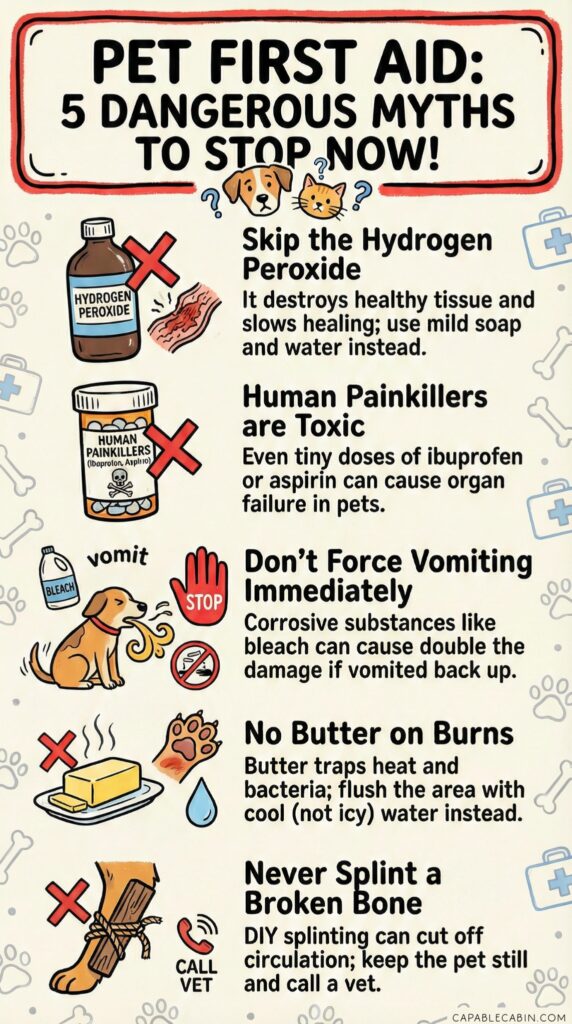
1. Using Hydrogen Peroxide Incorrectly
We’ve all heard the famous fizzing sound of hydrogen peroxide on a cut. It seems almost magical, right?
One dab, and it bubbles away the bad stuff. But when it comes to your pet’s open wounds, hydrogen peroxide can do more harm than good. According to research, hydrogen peroxide may kill some bacteria, but it also harms healthy tissue and slows down the healing process [1].
Why This Myth Persists
- It Looks Effective: The bubbles feel like “proof” that germs are being destroyed.
- Convenience: Hydrogen peroxide is a staple in many household first aid kits, so it’s often the first go-to item.
- Misinformation: Time-honored myths keep circulating in family conversations or on social media without being questioned.
What to Do Instead
- Gentle Cleaning: Use mild soap, clean water, and a soft washcloth to rinse the wound carefully. Pat gently rather than scrubbing.
- Watch for Severity: If you see deep cuts or suspect heavy bleeding, contact your vet. A wipe-down at home might not be enough.
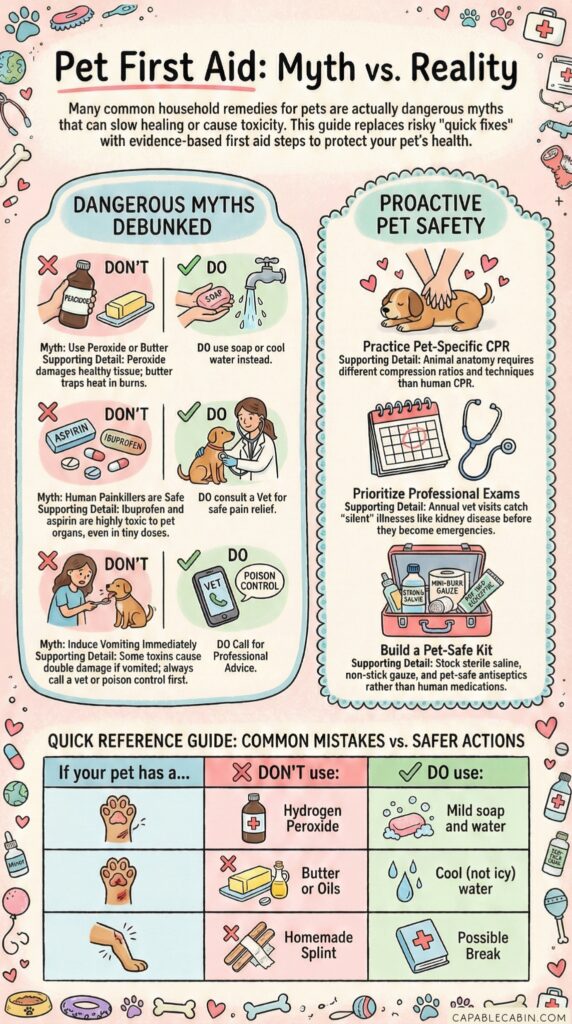
- Stock the Right Supplies: Keep a well-organized pet first aid kit list on hand, stocked with items safer than hydrogen peroxide: sterile saline, non-stick gauze, and mild antiseptic solutions specifically for pets.
Key Takeaways
A little bubble doesn’t always mean better healing. As tempting as it is to reach for what’s in your medicine cabinet, mild soap and water are safer bets. If you see ongoing redness, swelling, or bleeding, it’s time to call a professional.
Relying On Human Painkillers
Picture this: you notice your dog limping or your cat acting lethargic, and you hate to see them in pain. You might think, “Just half a tablet of my pain medication will help,” right? Not exactly. Human painkillers—like ibuprofen, acetaminophen, or aspirin—are toxic to pets, even in tiny doses. These medications can lead to stomach ulcers, kidney damage, or liver failure [1].
2. Why This Myth Persists
- Shared Symptoms: It’s easy to assume our pets feel the same type of pain we do, so we try to treat them the same way.
- Desire for Quick Relief: It’s heartbreaking to see your four-legged friend suffer. Offering a pain pill might seem like you’re helping.
- Unaware of Toxicity: Sometimes we just don’t realize certain human meds can be lethal to an animal’s smaller organs and different biology.
What to Do Instead
- Contact Your Vet: If you suspect your pet is in pain, call your veterinarian immediately. They have safe, pet-specific medications.
- Check Emergencies: For severe pain episodes, especially outside regular office hours, consider pet emergency medical preparedness tips and call an emergency vet clinic.
- Preemptive Planning: Keep your own meds in a locked drawer or cabinet so curious pets can’t accidentally ingest them. It’s a crucial step in overall common pet emergencies.
Key Takeaways
It might feel natural to treat your pet’s pain like you would your own, but that well-intentioned approach can create drastic problems. Your vet is your best ally, and there are approved pain relief options that won’t put your furry buddy at risk.
3. Inducing Vomiting No Matter What
It’s a stressful scenario: your pet just swallowed something that looks suspicious. Maybe it’s a household cleaner, a leftover human snack, or an unknown pill.
In a rush, you might think forcing them to throw up is the logical fix. But inducing vomiting can be harmful under many circumstances. Certain substances, like bleach or gasoline, can cause more damage if they’re vomited back up the esophagus [1].
Why This Myth Persists
- Immediate Reaction: We want instant results. We hope vomiting grabs that dangerous substance before it digests further.
- Common Advice: Some outdated pet care books and websites still advise making pets vomit for almost every ingestion case.
- Limited Awareness: People might not realize certain chemicals cause severe burns or airway damage when regurgitated.
What to Do Instead
- Call a Professional: Reach out to a vet or pet poison control hotline right away. They can assess the risk, including if induced vomiting is appropriate.
- Gather Details: Have the product label, approximate amount ingested, and your pet’s weight ready to share. It helps the vet provide better instructions.
- Observe Carefully: If your vet advises induced vomiting, they’ll tell you how to do it safely, possibly with recommended substances other than hydrogen peroxide.
Key Takeaways
Your instinct to “get the poison out” is entirely understandable, but it’s not always correct. Some toxic substances can do double damage on the way back up. In an emergency ingestion situation, quick guidance from a vet is far safer than guessing.
4. Applying Butter On Burns
We’ve likely heard an old tale about gently applying butter to minor burns—maybe even for ourselves. But using butter, oils, or creams on your pet’s burns can trap heat and bacteria, ultimately making things worse. Plus, many ointments are toxic if licked by dogs or cats [1].
Why This Myth Persists
- Traditional Remedies: Some family remedies include butter or cooking oil to “soothe” skin. The same thinking gets applied to pets.
- Cool Sensation: People assume butter might cool the burn, likening its effect to aloe vera.
- Lack of Vet Knowledge: If you don’t frequently visit a vet or research pet care, it’s easy to pick up old-school tips without question.
What to Do Instead
- Flush With Cool Water: Run cool (not icy) water gently over the burn for a few minutes. This helps reduce heat and cleans the area.
- Contact Your Vet: Burns can be tricky. Even if it looks minor, a vet can check for deeper tissue damage.
- Avoid Ice & Ointments: Ice can harm delicate tissues, and random ointments might pose a toxicity risk or worsen infections.
Key Takeaways
Butter may sound like a quick fix, but it can compound the injury. If your pet suffers a burn, prioritize cool water rinses and professional advice. That approach reduces pain and the chance of infection, which is essential for a speedy recovery.
5. Splinting Broken Bones At Home
Let’s say your energetic pup jumps off the couch and lands awkwardly, or your cat tumbles from a high shelf. A broken leg is terrifying, and you might feel you have to do something right away—like splint it yourself. However, an amateur splint can cut off circulation or push the fracture into more dangerous positions [1].
Why This Myth Persists
- Sense of Urgency: In an emergency, we want to fix the problem immediately, often ignoring our own lack of medical skill.
- Visual Similarities: We see human-grade splints used all the time on TV, so we assume a makeshift version will help our pets too.
- Misguided Empathy: It’s natural to want to stabilize a break the same way you might for a person. But animals’ anatomy and comfort levels differ.
What to Do Instead
- Limit Movement: Keep your pet as still and calm as possible. Some people create a temporary stretcher using a towel or blanket.
- Get Veterinary Help Fast: Transport your pet to a vet immediately. They might need X-rays, sedation, or specialized orthopedic care.
- Stay Prepared: Knowing where your nearest emergency vet is located is part of good pet emergency medical preparedness.
Key Takeaways
DIY splinting might sound heroic, but it’s risky. Your number one goal is minimizing further injury until you get to the professionals who have the tools to handle fractures safely and painlessly.
Assuming Pet CPR Is The Same
If your pet collapses or stops breathing, every second counts. You may have learned human CPR at some point, so the next step seems obvious—just do the same on your pet, right? Actually, pet CPR has distinct techniques, compressions, and rescue breath ratios that depend on the animal’s size and build [2].
Why This Myth Persists
- Limited Awareness: Many pet owners haven’t heard there’s a specific protocol for dogs or cats. They assume CPR is universal.
- Shared Emergencies: We see one CPR demonstration, figure it must apply to everyone, including our furry friends.
- Lack of Training: While plenty of folks learn basic human CPR in first aid courses, fewer enroll in pet-specific versions.
What to Do Instead
- Learn Pet CPR: Consider taking a pet-specific CPR course. Many local shelters or community centers offer workshops. In a pinch, online tutorials from reputable sources can help you learn correct hand placements and compression rates.
- Stay Calm: If you’ve never practiced on a pet mannequin or studied guidelines, call your emergency vet for immediate guidance while you try to assist.
- Update Skills: Even if you took a course once, guidelines can change. Revisit your knowledge now and then to stay sharp.
Key Takeaways
You can absolutely assist a pet in respiratory or cardiac distress—just not exactly the way you’d do for a human. Getting the right training saves vital seconds when the unexpected strikes.
Skipping Regular Vet Visits
You love your pets but figure that if they’re mostly indoors (or seem healthy enough), you can skip routine check-ups. After all, that saves time and money. But even a cat who never sets paw outside can develop issues like kidney disease, obesity, or parasites. You might miss early warning signs of illness if you’re relying on outward appearances alone [3].
Why This Myth Persists
- Perceived Low Risk: Owners assume their indoor pets aren’t exposed to hazards outside, so fewer vet visits are needed.
- Budget Concerns: Vet appointments can be pricey, so skipping them feels like saving money.
- Lack of Obvious Symptoms: Many pet illnesses progress silently. Without a professional exam, you might not know anything’s wrong until it’s urgent.
What to Do Instead
- Schedule Annual or Biannual Exams: Even if your pet appears fine, routine bloodwork and stool checks can catch problems early.
- Keep an Eye on Behavior: A small change in appetite or energy might be your only tip-off that something’s brewing. Share these with your vet.
- Explore Budget-Friendly Tips: If cost is a concern, some clinics offer wellness packages or payment plans. Early detection can be cheaper than dealing with advanced disease later.
Key Takeaways
Regular vet visits aren’t just for shots. They’re your best defense against hidden ailments that could become major. In the spirit of overall pet emergency preparedness (or general peace of mind), routine check-ups help you spot issues faster, saving stress and money in the long run.
Trusting Home Remedies Blindly
From Dr. Google to social media posts, there’s no shortage of home remedies for pet ailments. Maybe someone swears by a vinegar rinse, or insists that garlic in your dog’s food is “natural.” But many of these remedies can be irritating, toxic, or simply ineffective for treating wounds, burns, or infections in animals [4].
Why This Myth Persists
- Anecdotal Evidence: Stories of “it worked for me” travel fast, and some folks might see short-term improvements that aren’t medically proven.
- Desire for All-Natural: We often look for chemical-free or budget-friendly solutions, especially if we’re worried about side effects.
- Social Media Virality: Home remedy tips pop up everywhere, making them feel mainstream or trustworthy without solid backing.
What to Do Instead
- Check with a Vet: Before applying something new to your pet’s wound or adding it to their diet, ask a professional.
- Read Ingredient Labels: Honey or aloe vera might help in some circumstances, but even these can be harmful if they’re not pure or if mixed with dangerous additives.
- Focus on Evidence: Gather real facts from veterinary sources instead of relying on random how-to videos or unverified postings.
Key Takeaways
Home remedies might sound appealing, but it’s easy to do more harm than good. Your furry friend’s health can’t rely on guesswork. When you’re unsure, look for evidence-based sources or talk with your veterinarian.
Myth-Busting In Action: A Handy Recap
Below is a quick summary of each myth, why it’s risky, and what you can do instead.
| Myth | Potential Danger | Safer Alternative |
|---|---|---|
| 1. Using Hydrogen Peroxide Incorrectly | Damages healthy tissue, slows healing | Mild soap and water; vet care for deep wounds |
| 2. Relying On Human Painkillers | Toxic effects on organs (kidney, liver, stomach) | Vet-prescribed pet-safe meds |
| 3. Inducing Vomiting No Matter What | Further damage from corrosive or oily substances | Call vet or poison hotline first for tailored advice |
| 4. Applying Butter On Burns | Traps heat and bacteria, potential toxicity if licked | Flush with cool water; consult vet |
| 5. Splinting Broken Bones At Home | Can worsen fracture, cut circulation | Keep pet still; seek veterinary treatment |
| 6. Assuming Pet CPR Is The Same | Incorrect technique wastes precious time | Learn pet-specific CPR, or call vet for immediate guidance |
| 7. Skipping Regular Vet Visits | Misses silent illnesses, delayed detection | Routine check-ups, tests, and early interventions |
| 8. Trusting Home Remedies Blindly | Possible toxicity, delayed professional care | Consult vet, use only proven, safe treatments |
Extend Your Knowledge: Additional Tips And Insights
In an emergency, knowing what not to do can be as crucial as knowing the right steps. Here are a few overarching principles to round out your readiness:
Understand Common Emergencies
You don’t have to be an expert in veterinary science, but it really helps to know the red flags. Sudden confusion, excessive bleeding, seizures, or inability to stand can signal serious trouble. If you’re unsure, check out common pet emergencies for a quick breakdown, so you’re not caught off guard.
Create A Pet-Centered First Aid Kit
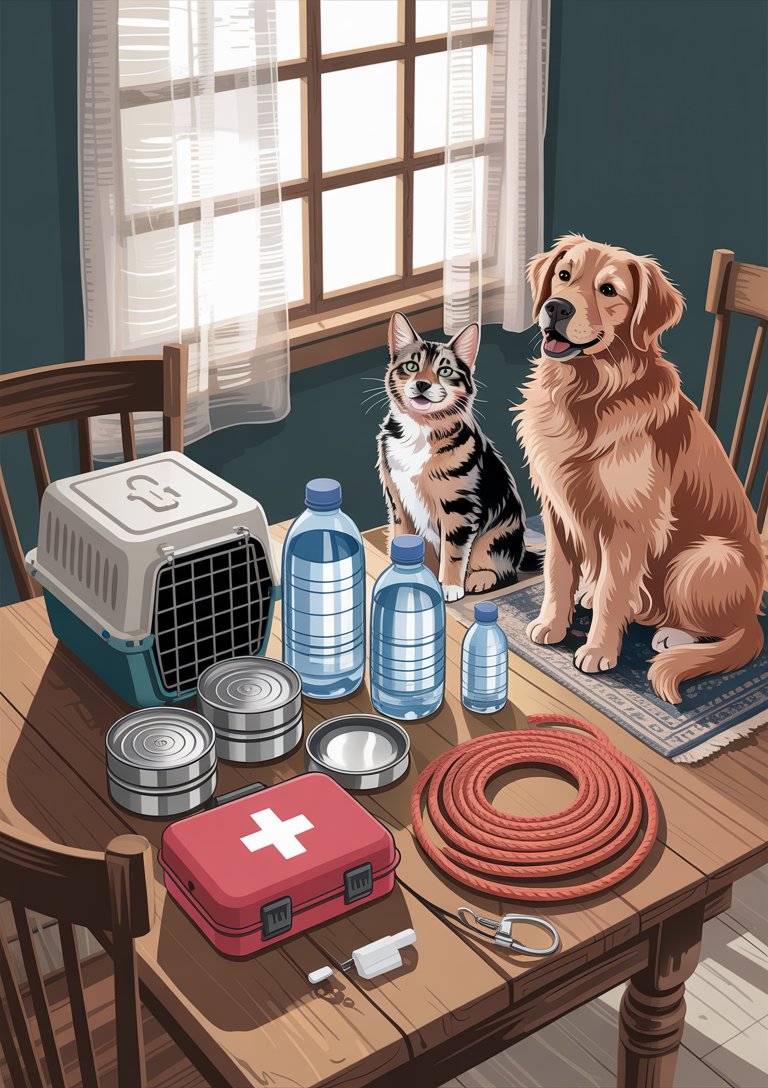
Your home first aid kit likely has Band-Aids and hydrogen peroxide, but you’ll want to customize one specifically for your four-legged friends. Include sterile gauze, non-stick pads, pet-safe antiseptics, tweezers, and a digital thermometer. For a comprehensive checklist, see our pet first aid kit list. You’ll sleep better knowing you’re ready for cuts, scrapes, or other mishaps.
Plan For Bigger Crises
Sometimes, you face not just a minor injury but a full-blown disaster—like floods, hurricanes, or even extended power outages. Having a step-by-step blueprint for pet emergency medical preparedness can protect your pet when minutes matter. Store backup food, medication, vet records, and contact info in a watertight bag, and consider these steps:
- Have A Safe Space: Identify an area in your home (or a shelter option) that’s pet-friendly.
- Evacuation Strategy: Know the pet-friendly hotels or friends who can house you both if needed.
- Keep Documents Handy: Proof of vaccinations, vet contact, and emergency phone numbers can speed up care.
Know When To Delegate
Not every pet owner can expertly handle a rescue-breath scenario or complicated wound cleaning. And that’s perfectly okay! What matters is you know how to spot trouble and who to call when advanced care is needed. Even in everyday life, leaning on professionals can bring peace of mind.
Monitor Your Pet’s Behavior
Animals have a way of hiding discomfort. Pay attention to appetite changes, mobility issues, or general mood shifts. Early signs can be subtle—like just a slight limp, or reduced eagerness to greet you at the door. This is where your strong relationship with a trusted vet shines. A quick call might be all it takes to prevent a bigger crisis.
Conclusion: Building Safer Habits, One Step At A Time
It’s natural to reach for quick fixes or old “tried-and-true” methods when a crisis pops up. We’re all aiming for the same goal—helping our pets feel better. But sometimes, these myths stand in the way. By identifying common pitfalls—like using human medicine, incorrectly inducing vomiting, or trusting outdated household remedies—you’re already taking a huge step toward better caregiving.
Remember, you don’t have to go it alone. Between your veterinarian’s guidance, evidence-based resources, and a well-stocked first aid kit, you can manage plenty of minor mishaps with confidence. And for those bigger emergencies, advanced planning ensures you won’t be scrambling at the last minute. You’re doing the best you can for your furry friends, and each myth busted is a victory for their well-being.
So keep going, stay curious, and never hesitate to seek professional help when something feels off. You’ve got this—and you’re not alone in wanting a safer, happier life for your pet. After all, looking out for them is part of looking out for yourself and your family. Each shift toward accurate information strengthens that human-animal bond we cherish so much. Here’s to building new habits and discarding the myths that no longer serve us. Go ahead and give your pet a well-deserved pat—because you’re both in this journey together.