15 Emergency Planning Tasks You Can Complete This Weekend
Busy professionals and families—let’s reframe this challenge strategically.
Your packed schedule isn’t a barrier to emergency readiness; it’s exactly why weekend emergency planning becomes your most powerful productivity investment.
Strategic Time Management Reality:
Two focused weekend days of emergency preparation eliminate months of potential crisis chaos. This isn’t about adding stress—it’s about building unshakeable confidence through systematic readiness.
Psychological Advantage Framework:
- Proactive Control: Replace anxiety with empowered action
- Strategic Efficiency: Front-load preparation to maximize long-term peace of mind
- Family Security: Transform vulnerability into collective resilience
- Confidence Building: Create protective systems that support your loved ones
Weekend Planning Power Strategy:
Simple, high-impact tasks that compound into comprehensive family protection. Each completed element builds momentum and eliminates future stress triggers.
Empowerment Approach:
Focus on manageable, strategic actions that fit naturally into weekend rhythms. No overwhelming complexity—just smart, systematic preparation that adapts to your lifestyle.
Bottom Line:
Strategic weekend investment creates exponential returns in family security and personal confidence. You’re not just checking boxes—you’re building an adaptive foundation that protects everything you value most.
Ready to transform your weekend into a strategic preparedness powerhouse? Let’s convert those precious hours into unshakeable family resilience.
. Whether you’re navigating emergency planning apartment living or coordinating a emergency planning multi generational household, these 15 steps are doable and budget-friendly. Let’s dive into what you can complete this weekend.
1. Gather Vital Documents
Having your paperwork in one spot gives you peace of mind and speeds up recovery after a crisis. Start by locating these essentials:
- Birth certificates, marriage license, Social Security cards
- Passports and driver’s licenses
- Insurance policies (home, auto, health)
- Medical records and prescription lists
- House deeds or lease agreements
Once you’ve rounded up the originals, scan them with your phone or a home scanner. Save encrypted copies to cloud storage or a USB drive. Keep printouts in a waterproof folder or fireproof lockbox. By securing both physical and digital backups, you’ll know your family’s record-keeping is covered, come what may. For more on organizing paperwork, see emergency planning documents.
2. Create an Emergency Contact List
When cell service falters, having multiple ways to reach loved ones is priceless. At a minimum, list:
- Out-of-area relative or friend as designated check-in
- Neighbors and nearby friends who can assist
- School, daycare, or pet sitter contacts
- Local police, fire department, and the nearest hospital
- Utility companies’ emergency hotlines
Type everything into your phone’s contacts and print a paper version. Attach a copy to your fridge or bulletin board so everyone can grab it in a rush. A laminated checklist or magnetic list can survive splashes and tears. If you need a template, check out our guide to the emergency contact list essential building.
3. Assemble a Basic Emergency Kit
Building or updating your family’s emergency kit might be easier than you think—you probably already own many supplies. Aim to pack:
- Three days of water (1 gallon per person, per day)
- Three days of nonperishable food (canned goods, energy bars)
- Battery-powered flashlight and extra batteries
- First-aid kit stocked with bandages, antiseptic wipes, and pain relievers
- Whistle, multi-tool, and sturdy work gloves
- Local maps, a hand-crank radio, and dust masks
Use a durable tote or bucket so the kit is portable. Label each bag with your name and contact info. Rotate food and water every six months to keep things fresh. If you need inspiration, learn which items you may already have in emergency supplies already own.
4. Pack a Ready-to-Go Bag
A go bag is your family’s grab-and-go survival kit for evacuation. Here’s what to include:
- Copies of vital documents in a waterproof pouch
- A change of clothes per person, sturdy shoes, and rain gear
- Essential toiletries (toothbrush, travel-size soap, sanitary products)
- Basic medication and a list of prescriptions
- Portable phone charger or power bank
- Cash in small bills, local and out-of-area currency
Store backpacks under beds or in a hallway closet. Alert everyone where the bags live, and check once a year that items still fit and work. Learn more about packing your family’s emergency documents go bag.
5. Plan Your Evacuation Routes
Knowing how to get out of your house—and your neighborhood—can make all the difference. Over the weekend:
- Identify two exit paths from each room in your home
- Map driving routes to at least two safe locations (friend’s house, shelter)
- Bookmark offline maps on your phone in case data fails
- Note road closures or flood-prone areas around your home
Walk the routes with kids so they feel familiar. Snap photos of key landmarks or street signs to avoid confusion in low visibility. Post a simple floor plan on the fridge so everyone remembers meeting points.
6. Establish Your Communication Strategy
In a major event, you may need an out-of-area contact to relay information.
Step by step:
- Choose a distant friend or relative as your “family check-in”
- Teach everyone how to text that contact with a simple code (for example, “Status OK”)
- Set scheduled check-in times (morning, midday, evening)
- Create a group chat that works on Wi-Fi (WhatsApp, GroupMe)
Test the process now by sending texts and voice notes. If cell service is overloaded, texting often works better than calls.
For more tips on staying in touch, visit emergency communication planning.
7. Review Financial Preparedness
Money matters don’t stop during emergencies. This weekend:
- List bank accounts, credit cards, and safe deposit box location
- Set aside a small emergency fund of $200–$500 in cash
- Arrange automatic bill pay for utilities or rent
- Contact your bank to learn about disaster relief protocols
Store a screenshot of account numbers in your phone’s password manager. Make sure at least one adult knows how to access joint accounts.
For more insight, explore our financial emergency planning guide.
8. Update Medical Information
Keep health details current so first responders can help quickly:
- Write down each family member’s allergies and chronic conditions
- List all prescribed medications, dosages, and refill info
- Include doctor and pharmacy contact details
- Add immunization records for kids and pets
Put this list in your go bag and in your glove compartment. A laminated summary is water-resistant and easy to grab. If someone has special medical gear—like an inhaler or EpiPen—pack extra doses in your kit.
9. Discuss Roles With Family
Clarity keeps panic at bay. Over brunch or coffee, assign tasks:
- Who grabs the go bag
- Who calls the out-of-area contact
- Who pets and livestock
- Who handles turning off the utilities (gas, water, electricity)
Write names next to roles on your printed emergency plan. Role-playing once helps everyone remember who does what. When kids pitch in, they feel empowered—not scared. To spark those conversations, see emergency planning conversations kids.
10. Practice a Mini Drill
A quick rehearsal ensures smooth action if disaster strikes. Try this drill:
- Sound the smoke alarm—everyone drops, covers, and crawls to the closest exit
- Meet at your designated outdoor spot and do a headcount
- Time yourselves and note delays or hiccups
- Discuss fixes (“Next time I’ll grab my keys sooner”)
Aim to run a drill every six months. If you’ve got little ones, turn it into a game—reward the fastest exit time. For more guidance, check practice emergency plans kids.
11. Secure Your Home
Simple home-safety checks can prevent damage or injury:
- Inspect smoke and carbon monoxide detectors; replace batteries if overdue
- Test fire extinguishers and teach everyone how to use them
- Clear gutters and downspouts of debris
- Tie down or bring in lightweight outdoor furniture
If you live in a flood or earthquake zone, consider placing heavy items on lower shelves. Knowing your home is as safe as it can be frees you to focus on people first.
12. Identify Special Needs
Every family has someone who needs extra care. Over the weekend:
- List neighbors or relatives who need help evacuating
- Gather supplies for infants (diapers, formula), seniors (glasses, hearing aids), or pets
- Pack copies of mobility or medical equipment prescriptions
- Note local services for people with disabilities
Create a buddy system with someone in your emergency planning caregivers network. When everyone’s needs are mapped out, you won’t scramble in a crisis.
13. Stock a Pet-Friendly Kit
Our furry friends need planning, too.
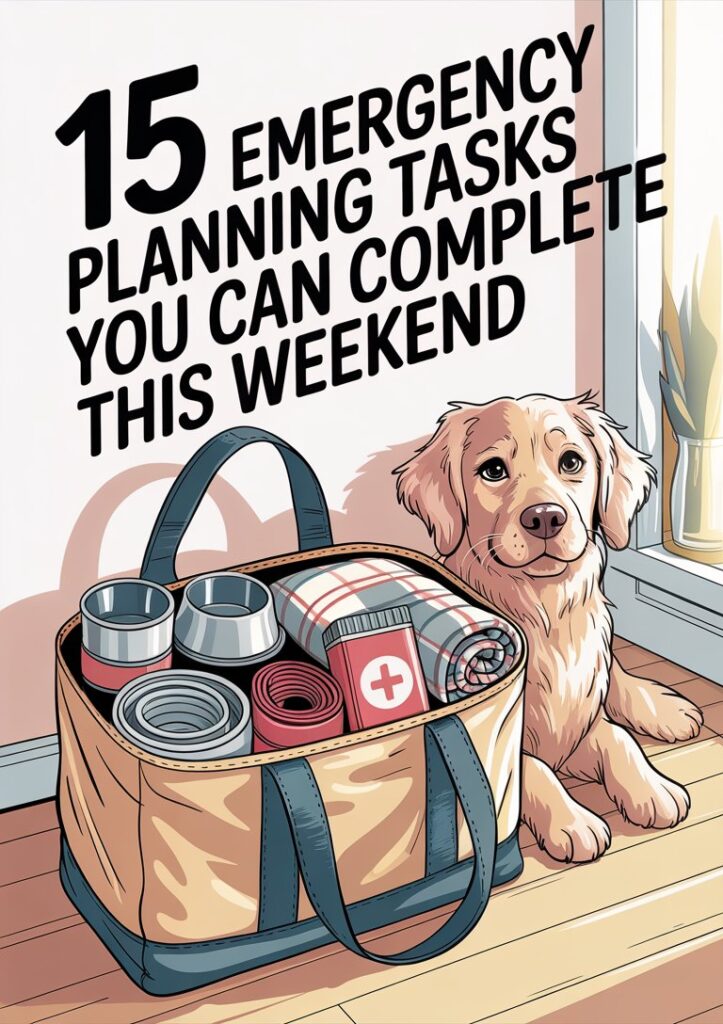
In your pet bag, include:
- Three days of pet food and fresh water
- Leash, carrier, litter box, or pee pads
- Up-to-date vaccination records and microchip info
- Favorite toy or blanket for comfort
Store the kit near your go bag so you grab both at once. Practice loading your pet carrier calmly—animals can sense stress.
14. Check Your Insurance Coverage
Insurance gaps can cost you dearly after a disaster. Take these steps:
- Review homeowner or renter policy limits and deductibles
- Ask about flood, earthquake, or windstorm add-ons if relevant
- Note claim filing procedures and deadlines
- Snap a quick video of your home’s interior and exterior
Email policy summaries to your out-of-area contact. This record can speed up claims even if your home server fails.
15. Learn Basic First-Aid Skills
A little knowledge goes a long way. This weekend:
- Watch a free online CPR or first-aid demo (check Red Cross resources)
- Practice cleaning and bandaging a mock wound
- Learn how to stop bleeding and treat shock
- Keep a first-aid reference card in your kit
Sign up for a community class if you prefer hands-on training. Knowing you can help an injured loved one is empowering—and it might just save a life. For family-focused skill sets, see emergency planning skills families.
Cabin Chat
Q1: How often should I update my emergency plan?
A1: Aim for once a year or after big life changes, like a move or new baby. Regular tweaks keep everything current. See how often update emergency plans.
Q2: What’s the easiest way to store evacuation routes?
A2: Take a screenshot of your planned routes on your phone and save it in a dedicated folder. Print a small map and tape it near the front door so it’s ready when you are.
Q3: How can I get kids excited about drills?
A3: Turn drills into a challenge—who can exit the fastest? Award fun titles like “Safety Star.” For more ideas, check out talk emergency planning kids.
Q4: Can I prepare on a tight budget?
A4: Absolutely. Use items you already own—canned goods, backpacks, multitools—and gradually replace spent supplies. Learn more about emergency planning any budget.
Q5: Should teenagers have their own roles?
A5: Yes, teens can manage tasks like updating social media check-ins, carrying the emergency contact list, or helping younger siblings. Read tips on how to teach teens emergency planning.
Q6: How do I involve extended family who live far away?
A6: Share your family plan via email or cloud link, then schedule a quick video chat to walk them through roles. Coordinate get-togethers at regional safe spots if travel is required. For multigenerational tips, see emergency planning multi-generational.
Q7: What if I’m a single parent with limited time?
A7: Break tasks into chunks—tackle documents one evening, kit assembly on Saturday morning. You can adapt all these steps to fit your busy routine. For more tailored advice, visit emergency planning single parents.
By spending just one weekend on these steps, you’ll transform vague worries into clear, actionable plans. Go ahead, pick a task and get started today—you’ve got this.