Complete Family Emergency Planning From Worried to Prepared
Ever feel like you have a million things on your plate, and adding emergency planning feels like just another item on your to-do list?
Trust me, you’re not alone.
As busy moms and caregivers, we juggle work, carpool schedules, and maybe even pets and aging parents.
Here’s the thing, a solid, complete family emergency planning strategy can bring a huge sense of relief, not just to you but to everyone in your household.
Think of this as your friendly roadmap—from figuring out local risks to practicing a drill that feels more like a game than a chore. Let’s do this together.
By the time we’re done, you’ll know exactly how to:
- Spot the most likely hazards in your area.
- Craft a communication plan that keeps everyone in the loop.
- Build a budget-friendly emergency kit you can actually carry.
- Tailor your plan to special needs like pets, medical equipment, or multigenerational households.
- Practice drills without turning your living room into a disaster zone.
- Keep your plan fresh with quick reviews and fun family check-ins.
So here’s a thought—emergency planning doesn’t have to be overwhelming. We’ll break it down into bite-sized tasks you can tackle during nap time, after dinner, or even in a few spare minutes on the weekend.
Identify Local Hazards
Let’s start at the beginning. You can’t prepare for everything, but knowing the hazards most likely to affect your neighborhood helps you focus your efforts and your budget. That way, you won’t find yourself with a mountain of freeze-dried meals when you really needed sandbags.
Here’s how to get started:
Research common disasters.
- Floods, hurricanes, tornadoes, wildfires, earthquakes, winter storms, power outages—even severe thunderstorms can knock out electricity and internet.
- Find an overview of hazards by region on Ready.gov [1].
Talk to neighbors or community groups.
- Ask about past events and how homes held up.
- A quick chat over the fence or in your neighborhood online group can reveal practical insights no website can match.
Check official resources.
- Your city or county’s emergency management office often publishes risk assessments and flood maps.
- Local news archives sometimes cover major weather events—clip highlights for reference.
That being said, your family situation matters just as much. If you live in an apartment, emergency planning apartment living may look different than if you’re in a rural area with one main road in and out [2]. Single parents have unique concerns—peek at emergency planning single parents for tips on juggling it all solo. Whatever your setup, we’re in this together, and a clear view of local hazards is your first step toward peace of mind.
Craft Your Communication Plan
So here’s the thing—when disasters hit, cell networks can jam or go down completely. That’s why a robust communication plan feels like your family’s lifeline.
Start with the basics:
- Choose a primary and a backup contact.
- Pick someone out of town who can relay messages if local lines are busy.
- Make sure every family member saves both numbers in their phone and writes them on a card in their wallet.
- Establish meet-up spots.
- One familiar place near home, like the local park or library.
- A secondary site farther away if your neighborhood is blocked.
- Decide on communication methods.
- Text messages often slip through when calls don’t.
- Download a free messaging app that works over Wi-Fi.
- Keep a battery-powered or hand-crank radio on hand for official updates.
Ready.gov offers a fillable Family Emergency Plan form you can complete in minutes, covering everything from emergency contacts to medical information [1]. That piece of paper can be a lifesaver when stress levels spike.
Here’s a quick checklist to keep you on track:
- Emergency Contact List – primary, backup, out-of-town friend.
- Meeting Spots – neighborhood and out-of-town.
- Medical Info – allergies, prescriptions, equipment details.
- Special Instructions – pet care, child drop-offs, school reunification plans.
That being said, flexibility is key. Your spouse or partner may have a different preferred method than the kids. Check out spouse emergency planning cooperation if you need tips on aligning plans across busy schedules. And for a deeper dive into keeping everyone in the loop, swing over to our emergency communication planning guide.
Build Your Emergency Kit
Alright, let’s talk survival kits. You can absolutely buy pre-assembled bundles, but there’s something oddly satisfying about customizing your own—and it’s often kinder to your wallet.
Here’s the must-have list:
- Water – one gallon per person per day for at least three days.
- Food – three-day supply of nonperishable items like granola bars, canned goods, and peanut butter.
- First Aid Kit – bandages, antiseptic wipes, tweezers, pain relievers.
- Flashlight and extra batteries or a hand-crank model.
- Radio – battery-powered or hand-crank for emergency broadcasts.
- Multi-tool – small but mighty.
- Prescription Medications – a week’s extra supply in a waterproof bag.
- Personal Documents – insurance papers, ID cards, and your family emergency plan.
- Cash – small bills in a sealed plastic bag. ATMs may be down.
- Sanitation – moist towelettes, garbage bags, and zip-tie ties.
- Special Needs Items – formula, diapers, pet food, extra hearing-aid batteries.
Start with these essentials, then customize based on your family’s unique needs [3]. It’s recommended to store items in airtight plastic bags and then pack them in one or two easy-carry containers—like a sturdy duffel or plastic bin [4]. That way, you can grab and go if you need to evacuate.
Here’s a thought—put together smaller kits for work, car, or even the kids’ backpacks. You never know where you’ll be when the unexpected strikes, and having supplies on hand can save precious minutes.
Keep in mind budget-friendly hacks:
- Repurpose a rolling suitcase or backpack you already own.
- Buy in bulk on sale and rotate supplies before expiration.
- Use DIY water filters paired with purification tablets.
- Raid your camping gear for items like flashlights and first aid supplies.
By mixing store-bought essentials with smart upcycles, you’ll feel prepared without breaking the bank. That’s the kind of planning we can all get behind.
Plan For Special Needs
Complete plans always consider what makes your family unique. Here’s how to cover every angle:
- Children – comfort items, favorite toy, child-safe scissors for opening packaging.
- Seniors – extra pair of glasses, mobility-device attachments, easy-open containers.
- Medical Equipment – extra batteries for hearing aids or CPAP machines, oxygen tanks, backup power if you rely on an electrical device.
- Pets – food, water, leash or pet carrier, vaccination records.
- Multigenerational Households – communication arrangements, space-sharing agreements, assigned sleeping areas.
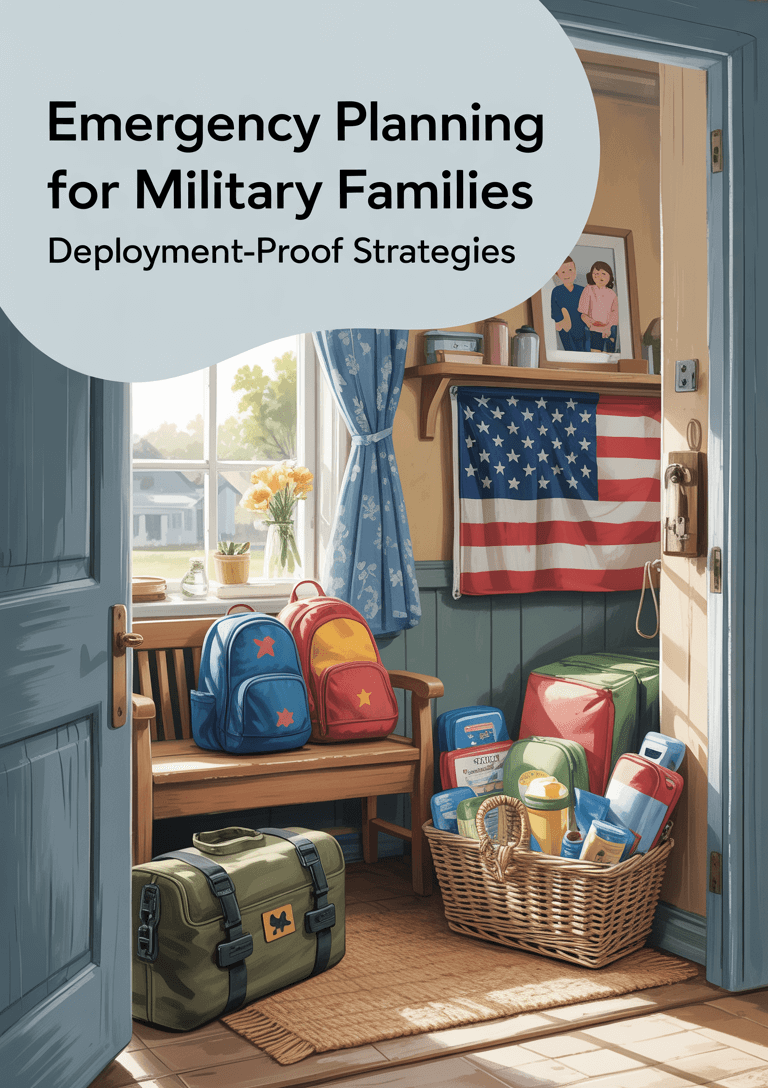
- Military Families – coordinating deployment schedules and emergency leave protocols.
- Single Parents – streamlined checklists and buddy systems for school drop-offs and pick-ups.
Tailor your kits and plans to these specifics—no one-size-fits-all approach here. If you need more ideas for caring for loved ones, check our guide on emergency planning caregivers or explore emergency planning multi generational for households spanning three or more generations.
That being said, don’t forget family reunification. In big disasters, schools and hospitals follow their own procedures. The American Academy of Pediatrics highlights the need for written disaster plans and reunification tools like “Family Reunification Following Disasters” for health care facilities [5]. As a family, store critical medical records, emergency contacts, and at least two meeting points in both digital and physical formats [6].
Practice Your Emergency Plan
We all know theory is great, but practice is where the rubber meets the road. Regular drills can feel more like a fun family activity than a chore—promise.
Here’s a simple routine:
Schedule quarterly check-ins on your calendar.
Review roles and responsibilities. Make sure kids know where to file out, where to find whistles or flashlights, and how to dial emergency services.
Run different scenarios.
Fire drill with quick exits.
Shelter-in-place drill for severe weather.
Communication check to confirm every family member can reach the out-of-town contact.
Debrief after each practice.
- What went well?
- What felt confusing or slow?
- What supplies did we forget?
Update your Family Emergency Plan form and kit based on lessons learned.
The more you practice, the more natural it feels. If you have little ones, turn it into a game—maybe a scavenger hunt to find the meeting spot, complete with a small reward. For teens, check out teach teens emergency planning and practice emergency plans kids so they take it seriously without rolling their eyes.
Remember, families that drill together stay safer together. Plus, it’s a chance to model calm, confident behavior when the unexpected happens.
Review And Update Often
Here’s the truth, emergency plans can’t sit on a shelf and collect dust. Life changes—kids graduate, pets join the household, new jobs start—so your plan needs to evolve right along with you.
Let’s make that happen:
- Set a recurring reminder.
- Quarterly check-ins for kit inventory and expiration dates.
- Annual deep dives to update contacts, medications, and meeting points.
- Rotate supplies.
- Use near-expiration items in your pantry and replace them with fresh ones.
- Add seasonal gear—extra blankets in winter, cooling towels in summer.
- Review key documents.
- Update insurance policies and financial records.
- Back up digital files to the cloud and keep physical copies in a fireproof, waterproof container [6].
- Refresh everyone’s memory.
- Share any changes with your personal network—neighbors, friends, out-of-town contacts.
- Revisit drills briefly after major life events like moving or adding a new family member.
If you ever wonder how often update emergency plans or need motivation to emergency planning habits stick, remember that consistency is your secret weapon. A little effort now prevents last-minute panic later.
Maintain Your Preparedness
You’ve built a plan, tested it, and made updates. Now let’s keep the momentum going.
Here’s the mindset shift to embrace:
- Celebrate small wins.
- Did you replace expired snacks? High five.
- Did the kids remember the meeting spot? That’s progress.
- Shared the plan with your babysitter or neighbor? Go you.
- Keep it positive.
- Emergency planning isn’t about living in fear.
- It’s about knowing you’ve done your best to protect the people you love.
- Lean into community.
- Swap best practices with other families.
- Host a mini drill with nearby neighbors or at your kids’ school.
- Acknowledge the mental health benefits.
- Preparedness reduces anxiety [7], letting you focus on enjoying everyday moments.
Trust me, staying on top of this isn’t just smart—it feels good. We’ve all been there, staring at a half-empty kit or an outdated plan. But the more you maintain your preparedness, the more confident you’ll feel when life hits those unexpected bumps.
Cabin Chat
Q: How often should I update my family emergency plan?
A: Aim for a quick review every three months and a deeper update once a year or after big life changes. Need more guidance? Check how often to update emergency plans.
Q: I live in a small apartment, where do I store my kit?
A: Use compact solutions like stackable bins under the bed or a backpack in your closet. See tips on emergency planning apartment living.
Q: How do I get my kids engaged in the plan?
A: Turn drills into games—hide clues leading to your meeting spot or let them pack their own mini kits. For age-tailored ideas, visit practice emergency plans kids and talk emergency planning kids.
Q: What’s the easiest way to start if I’m on a tight budget?
A: Begin with items you already have—flashlights, extra blankets, canned goods—and build from there. You’ll find more cost-friendly hacks at emergency planning any budget.
Q: Where can I find a fillable emergency plan form?
A: Download the free Family Emergency Plan form on Ready.gov to capture all your critical details in one place [1].
Q: Is it really worth the time to practice my plan?
A: Absolutely. Regular drills build confidence, reduce panic, and often highlight simple fixes you might otherwise miss. For quick wins, try some weekend emergency planning tasks.
You’ve got this. Whenever you feel overwhelmed, remember we’re in this together—one small step at a time toward complete peace of mind.