Pet Emergency Preparedness on a Budget
When it comes to budget pet emergency preparedness, it’s easy to feel overwhelmed. After all, you love your furry (or feathered, or scaly) companion like family.
But hey, let’s face it: veterinary bills, emergency kits, and disaster planning can add up, leaving your wallet a little stressed out.
The good news? You don’t have to choose between your budget and your pet’s safety. With the right approach, you can tackle emergencies without depleting your savings or cutting corners on care. Think of this as a friendly chat where we walk through practical ways to keep your pet safe—even if you’re on a tight budget. We’re in this together.
Below, you’ll find an ultimate guide that covers everything from creating a simple yet comprehensive pet emergency kit to finding affordable vet care. Each section includes tried-and-true tips, references from reputable organizations, and a sprinkle of encouragement. Because, trust me, you’ve got this. Let’s get started.
Understand Why Preparedness Matters
Emergencies can strike at any moment. Whether it’s a natural disaster like a wildfire or flood, a sudden health scare in the middle of the night, or a family crisis that requires you to leave home unexpectedly, the last thing you need is the added stress of scrambling for supplies. That’s where pet emergency preparation shines—it helps you respond quickly, keeping everyone safe and calm.
- Emergencies can range from minor incidents (like a small cut on your dog’s paw) to more serious events (such as an earthquake or hurricane).
- The CDC recommends having a pet emergency kit ready at all times, including water, food, medications, and important documents [1].
- American Humane Society notes that being prepared can significantly reduce anxiety during disasters and speed up rescue efforts for both you and your furry friend [2].
Procrastination is normal, but don’t let it become a barrier. By focusing on what you can do today—like gradually building an affordable kit or creating a simple plan—you save yourself plenty of headaches down the line. And if you share your life with multiple pets, you might check out multi-pet emergency preparedness for extra tips on coordinating supplies and evacuations.
Plan Your Pet Emergency Budget
Setting aside funds for your pet’s emergency care might sound daunting, but it’s often more manageable than you think. Even small, consistent contributions can add up over time, giving you more security when an urgent situation arises.
Why Having a Pet Emergency Fund Matters
Emergencies can be pricey. According to estimates from the Emergency Veterinary Care Centers, an initial exam at an emergency room can cost anywhere from $150 to $350. More complicated procedures—surgeries, extended hospital stays, or advanced diagnostics—can quickly climb into the thousands [3].
- An emergency fund ensures you’re not caught off guard by unplanned costs.
- Saving $30 a week could let you build up over $1,500 in one year, which can go a long way toward covering emergencies.
Major Cost Considerations
1. Veterinary Expenses
- Higher after-hours fees at emergency clinics
- Potential surgeries, x-rays, or hospitalizations
2. Medications and Supplies
- At least a two-week supply of any prescription medication is crucial [4]
- First-aid supplies, including bandages and antiseptic
3. Boarding or Shelter Costs
- If you’re displaced from your home, you may need to board your pet or pay for a pet-friendly hotel
- Having a plan for temporary housing can ease the financial strain
One tip is to create a dedicated savings account strictly for pet emergencies. Even if you start with just a few dollars each week, consistency is key. You can also explore alternative funding options like pet insurance, low-interest credit cards designed for veterinary care, and nonprofit programs that help cover veterinary bills. If you’re uncertain about the right approach, you can compare your choices with a simple table:
| Budgeting Method | Pros | Cons |
|---|---|---|
| Pet Emergency Savings Account | Easy to set up, no monthly fee, flexible use | Requires discipline to stash money regularly |
| Pet Insurance | Can cover large vet bills, peace of mind | Monthly premiums may not cover all conditions |
| Low-Interest Vet Credit Card | Quick approval, can handle big bills up front | Can be expensive if payments are missed or late |
| Nonprofit Aid Programs | May cover urgent needs for low-income families | Application process can be slow, limited funding |
No single solution is perfect for everyone, but exploring these options ensures you’re better prepared when the unexpected happens.
Build a Low-Cost Kit
Putting together a pet emergency kit doesn’t have to cost a fortune. Many everyday household items can double as emergency supplies, and discount stores or online deals can help stretch your dollar.
Essential Items for Your Kit
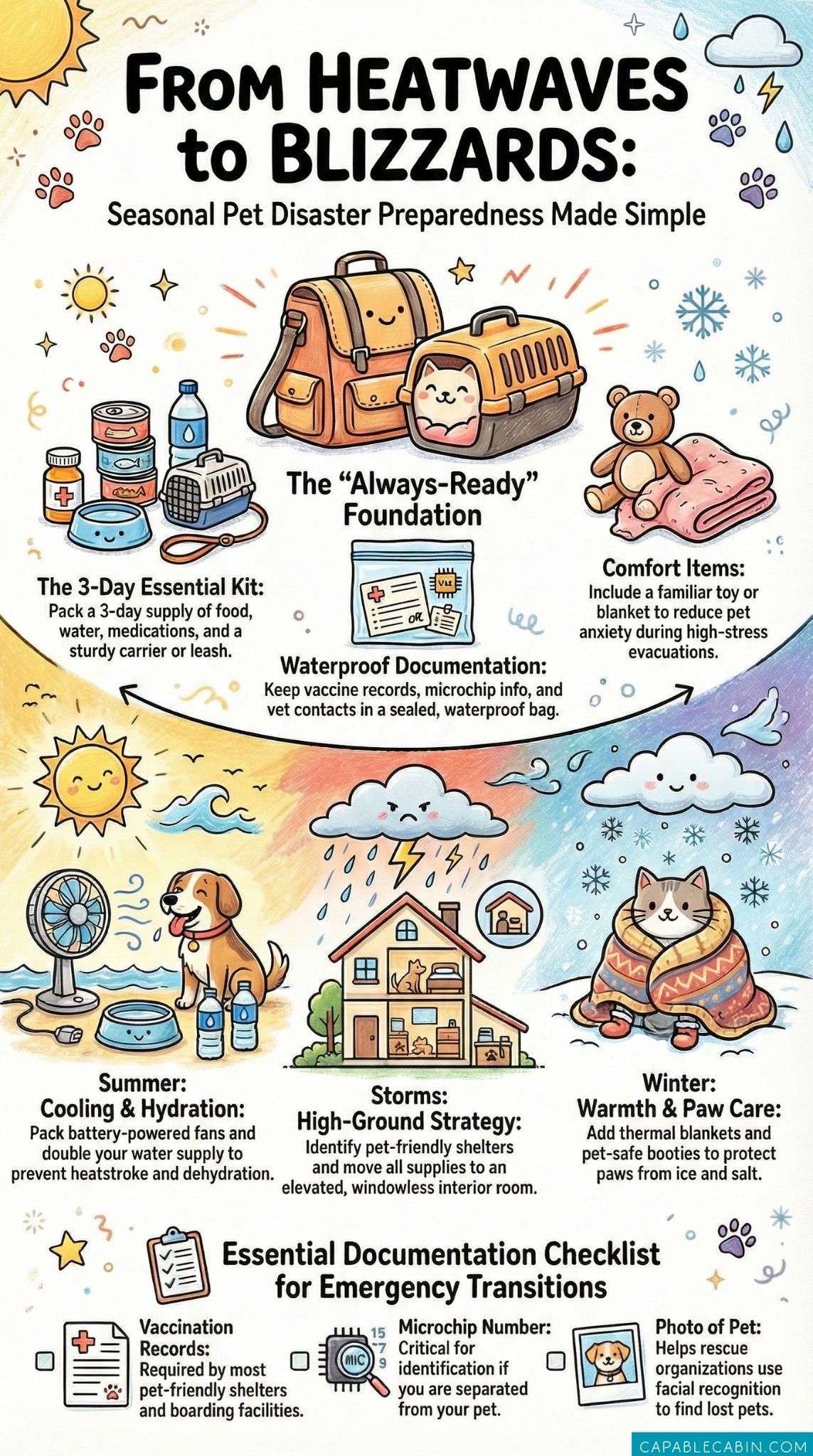
According to the CDC and Best Friends Animal Society, your pet’s emergency kit should include [5]:
- Food and Water: A minimum of two weeks’ worth
- Medications: Enough for two weeks, plus dosage instructions
- First-Aid Kit: Gauze, bandages, antiseptic wipes, and tweezers
- Leash and Collar: Ideally, with current ID tags
- Pet Records: Vaccination info, microchip details, and recent photos
- Comfort Items: A toy, blanket, or familiar-smelling towel
- Waste Disposal Supplies: Bags, litter, or newspapers, depending on your pet
You can store everything in a sturdy plastic bin that’s easy to grab and go—a tip recommended by the folks at Best Friends to speed up evacuation [4]. If you need more ideas for customizing your kit, check our pet first aid kit list.
Food and Water Storage Tips
- Rotate Before Expiration: Keep track of expiration dates and use up older supplies first.
- Consider Pet-Safe Foods: Not all human snacks are pet-friendly, so ensure your stash is free of anything that could be toxic. Check out toxic foods for pets for a helpful reference.
- Use Small Containers: This helps you ration supplies easily and prevents spoilage once opened.
Important Medications and Documentation
- Prescription Medications: Keep them labeled, with dosage instructions, and sealed in a waterproof bag.
- Vet Information: Include contact info for your regular vet, plus an emergency clinic’s details.
- Vaccination and Medical History: A simple printout or digital copy on a USB can save you valuable time in a crisis.
If you live in an apartment building, consider peeking at pet emergency prep apartments for additional tips on storing supplies in tight spaces.
Ensure a Safe Home
Being prepared isn’t just about having a stocked kit. The layout and condition of your home can significantly impact your pet’s well-being in an emergency. Even small changes, like securing electric cords or locking away harmful substances, make a big difference.
Kitchen Safety
- Keep trash cans closed and locked. Many human foods—like chocolate, onions, and coffee—can be harmful if pets manage to gobble them up [6].
- Store cleaning supplies or chemicals on high shelves or in locked cabinets.
Living Room Safety
- Tuck electric cords away behind furniture or use cord protectors.
- Make sure heavy furniture or TVs are secure, especially if you live in an earthquake-prone area. For more quake-specific pointers, see earthquake pet preparedness.
- Keep potentially poisonous plants out of reach.
Bathroom and Bedroom Safety
- Medications and personal care products can be toxic to pets, so stash them out of paw’s reach.
- If you use curtain cords, tie them up to prevent accidental choking.
- Block off any small crawl spaces where a frightened pet might hide during an emergency.
Taking these steps doesn’t require a hefty budget. Often, it’s about rearranging, child-proofing, and rethinking everyday items. Check out additional resources from American Humane for more pet-proofing ideas.
Prepare Evacuation Strategies
Emergencies sometimes force us to leave home quickly, whether it’s due to a sudden flood, a wildfire, or a severe storm. Having a clear evacuation plan keeps you and your pet safer.
Determine Where to Go
- Friends and Relatives: Ask ahead if they can host you for a few days in case of evacuation.
- Pet-Friendly Hotels: Keep a list of options along multiple routes.
- Nearby Shelters or Boarding Facilities: Some places offer emergency boarding, but confirm availability in advance.
Best Friends recommends plotting out multiple evacuation routes to avoid roads that might be blocked [4]. Also, if you’re worried about coordinating a group evacuation, consider checking out family pet emergency plan.
Create a Family Pet Emergency Plan
- Assign Roles: Decide who’s responsible for grabbing the emergency kit, who’s rounding up the pets, etc.
- Keep Pets Indoors: During an impending disaster, the safest place is often inside. Stay aware that pets might panic if they sense danger.
- Contain Them in One Area: Blocking off a room can make grabbing them for a last-minute evacuation much easier.
You could also coordinate with neighbors or a local community pet emergency response group, so if you’re away when an evacuation order hits, someone else can step in.
Find Affordable Support
It’s tough to talk finances when it comes to our beloved pets, but budget constraints are real. Thankfully, plenty of resources provide low-cost or even free aid so you can keep your pets safe and healthy.
Free Pet Food and Vet Services
- Local Charities and Shelters: Organizations often distribute free pet food or vouchers for low-cost vet care.
- Humane World: They offer a Pet Help Finder and guidance on finding local resources if you (or someone you know) struggles to afford pet care [7].
- Pet Food Banks: Many communities have food pantries specifically for pet owners in need.
Low-Cost or Sliding Scale Clinics
- Spay/Neuter Clinics: Some nationwide nonprofits provide these procedures at a reduced cost, which in turn can reduce future medical complications.
- University Veterinary Hospitals: Teaching hospitals sometimes offer discounted services while helping students gain experience.
- Nonprofit Vet Clinics: Certain clinics operate on a sliding-scale model, charging less for families who qualify.
Financing Options
According to the EVCC, pet owners can explore various ways to handle emergency treatments [3]:
- Dedicated Credit Cards: Some have low-interest rates for vet bills.
- Emergency Aid Programs: Local or national organizations may help with urgent cases.
- Payment Plans: Some vets allow monthly payments to spread out the cost.
Do a bit of research now, rather than waiting until you’re in crisis mode. By getting pre-approved for certain credit options or applying to nonprofits in advance, you can keep your composure when an emergency strikes.
Learn Basic First Aid
Part of being prepared is knowing what to do in the critical minutes before you can reach a vet or emergency shelter. Simple skills—like stopping bleeding or recognizing signs of heatstroke—can prevent a minor issue from turning into a life-threatening scenario.
Learn Basic Pet First Aid
- American Red Cross Course: They offer an online Cat & Dog First Aid class covering vital signs, wound care, seizures, and more [8].
- Pet First Aid App: The Red Cross also provides a free app with step-by-step instructions for common emergencies.
Keep a Pet First Aid Kit
If you’d like a more detailed shopping list, our pet first aid kit list has you covered. At a minimum, you might want:
- Antiseptic wipes or spray
- Sterile gauze and bandages
- Tweezers or blunt-tip scissors
- Disposable gloves
- Digital thermometer
Combine store-bought items with thrifty finds. For instance, discount shops or online deals can supply many first-aid basics at a fraction of the price. If you prefer crafting your own versions, diy pet emergency supplies can help you build a kit without breaking the bank.
Training Commands for Emergency Situations
Sometimes, clear communication can save your pet’s life. Teaching them a few simple voice commands or signals ensures they obey quickly in stressful environments.
- “Come” or “Here”: Reinforce with treats so they run to you even if frightened.
- “Stay”: Helps you keep them calm if there’s broken glass or other dangers around.
- “Crate”: Encourages them to enter a carrier or safe spot on command.
Check out emergency training commands for pets for step-by-step tips that work whether you have a cat, dog, or something more exotic.
Keep Momentum Going
You’ve got your emergency fund in place, a kit prepped, and some basic first-aid know-how under your belt. Now the question is: how do you make sure all this readiness stays fresh and up to date?
Rotating Supplies
- Food and Water: Replace every few months or before the expiration date. The folks at rotating pet emergency supplies recommend scheduling reminders in your phone.
- Medications: Keep track of refill dates. Don’t wait until you’re down to the last pill.
- Documents: If your pet gets new vaccinations or microchip updates, add those records to the kit right away.
Regular Budget Check-Ins
- Pencil in a monthly or quarterly check to ensure you’re still on track with your emergency savings.
- If your financial situation changes (say, a new job or unexpected bill), adjust your savings strategy without letting it drop off entirely.
Ongoing Community Support
- Join local Facebook groups or community email lists dedicated to pet owners. They often share money-saving tips, low-cost vaccine clinics, or emergency alerts.
- Consider buddying up with neighbors or friends to split bulk buys of pet food or supplies.
If you notice you’re slipping or forgetting a crucial step, don’t fret. We all have off days. Just recalibrate and pick up where you left off. You’re not alone—plenty of us are juggling life commitments while trying to ensure our four-legged pals are safe.
Conclusion
Preparing for emergencies on a tight budget doesn’t mean shortchanging your furry friend’s well-being. You can start small: set aside a little cash each week, build your kit with basic items, and pet-proof your home for everyday accidents. These seemingly minor steps add up, forming a robust safety net that protects both your pet and your peace of mind.
Whenever self-doubt creeps in, remember that you’re in good company—there’s a whole community of pet parents juggling finances and safety plans. Even if you only tackle a single tip from this guide, that’s progress worth celebrating. Next week, pick another. Over time, you’ll discover that you’ve created a well-rounded, budget-friendly emergency plan, and that sense of relief will be priceless.
Keep going, and keep caring. You and your pet deserve to feel safe, no matter what tomorrow brings. And if at any moment you feel a bit lost, just revisit these steps or reach out to the many resources listed here. We’re all in this together, and you’ve already taken the first step by reading this guide—kudos to you for that! Together, we’ll ensure your beloved companion is ready for anything, all without breaking the bank.
References
- (CDC)
- (American Humane)
- (EVCC)
- (Best Friends)
- (CDC, Best Friends)
- (ASPCAPetInsurance)
- (Humane World)
- (American Red Cross)