17 Vet-Approved Pet Emergency Preparedness Tips Every Owner Should Know
Picture this: you’re sitting on the couch, cuddling your furry friend, when a sudden realization strikes—“Wait, do I actually have a plan if something goes wrong?” Trust me, you’re not alone in that thought. Emergencies can sneak up on any of us, and it’s normal to feel a tinge of anxiety when you imagine your pet facing a crisis. But take heart. These veterinarian pet emergency tips are here to help you prep for the unexpected in a calm, practical way. Think of it as two friends chatting about how to keep our beloved companions safe when life throws a curveball. We’ve got this together.
Below, you’ll find 17 tips, all aimed at making sure you and your pet are as prepared as can be. From assembling a sturdy first aid kit to thinking about potential vet bills, each section taps into real, veterinary-backed ideas so you can feel confident you’re doing the right thing. And remember, you don’t need to tackle all these at once. Start small, celebrate each tiny step, and before you know it, you’ll have a functional plan that makes those scary “what if” moments a lot less daunting.
1. Prepare a Pet ID
One of the best ways to reunite with a lost or separated pet is identification. Microchipping is an affordable, permanent method recommended by veterinarians. Your pet’s ID tag should also have up-to-date contact details so that anyone who finds your buddy knows exactly whom to call.
- Consider having both a collar ID tag and a microchip. Collar IDs are quick to read, while microchips offer a secure backup if the collar comes off.
- Double-check that your registration info is current with the microchip provider. If your phone number or address changes, update these details immediately.
- Keep a recent photo of your pet in your wallet or on your phone, so you can provide visual proof if you’re searching for them during an emergency.
2. Keep Vet Contacts Handy
When panic sets in, having immediate access to your veterinarian, a 24-hour emergency hospital, or even a poison control hotline can be a lifesaver.
- Store your regular vet’s phone number in your phone contacts, and also place a written copy in your emergency kit.
- Look up local 24-hour vet clinics and note the addresses and phone numbers. Even if you never need them, it’s better to be safe than scrambling when every second counts.
- Identify the nearest animal poison control center (Lombard Veterinary Hospital recommends calling your vet or a poison hotline if you suspect ingestion). Keep that number visible on your fridge or pinned near your desk.
3. Assemble a First Aid Kit
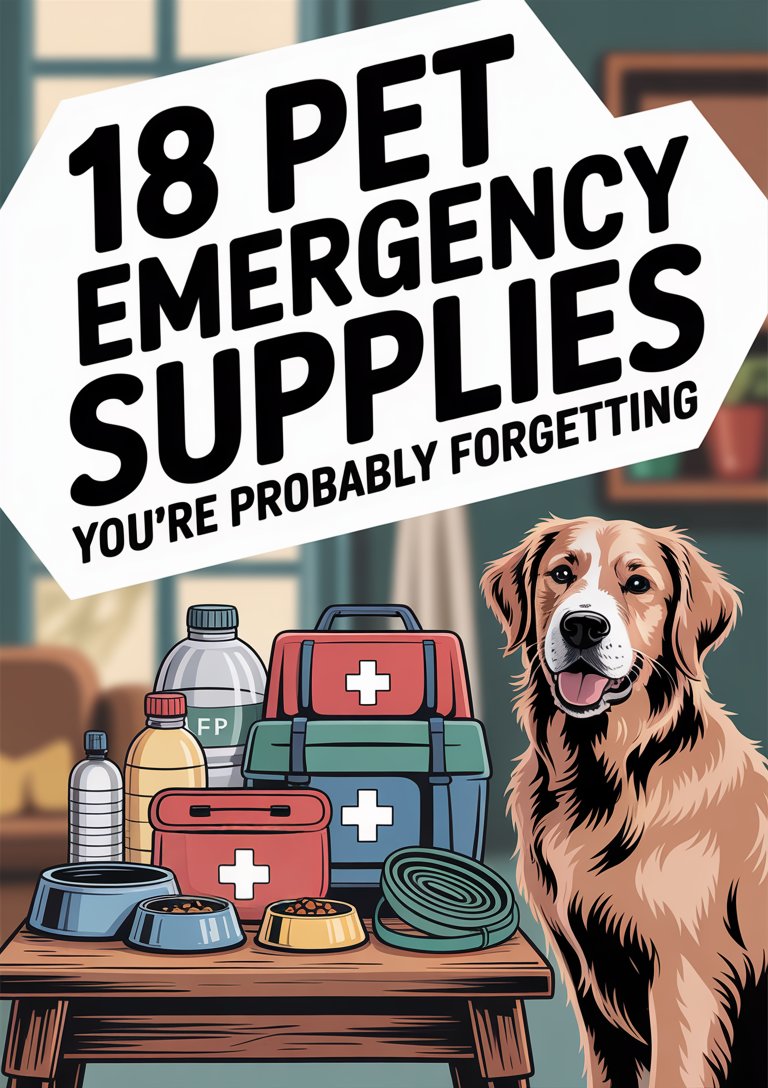
A pet-specific first aid kit is a must. According to the American Veterinary Medical Association [1], essential items might include sterile gauze, adhesive tape, hydrogen peroxide, a digital thermometer, scissors, tweezers, and disposable gloves. You can also keep an ice pack and a muzzle if your pet is severely distressed.
- Organize your supplies in a waterproof, clearly labeled container.
- Aim to set aside separate kits for home, travel, and your car if possible. Accidents don’t always happen at home.
- Keep instructions for common scenarios (choking, cuts, alert behaviors) in your kit for quick reference. For a more detailed breakdown, check out our pet first aid kit list.
4. Stock Food and Water
In an emergency—whether it’s a natural disaster or a sudden home evacuation—basic nourishment often becomes a critical concern.
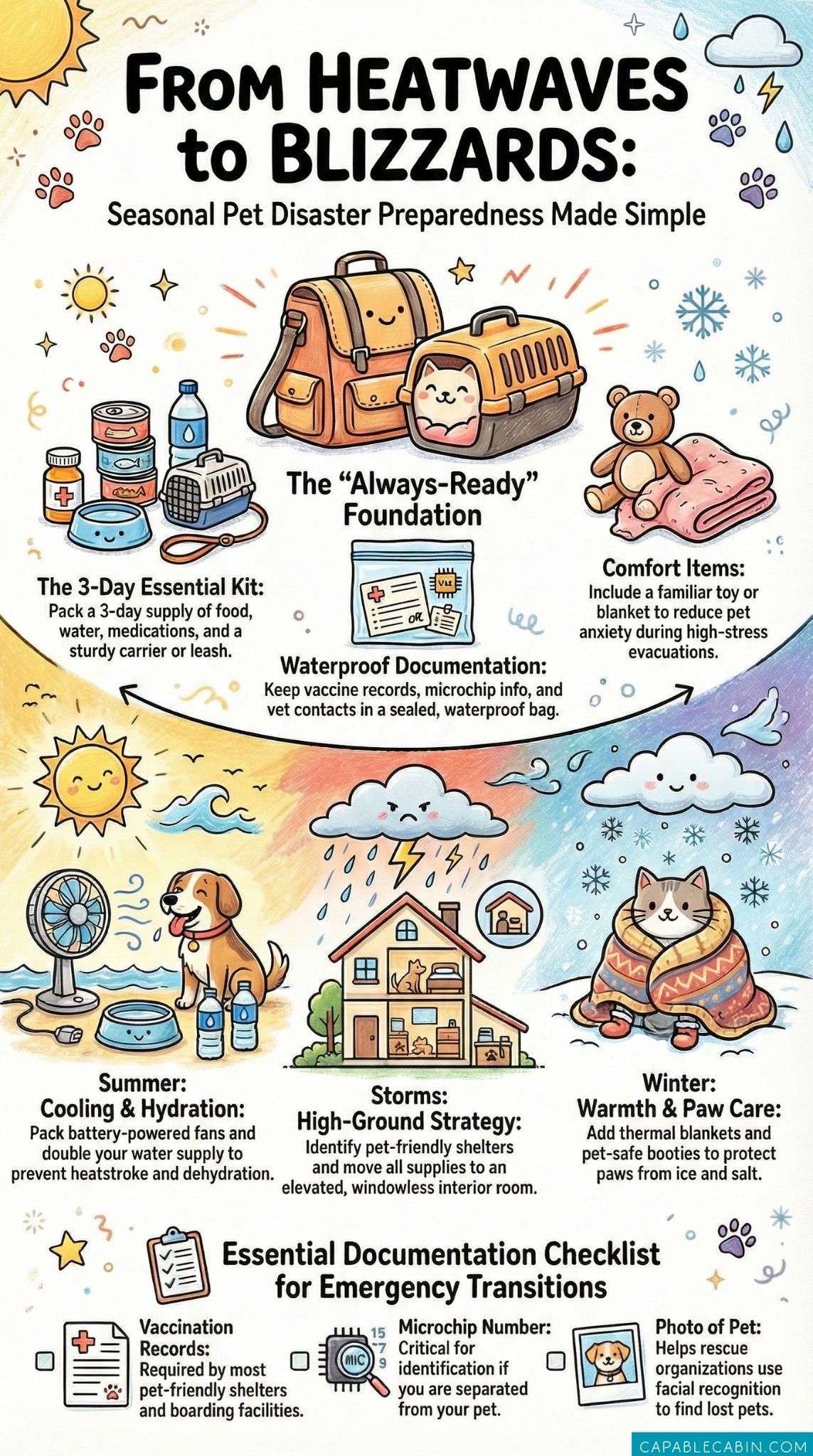
- Pack at least three days’ worth of your pet’s usual food, plus a similar supply of bottled water. (If you have room, a week’s supply is even better.)
- Switch out the food every few months to ensure freshness. This rotation also lets you spot if your pet’s dietary needs have changed.
- Store any specialty diets or prescription food separately, labeled and sealed. That way, there’s no mix-up if you’re rushing out the door.
5. Plan for Vet Costs
We all know visits to an emergency vet can be pricey. According to CareCredit, the average exam fee can range from $96 to $236 for dogs, and $94 to $228 for cats. Any additional treatments, surgeries, or overnight stays pile on quickly.
- Set up a small monthly savings plan strictly for pet emergencies, or look into pet insurance that covers urgent care.
- Check your budget to see if you can apply for a credit option like CareCredit. While debt isn’t fun, sometimes it’s the difference between getting immediate care and waiting too long.
- Research local charities or community funds that assist with vet bills. Having these options in mind ahead of time reduces stress if a crisis hits.
6. Practice Calm Under Pressure
Pets are incredibly sensitive to our emotions. If you’re freaking out, they’re likely to mirror that anxiety, which can complicate an already tense situation.
- Take a deep breath before stepping in to help. Lombard Veterinary Hospital suggests staying calm to help your pet remain calmer too.
- Focus on stable, gentle movements. Rushing or yelling can scare your pet into biting or running away.
- If your pet is injured, speak softly to reassure them. This helps build trust and may prevent the situation from escalating.
7. Gather Vital Documents
Having a quick grab-and-go folder of critical paperwork can save you from fumbling in an emergency.
- Include vaccination records, medical history, prescription info, and a recent photo.
- Keep a copy of your pet’s microchip and license documentation as well.
- Store these in a waterproof bag or folder, then place it with your first aid kit, so everything is easy to find in one place.
8. Avoid Harmful Home Remedies
In a scary moment, it’s tempting to jump online and try the first DIY solution you see. But some actions can do more harm than good.
- Don’t induce vomiting without calling a vet or poison control center first. Forcefully using hydrogen peroxide or other substances can injure your pet’s throat if the ingested material is caustic or sharp [1].
- Steer clear of blindly giving human medication like ibuprofen or acetaminophen. They can be toxic to animals.
- Resist digging into a choking pet’s throat with your bare hands. Instead, carefully slide your fingers along the inside of the cheek to locate and remove any visible blockage, if it’s safe to do so.
9. Monitor Common Emergencies
Trauma, difficulty breathing, seizures, and ingestion of poison are among the most frequent pet emergencies, per BluePearl Veterinary Partners. Knowing what’s normal—and what’s not—helps you act fast.
- Keep track of your pet’s typical temperature, heart rate, and breathing patterns, so you’ll quickly notice any alarming changes.
- If you see labored breathing or if your pet collapses, consider it urgent.
- For deeper details on urgent signs, browse common pet emergencies so you can spot red flags right away.
10. Check for Safe Transportation
You don’t want to wait until the last second to realize you have no proper carrier or crate. Planning ahead ensures you can move your pet safely if you must leave home.
- Keep a sturdy carrier or crate for cats and smaller dogs. Label it with your contact info in case you get separated.
- For bigger dogs, have a collar or harness that’s secure and easy to grab in a rush.
- Make sure your vehicle is equipped with a pet seat belt or barrier if you plan to drive them to the veterinarian.
11. Stay Aware of Hazards
Emergencies come in many forms—hurricanes, earthquakes, floods, or even a simple household fire. The more informed you are, the better you can prep for your pet’s safety.
- Know your region’s most common risks. For instance, in earthquake-prone areas, keep carriers near exits to grab easily.
- Read about specific disaster types, like disaster specific pet preparedness, to tailor your plan.
- Keep an eye on local weather alerts. Apps that send push notifications can give you a head start on prepping.
12. Rotate Your Supplies
It’s easy to stash emergency food, water, and medication in a closet and forget about them. But these stockpiles have shelf lives.
- Mark your calendar every few months to check expiration dates.
- Rotate canned or dry pet food to keep it fresh, and keep water jugs from sitting too long.
- After restocking, label each item with the date you replaced it. This simple step helps you stay organized and ensures everything’s safe to use.
13. Train Emergency Commands
Early training might seem like an optional luxury, but in a crisis, it can be the game-changer that keeps you both safe.
- Teach basic commands like “come,” “stay,” and “drop.” During an emergency, you want your pet to respond quickly.
- Practice crate training, even if it’s just a few minutes a day. It reduces panic when you need to evacuate in a hurry.
- Consider “emergency recall” training. This specialized command helps you call your pet back instantly in risky situations. If you want a head start, see if a local trainer offers classes on emergency training commands pets.
14. Double-Check Home Safety
Even small issues around your home can pose a big risk when stress levels are high.
- Secure loose wires or chemicals that your pet might knock over in a scramble.
- Use childproof latches on cabinets that store harmful substances. Many curious pets can nudge open a door if it’s not locked.
- Move any toxic foods or plants out of reach, or check out our toxic foods for pets list if you need a refresher.
15. Save Important Numbers
Along with your vet’s contact info, keep phone numbers for local animal shelters, boarding facilities, and pet-friendly hotels in case you need a safe place to stay.
- Build a mini resource list so you’re not Googling “24-hour pet shelter near me” in a last-minute scramble.
- Don’t forget friends or family members who can foster your pet short-term if you’re really stuck.
- If you have a neighbor who’s close with your pet, consider making them your emergency contact.
16. Have a Backup Caretaker
Life can throw anything at you—job shifts, hospital visits, or a personal crisis. Arranging a go-to caretaker ensures your pet doesn’t get ignored if you’re suddenly unavailable.
- Choose someone your pet already trusts. This might be a family member, friend, or neighbor.
- Give this person a spare key or reliable access to your home. Keep them in the loop about your pet’s routines, dietary needs, and medical conditions.
- If you have multiple pets, detail feeding schedules carefully, or link them to multi pet emergency preparedness guides so they’re fully informed.
17. Evaluate and Update Often
Emergency plans aren’t “set it and forget it.” Your pet’s needs, health status, and even your household situation can change.
- Schedule an annual review—maybe the same time you renew your pet’s license or microchip registration.
- Ask yourself: Did your pet’s health issues evolve this year? Are there new medications or dietary changes to factor in?
- Replace outdated info, replenish supplies, and confirm caretaker details. You’ll breathe easier knowing your plan is as fresh as possible.
By now, you’ve got the foundational tools to keep your pet safe no matter what curveballs life throws your way. If this still feels overwhelming, take it one tip at a time—start by gathering a few first aid essentials, then work on labeling an easy-to-grab container of food and water. Trust me, each little step adds up to a more secure plan for you and your pet. And here’s a friendly reminder: you’re definitely not alone on this journey.
We’ve all been in that moment of panic, wondering what to do if our pet is choking or injured. But with preparation, a cool head, and a community of resources at your side, you’re creating the smoothest path forward for both you and your furry companion. Emergencies can still be scary, of course, but they don’t have to catch you off guard. Keep going—you’ve already started building a level of safety that will help you rest easy, knowing you’re doing right by the pets who rely on you. Onwards and upwards, friend. You’ve got this!