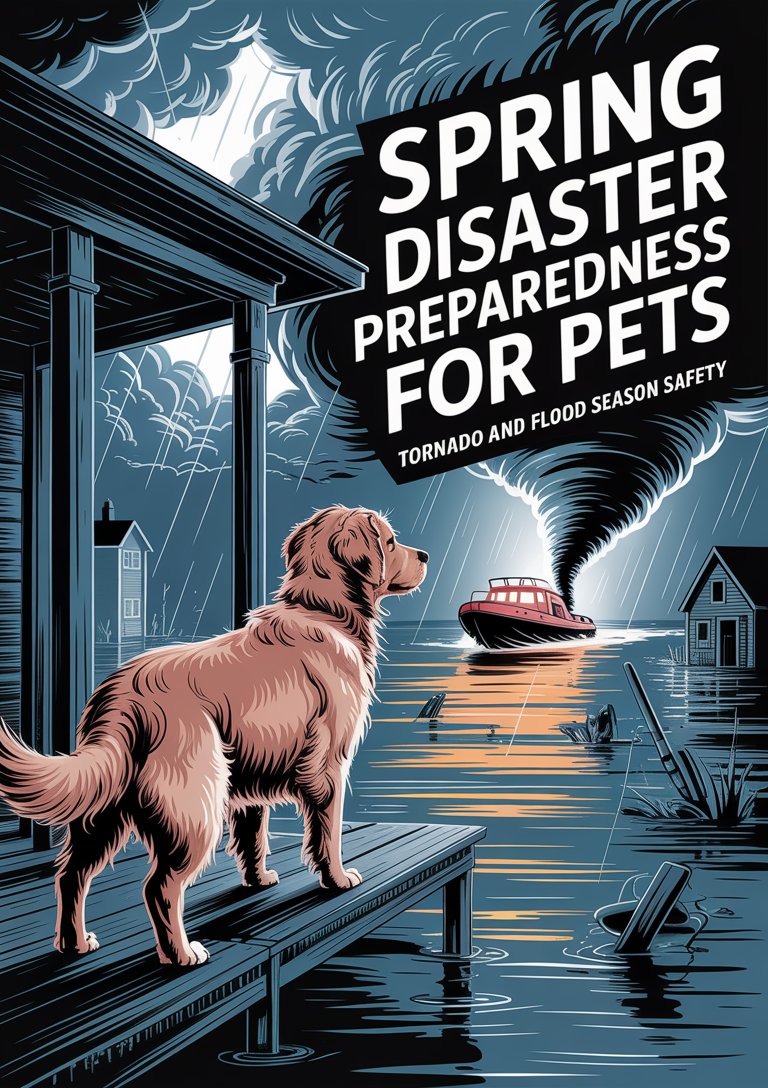
Every Season, Every Disaster: How to Prep Your Pet the Smart Way
Ever feel like your disaster plans are all set… until you realize you haven’t included your four-legged family members? Trust me, you’re not alone. Disaster Specific Pet Preparedness is easier to overlook than you might think, especially when life’s everyday chaos keeps us busy. The good news? You can protect your pets in any emergency with a little extra forethought. Let’s look at why preparedness matters so much and how to put together a handy, season-tailored plan that helps keep your beloved animals safe.
Discover the Importance of Preparedness
When you picture emergency scenarios—flooded streets, power outages, twisting tornadoes—your thoughts probably go straight to your home and loved ones. It’s easy to assume our pets will be fine too, but here’s the thing: they depend on you for nearly everything, especially when things get chaotic. According to Ready.gov [1], including pets in household emergency plans isn’t optional. If you have to evacuate, you need to know exactly where your pets will go. Nothing’s worse than rushing out the door, only to realize Fido’s crate is buried in the garage or that you never found a pet-friendly hotel.
Like any family member, pets are vulnerable in ways adults might not be. They can’t ask for help, they can’t pack their own bags, and they can’t decode evacuation orders. By stepping up your preparedness game—thinking ahead about food, water, meds, and safe shelter—you’re showing them the same warmth and protection you’d give any other loved one. Plus, you’re preventing that dreaded feeling of guilt or panic if something unexpected happens. When you pull together a plan early, you’ll feel more confident and calmer, because you’ll know you’re doing all you can for your furry family.
Having a routine check-in on your supplies and plans helps you stay one step ahead. It’s less stressful to rotate out expired pet food regularly than to worry about last-minute dashes to the store. And let’s not forget peace of mind: you might sleep a bit easier knowing there’s a designated stash of emergency resources tucked away. After all, preparing now means you won’t be scrambling when the weatherman announces the next big storm.
Build a Pet Emergency Kit
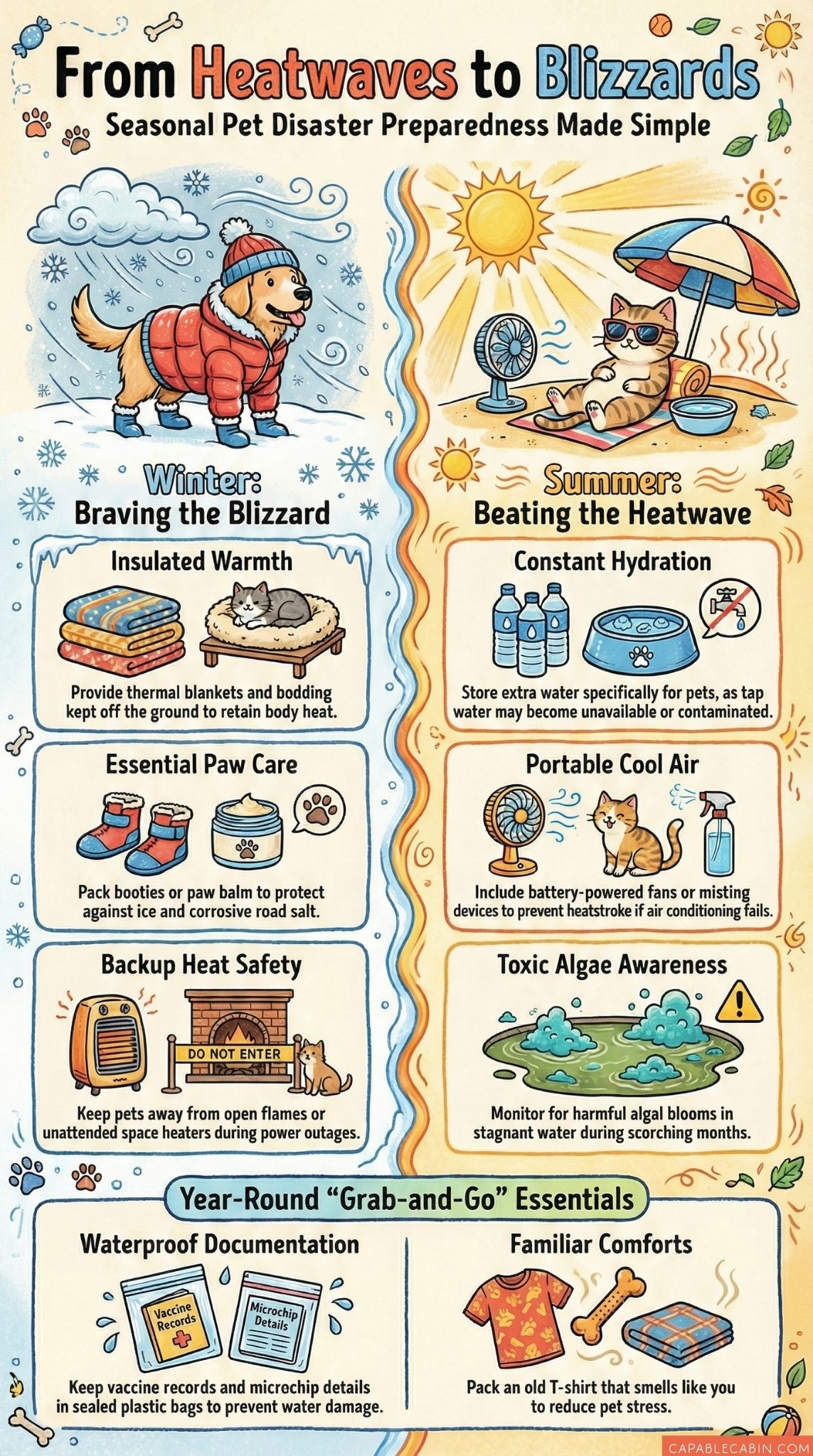
Let’s start with the foundation: putting together a year-round emergency kit for your pet. Think of this as your safety net—something you can grab at a moment’s notice if you need to head out the door or shelter in place. According to the Centers for Disease Control and Prevention [2], it’s smart to check with your vet to ensure you include all the medical essentials.
Below is a list of must-have items most experts recommend, but feel free to tailor it to your specific pet’s needs:
- Water: Keep a stock of bottled water or water pouches. Aim for at least three days’ worth, although a two-week supply is even better if you can store it.
- Food: Non-perishable, preferably individually sealed or canned. Rotate out items periodically so they stay fresh and appealing. Check out pet safe emergency foods if you need ideas that respond well to long-term storage.
- Medications: Keep a supply of any daily meds (e.g., heartworm prevention, allergy meds) and note dosage instructions clearly.
- First Aid Supplies: Bandages, gauze, tweezers, antiseptic wipes. For more details, see the pet first aid kit list.
- Comfort Items: A blanket, a favorite toy, or an old T-shirt that smells like you can reduce stress if you’re in a noisy or strange environment. We talk more about helpful comforts here: pet emergency comfort items.
- Records and Documentation: Up-to-date vaccine records, adoption papers, microchip details. We’ll dive deeper into documentation a bit later, but trust me, having it all in one place removes a ton of stress.
- Sturdy Carrier or Crate: Ideally one your pet is already comfortable with, so they don’t panic if you need to move quickly. If you have multiple pets, consider separate crates or a sturdy option appropriate for each animal’s size and temperament.
- Collar and Leash: Even if your pet is usually indoors, you may need a leash for quick control in crowded places. Attach an ID tag updated with your name and phone number.
Many folks like to create two kits: one larger for sheltering in place and a smaller, grab-and-go version for evacuation. Ready.gov [1] also suggests storing these items in sturdy, easy-to-carry containers. Make sure you place them in a spot where you won’t accidentally bury them under seasonal decorations or old boxes. The entire idea is to have them readily accessible, so keep them near your usual exit route. And remember, no kit is ever static. Medicines expire, your pet’s health changes, new items come onto the market. A periodic audit ensures your bag is fresh and relevant to your pet’s current needs.
Of course, if you’ve got more than one pet, you’ll want to multiply these supplies accordingly. For pointers on juggling canines, felines, birds, or reptiles all at once, peek at multi pet emergency preparedness.
Prepare for Seasonal Disasters
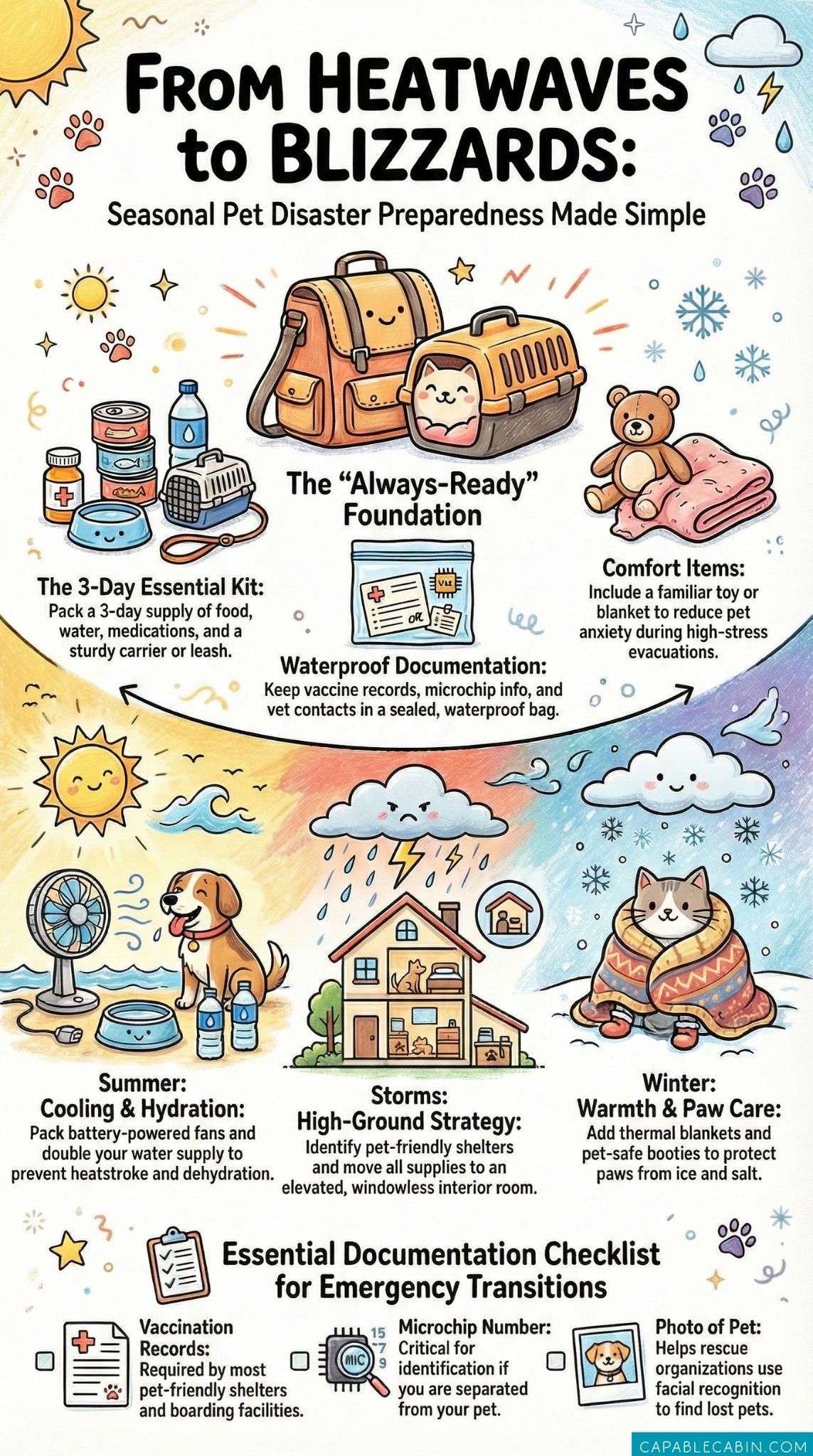
General checklists are great, but some emergencies are heavily tied to specific seasons. You’ll want to adapt your pet preparedness plan for whatever the calendar might bring—like winter storms, summer heatwaves, or fall floods. Let’s explore a few scenarios and how to handle them so you won’t be caught off guard.
Winter Storm Preparedness
Snow, ice, and freezing winds can strike hard. You might face power outages, blocked roads, or dangerously cold temperatures if you don’t plan. If your region sees frequent snow, place some extra insulation items in your pet’s kit, like thermal blankets or heated water bowls.
- Warm Bedding: Ensure your pet has a cozy spot that’s off the ground. A pile of old blankets can do wonders when the house gets chilly.
- Paw Care: Snow, ice, and road salt can hurt your pet’s paws. Pet-safe booties, paw balm, or even gently wiping paws when you come inside keeps them healthy.
- Backup Heat: If you lose electricity, how will you keep your house warm enough? Consider a safe alternative heat source and never leave pets near open flames or space heaters unattended.
If you’d like a deep dive into cold-weather details, check out winter storm pet preparedness. Even if you’re not in a region that sees a ton of snow, you never know when a freak storm might roll in.
Flood Preparedness
Heavy rains and overflowing rivers can cause flash floods, sometimes with minimal warning. Water can rise fast, forcing you to grab your evac kit and go. The American Red Cross [3] urges pet owners to map out pet-friendly shelters or hotels before a crisis hits.
- Elevated Shelter: If you’re trapped at home, move essential pet items to higher ground. That includes food, water, litter boxes, and bedding.
- Waterproof Containers: Keep important documents in sealed plastic bags to prevent water damage.
- Safe Transport: Floodwaters can be intimidating. A sturdy crate, plus a harness and leash, helps you avoid carrying a panicked pet in your arms through slippery areas.
Take a closer look at our dedicated resource on flood preparedness for pets to keep them safe if the waters rise.
Heatwave and Summer Threats
Summer is prime time for dehydration, heatstroke, and even wildfires. Extra water, shade, and ventilation become non-negotiable for your pet’s comfort. Always carry more water than you think you’ll need.
- Access to Cool Air: Keep a battery-powered fan or portable misting device in your kit. These can be surprisingly comforting if the AC fails.
- Hydration: Cat or dog, large or small, your pet needs constant hydration—and you can’t rely on tap water available in an outage or dusty roadside.
- Toxic Algae and Water Sources: During scorching months, stagnant water might be contaminated. If your pet’s a water-loving pup, keep an eye out for signs warning of harmful algal blooms in lakes or ponds.
Serious heat waves can sneak up on your pet, so the best defense is constant vigilance. We have more info at heatwave pet safety if you want to delve into the details.
Hurricanes and Tornadoes
The swirling winds of hurricanes or tornadoes can uproot trees, blow objects around, and force quick evacuations. It’s understandably terrifying for pets and humans alike. The Federal Emergency Management Agency recommends advanced planning for such events [4].
- Safe Shelter Space: Designate the sturdiest interior room in your home, free of windows and debris. Keep your pet’s crate and comfort items there.
- Weather Alerts: Monitor local radio or weather apps. If you get a tornado warning, you might have minutes to act. Practice quick drills so your pet knows how to go indoors quietly and quickly.
- Evacuation Paths: Hurricanes usually come with more notice, so map out a route. If you live in a region prone to these storms, consider hurricane pet preparedness or tornado pet preparedness for specialized tips.
Don’t forget that wildfires also pose a big threat in certain areas, as smoke inhalation and airborne embers can harm pets. Having a wildfire pet evacuation plan is just as crucial.
Create an Evacuation Strategy
Planning early prevents those last-minute scrambles. The American Red Cross points out that not all shelters or hotels accept animals, underscoring the need for a pet-friendly safe haven [3].
First, list a few pet-friendly accommodations. If you can’t find official shelters, look for boarding facilities or talk to friends and family outside the affected area about temporarily housing your pet. You can store these phone numbers, addresses, and directions in a waterproof bag in your emergency kit.
Second, consider doing a few mini-drills. Practicing your getaway might sound excessive, but in a real crisis, every second counts. If you have to evacuate your home, grabbing carriers and leashes, plus loading your pet in the car, should become second nature. This approach is especially helpful for anxious animals who might resist being crated under stress. Rehearsals let them build familiarity so it’s less terrifying when it’s go-time.
Lastly, keep your gas tank at least half full. If roads clog with traffic, the last thing you want is to be stuck or forced to leave your pet behind. If evacuation routes are jammed up, you may need to pivot and try an alternate road. Keep local maps in your glove box so you can navigate even if the internet or cell service is down. Our pet evacuation planning guide can walk you through each step.
Address Unique Pet Needs
All pets have their quirks—big or small, young or old, reptiles or otherwise. When it comes to disaster specific pet preparedness, it often helps to break it down by unique needs. Understanding your pet’s specifics ensures they’re comfortable and safe, no matter the scenario.
Senior Pets
Older animals might have mobility struggles, dietary restrictions, or specialized medications. Giving them the right support means making sure you have ramps or carrying slings for evacuations and extra supplies if they’re prone to incontinence issues. You might even store an orthopedic bed in your emergency kit if that’s what keeps them at ease. If you want a detailed approach, see senior pet emergency preparedness.
Exotic Pets
Reptiles, amphibians, birds, and smaller creatures like ferrets often have stricter temperature and habitat requirements. For instance, a reptile may need a heat lamp or specialized substrate. In a power outage, how do you maintain that environment? Consider investing in battery-powered heating pads or travel terrariums. Temperature swings can severely harm exotics, so the more stable you can keep their environment, the safer they’ll be. To explore specialized loadouts, check out exotic pet emergency preparedness.
Rural Areas
If you live in a rural region, you might be dealing with livestock alongside household pets. Horses, goats, and other large animals also need evacuation plans [1]. Think about trailers, routes that can accommodate large vehicles, and a buddy system with neighbors to help move everyone efficiently. For deeper insights, rural pet emergency preparedness is an excellent resource.
Multi-Pet Households
If your family is like many—two dogs, three cats, maybe a parrot in the mix—coordinating multiple animals can get complicated. Stagger your approach: have separate crates labeled with your pets’ names and any relevant details, and divide the tasks among family members so one person handles dogs while another manages cats. Multi pet emergency preparedness includes checklists for busy homes.
No matter which special category fits your furry friend, the basics remain the same: gather essential supplies, keep them accessible, and rehearse. The real difference lies in those extra touches—whether it’s a bird’s portable perch, a senior dog’s joint supplements, or a horse’s trailer. These details might take a bit of time to piece together, but they’ll pay off in spades when emergencies happen.
Maintain Essential Documentation
Imagine you’re on the road, your cat is meowing anxiously, and you arrive at a boarding facility that won’t take you without proof of vaccinations. Keeping records on hand can literally make the difference between a safe refuge and a stressful scramble to find an alternative.
Keep these documents in sealed plastic bags or a waterproof folder:
- Veterinarian Contact Information: Name, address, phone number, and any after-hours lines.
- Vaccination Records: Up-to-date shots, including rabies certifications.
- Medical Conditions: Summaries of any chronic illnesses or conditions your pet has, plus a list of medications and dosage instructions.
- Microchip Details: If your pet is chipped, note the microchip number, along with the registry’s phone number. Many owners also keep a clear photo of their pet’s face and body to help with identification. Platforms like Petco Love Lost (mentioned by Young-Williams Animal Center) use facial recognition to reunite lost pets, but having a physical picture on hand can reap huge benefits.
Many families slip these records into a small binder or zippered pouch attached to the crate handle. That way, if you need to quickly explain your pet’s unique needs to someone else, you can just hand them the documents. These records also help if you’re separated from your pet for any reason, because shelters and rescues typically require proof before releasing or accepting an animal. For a more thorough breakdown of how to handle your pet’s medical details in emergencies, pop by pet emergency medical preparedness.
Stay Prepared and Calm
The final piece in your disaster specific pet preparedness puzzle is longevity. Making your plan isn’t a one-and-done deal. Supplies expire, pets grow older and require new medication, new family members join (animals or humans!), or you might move to a different climate. Regularly check your kit for outdated food, old paperwork, or cracked containers. If you use freeze-dried or dehydrated food, confirm the best-by dates. Even water can go stale if stored improperly. Give everything a once-over at least twice a year, or streamline it by linking the check to a routine event—such as the start of summer or the holiday season. For tips on routine kit maintenance, you might peek at rotating pet emergency supplies.
Your emotional well-being matters too. Pets pick up on human stress, so try to remain as calm as possible in a crisis. If you’ve practiced routines, you’re more likely to keep your cool. You can also pack small items that ease your nerves—maybe a stress ball or a bar of chocolate for yourself (just remember to keep it out of your pet’s reach, since chocolate is toxic to animals). In truly dire situations, you being collected could make all the difference when deciding how to move forward.
Look into community resources. Some neighborhoods have local pet rescue organizations, and it’s not a bad idea to get to know them. Ask about group evacuation drills, local community pet emergency networks, or shared supply stashes. Everyone has a role to play in ensuring that no critter is left behind.
Finally, celebrate small milestones. Each time you check something off—maybe you finally updated your cat’s microchip info or found a perfect travel cage for your parrot—give yourself a mental high-five. This is about progress, not perfection. The overarching goal is ensuring your beloved animals have the best odds if the unexpected happens. And trust me, a little planning now makes a world of difference later.
Remember: big storms, raging wildfires, or even a simple power outage can happen anytime. But you and your pet are a team. Since we’re all in this together, a well-thought-out plan ensures you’re ready to face whatever nature throws your way. By gathering supplies, staying on top of vet visits, and building a flexible, season-smart approach, you can keep your pet healthy, comfy, and secure—even when the weather doesn’t cooperate.
In the end, a comprehensive pet preparedness plan is just another beautiful way to show your furry friend how much they matter. From everyday scritches behind the ears to the extraordinary moments when you might need to grab the leash and run, you’re standing by them. And that, my friend, is what being a caring pet owner is all about. You’ve got this—one thoughtful step at a time.