Pet Emergency Preparedness for Apartment and Condo Dwellers
In our cozy apartment or condo, space is often precious, which can make planning for emergencies feel like a puzzle.
Toss in the added challenge of making sure your beloved pet is safe, and it can feel overwhelming, right?
That’s where pet emergency prep apartments really come into play.
By preparing ahead, you can ensure that you and your furry (or feathered, or scaly) companion have what you need when disaster strikes.
Let’s explore how we can tackle this together, with simple, practical steps that work in smaller living spaces.
Know Apartment-Specific Challenges
Apartments and condos each bring their own quirks. You might have limited storage, shared hallways, and only one or two exit routes. On top of that, some buildings have strict pet policies, making emergency planning feel like walking a tightrope. But you’re not alone. We’ve all stared at our cramped pantry and wondered, “Where in the world am I going to stash extra pet food?” Trust me, we can find clever ways to make it happen.
Shared Exits and Stairs
In many apartments, you likely rely on elevators, stairwells, or narrow hallways to leave quickly. It’s important to anticipate how your pet might react. A nervous dog or cat can freeze in the middle of a stressful situation, especially if strangers are rushing about. Consider a few practice runs with your pet on the stairs or in a carrier so you both get the hang of exiting at a brisk but calm pace.Limited Storage Space
Storing emergency items can feel like a puzzle when your closet is already bursting. A good trick is to make the most of vertical or under-the-bed storage. You might store canned pet food behind the couch, slip a collapsible water bowl into a shoe rack, or tuck an extra supply of medications in a labeled container under the sink. The idea is to keep these items accessible, but out of daily traffic flow.Pet Policy or Breed Restrictions
Some buildings have breed or size limits, meaning your large dog might not be welcome in certain communal areas. While that’s an ongoing challenge, it also impacts evacuation planning. Aim to stay informed about your landlord’s rules in case an emergency forces you to shelter-in-place or even move, and keep any required paperwork (like vaccination records or service animal documentation) handy.Communicating With Neighbors
Even if you have the sweetest chihuahua, your neighbor might not be a pet person. During emergencies, tensions can run high, so it’s helpful to touch base with neighbors in advance. Share your phone number, talk about your pets’ temperament, and promise to check on each other’s well-being if something happens. A quick hello in the hallway now can pay off in a big way later.
Being proactive about pet emergency prep for apartments involves juggling these unique challenges. You’re already on the right path by acknowledging them. It’s a signal to both you and your furry buddy: “Yes, we can do this.”
Create Your Two-Kit Setup
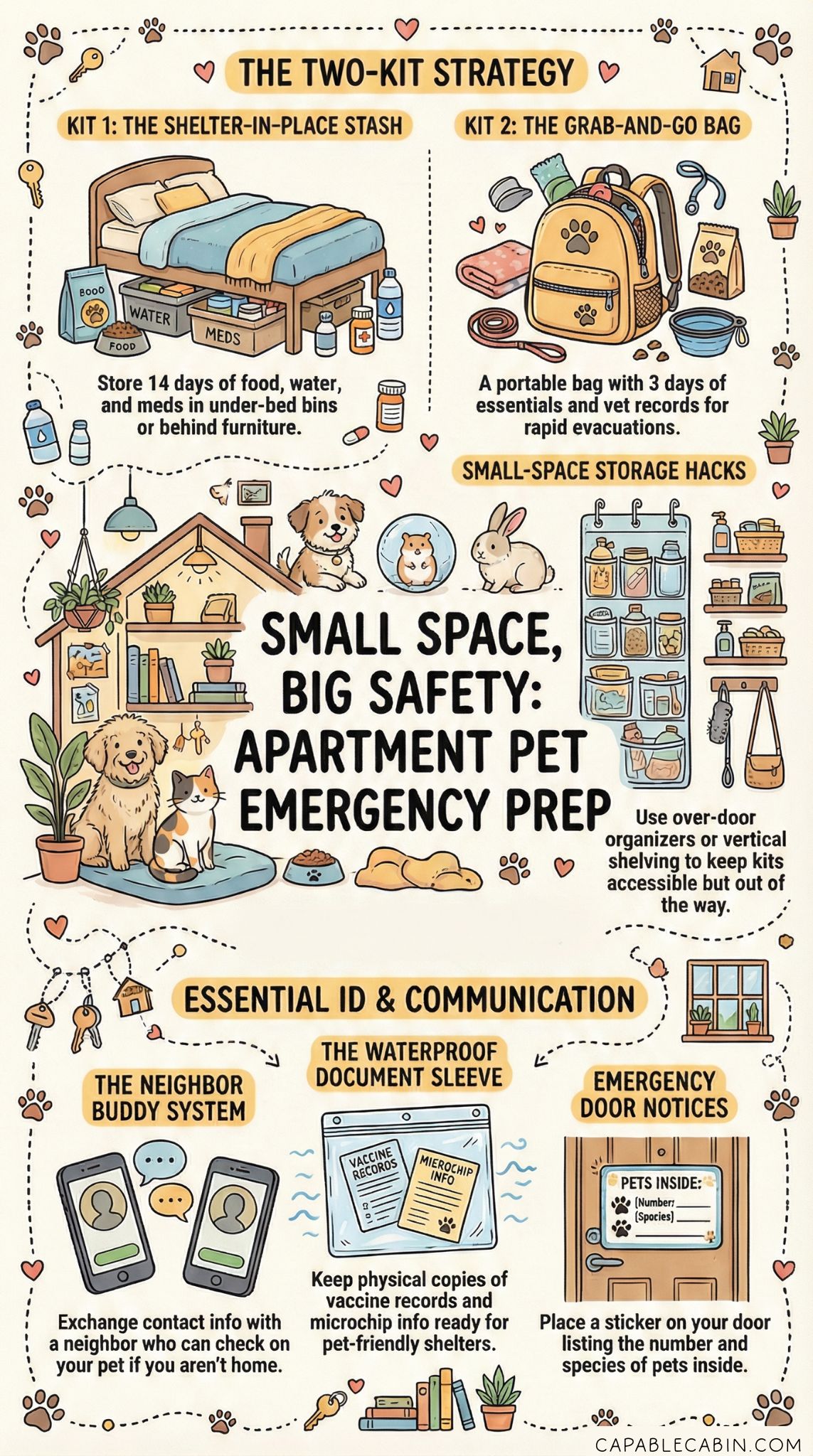
One of the top suggestions from Ready.gov (https://www.ready.gov/pets) is having two emergency kits for your pet: a larger one for staying put (sheltering in place), and a portable version for quick getaways (evacuation). This two-kit strategy is a real game-changer, especially when storage is limited.
- Kit 1: Shelter-in-Place Essentials
This kit stays in your apartment or condo, tucked somewhere you can grab it easily. It might include:
Two weeks’ worth of pet food in airtight containers
Adequate bottled water (usually one gallon per pet per day, depending on size)
Medications noted with instructions and veterinary contacts
Sanitation items like pet-safe wipes, plastic bags, or puppy pads
A pet first-aid reference chart, plus essential supplies. If you want more specific guidance, check out our pet first aid kit list.
Because some emergencies involve power outages or restricted movement, you want enough supplies to keep your pet comfortable for multiple days. This kit sits in a closet or under the bed, ready to rock if you’re hunkered down.
Kit 2: Grab-and-Go Bag
Think of this as your pet’s bug-out bag. It’s a streamlined set of essentials that allow you to leave fast, possibly walking down several flights of stairs. Focus on the basics: a few days’ worth of pet food, a small water supply, collapsible dishes, crucial meds, recent vet records, and a leash or sturdy carrier. A quick reference item, like a list of your pet’s dietary requirements or medications, can serve you well if you need help from a shelter or friend.Storage Tips
Consider an over-door organizer or a labeled bin under your bed for these kits. Some folks use stackable plastic drawers to keep items tidy yet accessible. Revisit your kits every six months. Foods, medicines, and documents can expire or become outdated, so a routine check helps ensure everything is fresh. You can even set a calendar reminder to keep it from slipping your mind. This regular upkeep is important, especially in a compact living environment where you might shuffle items around a lot.
Following the two-kit approach immediately takes your pet emergency prep for apartments up a notch. You gain flexibility no matter what scenario arises, plus peace of mind that you have the right tools in the right places.
Prepare Identification And Paperwork
In a crisis, your pet’s ID is their lifeline. If you ever get separated, having updated tags, microchips, and crucial documents can be the difference between a quick reunion and a frantic search.
Collar and Microchip
The CDC (https://www.cdc.gov/healthy-pets/emergency-preparedness/index.html) advises that your pet should always wear a collar and tag with current contact information. If possible, microchip them too. A microchip is a simple, one-time procedure, but it offers major reassurance during emergencies. Anyone with a scanner (like a shelter or veterinarian) can identify your pet and contact you, even if they lose their collar.Veterinary Records
If you wind up in a pet-friendly evacuation center or a hotel that allows animals, you might need proof of vaccines and health records. Keep copies of these documents in a waterproof zipper bag as part of both your shelter-in-place kit and your grab-and-go bag. If your pet needs regular medication, tuck a note from your vet into the bag explaining dosage schedules.Emergency Contacts and Photos
It helps to keep a list of phone numbers for veterinarians, pet-friendly hotels, and local animal shelters. Have a recent photo of your pet (printed or on your phone) to help others identify them if they get lost. If you have friends or family nearby who could care for your pet temporarily, add that info to your contact list. Having a plan B, even if it’s not your first choice, saves you from scrambling in the moment.Apartment Paperwork
Some condo associations or apartment complexes require documentation of your pet’s breed or size. Keep any official paperwork handy, like an ESA (Emotional Support Animal) letter if that applies. During emergencies, apartment management might handle evacuations or check who enters the building. Being able to quickly prove that your pet has the right to be with you can help in a pinch.
Having up-to-date ID and paperwork not only gives you peace of mind but also helps your pet navigate new environments if you’re forced out of your home. A printed checklist of these items can be useful, so you don’t forget anything when you’re in a hurry.
Evacuate With Confidence
Emergencies that prompt evacuation can feel chaotic, but you have a plan. You’re armed with your portable kit, you have your routes mapped out, and your pet is carrier-trained. That’s huge. Keeping pets calm — and yourself centered — can make all the difference.
Follow Official Guidance
If local officials say it’s time to evacuate, take your pet with you. Leaving them behind can lead to them getting lost or injured [1]. Don’t assume you’ll be able to come back in a few hours to grab them. Crises like floods, fires, or tornadoes can escalate quickly.Practice Loading and Leaving
Especially with cats or small dogs, practice putting them in a carrier. Let them hang out in it occasionally so it’s not a dreaded contraption. When an emergency hits, a little familiarity goes a long way. You might test out going down the stairs or even driving around the block to see how they respond. You don’t want your first test run to be under real pressure.Pet-Friendly Shelters or Hotels
The Red Cross often welcomes pets, but in some cases, they need to stay in a designated area (https://www.redcross.org/get-help/disaster-relief-and-recovery-services/find-an-open-shelter.html). Try to know your community resources in advance. Search for pet-friendly evacuation centers, call your vet for referrals, or ask local animal shelters if they provide emergency boarding. Having a short list of phone numbers in your grab-and-go bag can save you from last-minute Googling.Plan for Multiple Pets
If you have more than one fur baby, you might need additional carriers or help from a friend. Evacuating with cats, dogs, and maybe a bird or reptile is doable if you have the right gear. You’ll need enough hands to handle each one safely. If you’re juggling a handful of different critters, exploring multi-pet emergency preparedness might offer targeted strategies so that no one gets overlooked.
Feeling prepared when you evacuate can help your pet feel calm too. Animals often pick up on our emotions, so if you’re showing a bit of confidence, they might settle quicker.
Shelter In Place Safely
Sometimes, officials advise you to stay exactly where you are. Maybe the roads are flooded, or there’s a severe storm that makes traveling dangerous. When that happens, you have your bigger emergency kit and plenty of know-how to hunker down with your pet.
Designate a Safe Room
If windows are susceptible to damage, pick a room that is more central in your apartment. Remove anything that could topple if your pet bumps into it while nervous. Keep that door closed to reduce your pet’s temptation to wander into an unsafe area. If you have cats, especially, they might try to sneak behind appliances or shelves in stressful moments. A secure space is best for everyone’s sanity.Keep Your Pet Comfortable
This can mean laying out familiar bedding, a favorite toy, or a piece of clothing that smells like you. If your dog or cat has a safe crate, use that as a chill-out zone. Placing water and a bit of food inside can help your pet associate it with something positive. During moments of high tension, little comforts work wonders.Be Wary of Potential Hazards
Disasters can knock out power or water. Be cautious with candles, broken glass, or leaking household chemicals. Move toxic items out of your pet’s reach. If your apartment has any balcony space, watch for loose objects that could fly in a storm or be harmful if your pet decides to explore. Sometimes we forget how curious a stressed pet can become.Rotation of Supplies
Even if you’re well-stocked, you want to ensure your stash remains fresh. The CDC (https://www.cdc.gov/healthy-pets/emergency-preparedness/index.html) suggests checking perishable items regularly. Every six months or so, swap out old food for new, and double-check expiration dates on medications. You can use a quick chart to track these tasks, or read more in rotating pet emergency supplies to develop a consistent habit.
Staying put with your pet can be less stressful than evacuating, but it still calls for thoughtful planning. If the water or power goes out, your chore is to keep your furry friend cozy, fed, and safe — and now you have the tools to do it.
Address Large Or Exotic Pets
Living in an apartment with a big dog or an exotic companion, like a parrot or a reptile, can be an extra challenge. While many tips overlap, these animals often have unique needs that require you to get creative.
Large Dogs
Manage your dog’s energy and stress levels, especially if you need to shelter in place. Keep a supply of durable toys. If you have to evacuate, confirm that your dog’s crate or harness fits them properly, so they can’t slip out in an unfamiliar environment. Some areas or shelters might have breed restrictions, so keep any documents that show your dog’s breed or behavior training.Birds, Rabbits, and Reptiles
These pets typically need specialized enclosures or temperature-controlled habitats. During an emergency, portable cages (appropriate for the animal’s size) and heat packs or battery-powered warming discs can help. If your reptile requires a heat lamp, have an alternative power source in mind, like a small generator or a solar charger. The more you prep for these details, the easier it is to manage unexpected changes.Horses and Farm Animals?
If you’re in a condo or apartment, you likely don’t have large livestock, but in some rare cases, folks might keep goats or horses offsite. If that’s you, the suggestion from Ready.gov (https://www.ready.gov/pets) is to prepare well before a disaster, because large animals often need advanced transport arrangements. It’s a different scenario, but the main idea still applies: have a plan, practice it, and maintain contact with any boarding facility or farm manager.
Even if your llama or macaw is living the condo life, you can find ways to adapt. We’re all in this together, adjusting our emergency prep for apartments to match our unique pets. The key is to note each pet’s special needs and gather the gear that keeps them healthy if conditions change.
Practice Communication And Accessibility
Emergencies get complicated fast. That’s why prepping for good communication and ensuring accessibility is vital. If you or a family member has a disability, or you live with someone who might struggle during a crisis, make sure your plan is inclusive.
Talk With Management
Apartment managers or condo boards might maintain an emergency plan for the entire building. Ask about it. Find out if the building has backup generators, posted escape routes, or designated safe rooms. If some floors are set up differently or certain stairwells are locked, you want to know now, not when every minute counts.Neighbors And Buddy Systems
Try forming a buddy system with a person (or two) in your building. If they’ve spent time with your pet, they might be able to help if you’re not home during an emergency. The CDC (https://www.cdc.gov/healthy-pets/Emergency-Preparedness/pets-in-evacuation-centers.html) notes that letting others know about your pet’s personality or medical needs can smooth out any confusion later. Keep them in the loop with updates if your situation changes.Accessible Exits And Communication Aids
If you rely on sign language, hearing aids, or assistive devices, keep them readily available. In a crisis, quick access might be the difference between connecting with help or being overlooked. Shelters and emergency managers often have to make “reasonable modifications” to ensure people with disabilities aren’t left out (https://archive.ada.gov/pcatoolkit/chap7shelterprog.htm). But having your own plan for communication is still your best bet.Pet Evacuation Notices
Post a sticker or small sign on your door or window stating there are pets inside. Include species, number, and your emergency contact information. This is especially helpful if rescue crews are going door-to-door. Just remember to update it if your pet situation changes, so the info is always accurate.
Clear communication helps your game plan run smoothly. With a reliable buddy and an informed building manager, you won’t be scrambling at the worst possible time. Plus, you can breathe easier knowing someone else knows about your pet’s location.
Keep Post-Emergency Safety In Mind
When the immediate danger has passed, some folks breathe a sigh of relief and drop their guard. However, this is often when new hazards pop up: broken glass in hallways, contaminated floodwater, or power lines down outside. Staying vigilant can protect you and your pet from hidden dangers.
Inspect Your Home First
If your building was damaged, proceed carefully when you return. Look for dangling debris, moldy carpet (if there was water damage), or broken vents. Curious pets might be drawn to strange smells or puddles, so a once-over helps you spot trouble. The CDC (https://www.cdc.gov/healthy-pets/emergency-preparedness/index.html) recommends keeping them leashed until you’re sure it’s safe.Monitor Health Issues
Sometimes, stress or exposure to contaminated water can lead to illness in animals. Watch for lethargy, vomiting, or changes in appetite. If you see anything off, consult a vet. A post-disaster checkup never hurts, especially if your pet was out in unknown conditions. For further guidance on signs that need urgent attention, you can look at common pet emergencies.Ease Anxiety
Like humans, pets can struggle to return to normal after a scary event. Some might cling to you, have accidents indoors, or shy away from places they once felt safe. Offer extra reassurance. Keep routines if possible, and give your pet a quiet space to decompress. You can also reward calm behavior with treats and gentle play sessions.Plan For The Next Time
Every emergency is a learning experience. Maybe you discovered your cat hates the plastic carrier and you wish you’d invested in a sturdier, well-ventilated one. Maybe your dog needed more water than you expected. Take notes and revise your kit and plan. Revisit resources like maintain pet emergency preparedness for ongoing tips to keep everything up to date.
Even if your apartment breezed through the disaster unscathed, it’s wise to double-check for hidden issues. The more carefully you approach the aftermath, the smoother life can transition back to normal.
Keep Going, You’ve Got This
It can be daunting to juggle all this information, especially when living in close quarters. pet emergency prep apartments isn’t just about having a bag of kibble lying around. It’s about building routines, forging connections with neighbors, and adapting your plan to your unique pet. That’s a lot, right? But we’re right here with you, cheering you on as you boost safety for both you and your fur baby.
- Recap Your Key Steps
- Recognize apartment-specific challenges: limited storage, shared exits, and building rules.
- Create your two-kit system: one for sheltering in place, one for quick evacuations.
- Update ID and paperwork: microchip, vet records, and essential phone numbers.
- Practice evacuations: load pets in carriers, know routes, and plan for pet-friendly shelters.
- Shelter in place with confidence: prep a designated room and watch for hazards.
- Adapt for large or exotic animals: plan for specialized needs.
- Communicate clearly: coordinate with neighbors, use a buddy system, and stay in touch with building management.
- Handle challenges after the emergency: inspect your space, watch for health issues, and provide emotional support for your pet.
Celebrate Little Wins
Each time you update your stash of pet food or confirm the best location for your emergency kits, give yourself a pat on the back. Those small steps build a secure foundation. We’ve all started somewhere, often with “I’ll get to that eventually,” but you’re already moving beyond that phase. High-five for the effort!Seek Extra Resources
If you find yourself craving more detail on specialized scenarios, like preparing for earthquakes or hurricanes, you might explore disaster specific pet preparedness. Or if you want some guidance on budget-friendly ideas, head over to budget pet emergency preparedness. The key is to stay informed, so you’ll never be caught off guard.Embrace Flexibility
Yes, you have a plan. But emergencies come in different forms, from a burst pipe to a major hurricane. That’s why a flexible mindset is golden. You might need to jump from your shelter-in-place plan to evacuation mode with little warning. Because you’re already thinking ahead, you’ll handle that with far less chaos.
The best part? All these steps make life a little easier every day, not just when something goes wrong. Having a buddy system, a labeled kit, and a calm approach to stress can reinforce the bond you share with your pet. You’re building confidence in yourself and resilience in your four-legged friend. And that sense of “we’ve got this” can carry you through, even when the unexpected happens.
You’re well on your way to ensuring your pet stays safe, no matter how small your living space might be. With each item you check off and each plan you practice, you’ll feel more prepared and at ease in your apartment or condo. Trust me, you’re doing great. Keep going — your pet is lucky to have someone who cares this much about their well-being. And remember, anytime you feel unsure, just revisit these guidelines and keep fine-tuning until you find a system that makes you both feel secure. Because, at the end of the day, knowing you’ve got a solid pet emergency plan in place is the best peace of mind you can give yourself and your beloved companion.