How to Rotate Your Pet Emergency Supplies with the Seasons
Have you ever glanced at that dusty bin of pet emergency supplies in the closet and thought, “Well, I checked it once—should be fine, right?” Trust me, you’re not alone in wondering if those extra cans of pet food and bottled water are still good to go. That’s where rotating pet emergency supplies comes into play. Think of it like swapping out your winter clothes for your summer wardrobe, only this time you’re safeguarding your furry companions. Doing regular checkups and adjustments can make all the difference when an emergency strikes, giving you peace of mind that you’re ready to grab those supplies and go.
We’re in this together, so let’s walk through the essentials of scheduling seasonal reviews, spotting items that need refreshing, and making sure your pet’s emergency stash is always on point. By the time we’re done here, you’ll have a friendly, foolproof plan to keep everything up-to-date—no matter the season. Ready to dive in?
Why Seasonal Rotation Matters
Picture this: You’ve prepared an awesome emergency kit for your pet. You’ve got food, water, medications, first aid items, and a few comfort toys stashed away. But months (or even years) pass, and life gets in the way. You might not realize that canned food and medications can expire, water can go stale, and even your contact list might be out of date. When an actual emergency hits, you’ll scramble, discovering half your kit is no longer usable.
That’s why rotating your pet’s supplies every few months, or at least around major weather shifts, really counts. According to the ASPCA [1], planning for “worst-case scenarios” often means your kit should be ready for an extended period away from home—think weeks, not days. If you’re not swapping items seasonally, you risk heading out with dried-up medications or moldy pet treats. A simple rotation strategy helps ensure your pet’s kit is reliable, fresh, and equipped to handle the unexpected.
Avoiding Expired Food and Medications
Food, treats, and meds have a finite lifespan, and you definitely don’t want your pet’s emergency rations losing their nutritional or medicinal value. Organizations like the Virginia-Maryland College of Veterinary Medicine [2] advise stocking at least two weeks’ worth of supplies for each pet. That means if you have an older stash that you last checked a year ago, you could be facing multiple items that no longer fit for use. A seasonal rotation—like every three or four months—lets you catch these expirations before they become a problem.
Keeping Up with Your Pet’s Changing Needs
Our pets’ needs aren’t static. As they age, their diets can change, and sometimes they develop new health conditions that require special care. Checking your supplies when the weather transitions from warm to cool (or vice versa) lets you pause and ask, “Does my dog or cat need a different type of food now? Any new prescriptions?” If you have a senior pet, you might want to peek at senior pet emergency preparedness for added insights.
By matching rotations to the seasons, you also get the chance to update your kit with new contact info, fresh medical records, and any recently prescribed medication. It’s basically a routine wellness check—but for your emergency stash.
Set a Rotation Schedule
So how exactly do you remember to swap items out every few months? With everything else on your to-do list, it might feel overwhelming. But try thinking of your rotation as a quick ritual you can combine with something you already do, like your seasonal wardrobe change, spring cleaning, or holiday prep. The key is to pick a schedule, put it in your calendar, and treat it as non-negotiable.
Quarterly, Seasonal, or Twice a Year?
You can choose from a few rotation strategies, depending on your lifestyle:
- Quarterly Check: Every three months, take 15-20 minutes to reevaluate your supplies. This is a great option if you live in an area with distinct seasonal changes—like harsh winters and scorching summers.
- Seasonal Swaps: If you’d rather do a major check four times a year, align it with the first day of each season: spring, summer, fall, and winter. This approach helps you tailor items for upcoming weather challenges.
- Twice a Year: Some folks prefer a semiannual check—usually in the spring and fall—to coincide with typical weather shifts. This is the minimum recommended frequency, but it’s still way better than never checking at all.
Use Reminders and Checklists
Set alarms or notifications in your phone or calendar. If you’re more of a pen-and-paper person, jot these reminders on a sticky note. Doing so removes the guesswork. Plus, you can keep a basic checklist so you know exactly which items to evaluate each time.
Take a look at the seasonal pet preparedness calendar if you want a companion resource to help keep track of weather-specific tasks.
Check Your Core Supplies
Not sure which items need a regular once-over? Here are some main categories to keep in mind. These basics serve as the building blocks of a well-rounded pet emergency kit. Feel free to adapt them based on your specific pet’s needs—like medication for seizures, specialized diets, or breed-specific accessories.
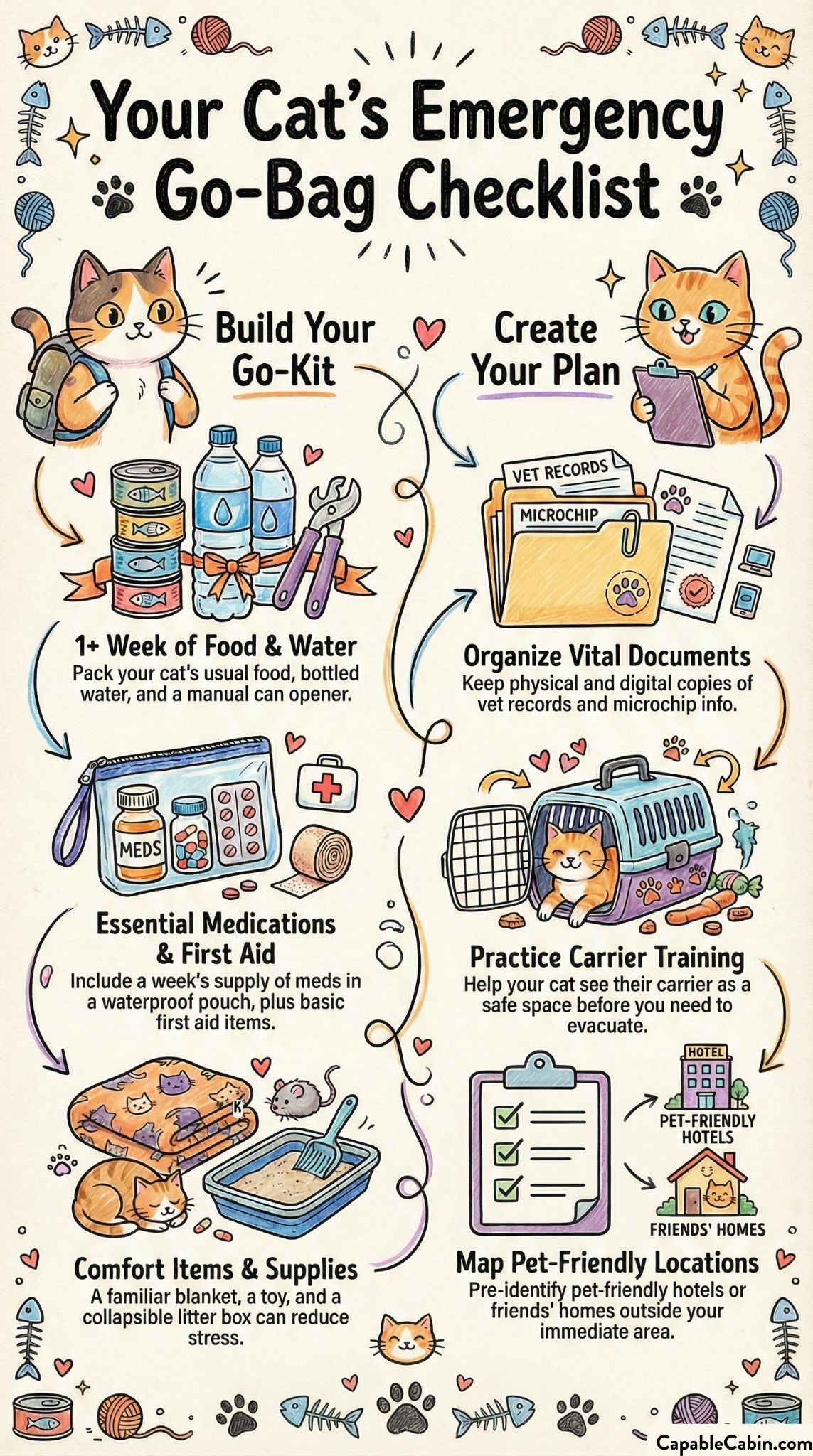
1. Food and Treats
Rotating your pet’s food is crucial. Organizations like the CDC [3] recommend having at least a couple of weeks’ supply on hand. But that supply has to be edible when you need it.
- How to keep it fresh: Check expiration dates on canned food, kibble, and treats. If the dates are coming up soon, cycle those items into your regular feeding before they go bad. Then replace them with fresh products.
- Storage tips: If possible, store food in airtight, waterproof containers. Moisture and high temperatures can accelerate spoilage.
2. Water and Bowls
Water is a biggie. The CDC [3] and the ASPCA both emphasize having enough drinking water for both you and your pet in a disaster scenario. Keep in mind that you might not be able to return home for several weeks if the situation is dire.
- Check for freshness: Rotate your water supply every 6-12 months [4]. Nobody wants stale or contaminated water, and your pet definitely deserves better.
- Collapsible bowls: Consider adding collapsible bowls to your kit. Just ensure they don’t have cracks or mold. If they’re worn out, replace them during your rotation check.
3. Medications and First Aid Items
If your pet needs prescription meds, double-check that those pills or liquids haven’t expired. And don’t forget general first aid supplies like bandages, gauze, antibiotic ointments, and any calming aids you might have included in your kit. According to the Skokie Government guidelines [5], it’s wise to talk to your vet about mild tranquilizers if your pet gets anxious during emergencies.
- Create a surplus: Keep at least a few days’ extra medication in a separate container for emergencies. Remember to cycle through those prescriptions to keep them current.
- First aid kit: If you’re not sure what to include, here’s a quick reference. You can also check out our pet emergency medical preparedness guide for more details.
| First Aid Item | Purpose | Replace / Check Frequency |
|---|---|---|
| Gauze & Vet Wrap | Cover wounds / Stabilize injuries | Every 6 months |
| Antibiotic Ointment | Prevent infection in minor cuts | Every rotation (check expiration) |
| Styptic Powder / Styptic Pen | Stop minor bleeding from nails or minor wounds | Every rotation (check dryness) |
| Prescription Meds | Condition-specific meds (e.g., thyroid, heart) | Monthly or as labeled |
| Flea/Tick Prevention | Protection from pests | Per product instructions |
4. Identification and Documents
Keeping up-to-date records is one of those tasks that’s easy to forget until you really need it. The CDC recommends you keep your pet’s vaccination records—particularly rabies—and a recent photo on hand. That way, if you do need to evacuate or get separated from your pet, you can prove ownership and ensure a smooth reunion.
- Records to include: Vaccination certificates, adoption papers, microchip info, prescriptions, and a list of emergency contacts (vet, local shelters, and pet-friendly hotels).
- Photo ID: A current picture of you with your pet can help verify ownership if you get separated. If your pet has unique markings, take clear snapshots of those areas too.
5. Comfort Items
When stress levels spike during an evacuation, familiar objects help pets feel more at ease. The Skokie Government’s tips [5] encourage including a favorite blanket or toy in your evacuation bag. But be wary of old blankets that might be worn, damp, or unwashed.
- Rotate gently loved toys: If that squeaky plush has seen better days, sub in a fresh toy and wash the older one—provided it’s salvageable.
- Include something that smells like home: Whether it’s a T-shirt you’ve worn or your pet’s favorite small cushion, that scent can help ease panic in a new environment.
Adjust for Changing Climates
Your pet’s emergency kit probably shouldn’t be a one-size-fits-all scenario, especially if you live in a region prone to season-specific disasters like hurricanes, wildfires, or winter storms. Regularly revisiting your kit with an eye toward upcoming weather hazards ensures you’re prepped for the right conditions.
Hot Weather Supplies
If you’re heading into summer, consider extras like cooling mats, plenty of water, and portable fans that run on batteries. Pets can develop heatstroke quickly, so having a strategy for keeping them cool is key. If summer storms are common in your area, you’ll also want to stash more water-resistant or waterproof supplies. For more tips on hot-weather readiness, check out heatwave pet safety.
Cold Weather Essentials
Switching into cooler months may mean adding pet-safe de-icing products, warm blankets, and protective gear like booties. If you’re prone to blizzards or ice storms, a heavier stash of food might be necessary in case you’re stuck indoors for longer periods. You never know when roads might become impassable.
Specific Disaster Plans
Certain natural events benefit from specialized items. For instance, if you live in an area where wildfires are common, keep a filtration mask for your dog or cat if they tolerate it, plus extra water and eye drops for irritants. In places prone to severe flooding, sturdy carriers and floating devices might help. If you want more guidance on tailoring your kit, you can explore disaster specific pet preparedness.
Prevent Expiration: Best Practices
It’s one thing to know you need to rotate items, but how do you actually keep tabs on expiration dates without rummaging through every can or bottle each time? A little organization goes a long way toward saving you time and stress.
Label and Date Everything
When you buy new pet food or medication, grab a permanent marker and note the purchase date. You can even write the “use by” date in large letters. That way, a quick glance tells you what needs to be used or replaced first. Organizations like the Humane Society of Charlotte [6] recommend checking products every 6 months, so try to coordinate labeling with those check-ins.
Rotate Into Your Daily Routine
We sometimes forget that we can use our emergency stash as part of day-to-day life, as long as we replace what we consume. For instance, if your dog’s usual canned food supply is running low, pull a can from the emergency kit and immediately replace it with a fresh one. This principle, known as “first in, first out,” ensures you’re always replenishing with newer items.
Maintain Extra Medication Supplies
Your vet might be able to prescribe an additional supply of essential meds so you can store them for emergencies. But remember, pills and liquids don’t last forever. Set up a rotation schedule every time you refill your regular prescription. That way, your back-up stash remains potent and safe to use.
Easy Storage and Accessibility Ideas
It’s not just about what’s in your kit, but where you keep it. When time is short—like in a last-minute evacuation—you want to grab your kit and go without rummaging through multiple closets.
Go for Light, Grab-and-Go Containers
A compact, waterproof container or sturdy backpack works wonders. The Skokie Government [5] advises using easy-to-carry bins or bags, in case you need to leave home quickly. Stick with something big enough to hold essentials but not so bulky that it’s a challenge to haul.
Keep It Near Your Other Emergency Supplies
Many families store flashlights, extra batteries, and a first aid kit for humans in one central location. Place your pet’s emergency kit alongside these to make sure you aren’t scrambling around the house if you need to evacuate. If you live in a smaller space, like a studio or one-bedroom, you may appreciate additional tips in pet emergency prep apartments.
Make Sure Everyone Knows the Spot
Emergencies aren’t always polite enough to happen when you’re home. If a family member or neighbor is caring for your pets, they need to know exactly where that kit is stored. Label the container clearly and communicate its location to every adult in the household.
Keep Track of Everything
You might be thinking, “That’s a lot to remember.” And you’re right—rotating supplies, checking dates, updating documents, and accounting for seasonal swings can feel like a big job. The good news is, once you set up a system, the ongoing maintenance is more of a short monthly or seasonal review than a massive overhaul.
Create a Simple Inventory List
Whether it’s a spreadsheet on your laptop or a handwritten chart on the container lid, listing out all your items makes it easier to see what you have and what might be missing.
- What to include: The item name, quantity, expiration date, and last rotation date.
- Quick reference: During each rotation, scan the list to identify anything nearing its expiration or past its prime.
Try a Dry Run
Doing a drill can highlight gaps you might have overlooked [7]. Pick a weekend and pretend you need to evacuate with your pet. See how quickly you can access the kit, whether everything you need is there, and how your pet reacts. This practice run can clue you in on which items are truly functional and which might need upgrading.
Keep Documents in Digital Form Too
The Humane Society of Charlotte [6] suggests having digital backups of documents. That way, if your physical papers are lost or damaged, you still have access to important information like immunization records or your veterinarian’s contact details from your phone.
Handling Special Cases
Sometimes, a pet’s unique situation calls for extra steps. Maybe your cat has a strict prescription diet, or you have multiple pets all with their own quirky needs. Let’s talk about how to tailor your rotation for different circumstances:
Multiple Pets
If you have multiple furry friends, label each set of food containers, medications, and records. A color-coded system might help you avoid mixing up who gets what. You might also check out multi pet emergency preparedness if your lineup includes more than one species.
Senior or Special-Needs Pets
Older pets or those with chronic conditions can require extra medication and vet visits. Make sure you’re rotating those specialized meds frequently. Storing a therapeutic bed or orthopedic supplies might also be a good idea if that’s what your senior buddy needs. Take a look at senior pet emergency preparedness for additional considerations.
Exotic Pets
Have a rabbit, bird, lizard, or more unusual companion? Exotic pets often have unique climates, dietary requirements, and lighting needs to stay healthy. Rotating supplies for them might include things like specialized heating bulbs, fresh bedding, or vitamin supplements. If that’s you, exotic pet emergency preparedness might be right up your alley.
Tips for Stress-Free Rotation
We get it—life is busy, and rotating supplies can feel like one more daunting to-do. But it doesn’t have to be overwhelming. Here are a few tips to keep the process seamless:
Pair It with Another Task
Link your rotation to something you already do regularly—like switching out seasonal decorations or cleaning your home’s air filters. By “piggybacking” tasks, you create a habit that’s easier to maintain.Enlist Help
Involve your family or roommates. Maybe your teenager checks expiration dates while you handle restocking. Or your spouse helps confirm your contact list is accurate. Teamwork cuts the workload in half and ensures everyone knows the routine.Reward Yourself (and Your Pet)
Give your pet a new toy or a treat after you’ve finished your rotation. You could also treat yourself, because hey, you’re taking great care of your family—furry members included. Positive reinforcement extends to us humans, too.Keep It Light
Don’t expect perfection every single time. If you discover you forgot one detail last season, it’s okay. You’ll catch it in the next rotation. The goal is progress, not perfection.
Frequently Asked Questions
Here’s a quick recap of some common concerns:
How often should I rotate my pet’s emergency supplies?
Aim for at least every six months. That said, quarterly or seasonal checks are ideal to stay updated with weather changes and your pet’s evolving needs.
Can I just leave canned foods indefinitely?
Canned pet food can last longer than kibble, but it still has an expiration date. Once that date passes, nutritional quality and safety aren’t guaranteed. So, rotating is still essential.
Do I need separate kits for different pets?
If your pets have different dietary or medical requirements, you should separate or clearly label supplies. Otherwise, you can keep them all in one large kit if space allows.
What if my pet rarely needs medication?
Even if it’s an “as needed” medication, you’ll want to rotate that prescription around its expiration date. Consult your vet about getting extra or sample sizes to keep in your kit.
Should I keep everything in one place?
Yes, ideally. Keep your pet’s emergency kit with your family’s main emergency supplies so you can grab everything quickly. Just make sure your container or bag is easy to carry.
Conclusion: You’ve Got This
Rotating pet emergency supplies might sound complicated at first, but once you set up a simple framework—like seasonal checks and clear organization—it becomes part of your normal routine. Think of it like a safety net you refresh now and then, ensuring you and your furry companion can face unexpected emergencies with confidence. You’ll no longer have to guess if those canned foods are expired or worry about musty blankets in the bottom of the bin. Instead, you’ll know exactly what’s there, how fresh it is, and that it’s ready whenever you need it.
The goal is to keep your pets as comfortable, safe, and healthy as possible in a crisis. And here’s some good news—you’re already off to a strong start just by reading this and taking the idea seriously. Whether you set a quarterly reminder or plan a rotating schedule at the change of each season, make it a habit that sticks. We’re cheering you on every step of the way.
No matter what life tosses in your path—be it floods, severe storms, or unexpected evacuations—having a well-maintained kit at the ready can bring that extra peace of mind. Remember, you’re not on this journey alone. We’re in this together, every step of the way, ensuring your furry friends get the care they deserve when they need it most. So go ahead, mark that calendar, pull out your pet’s kit, and rotate away. You’ve got this!