Winter Storm Pet Preparedness: How to Keep Pets Warm and Safe
When the wind is howling and the snow is piling up, winter storm preparedness can feel like a tall order. Trust me, I know how easy it is to worry about keeping your furry (or feathered, or scaly) companions cozy in freezing conditions. The good news is, you can safeguard your pets without breaking the bank or losing your peace of mind. We’re going to walk through each step together, from keeping them warm indoors to mapping out a realistic evacuation plan. By the end, you’ll have practical, comforting strategies to help everyone weather winter storms more confidently.
Recognize Winter Storm Risks
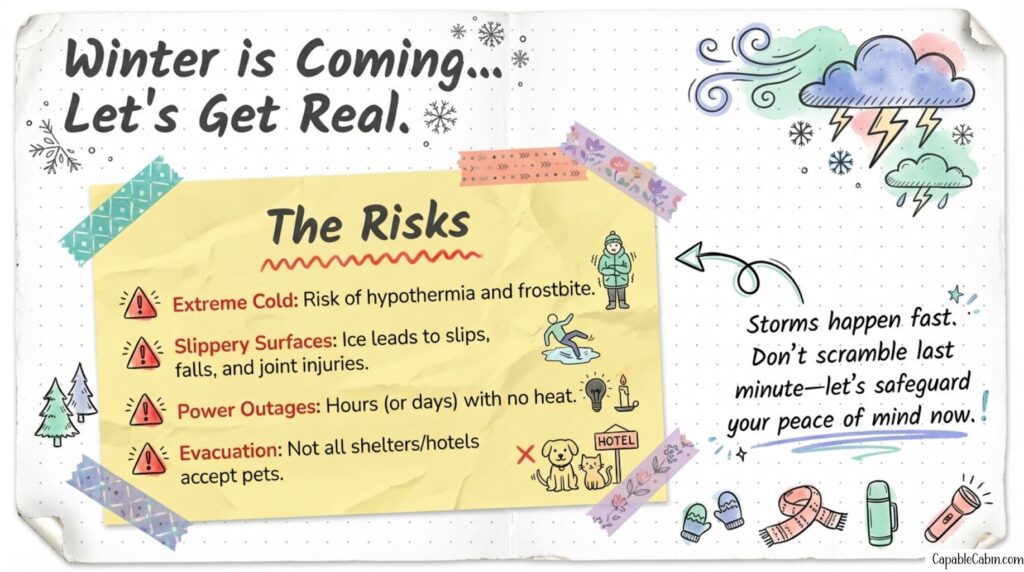
So here’s the thing: winter storms bring unique dangers. Beyond the obvious cold, there are slippery surfaces, reduced visibility, and the possibility of power outages or evacuation. And yes, our pets feel the brunt of these challenges just like we do. Understanding these risks is the first step in addressing them head-on.
- Extreme cold can lead to hypothermia, a serious condition that lowers a pet’s core body temperature below healthy levels.
- Frostbite can harm ears, paws, and tails, especially in smaller or short-haired pets.
- Ice and snow make it harder for pets to walk. Slips and falls can injure older animals or those with joint issues.
- Winter storms often disrupt power supplies, meaning you and your pet might face long hours with no heat.
- Storm conditions might force an evacuation, and not all shelters or hotels accept pets.
When you know what’s on the horizon, you can plan accordingly. Keep a close eye on the weather forecast, and if local officials warn of an oncoming storm, think about what you’ll need to keep your furry friends safe inside or on the go.
Gather Essential Supplies
Winter storms can arrive quickly, and once the snow starts falling hard, there’s no time to realize you’re missing crucial pet gear. Having the right supplies on hand is a must, and it gives you a sense of relief knowing you’re prepared. We’ve all been in that boat—scrambling last-minute is never fun. So let’s talk about the basics.
Food, Water, and Meds
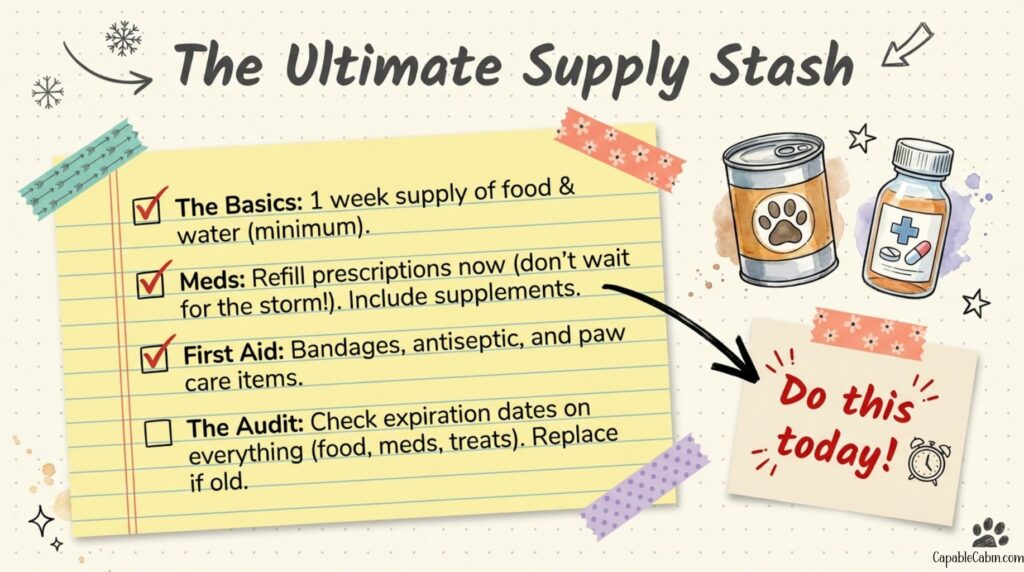
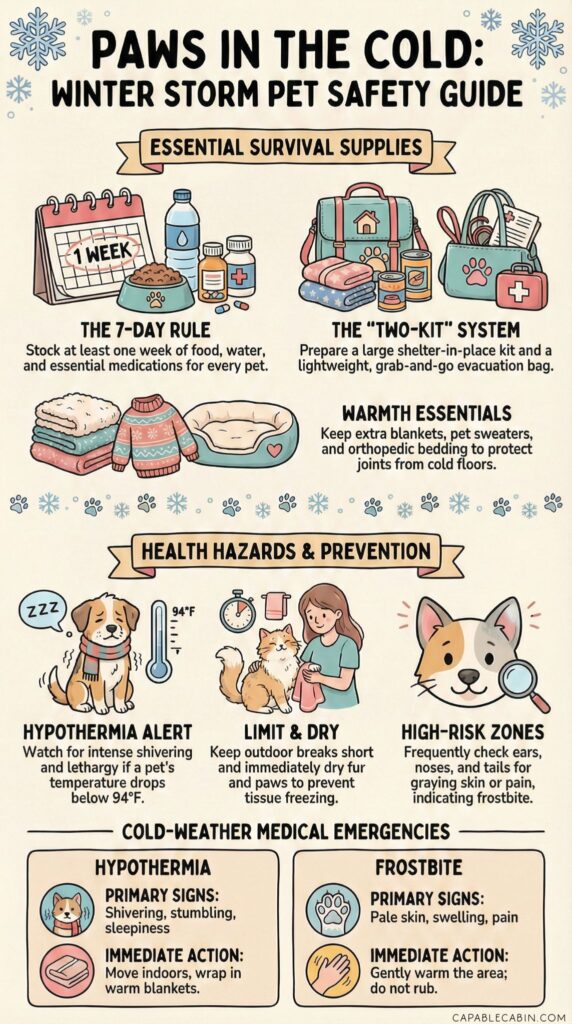
- Stock at least a week’s worth of pet food and water.
- Consider any medications, treatments, or supplements. Pack extra so you’re not caught short if you’re stuck at home or forced to relocate.
- Regularly check expiration dates. Replace items as needed, just like you would for your own emergency stash.
Warm Clothing and Blankets
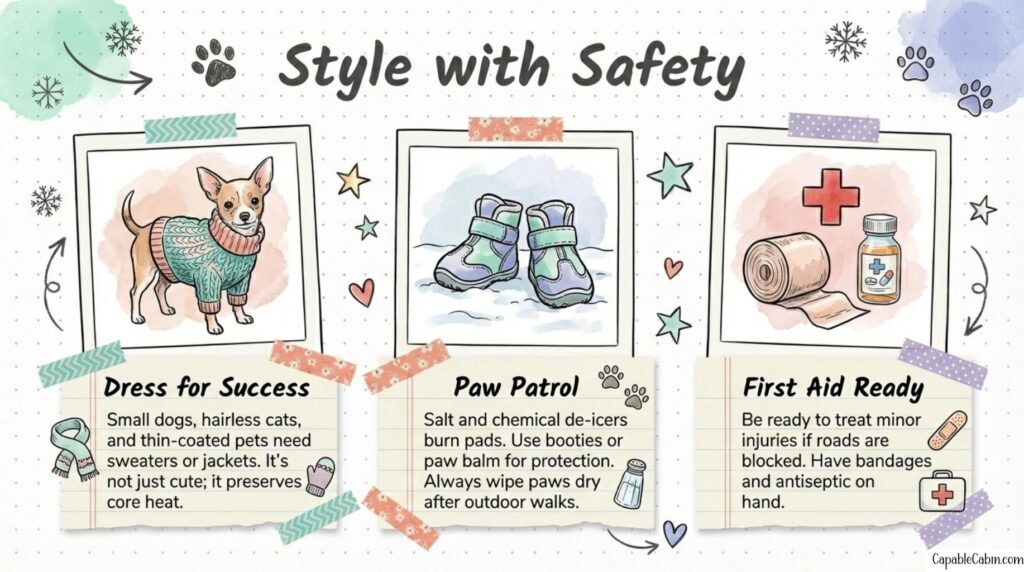
- For smaller dogs, hairless cats, or pets with thin coats, a cozy sweater or jacket matters more than you might think, especially if they spend any time outdoors.
- Keep extra blankets on hand to layer inside carriers or create a snug sleeping nook during storms.
Pet First Aid Kit
It’s not only about cold weather, but every part of winter storm pet preparedness should include treating minor injuries if you can’t immediately reach a vet. Look into a complete kit or create your own. If you’d like a full checklist of must-have items, visit our pet first aid kit list.
Carrier or Crate
- Make sure your pet is comfortable spending time in their carrier.
- If evacuation becomes necessary, readiness can ease stress for everyone.
Having a fully stocked supply kit means you can relax and focus on other storm prep strategies. For extra tips about building or expanding your readiness, you can glance at pet evacuation planning if you see a serious storm coming your way.
Prevent Hypothermia And Frostbite
Let’s get real: hypothermia and frostbite are two of the biggest threats for pets in winter. One bad chill can spiral into serious complications, so it’s crucial to recognize warning signs.
Understand the Symptoms
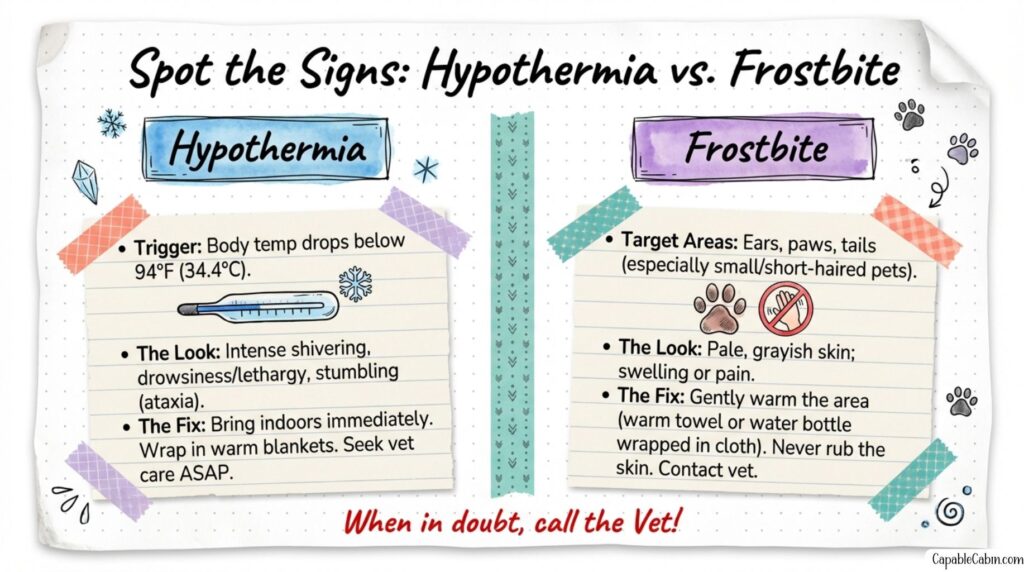
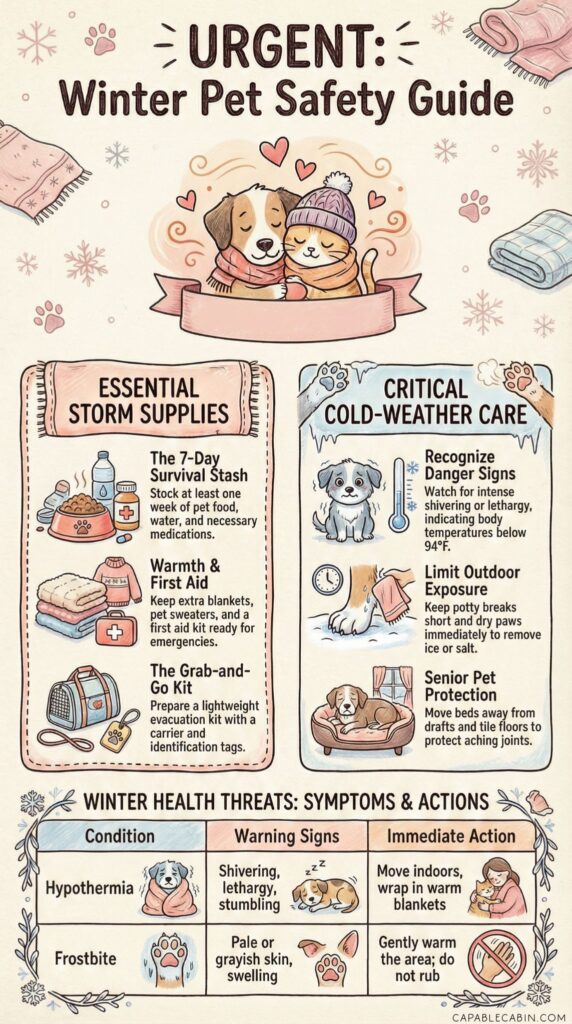
When a pet’s body temperature drops below 94°F (34.4°C), they risk hypothermia. Early signs include:
- Intense shivering
- Drowsiness or lethargy
- Stumbling (ataxia)
- Constantly seeking warmth
If left unchecked, the pet may stop shivering altogether, lose consciousness, and suffer dire consequences to organ systems (per Small Door Veterinary). Frostbite, on the other hand, typically targets ears, paws, noses, and tails—places with less fur and reduced blood flow.
Quick Comparison Table
| Condition | Main Cause | Signs | What to Do |
|---|---|---|---|
| Hypothermia | Prolonged exposure to cold or wet | Shivering, drowsiness, slow breathing | Bring pet indoors, wrap in warm blankets, seek vet care |
| Frostbite | Tissue freezes in cold temperatures | Pale or grayish skin, swelling, pain | Gently warm the area, don’t rub, contact vet for evaluation |
Easy Prevention Tips
- Limit outdoor time during freezing weather.
- Dress smaller or hairless animals in protective gear.
- Dry your pet’s fur and paws if they get wet.
- Watch for salt or chemical de-icing agents on sidewalks, as these can irritate or burn paw pads.
If you suspect hypothermia or frostbite, move your pet indoors right away and call your veterinarian. They can guide you on how to warm your pet gradually without causing additional damage (per Humane Animal Partners). Small steps like a warm towel or water bottle wrapped in cloth can help, but avoid hot water or direct heat sources.
Prepare Your Home For Harsh Weather
We all know winter storms often mean staying put. You’d rather be indoors with a hot drink than trudging through the snow, and your pet probably feels the same way. Let’s set up your home so everyone is cozy and safe.
Create a Warm, Draft-Free Space
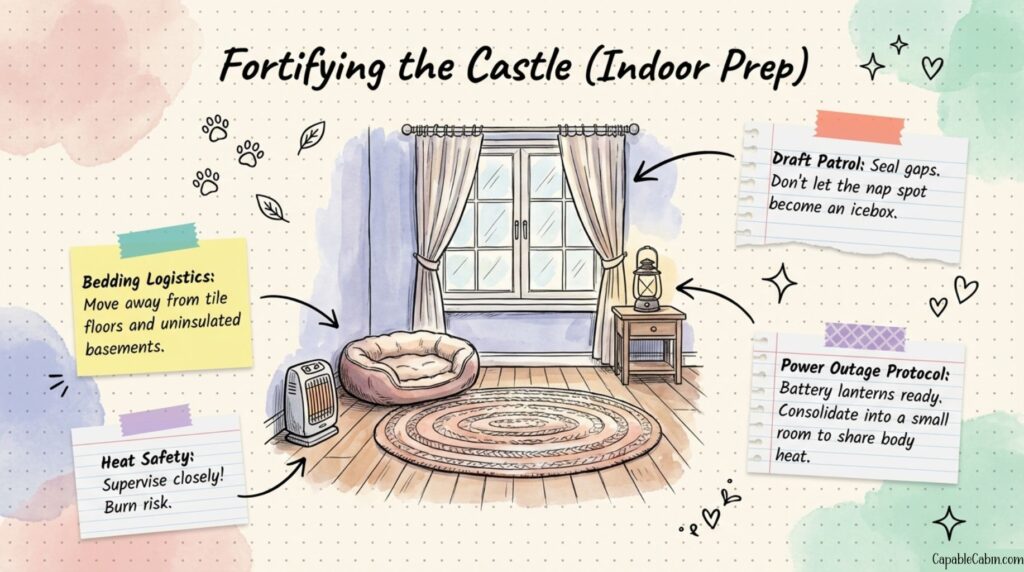
- Check for drafts around windows and doors. Seal up those gaps so that your pet’s favorite corner doesn’t become an icebox.
- Position pet beds, crates, or sleeping blankets away from chilly spots like tile floors or uninsulated basements.
- If you use space heaters, supervise pets closely to avoid burns.
Think About Power Outages
When a storm knocks out electricity, your heating system may fail. Keeping a few layers of blankets or an indoor-safe warming solution handy can save the day. For example, some folks rely on heated blankets or pads, but these should be used carefully and only when you’re around to keep an eye on your pet’s safety.
- Have flashlights or battery-powered lanterns to navigate in the dark.
- Stock up on extra batteries for any pet gear, such as carriers with built-in fans or heated dog bed controllers.
- Know where you’ll place your pet in an unheated home. Condensing everyone in a smaller interior room can help retain warmth.
Limit Slippery Surfaces
Snow can melt inside, creating puddles or slush near entryways. Pets can slip on wet floors, especially older animals that might already struggle with mobility or arthritis. Put absorbent mats or towels near doors, and clean up moisture promptly to prevent accidents. This small trick can make a big difference for your four-legged friend.
Plan For Possible Evacuations
Sometimes the forecast doesn’t just call for heavy snow—it calls for you to leave your home. Even though it’s not the first scenario that comes to mind in the middle of a blizzard, certain winter storms might cause severe infrastructure issues that prompt evacuations. If that happens, you want a plan that includes your furry—or scaly—family members (per Ready.gov).
Make a Pet-Friendly Evacuation Strategy
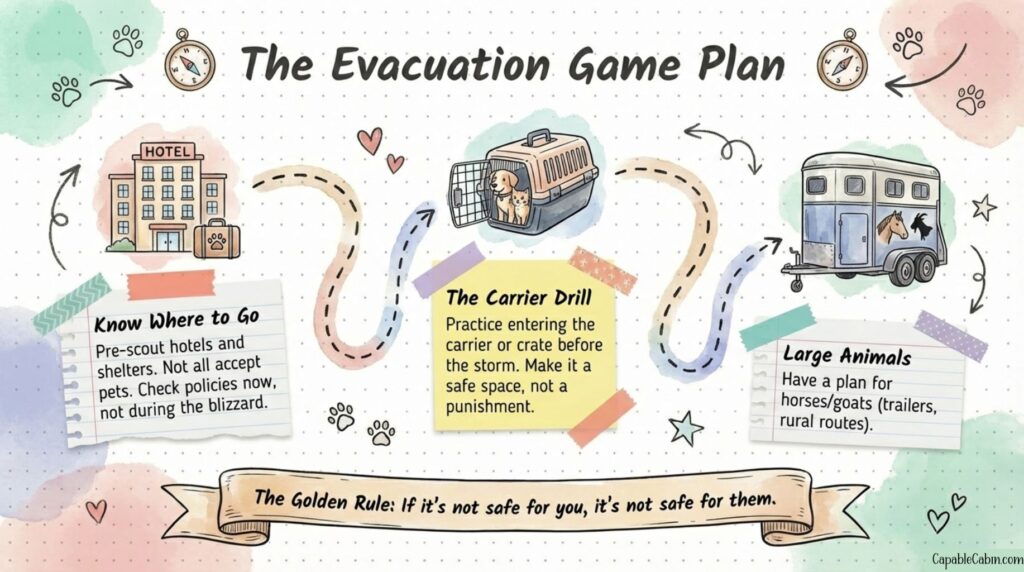
- Identify hotels or shelters that accept animals in advance. A quick online search now might save you from major stress later.
- Keep your pet comfortable with pre-evacuation routines. For example, place them in a carrier or harness a couple of times before the real deal so it’s not a brand-new experience.
- Plan for how you’ll transport larger pets (like goats or horses). Check out tips at rural pet emergency preparedness if you live in a more spacious environment.
Create Two Kits
According to Ready.gov:
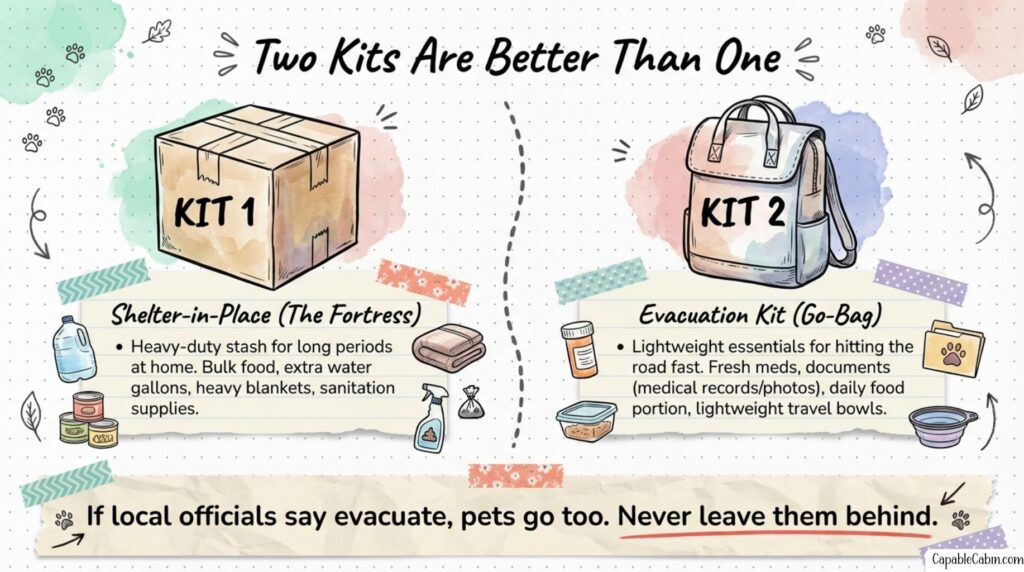
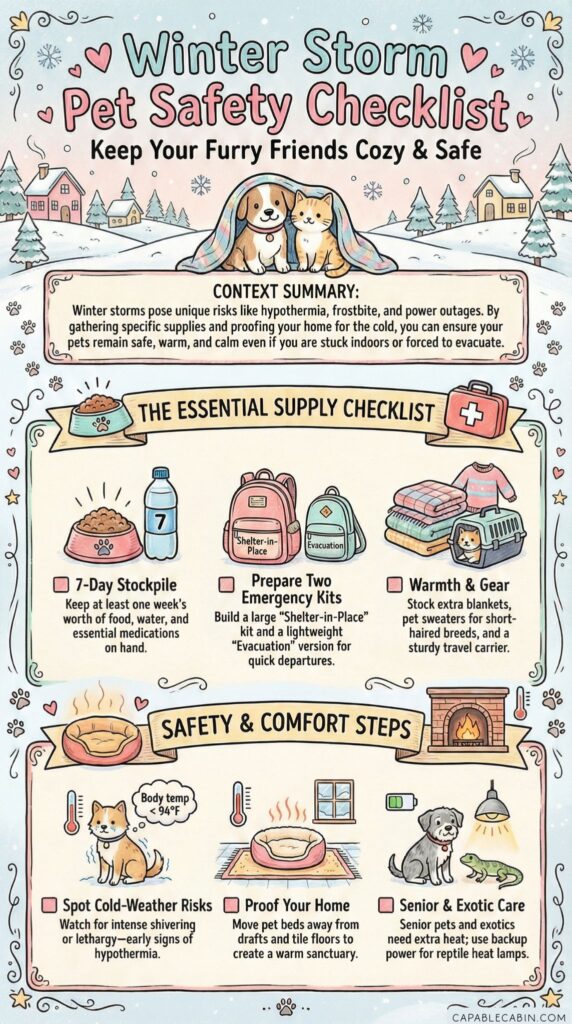
- Shelter-in-Place Kit: A larger collection of food, water, blankets, and medications that can carry your pet through longer periods at home.
- Evacuation Kit: A lightweight version with essentials for hitting the road at a moment’s notice. Keep daily use items fresh, rotate out old food or medicine, and ensure you can grab this kit quickly.
Remember, if local officials ask you to evacuate, leaving pets behind is never a good idea. It puts them at risk for getting lost, injured, or worse. We want them right by our side, safe and sound.
Keep A Cozy Routine
One of the best ways to handle winter storm pet preparedness is to keep things as normal as possible, even when the weather is anything but. You’ve probably noticed that your pet thrives on predictability—meal times, potty breaks, and snuggle sessions. A storm can throw a monkey wrench into everything, so let’s find ways to keep your routine stable.
Indoor Exercise
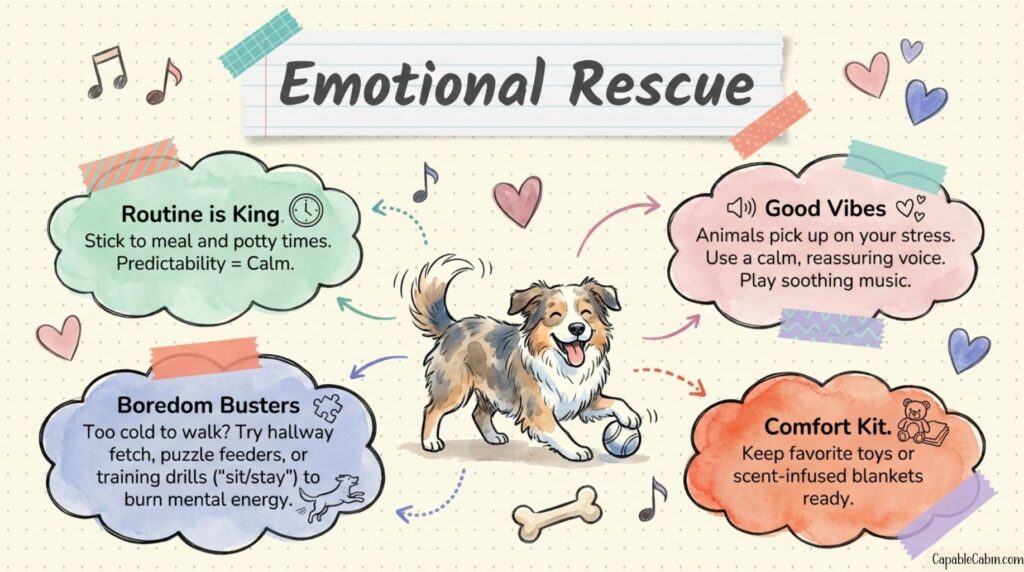
- When prolonged snowfall or ice stops you from outdoor play, a quick hallway fetch session or puzzle toy can release extra energy.
- If you have a safe spot in your living room, try a short training exercise. Practice commands like “sit” or “stay” just to keep them mentally stimulated.
- If you’re living in an apartment with limited space, consider a puzzle feeder or a treat-dispensing ball to keep your pup’s mind occupied. For more tips, see pet emergency prep apartments.
Stay on Schedule
Try to feed your pet, clean litter boxes, or do any grooming around the usual times they’ve come to expect. Despite the chaos outside, your pet can find comfort in the familiarity of routines inside.
Calm, Reassuring Voice
Dogs, cats, and even smaller animals pick up on our stress levels. Offering a warm tone, gentle petting, and a soft voice can help them remain at ease. You don’t have to put on a show—just be there, be kind, and let them know you’re in this together.
Identify Special Considerations For Senior Pets
Older animals can be particularly vulnerable in winter storms. They may already have health issues like arthritis, heart conditions, or kidney disease that cold weather tends to aggravate (per Horton Animal Hospital-Discovery). We want our senior companions to remain as comfortable as possible, so let’s dive into a few key points.
Warmth Matters Even More
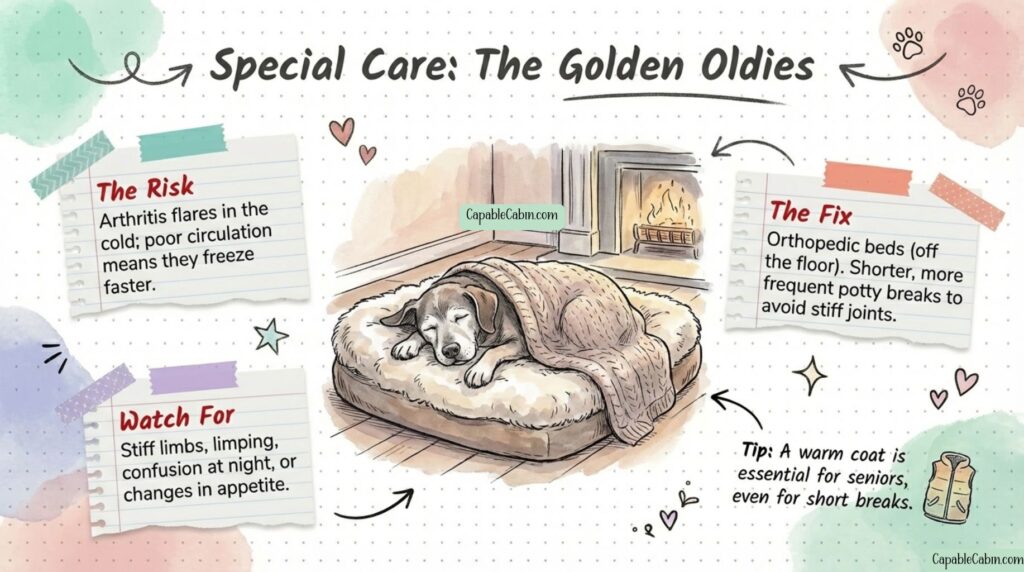
- Seniors often have weaker circulation, making them prone to feeling cold faster. Position a senior pet’s bed away from drafts or tile floors.
- Add soft blankets or orthopedic foam bedding that supports aching joints.
Frequent Health Check-Ins
Winter weather can complicate existing illnesses. Keep an eye out for:
- Stiff limbs or limping, especially after going outdoors.
- Changes in appetite or bathroom habits.
- Confusion or restlessness at night can be a sign of discomfort.
When in doubt, consult your vet for a winter check-up, especially if your older pet has pre-existing medical conditions. You can also visit senior pet emergency preparedness for more tailored ideas on caring for aging animals when storms hit.
Adjust Outdoor Time
Arthritis pain might flare up in freezing conditions, and slick surfaces can make walking dangerous. Rather than a single, long walk, opt for shorter but more frequent potty breaks so your senior pet isn’t outside for too long at once. If it’s extra frigid, a simple jacket or coat can do wonders to shield those joints from chilly winds.
Support Outdoor Pets Safely
Maybe you have an outdoor cat who’s used to roaming, or farm animals like goats or chickens that spend most of their time outside. When winter storms strike, these pets need proper protection to get through the cold without risk of frostbite or hypothermia.
Provide a Warm Shelter
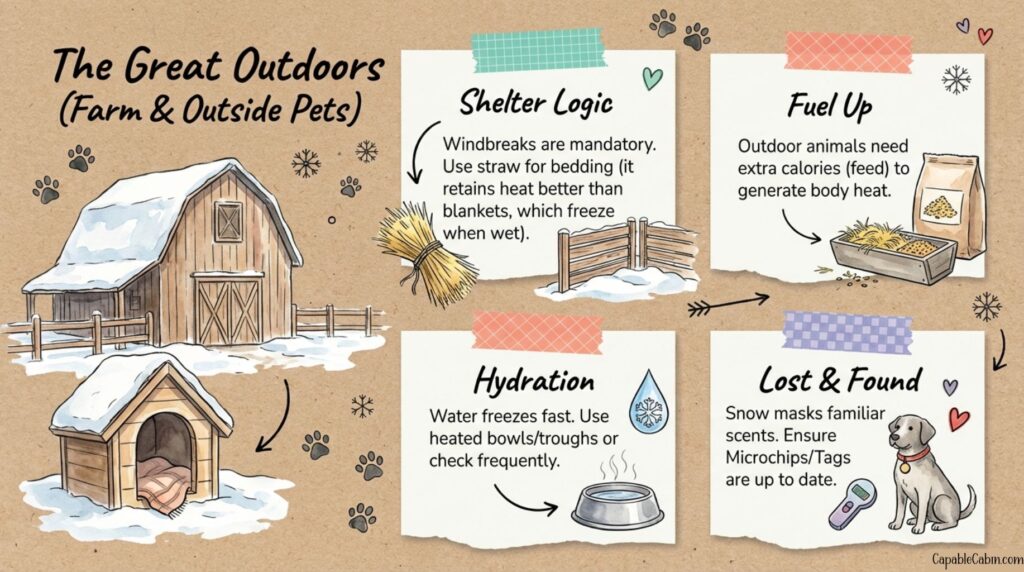
- Insulated doghouses, barns, or coops are a must.
- Layer bedding materials like straw, which retain heat better than a blanket and don’t freeze as easily.
- Keep entrances away from direct wind exposure, possibly adding a simple flap or windbreak over the doorway.
Monitor Food and Water
- Outdoor animals might need extra food in cold weather to generate body heat.
- Water sources freeze quickly. Check water bowls or troughs often, or use heated water containers to ensure they’re not iced over.
Keep Identification Updated
Snow and ice can mask familiar scents, leading even seasoned outdoor pets to become disoriented and lost. An up-to-date ID tag or microchip is essential. If your pet goes missing, a collar with clear contact info helps them make their way home faster (per Horton Animal Hospital-Discovery).
Take Steps For Large Or Exotic Pets
Winter storm pet preparedness doesn’t stop at dogs and cats. Maybe you share your life with horses, goats, lizards, parrots, or even potbellied pigs. Each category of pet has unique needs in freezing temperatures, so a one-size-fits-all approach won’t cut it.
Horses, Goats, or Pigs
- Provide adequate shelter, including windbreaks and dry, insulated areas for rest.
- Stock up on extra feed and consider offering hay more frequently to help large animals stay warm.
- Keep pathways clear of ice to prevent injuries.
- Check pet evacuation planning or rural pet emergency preparedness for additional guidance on relocating large animals if necessary.
Birds and Small Exotics
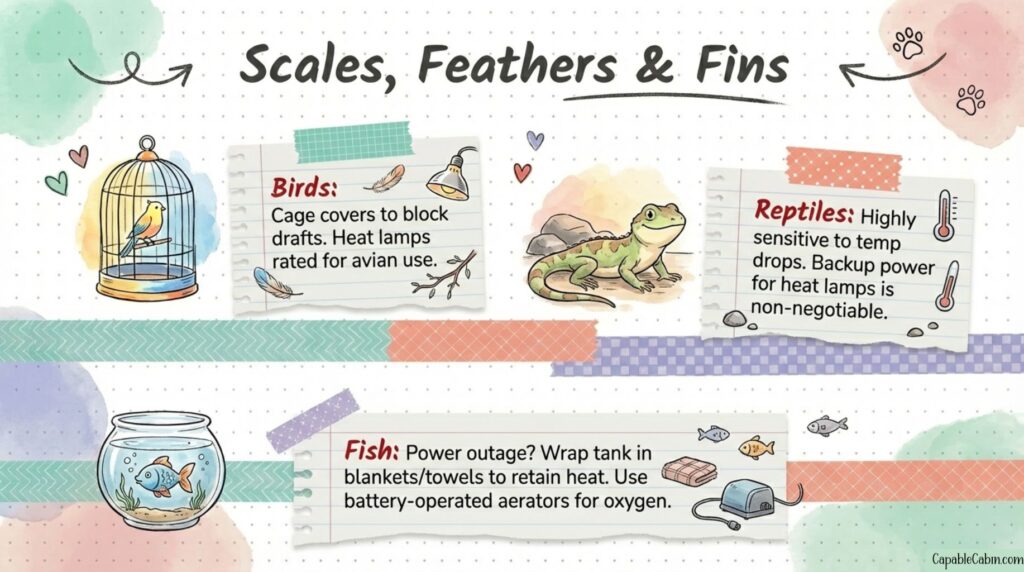
- Indoor birds should be housed away from drafts. Consider a cage cover or heat lamp rated for avian use to maintain a steady temperature.
- Reptiles or amphibians living in terrariums need stable humidity and heat levels. Have a backup power source for their heat lamps.
- Exotic pets can be more sensitive to temperature swings. For additional tips, look at exotic pet emergency preparedness.
Fish and Aquatic Animals
- If you lose power, your aquarium heater and filter won’t function. Keep insulated blankets or towels nearby to retain some warmth around the tank.
- Temperature shifts can be fatal for certain fish. Monitor water temps closely, and use battery-operated aerators if possible.
Maintain Ongoing Winter Preparedness
We’ve all made the mistake of thinking, “Oh, this is a one-time scenario.” But if you live in areas prone to harsh winters, storms can come back-to-back. Keeping your gear and your strategies updated ensures you’re not scrambling when the next blizzard arrives.
Rotate Supplies
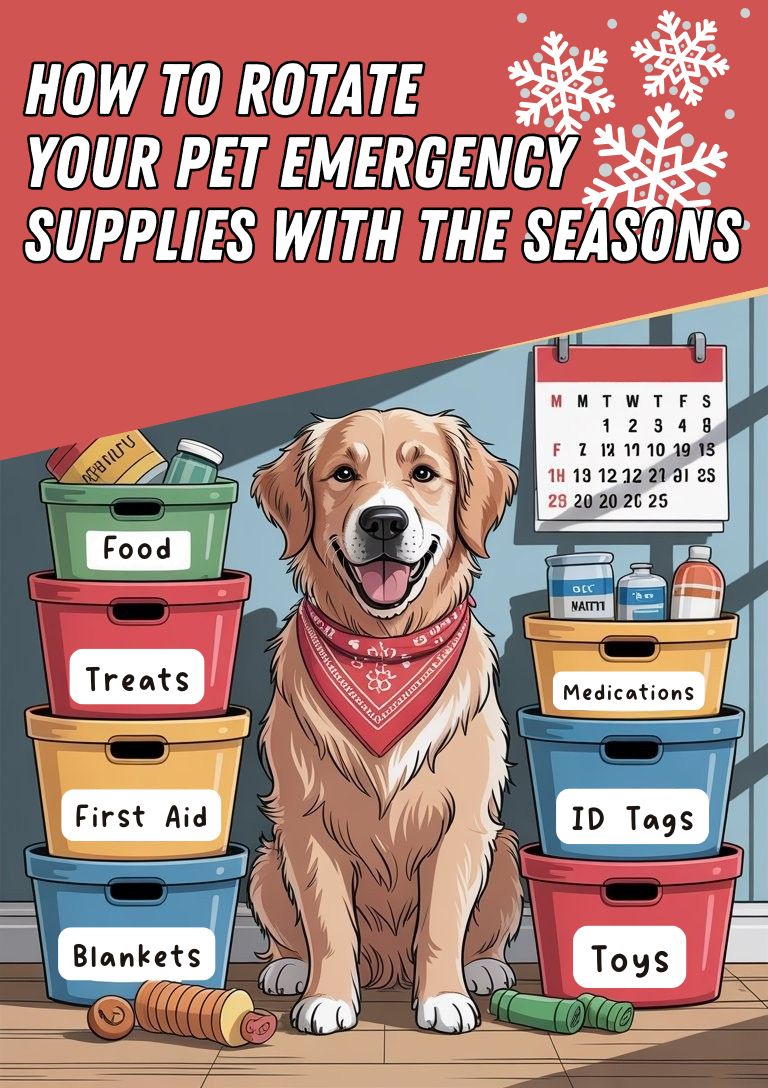
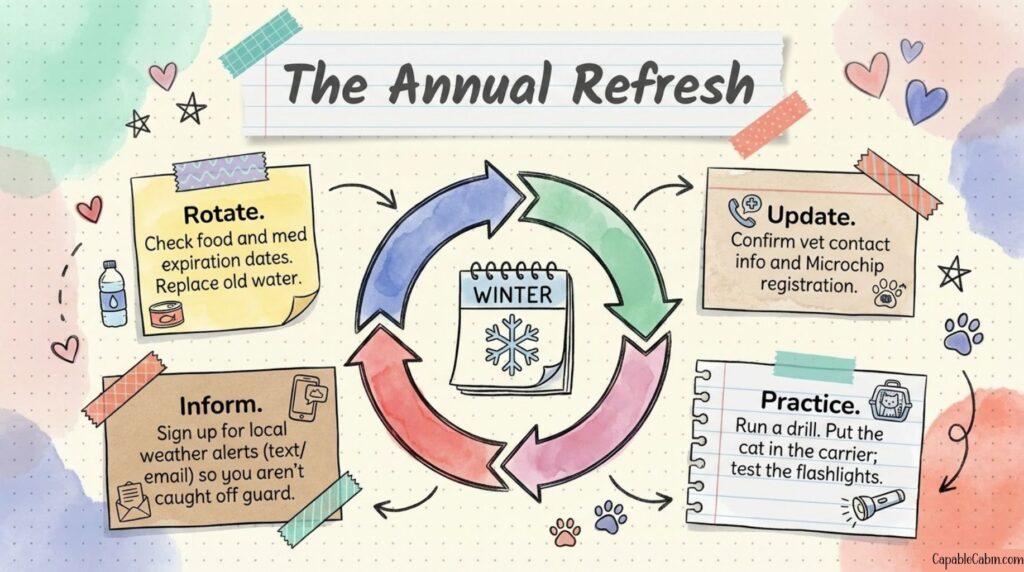
- Revisit your pet’s food stash and meds regularly. Nothing’s worse than discovering expired rations mid-storm. Replace items well before they’re due.
- Switch out or wash blankets that have been stored for a while so they’re fresh and clean.
Refresh Your Plans
- Every year, confirm that your vet’s contact details are correct and easily accessible.
- Re-list any pet-friendly hotels or shelters. Check if policies have changed.
- Go over your evacuation plan with family members, making sure everyone knows the drill. Your kids can benefit from reading kids pet emergency preparedness.
Stay Informed
Sign up for local weather alerts and severe storm notifications. That way, if the forecast suddenly shifts, you’ll have time to implement your preparedness plan. Even small heads-up intervals can make a difference in getting everyone inside and safe before conditions peak.
Practical Comfort Tips
Let’s slow down for a second and talk about your pet’s emotional well-being. Sure, storms are physically cold, but they can also be stressful. The wind rattles windows, the power might flicker, and family routines get shaken up. Helping your pet stay calm is a big piece of the puzzle.
Comfort Items
Put together a small kit of favorite toys, blankets, or scent-infused items to soothe your pet during tense moments. These can be part of your standard kit or a separate mini-bag you can grab at any time. For more suggestions, check out pet emergency comfort items.
Gentle Distractions
During a howling blizzard, turning on calming music or offering interactive toys can keep your pet’s mind off the storm. Puzzle feeders or a slow-paced indoor game can recreate some normalcy.
Positive Reinforcement
When your pet handles a particularly loud gust of wind without panic, give them a treat or praise. Reinforcing calm behaviors can help them adjust faster to unusual noises and conditions.
Frequently Asked Questions
Below are a few questions people often have during winter storms. If you’ve ever worried about any of these, you’re not alone.
How Long Can My Pet Safely Stay Outdoors?
This depends on factors like breed, coat thickness, and temperature. Short outdoor breaks are generally okay above 32°F, but once you dip below freezing, keep an eye out for shivering or paw lifting. Smaller breeds or hairless pets may need to come in sooner.
Should I Leave My Pet in the Car During Errands?
It’s risky, even in winter. According to the Animal Humane Society, cars can become dangerously cold (or even hot with exposure to winter sun). Pets are safer at home in a warm environment or going inside with you if that’s an option.
What If My Pet Shows Early Signs of Hypothermia?
Bring them indoors immediately, wrap them in warm blankets, and contact your vet. Try to raise their temperature slowly. Jumping right to hot water or a heating pad can cause shock or burns.
Which Internal Links Should I Check For More Tips?
That depends on your situation. If you worry about older animals, read senior pet emergency preparedness. If you live in an apartment with limited resources, pet emergency prep apartments could be helpful. Need extra supplies? Browse pet emergency kit petsmart for ready-made kits.
Budget-Friendly Ideas
You might think winter storm pet preparedness has to be expensive, but you can absolutely take thrifty routes. Most importantly, stay consistent in your efforts. Even small steps can prevent larger emergencies later.
- DIY Pet Clothing: If you’re crafty, try upcycling an old sweater into a pet coat.
- Homemade Shelter: For outdoor cats, a simple waterproof container with straw can keep them warm.
- Local Pet-Focused Groups: Community centers or shelters sometimes offer free or low-cost pet supplies in case of emergency.
- Swap Supplies: Team up with neighbors or friends who also have pets. Sharing a bulk purchase of food or splitting a big box of single-use heating pads can cut costs.
For more creative cost-saving tips, read our post on budget pet emergency preparedness.
Encourage A Pet-Friendly Neighborhood
One final piece of the puzzle is thinking beyond our own households. If you see animals left outside in brutal conditions, or you notice neighbors who are struggling to keep their pets warm, consider reaching out.
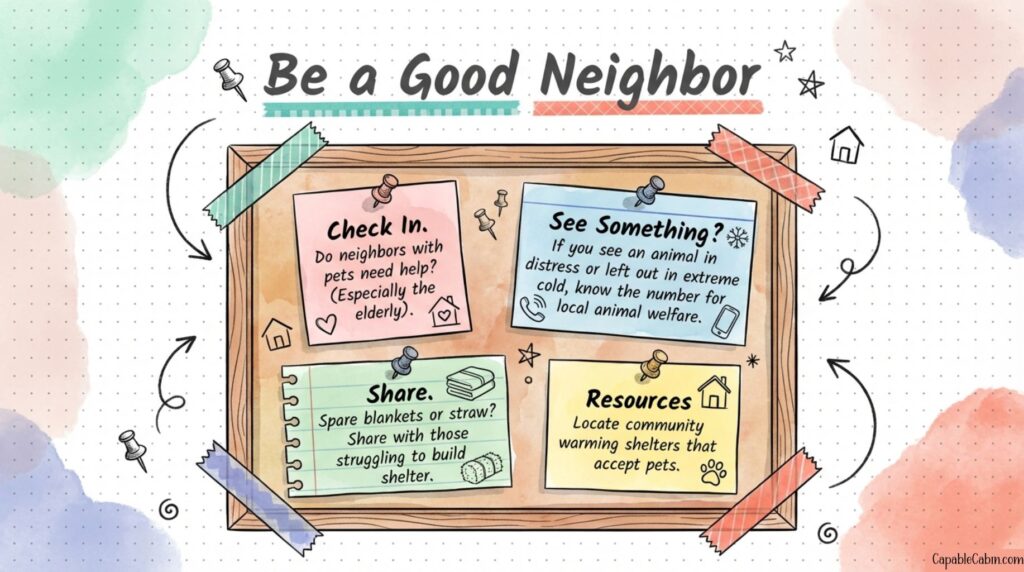
- Alert local offices of animal welfare if you see an animal in clear distress. In Delaware, for instance, you can call 302-255-4646 if pets are left outside in extreme cold (per Humane Animal Partners).
- Offer to help neighbors build quick shelter solutions or share blankets.
- Keep an eye on community notice boards for local guidance, like warming shelters that accept pets.
We’re all in the same boat when snow hits; often, it’s the small acts of kindness that keep our companion animals out of harm’s way.
Keep The Momentum Going
Winter storm preparedness doesn’t stop after one storm passes. It’s an ongoing process—fine-tuning your kit, remembering to rotate supplies, refreshing your contact list, and staying flexible in case circumstances change. We’ve all had moments when we breathe a huge sigh of relief after the weather warms, only to find ourselves caught off guard again in the next cold snap.
- Review Your Setup: Jot down any lessons you learned this time around. Did your dog’s water freeze too quickly? Did you miss an essential medication for your cat? Adjust your process now before the next storm.
- Practice Short Drills: Once a season, run through an “evacuation light” scenario or a brief power outage simulation. This might sound like overkill, but a fast practice run ensures you know exactly what to do when stress levels are high for real.
- Stay Tuned to Local Alerts: Subscribe to text or email updates about severe weather. Even if storms aren’t currently in the forecast, advanced notice can save you from last-minute scrambling.
Final Reminders: You’ve Got This
Winter storms can be challenging, but you have the tools to make them far less intimidating for both you and your pets. The trick is recognizing potential problems early, staying organized, and having a comfortable routine that keeps stress at bay. Maybe you can’t change the weather, but you can absolutely control your readiness. Let’s embrace a no-judgment zone here: it’s okay if you’re still working through the details. Any step you take today is a win for your pet’s well-being tomorrow.
Remember:
- Keep extra food, water, and meds on hand.
- Protect your pet from frostbite and hypothermia with limited outdoor time, warm layers, and close supervision.
- Prepare for possible evacuations ahead of time by scoping out pet-friendly accommodations and assembling lightweight kits.
- Don’t forget senior animals have extra needs. A warm bed away from drafts can be a game-changer for their comfort.
- If you have large or exotic pets, adapt your plan to their specific requirements.
- Maintain your strategy year-round, adjusting as needed.
At the end of the day, winter storm pet preparedness is about showing up consistently for your companions. You’re already proving you care deeply by researching how to keep them safe, and that alone sets you on the right path. Soon, you’ll find a rhythm that makes those swirling snows feel less like a crisis and more like just another season we can navigate together. Stay warm, stay safe, and give your pet a little extra cuddle—you’ve got this.