How to Network with Other Pet Owners for Emergency Support
Ever feel that tug of worry when you imagine an emergency striking? If you’re like most of us, you want to keep your beloved pets safe no matter what. That is where pet owner networking emergency support can make all the difference. Having a reliable community of pet owners by your side can help you share supplies, trade insights, and arrange safe havens for your furry companions in tough situations. Let’s explore how you can connect with fellow pet owners, build a strong network, and ensure everyone’s pets remain safe, healthy, and protected during an emergency. Consider this our little chat over coffee, where we brainstorm the best ways to look out for our four-legged family members together.
Embrace Pet Owner Networking
We all know emergencies can, quite frankly, be scary. You might be facing a natural disaster, sudden evacuation, or even personal crises like a house fire. Regardless of the disruption, taking on these moments alone can strain both you and your pets. That is why networking with other pet owners can be such a game-changer. As soon as you start building connections, you are not just forming friendships; you are creating a robust safety net in case things go sideways.
Why Pet Networking Matters
Let’s be honest, sometimes we only think of networking in terms of careers and conferences. But in the pet world, it can mean the difference between your furry friend being safe or lost during a crisis. In the Townsville case study, for example, almost half of pet owners did not include pets in their evacuation plans, even though 95% thought they could evacuate all their animals if necessary [1]. That gap between confidence and actual preparedness can leave your pets vulnerable.
But you do not have to go it alone. Imagine partnering with neighbors or local pet groups who can offer tips, resources, and maybe even a backup place for your pets to stay. When you exchange contact info and do a little planning together, you each become one another’s safety net. If something happens and you are away, or if you need urgent help, having folks who already understand your pet’s breed, temperament, and daily needs can be amazing.
Breaking Down Silos
Emergencies that involve pets often highlight how vital it is for people to collaborate. Researchers from the One Welfare framework emphasize that human-animal-environment interdependencies are real, and including animals in an emergency plan benefits everyone [2]. We sometimes compartmentalize emergencies as purely “human issues,” but your pet’s health is directly tied to your own feeling of security.
Networking breaks down those barriers and fosters a sense of unity. Maybe your neighbor has goats or horses, while you have small dogs. The prepping strategies, space needs, and evacuation logistics might differ, but sharing knowledge helps everyone formulate better plans. As a bonus, connecting with other pet owners keeps you aware of local resources, like animal-friendly shelters, vet clinics, or pet-friendly hotels if you have to leave quickly.
Action Steps to Get Started
- Chat With Neighbors: Knock on a few doors, or strike up conversations during evening walks. A simple “Hey, do you have a plan for your pets if we had to leave quickly?” can launch a bigger conversation.
- Join Local Pet Owner Associations: Search for or establish a neighborhood group. Keep everyone informed about local emergency warnings and resources.
- Exchange Contact Details: Form a small group text or social media thread to share updates on approaching weather events, local warnings, or helpful tips on stockpiling pet supplies.
With these small steps, you will be surprised how quickly a sense of camaraderie grows. After all, we love our animals the same way, and that common ground is a great place to begin building a supportive network.
Prepare Your Pet For Emergencies
Networking is crucial, but your own emergency readiness also matters. According to Ready.gov, you should have two emergency supply kits for your pet—one for sheltering in place and one lightweight kit for on-the-go evacuation [3]. Being prepared at home frees you up to help or connect with others, instead of panicking about last-minute logistics when you could be focusing on your entire community’s well-being.
Stocking Pet Emergency Kits
A well-organized pet kit can lighten your stress in any crisis. Let’s talk about the essentials:
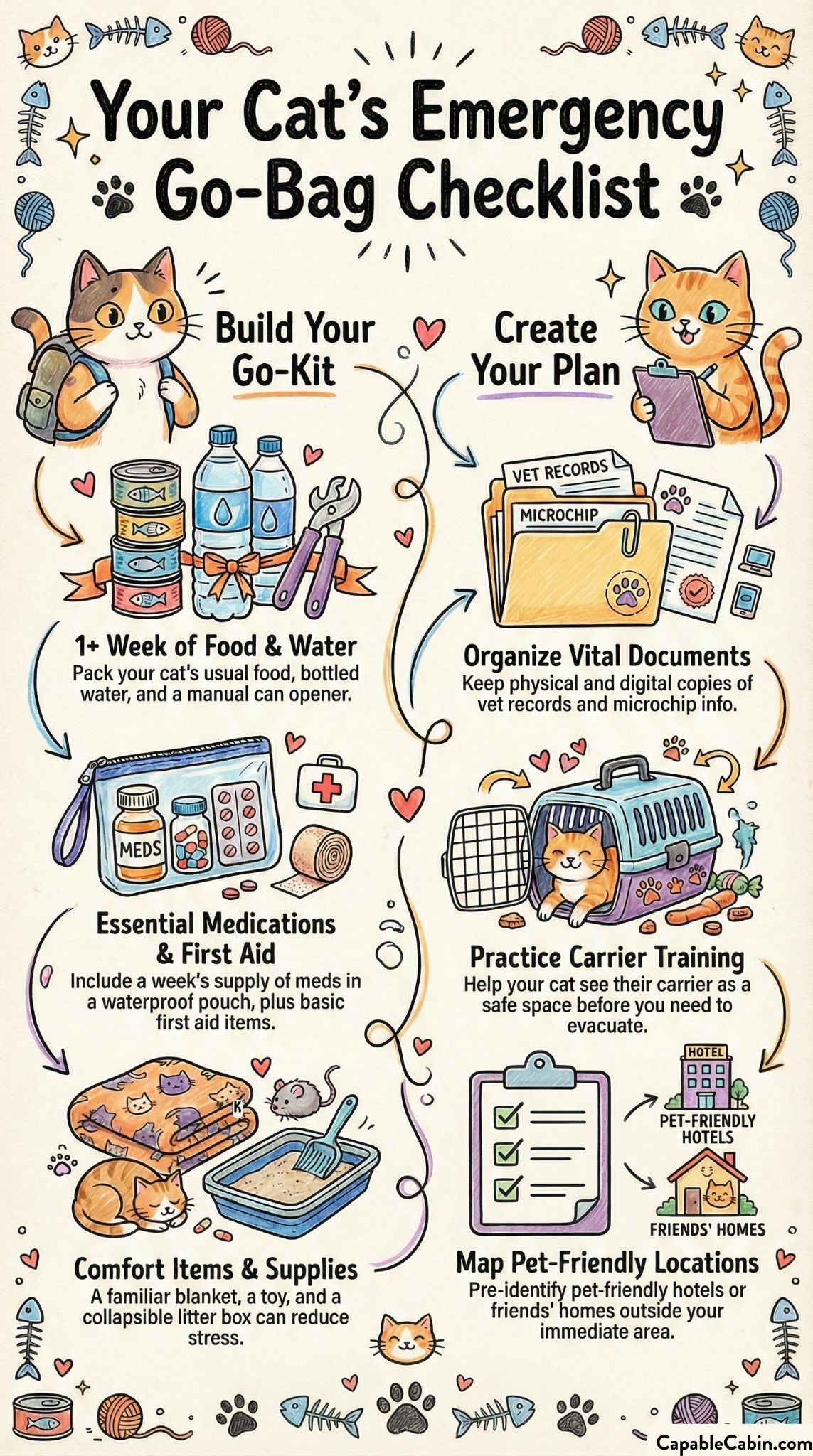
- Food and Water: Aim for a minimum of three days’ worth of food and water. If your pet is on specific diets, keep extra supplies and rotate them regularly to stay fresh.
- Medications and Medical Records: Store backup meds, copies of prescriptions, and vet info. Check out pet emergency documentation for more on which records are most important.
- Leashes, Carriers, and ID Tags: If your pet is microchipped, confirm the registration details are up to date. Keep a sturdy leash, collar, or harness for safe transport.
- Comfort Items: A favorite toy, blanket, or small bed can help soothe pets in chaotic environments.
- Sanitation Supplies: Include poop bags, litter, or disposable trays if you have felines. You do not want to scramble for these items in a shelter.
Review your kits at least twice a year to swap out expired food or meds. Put items in waterproof containers so they are easy to grab. If you need suggestions for how to store your kits effectively when you have limited space, consult pet supplies disaster types.
Practice Makes Perfect
Sometimes, the trickiest part is less about what to pack and more about whether your pet is ready to handle the hustle of an evacuation. The CDC recommends training your pet to get comfortable in their carrier, leash, or harness ahead of time [4]. That way, it is not a fight to coax your nervous cat into a carrier when the clock is ticking, or your dog is balking at a not-so-familiar car ride.
Try mini-drills: set up your carrier, place a treat or a toy inside, and reward your pet for walking in. Over time, they get used to the space and associate it with positive experiences. This simple practice can reduce panic—for both you and your pet—if an actual evacuation is needed.
Shelter at Home
Not all emergencies require leaving your house. If you have to hunker down, keep your pets in one safe space that is easily accessible. You can learn more about setting up a secure indoor spot from pet emergency shelter setup. This ensures you can grab them quickly if things escalate, and it also comforts them being close to the family.
Leverage Social Platforms & Groups
Networking is often driven by technology these days. And sure, that can be a double-edged sword (guilty of scrolling videos for too long), but for emergencies, online communities are a real lifesaver.
Finding Local Pet Groups Online
Look for neighborhood-centered apps or social media groups. Many communities have Facebook or Nextdoor groups dedicated to pet adoption, missing pets, or general pet advice. Jump in, introduce yourself, and mention you are seeking buddies for emergency planning. Chances are, you will find pet parents who appreciate your forward thinking.
- Facebook Groups: Search for “YourCity Pet Owners” or “YourCity Pet Emergency” to find relevant communities.
- Nextdoor: In many places, Nextdoor has become a go-to for real-time updates on local hazards like floods, fires, or weather events.
- Community Forums: Some restaurant or civic sites also host local bulletin boards. Keep your eyes open for digital spaces that might not be labeled strictly as “pet communities” but have active pet-related threads.
Once you have found a group, start a conversation around emergency prep. You might say, “Hey friends, has anyone put together a pet evacuation plan or kit that we can learn from?” You will quickly see who’s already well prepared and who needs some direction.
Data Sharing for Safety
When emergencies strike, data is everything. Simple online message boards can track who has evacuated and who is still at home. This real-time communication can save precious minutes if you need backup. Sharing phone numbers or creating a group chat also keeps everything in one spot. Consider collecting:
- Addresses and phone numbers of each pet owner in your circle
- Pet details (breed, medical conditions, allergies)
- Vet clinic info and preferred emergency animal hospital
Creating a digital spreadsheet shared among trusted neighbors sets you up for coordinated responses. Just be mindful of privacy—only gather info others are comfortable sharing.
Build A Mutual Aid Network
A mutual aid network is like having a personal support system: your pet buddies watch out for you, and you watch out for them. In an emergency, that could mean fostering someone’s dog temporarily while they handle evacuation details, or it might mean carpooling pets to safety when a single person’s vehicle cannot handle them all.
The Buddy System
Think of it like having a “pet buddy”—someone you trust to step in if you are not around. Let us say a sudden emergency means you cannot get home to rescue your kitty. If you already have a pact with a neighbor or friend, they can check on your cat, grab the emergency kit, and meet you at a designated spot. The American Red Cross says leaving pets behind is never safe, since they are likely to be injured or get lost, so having a buddy to help ensures that does not happen [5].
Organizing Assignments
In the chaos of a crisis, things can become a tangled mess, which is why clarity is so powerful. If you opt for a more formal mutual aid system, lay out roles:
- Resource Collector: Someone who is good at finding pet-friendly evacuation shelters, collecting donation supplies, or monitoring official alerts
- Transport Specialist: The neighbor with the spacious SUV or truck who can handle multiple crates
- Foster Volunteers: People who have extra space at home to temporarily house animals, including bigger pets like horses or goats if you are in a rural area
Schedule a casual get-together to assign tasks and discuss possible scenarios. This might all sound a bit intense, but trusting each other to fulfill specific roles can cut through confusion when an emergency hits.
Helping Large Animals
Not everyone has dogs or cats—some have horses, goats, or pigs. According to Ready.gov, large-animal owners need extra preparation [3]. So it might be wise to connect with local equestrian clubs or small farm owners. Hauling livestock or big pets requires specialized vehicles and knowledge. By integrating these owners into your mutual aid network, everyone benefits from a wider pool of resources and on-the-ground experience.
Coordinate Shelter Options & Plans
One subtle but critical piece of the puzzle is knowing where you will physically shelter your pet if you are forced out of your home. Because not every emergency shelter allows animals (much less multiple pets), advanced planning is paramount.
Identifying Pet-Friendly Shelters
The CDC warns that pets are not always granted universal access in evacuation shelters [4]. That means you should double-check local guidelines and keep a list of friendlier options:
- Local Shelters: Ask if they can accommodate pets. Some might only accept service animals.
- Animal Hospitals or Boarding Facilities: Jot down their addresses in case your usual vet’s office is overwhelmed.
- Out-Of-Town Friends: See if they can host your pets short-term if local shelters are full.
Additionally, updating your local “rescue sticker” with the number and types of pets in the home can help first responders know if animals are inside when you are not around [5].
Housing Swaps
One powerful approach is “housing swaps” with fellow pet owners. If your area is under a flood threat while a friend’s region is not, or vice versa, consider hosting each other’s animals away from danger zones. It might require some driving, but the peace of mind you get from ensuring your pets are with someone you trust is often well worth the trip.
If you want to add extra safety measures to your plan, remember to check out pet emergency legal insurance in case anything goes wrong. Having coverage for unforeseen vet expenses can protect both your finances and your pets.
Exchange Pet Care Knowledge
Sometimes, networking is not just about big-scale events—it is also about everyday tips that strengthen your overall readiness. Whether you are dealing with pet behavior quirks or medical concerns, the knowledge you swap with other owners can keep your circle of furry friends healthier and better prepared for anything.
Sharing Training Techniques
Your dog can be the most laid-back personality around, but emergencies might cause them to act out of character. Having resources on how to calm anxious pets can be a lifesaver, especially in noisy or chaotic settings. If your dog is prone to anxious whining during storms, you might share that you learned about pressure wraps or how to gently reassure them without reinforcing fear. That neighborly exchange can reduce stress for everyone in a pinch, and for more ideas, you might check out calming anxious pets emergency.
Behavior Emergencies
Behavior-related crises, like sudden aggression or anxiety attacks, can emerge when temperatures spike or environmental stress runs high. In extreme weather, pets may become dehydrated, disoriented, or show uncharacteristic behavior. Knowing what is normal and what is a red flag can keep you ahead of potential disasters. Resources like pet behavior emergencies offer practical info to manage such surprises.
First Aid Skills
Quick first aid can mean the difference between a manageable situation and a full-blown emergency. If you or someone in your network knows how to treat minor injuries, you have a head start. Point friends to easy-to-use first aid apps, many of which come from reputable groups like the Red Cross [5]. Basic tips like how to check for dehydration, how to safely handle a bleeding pet, or how to prevent heatstroke are valuable info for everyone.
Train Together For Readiness
Team training can supercharge the effectiveness of your network. Think about group drills or workshops where you all practice packing up your pets and moving them to a safe spot quickly. It might feel a bit silly at first, but you will thank yourselves later when nerves are high.
Group Drills
Set a date and time for a mock evacuation:
- Make it real. Sound an alarm or set a timer so everyone scurries to gather their pets and go to a prearranged meeting location.
- Time yourselves. See how long it actually takes to load pets into carriers and have them securely in the vehicle.
- Debrief afterward. Share any stumbling blocks—like if you realized your dog’s crate does not fit in your new car.
You learn a lot by acting things out, rather than just reading checklists. Plus, it can be a nice relationship-building activity. Humans bond over group problem-solving, and so do animals who get used to seeing each other around. The Aussie study in Townsville highlighted that many owners felt uncertain about whether local shelters accepted pets [1]. Drills help you spot these knowledge gaps early on.
Coordinated Communication
It is easy to overlook how big a role communication plays. If you plan a group drill, make sure everyone knows the plan:
- Decide on a communication platform (text thread or group app).
- Send out frequent reminders about the drill date.
- Post real-time updates about your progress.
After a few runs, you will see your group transform into a well-oiled machine. You will also notice that your pets adapt to the routine if the practice is repeated periodically.
Seek Financial Aid & Assistance
Financial stress often rears its head when disaster strikes. It is no secret pet care can get expensive, especially if medical needs or evacuations come into play. That is why learning about financial resources and sharing them within your network is a tremendous help.
Crowdfunding Platforms
- CoFund My Pet: Helps people fundraise for vet costs [6].
- Free Animal Doctor: A nonprofit crowdfunding platform ensuring all donations directly support veterinary bills [6].
- Waggle: Designed to assist pet owners with unexpected medical procedures they cannot afford [6].
These platforms can step in when finances become tight due to sudden emergencies or even chronic conditions. As you network, share links to these services so that nobody struggles alone.
Grants and Charities
Consider looking into funds like:
- Brown Dog Foundation: Offers help to families in temporary financial crisis when their pets face life-threatening but treatable conditions [6].
- RedRover Relief Grants: Supports emergency veterinary care expenses [6].
If you come across a friend or neighbor upset about not being able to afford their pet’s necessary treatment, these resources can literally save a life. Encouraging each other also lifts that emotional burden of feeling alone or judged, which can be very isolating.
Local Resources and Discounts
In some communities, local vets, humane societies, or rescue organizations offer discount services for spay-neuter procedures, shots, or microchipping. Ask around your network if anyone has discovered helpful programs in your area. Passing along this knowledge fosters goodwill and keeps your network active, supportive, and solution-oriented.
Stay Connected & Informed
Emergency preparedness is not static; it evolves as new threats emerge or as your pet’s needs change. That is why staying in the loop with local alerts, official sites, and even each other is an ongoing job.
Follow Local Alerts
Subscribe to emergency alert systems your city or county provides. You can also sign up for text notifications from local authorities that give real-time info on:
- Weather changes
- Fire status
- Nearby hazardous materials spills
- Flood warnings
Whenever you see an alert, shoot it out to your network of pet owners. That heads-up can save someone who might not check their phone as frequently. Sometimes, hearing from a friend is what truly spurs people into action.
Regular Check-Ins
Even if no disaster is looming, keep those group chats lively. Did someone learn a new tip about storing medications for cats? Share it. Did a new neighbor move in with two adorable boxers? Invite them to your existing network. The more robust your group, the better the safety net for all. You can also periodically remind everyone to refresh their kits. Think about dropping a note like, “Hey folks, guess what, I just realized all of Toby’s meds are about to expire… maybe we can all do a supply check this weekend?”
Document Ongoing Lessons
Not every emergency scenario will go perfectly, but every experience can teach valuable lessons. Keep notes on what worked well and what could have gone smoother. Maybe you discovered your go-to boarding facility filled up immediately after a hurricane warning. That is golden info to share, prompting folks to scout out backup locations in advance. Over time, your collective wisdom builds a stronger fortress of preparedness.
Celebrate Community & Ongoing Support
Networking should not be all about stressful doomsday scenarios. It is also about connecting with people who love animals as much as you do. Sharing pictures of your pets, organizing group walks, and celebrating small wins (like a next-door neighbor who successfully evacuated her rescue dog with no drama) keep these relationships alive and meaningful.
Foster a Supportive Atmosphere
Try hosting occasional meetups—barbecues in the park, potlucks, or even small holiday parties where pets are welcome. This not only helps your animals socialize, it also nurtures trust among the humans. Plus, an open dialogue about budgets, concerns, or vet recommendations will feel more natural when you truly know each other.
Another boost? You might create a community event where all the dog or cat owners volunteer at a local shelter. It is a fantastic way to build connections, spread awareness about pet emergency planning, and make a difference for rescue animals. For further reading on resiliency in rescue situations, check out rescue pet emergency resilience. You never know when a rescue situation might be part of your emergency planning, especially if you or your neighbors become foster homes in a pinch.
Keep the Momentum Going
Emergencies come in waves. One month it is a flood threat, the next a heatwave, or maybe you are uncomfortably close to a wildfire zone. By investing time in your network, you are building the resilience to handle whatever comes next.
- Do routine plan checkups: Are your phone numbers correct? Do you need new volunteers for fostering?
- Keep an eye on local news: Keep each other in the loop about changes in community shelters or new legislations that might affect pet evacuations.
- Celebrate small steps: High-five that neighbor who added a second location for their emergency kit or someone who just discovered an incredible discount on microchipping.
At the end of the day, pet owner networking emergency planning revolves around being each other’s safety net. When you foster real connections, build mutual trust, and share vital resources, you transform a scary potential crisis scenario into something far more manageable. Remember, none of us wants to face an emergency alone, and our pets deserve all the care and support we can give. By planning together, practicing little by little, and celebrating those small wins along the way, you will strengthen not just your readiness, but the community spirit that makes life with pets so wonderfully rich.
We are all in this together. Keep spreading the word, keep sharing those tips, and let your friendly alliances flourish. If the unexpected happens, you will look around and realize you have a network—an extended family—ready to support you and your beloved pets. It is comforting to know that even in tumultuous times, someone else has your back, just like you have theirs. And that, friend, is what community is all about.