The $5 Challenge: Turn Spare Change into Emergency Savings
If you’ve heard the buzz about the “$5 savings challenge” and you’re wondering how something so simple could transform your emergency fund, you’re not alone. Sometimes, saving even small amounts of money can feel like climbing a mountain—especially when you have a family, job demands, and day-to-day expenses all vying for your attention. But here’s the thing: this challenge is designed to be easy, stress-free, and surprisingly fun. Rather than overhauling your entire budget overnight, you’re invited to take small, consistent steps that help you stash away real money before you know it.
In this guide, we’ll explore exactly how this five-dollar approach helps you turn spare change into a sustainable safety net. Along the way, we’ll walk through common roadblocks and share encouragement to keep you moving forward. By the time you finish reading, you’ll see that building an emergency cushion isn’t reserved for financial gurus—it’s something you can do right now, in bite-sized steps. Ready to get started?
Understand the $5 Savings Challenge
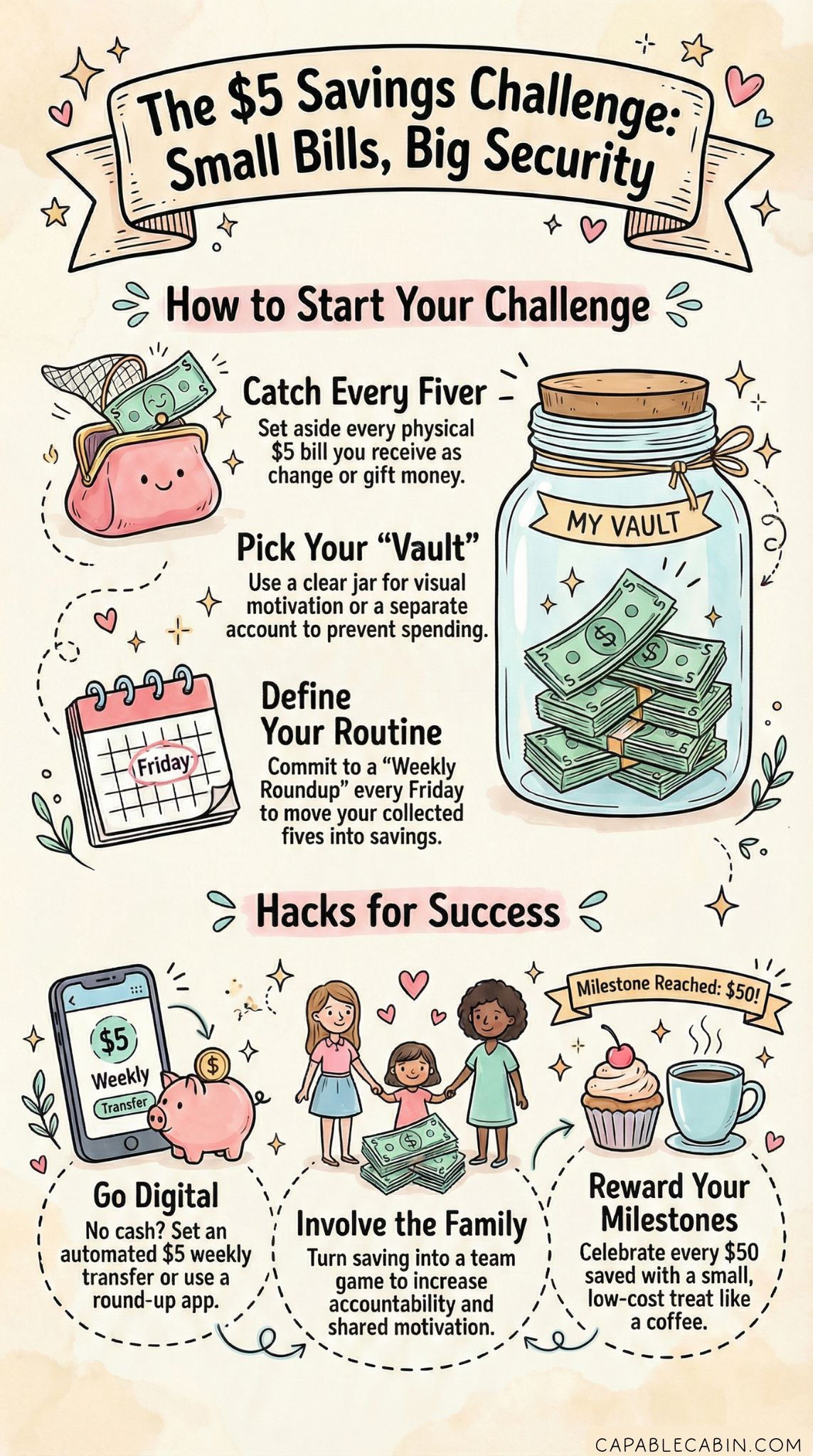
The core idea behind the $5 savings challenge is simple: every time you come across a five-dollar bill—or decide to allocate five dollars from your checking account—you set it aside for your emergency fund. This method is perfect for people who feel overwhelmed by typical advice like “save 20% of your income.” While 20% might be excellent in theory, it can seem daunting if you’re already juggling groceries, housing, or childcare costs.
The beauty of this challenge lies in how flexible it can be. You might find you only end up with a couple of $5 bills each week, or maybe you receive more than you expected in tips or gift money that you can earmark. The point isn’t to stress over exact amounts; it’s about getting into the habit of saving whenever you have five extra dollars. You’d be amazed how fast it adds up once you start treating that fiver like it has a purpose.
Why This Challenge Works
One of the biggest reasons the %5 savings challenge is so effective is that it leverages a playful, almost gamified approach to saving. Instead of focusing on big chunks that can stress you out (“I have to save $200 per paycheck?!”), you’re simply mindful of every little bit that comes your way. You get a mini rush each time you toss another five-dollar bill into your jar or transfer it into a dedicated account.
It also builds momentum. Each $5 deposit is a small win. When you feel accomplished, you’re more likely to stay motivated and keep going. This technique is especially powerful if you’ve ever felt like you weren’t “good at saving.” By focusing on achievable baby steps, you end up changing your mindset about money as much as you’re improving your financial situation.
Gather Your Tools
You don’t need fancy gadgets to make this challenge work. In fact, much of the success rests on how you organize your environment, so you can’t ignore your savings intentions. Here are a few things that often come in handy:
- A Dedicated Savings Container: A piggy bank, jar, or envelope can serve as a visual reminder in your home. Seeing it every day keeps your challenge front and center.
- A Separate Bank Account: This is ideal if you want to avoid the temptation of dipping into your challenge savings. If you prefer a more tech-friendly option, open or use a separate no-fee savings account.
- A Notebook or Tracker: Whether you love old-fashioned paper or prefer a budgeting app, tracking your deposits reinforces how much progress you’re making. It also provides a little dose of motivation every time you tally up your growing savings.
For many families, combining a tangible container (where you drop your fives throughout the week) with a periodic deposit into a bank account can strike a good balance. That way, you still get the fun, hands-on feeling of physically saving, but you also enjoy the security of a protected account.
Set Up Your Strategy
Let’s talk logistics, because sometimes the biggest hurdle is simply deciding how to implement a new habit. Here’s a straightforward approach:
Identify the Flow of Cash
- Think about when and how you handle actual cash or make transactions that leave you with a little leftover. Maybe you withdraw $20 for groceries and get $5 back in change. Or each payday, you can move $5—plus any loose change—straight into your challenge jar.
Decide on a Routine
- Will you deposit your fives every day, once a week, or whenever you notice them? Some folks like to do a “weekly roundup,” where they gather all their small bills and put them in one place. If consistency is tricky, set an alert on your phone (for example, each Friday at 6 p.m.) to remind you: “$5 savings challenge time!”
Over time, you’ll refine the process based on what works best for you. The key is to remain flexible. If you realize you could save more than just $5 every few days, go for it. If a week goes by where you can only manage a single deposit, that’s fine too. Keep the spirit of the challenge alive by focusing on consistent action rather than perfection.
Stay Motivated
Motivation can be the trickiest part of any money habit. One week, you’re excited to watch that jar fill up. Next, you’re grappling with an unexpected expense and feeling tempted to skip your deposit. Here are a few gentle reminders to keep your spirits high:
Visualize Your Future Peace of Mind
Think about how it will feel to have a real emergency cushion. No more scrambling to pay for a car repair or unexpected medical bill. Even a modest emergency fund can bring more peace and reduce anxiety because you know you’re prepared.Involve Your Family
Bring your spouse, partner, or kids into the challenge. Let’s say your children find a $5 bill in birthday money. If they’re old enough, explain that this challenge helps everyone stay secure in case something unexpected happens. It’s not just about saving money—it’s about creating a safety net as a team.Reward Progress
Maybe every time you reach $50, you treat yourself to a small reward, like a cup of coffee at your favorite cafe or a mini home spa night. This micro-incentive keeps the positive momentum rolling without setting you back financially.- Handle Common Obstacles
Building any new habit comes with hiccups, and the $5 savings challenge is no exception. Let’s tackle some common roadblocks head-on, so you’re prepared when challenges pop up.
Feeling Like You Don’t Have Cash
If you mainly use cards or digital payments, it’s easy to feel like you never see five-dollar bills. In this case, consider transferring five dollars regularly from your checking account to a separate savings account. For an automated approach:
Automated Transfers
- Schedule a $5 transfer on the same day each week. By year’s end, you’ll be surprised at how those small amounts add up.
Round-Up Apps
- Some apps automatically round up your transactions to the nearest dollar and move the spare change to savings. You can apply a similar principle by manually transferring “extra” amounts once or twice a week.
Urge to Dip into Your Savings
Sometimes that money in the jar or reserved account calls your name—especially if you’re momentarily short on cash. One helpful tactic is the “out of sight, out of mind” approach. If possible, deposit your collected fives into a dedicated account that isn’t linked to your primary checking. This means you won’t see that balance every time you open your banking app. If you’re worried about accessibility in a real emergency, consider reading more about accessing emergency fund best practices, so you’re prepared without being tempted to raid it for non-emergencies.
Explore Variations
We all have unique financial situations and preferences, so it’s worth exploring different twists on the standard five-dollar format. Here are a few variations to consider:
The “$5 a Day” Plan
Commit to saving $5 each day, either physically or electronically. This can be especially effective if you’re trying to fast-track a specific goal, like building a starter emergency fund.The “Every 5th Purchase” Method
If you realize you shop frequently, decide that every 5th purchase—no matter how big or small—triggers an automatic $5 transfer to your savings. This approach links your spending patterns with your savings behavior.The “Digital Only” Challenge
If you’re not into handling physical cash, you might focus on digital deposits. Add a line item in your budget each month specifically for your five-dollar deposits and track them diligently in a budgeting app.
Remember, the challenge is supposed to be friendly and approachable. Feel free to adjust the rules to fit your life, whether that means saving $5 a week, $5 a day, or $5 for every birthday card you receive. Consistency is the secret sauce here.
Secure Your Savings
You might also check out ways others keep their funds safe and accessible. Some families prefer a fraction of their reserves in quick cash form at home—like an emergency cash at home strategy—while maintaining the bulk of their funds in a savings account. Wherever you decide to keep it, make sure the account (or container) is set aside solely for emergencies. Nobody wants to see months of progress wiped out by an impulsive purchase or everyday bills that could be covered elsewhere.
As you watch your small contributions add up, you’ll grow more protective of your new nest egg. One of the best ways to safeguard that money is to think ahead about where to store it. Keeping part of your savings in a jar at home might be convenient, but consider transferring it to a secure, dedicated account once you hit a certain threshold. That way, you minimize the temptation to dip into it.
Celebrate Your Progress
One of the best elements of the $5 savings challenge is how quickly you can see tangible results, even if it starts small. That steady accumulation of fives is a reminder that you’re taking care of the future you. It’s a big deal, and it deserves ongoing celebration. Rather than wait until you’ve reached a magical number, take stock every couple of weeks or once a month:
Tally Your Growth
Take a few minutes to count up what you have in your jar, or check your account balance. Write it down in a notebook or update your budgeting app. Watching your savings climb can spark a burst of motivation that keeps you going strong.Share the Milestone
If you’re doing this with family or close friends, share the milestone with them. A small high-five or a “We did it!” message can create a sense of shared victory. Saving money doesn’t have to be a lonely endeavor.Reflect on the Why
Take a moment to remember why you started. Maybe it’s for greater peace of mind if there’s a job loss, car trouble, or a medical issue. Perhaps you want to feel more secure as a parent. Let that sense of purpose fuel you forward.
Make It Part of Your Emergency Fund
By now, you’ve probably realized that five-dollar deposits can be an incredible way to jump-start, supplement, or rebuild an emergency fund. If you’re brand-new to the concept of saving for unexpected events, you might want to learn more about how to start emergency fund strategies or compare an emergency fund vs savings. These resources delve into practical steps to expand your financial safety net beyond the five-dollar approach.
Some people even ramp up the challenge once they see success. Instead of just saving five bills a week, they add a weekly deposit of $25 to a high-yield savings account. Or they might challenge themselves to match whatever amount they accumulate in fives with an equal sum from their paycheck. Those little upgrades can build a meaningful cushion surprisingly fast.
Take It to the Next Level
Curious about growing your nest egg even more? Once you’re comfortable with the $5 savings challenge, you can layer in additional tactics:
1. Pair with Other Challenges
Try combining the five-dollar approach with a broader emergency fund challenge or a year-long emergency fund challenge. Stacking strategies not only boost your savings but also keep excitement high—especially if you thrive on variety.
2. Create a Financial Preparedness Kit
When you’re thinking about emergencies, money is only part of the picture. Check out a financial emergency preparedness kit to organize essential documents and contingency plans. It’s one way to ensure you’re well-equipped in case life throws you a curveball.
3. Automate Your Bill-Paying Strategy
Keeping up with monthly bills in a timely manner prevents expensive late fees and helps your emergency fund remain intact. If you’re confident you won’t accidentally forget a due date, consider automating payments. With fewer day-to-day money chores, you can focus that energy on the challenge itself.
Embrace an Envelope System
If you’re partial to tangible methods, an emergency fund envelope system could provide the perfect pairing with your $5 savings challenge. Here’s how it might work:
- Label Envelopes by Category
Have one envelope for your “$5 savings challenge,” others for monthly expenses, and some for discretionary spending. - Allocate Fives Immediately
Whenever you get a $5 bill, move it to your challenge envelope. This visual, hands-on step can make saving feel real and immediate. - Transfer Larger Amounts
Once your envelope reaches a comfortable sum, deposit it into a bank account. Maintaining a protective layer ensures that day-to-day spending doesn’t accidentally or intentionally co-opt your challenge funds.
This method is often praised for its transparency. You can see at a glance exactly where your money is going, and that clarity can help you stay on track. Over time, you might adapt it to suit changing circumstances without losing the core principle of setting aside fives.
Overcome Slumps and Plateaus
Like any new habit, the $5 savings challenge can sometimes lose its sparkle. Maybe you forget to make deposits for a week, or you feel like you’re not making progress fast enough. Before you decide it’s not worth the effort, remember that financial habits grow over time, and it’s natural to have peaks and valleys.
Revisit Your Original Motivations
Write down a quick list of the top reasons you’re saving—such as covering unplanned medical bills, preventing stress during a job transition, or shielding your household budget from sudden emergencies. Keep this list easily visible, like on your fridge or near your workspace. That constant reminder can reignite your enthusiasm.
Plan for Adjustments
Things like sudden car repairs or back-to-school expenses may crop up. If you can’t deposit as many fives for a while, that’s okay. Flexibility is part of life. Use these moments to reinforce that even a small deposit is better than none. A single five-dollar bill might not seem like a big deal, but it keeps you in the saving habit until you can crank things up again.
Build a Support System
Never underestimate the power of community when it comes to staying accountable. If you have friends or family members who are also looking to beef up their safety net, share the idea of a $5 savings challenge with them. Perhaps you create a small text group or social media thread where everyone posts updates on how much they’ve saved each week.
If you’re the type who prefers more privacy around finances, you can still find subtle ways to stay connected with a partner or close friend. Let them in on your goal: “I’m aiming to save at least $5 every few days for emergencies.” That bit of social accountability boosts your commitment, and you might inspire someone else to join the journey.
Check In on Your Needs
As your challenge fund grows, you’ll want to ensure that your emergency savings align with your broader financial goals. Maybe you started with a humble target, such as $500, but now you’re considering a more robust safety net like $1,000 or even three months of expenses. You can also check out 3-month emergency fund guidance to see what that timeline might look like.
If you discover you need more clarity on what makes sense for your family, consider exploring resources on emergency fund amount. Everyone’s situation is unique, and it helps to know where your current challenge fits into the big picture of financial preparedness.
Craft a Sustainable Mindset
The $5 savings challenge isn’t just about collecting fives. It’s also about building a mindset of intentional spending and regular saving. When you become mindful of small bills, you often start paying attention to other tiny leaks in your budget. Maybe you spot daily coffee purchases or random online shopping that could be reined in, even if just a little. Over time, this mindful approach can translate to bigger savings behaviors without feeling forced.
Pay attention to how you feel as you see your emergency stash grow. Do you notice a greater sense of stability? Less anxiety about potential financial surprises? Lean into those positive feelings. They reinforce that your efforts are paying off in more ways than just the balance in your container or account.
Reflect on Lessons Learned
At some point, you’ll look across the table and realize you have a nice pile of fives or a solid bank balance you didn’t have before. That calm confidence is a signal to reflect on what worked:
- What triggers helped you remember to set aside the money?
- Did you find it easier to deposit cash or make digital transfers?
- Did having a visual reminder at home help keep you inspired?
You can also consider if you faced any challenges you want to handle differently next time. Maybe certain times of the month were harder for building momentum. Once you’re aware of these patterns, you can plan around them to keep the process sustainable.
Use Tracking Tools to Your Advantage
If tech is your friend, try using a spreadsheet or free budgeting app to document every deposit you make. It might look something like this:
| Date | Deposit | Running Total |
|---|---|---|
| Sept 1 | $5 | $5 |
| Sept 3 | $10 | $15 |
| Sept 7 | $5 | $20 |
| Sept 10 | $5 | $25 |
Seeing a running total climb, line by line, can be immensely satisfying. This record acts like a personal cheerleader, showing you in black and white that every small deposit counts. You might even color-code your rows for extra motivation—try green for contributions, yellow for times you had to skip a day or week, and so on.
Troubleshoot Potential Pitfalls
Think about the tough times—maybe you have a tight month and can’t do your usual deposits. Or you feel bored because the process has become routine. Having a plan for these moments is key.
- Set Minimums and Maximums
Sometimes it helps to define a baseline. Even in a tough month, you might commit to saving at least $5 a week. Conversely, if you get a windfall, you could set a maximum you want to deposit toward your emergency fund, ensuring you leave enough for your daily needs. - Keep It Interesting
Try a mini-challenge each month—for example, see how many consecutive days you can go adding just $1 or $2 more beyond your usual five. These little twists can break up monotony and relight the spark.
Extend the Habit to Other Financial Goals
Once you’re comfortable with the $5 savings challenge, don’t be surprised if you’re motivated to save in other areas too. Some folks redirect that same habit toward a holiday fund, a vacation pot, or an additional “future fun” envelope. The sense of achievement you gain from your emergency cushion can spill over into other dreams—because you’ve proven to yourself that consistent micro-saving is possible.
As you expand, it’s always a good idea to keep your main emergency fund intact. After all, emergencies can pop up anytime, and you don’t want to be caught off guard. If you need further ideas, you might browse creative emergency fund ideas to see which approach aligns best with your family’s style and goals.
Move Forward With Confidence
Think of the $5 savings challenge as one stepping stone in your broader financial journey. You might start small, but those tiny actions build a sense of accomplishment and reliability. Even if you can only spare an occasional five-dollar bill, that’s still progress. Each time you tuck away a bit of money, you’re creating a cushion that your future self will thank you for.
Financial security isn’t about how much you earn—it’s about consistency, planning, and mindset. This challenge teaches you that big numbers often grow out of small, steady habits. And the best part? You haven’t had to drastically alter your life or your family’s budget to make it happen. You just needed a method that feels doable, encourages you each step of the way, and reminds you that every little bit truly counts.
You’ve got this. It’s okay if you skip a week here or there, or if you decide to modify your routine to fit changing circumstances. The key is that you’re actively doing something to protect yourself and your loved ones from financial surprises. You don’t need a lecture or complicated investment strategy to get started—just the willingness to set aside a few dollars whenever you can.
Here’s to you and your brand-new emergency fund foundation. Keep showing up for yourself and those you care about. That’s the real power of the $5 savings challenge—turning spare change into peace of mind, one five-dollar deposit at a time.