Cat Emergency Preparedness Made Simple (No Guesswork)
Recognize The Need For Cat Emergency Preparedness
Ever feel like emergencies catch us completely off guard, leaving us scrambling to figure out the next move?
When it comes to our cats, that last-minute panic can get even more intense—after all, they rely on us for everything. This is where cat emergency preparedness comes into play. Think of it as a comforting safety net that lets you breathe easier, knowing you’ve packed the essentials your feline friend needs if things go sideways.
We’ve all seen news reports about hurricanes, fires, floods, or power outages. Maybe you’ve been in a situation where you were told to evacuate and had about ten minutes to grab what you could.
Without a plan, you might forget cat food, skip important medications, or scramble to find a carrier at the worst possible moment. Being purposeful about preparing a kit, having an evacuation plan, and keeping key documents organized can lift a huge burden if you ever have to act fast.
Our cats might seem independent (they do have those “I’ve got this” vibes sometimes), but in a crisis, they depend on us. By the end of this post, you’ll have a clear roadmap for assembling an emergency kit, documenting crucial details, training your cat to handle sudden moves, and brushing up on first aid basics.
Think of it as building a safety cushion—one that gives you and your furry companion the confidence to handle tough moments together.
Build Your Cat Emergency Kit
So here’s the thing: a good kit is like your armor against the unknown. Preparedness experts at the CDC recommend keeping plenty of water, food, and supplies for each pet [1]. It’s no different for our feline companions. As we walk through each item, remember that it’s okay to start with the basics and build up. Even a small stash is better than nothing at all.
Stock Up On Food And Water
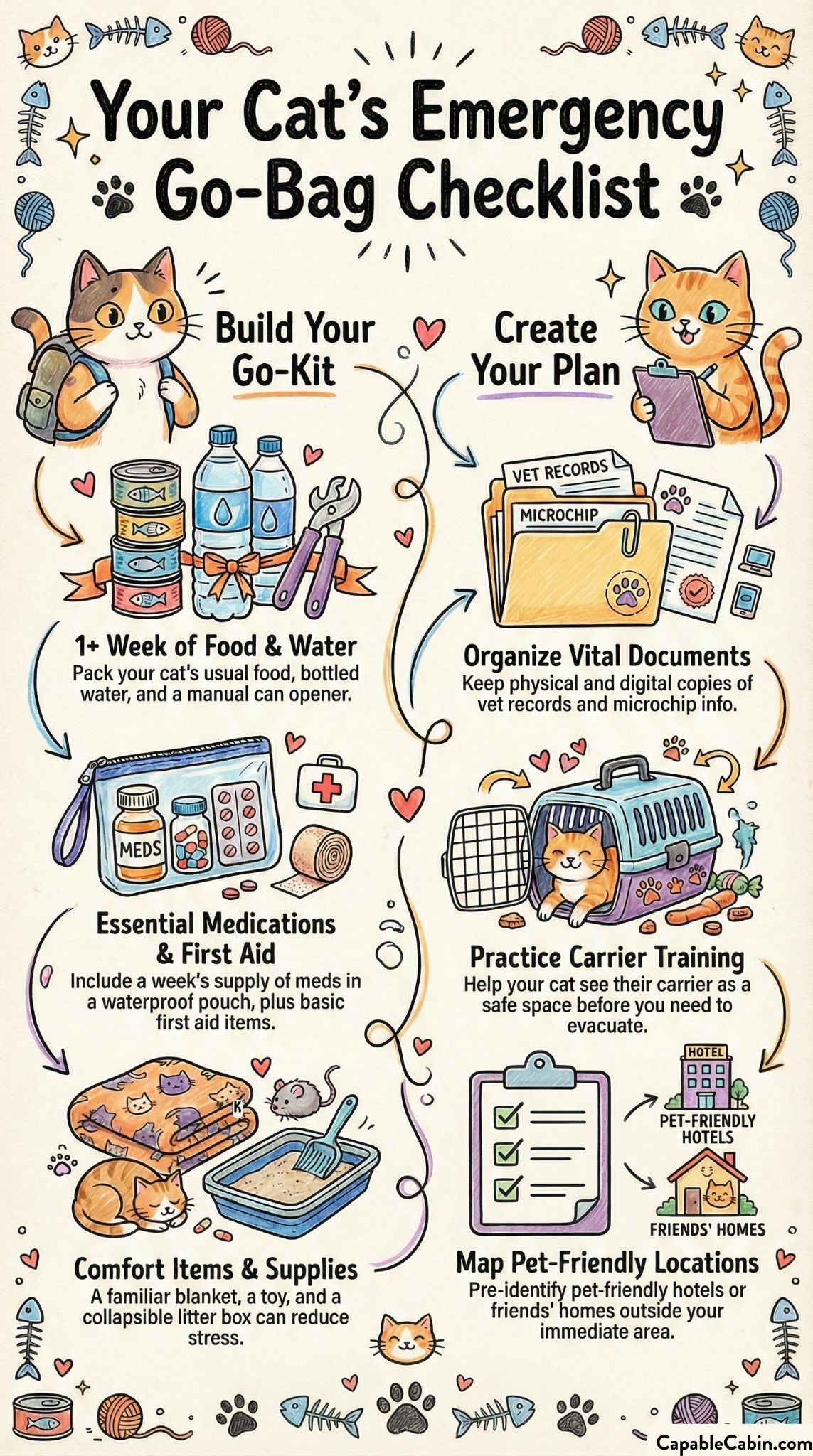
Food and water are your cat’s lifelines. You’ll want at least a week’s worth of cat food—preferably the same brand your cat already eats to avoid tummy troubles. If you rely on canned food, be sure to include a manual can opener. For water, set aside one gallon per cat per day if you can swing it. Some folks store a little less, but aiming high is never a bad idea.
- Pack at least a week’s worth of bottled water.
- Store at least a week’s worth of cat food.
- Include a can opener if you feed wet food.
- Toss in collapsible bowls for easy storage.
Rotating supplies every few months is key, so you don’t get stuck with expired food or stale water. If you’re short on space, consider splitting your stock into different parts of the house. You could also explore storing emergency food in easy-to-reach closets or even your car if you’re in a scenario where floods or fires are a risk.
Collect Essential Medications
If your cat takes medications or supplements—maybe they’re on daily pills for a thyroid condition or insulin for diabetes—pack a minimum of one week’s worth in a waterproof pouch. Label everything clearly. Often, a call to your veterinarian can help you snag a small emergency stockpile.
Some folks also like to include a basic first aid kit in their cat emergency preparedness plan—things like tweezers, gauze, antiseptic wipes, and perhaps a pet thermometer or antibiotic ointment. (Many of these items are also mentioned on PetMD.) If you prefer a more detailed breakdown, check out our pet first aid kit list.
Gather Comfort Items
This might seem optional, but your cat will appreciate having something familiar around if you need to evacuate.
A small blanket or towel they’ve napped on can bring soothing scents. Maybe a favorite toy or even a scratcher that’s easy to fold. It’s all about keeping your cat’s stress low, because we know how easily felines can get spooked when their familiar environment shifts.
- A familiar blanket or small bed.
- A well-loved toy (preferably one that doesn’t jingle loudly in a chaotic environment).
- A collapsible litter box and a bag of litter for quick setups.
Organize Vital Cat Documents
Picture this: you’re running out the door, cat in carrier, and you realize you’ve left behind all your cat’s veterinary records. You might need them if you end up at a shelter or a hotel that requires proof of vaccinations.
Having these documents ready to roll will give you one less thing to stress about.
Why Paper And Digital Matter
It’s worth having both physical and digital copies of your cat’s essentials. Paper records can go into a plastic or waterproof folder in your kit. Then, scan or take photos of everything and store them in cloud services like Google Drive or Dropbox.
According to the National Animal Supplement Council [2], making these duplicates helps you share info quickly with a new vet if you have to relocate.
Documents to include:
- Vaccination certificates.
- Recent medical history or diagnoses.
- Microchip registration info, including the number.
- A clear photo of you and your cat together (great for proving ownership if you get separated).
- Contact info for your primary vet or an emergency vet clinic.
If you have older cats, note any existing health concerns, like kidney disease or arthritis, so that any veterinarian can get the full picture quickly. It’s a small detail that might make a huge difference.
Plan Your Cat’s Evacuation Strategy
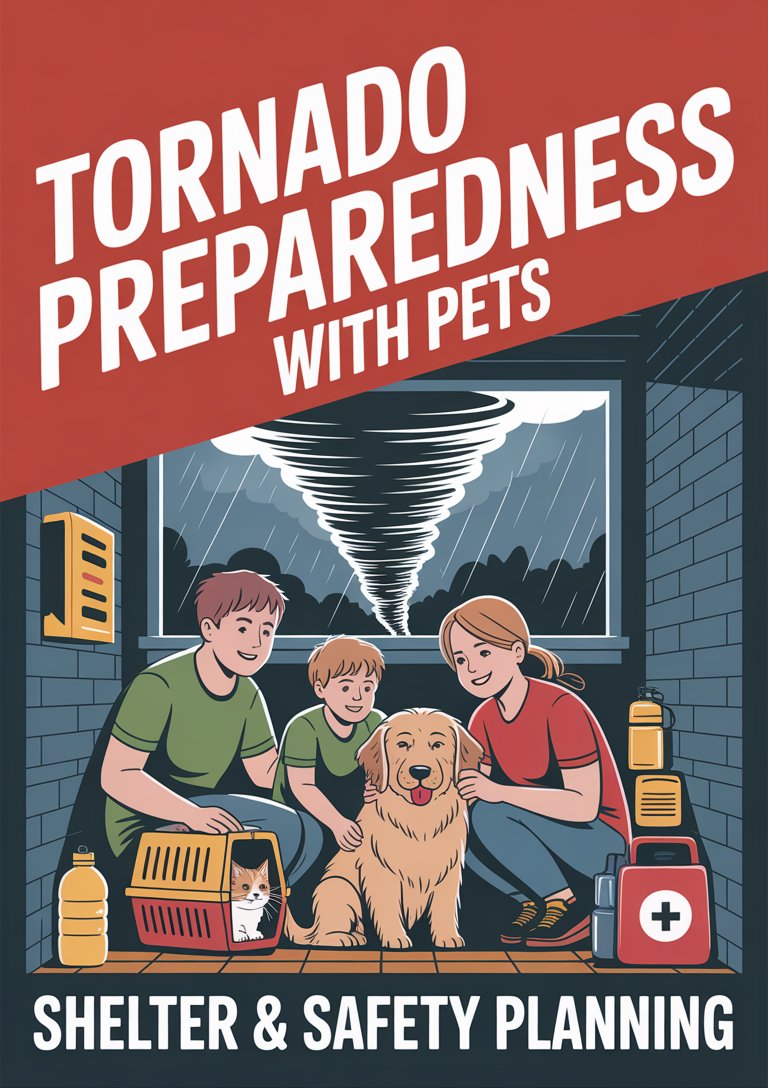
Emergencies come in all stripes—wildfires, hurricanes, tornadoes, and even sudden apartment fires. If local officials advise you to evacuate, planning ahead can make a world of difference [3]. The main goal: keep your cat safe and minimize chaos.
Practice Carrier Training
We’ve all wrestled a cat into a carrier at the last minute. Not fun for either of you. The trick is to let your cat spend time with the carrier before an emergency. Toss in treats, toys, or even a T-shirt that smells like you. Encourage short “carrier visits.” Reward your cat with praise (and maybe a catnip toy). This training can cut down on hissing, fear, or frantic escape attempts when you actually need to move quickly.
Consider placing the carrier in a quiet corner of your home. Leave the door open so they can wander in and out. If they associate it with calm feelings, it’ll be less intimidating in a real crisis. If you ever have multiple cats, you may also find it helpful to read up on multi pet emergency preparedness to ensure everyone has the right-sized carrier and enough space to travel comfortably.
Map Out Pet-Friendly Options
It’s one thing to leave your house… and another to figure out where to go with a cat in tow. Many emergency shelters, hotels, or volunteer rescue spaces don’t allow pets (aside from service animals), so do a little recon beforehand.
A few phone calls to potential friends or family contacts, cat-friendly motels, or boarding facilities can put your mind at ease. Keep addresses and numbers in both digital and paper form.
You might also want to identify a reliable friend outside your immediate area. If you can’t bring your cat to a hotel or shelter, perhaps your buddy’s home is your fallback spot. Yes, it takes a bit of planning. But this kind of forethought can spare you from tough calls made under emotional duress.
Master Basic Cat First Aid
You know that knot in your stomach when you see your cat acting “off”? Emergencies can happen anytime—maybe you discover a strange wound, or you notice your cat struggling to breathe.
Having a handle on simple first aid does two great things: it helps you stay calm, and it stabilizes your cat before you get to a vet.
Common Emergencies And Symptoms
Cats are experts at masking pain. Sometimes, you don’t realize something’s wrong until minutes before it becomes serious. Here are a few signs you never want to ignore:
- Breathing difficulties: Any open-mouth breathing or heavy wheezing needs immediate veterinary attention.
- Urinary obstruction: Straining in the litter box, crying as they attempt to pee, or multiple failed trips to the box could be life-threatening [4].
- Trauma injuries: Falls, being attacked by another animal, or a run-in with a vehicle. If you notice limping, bleeding, or odd swelling, head to an emergency vet.
- Ingestion of toxic foods: Chocolate, grapes, onions, and certain plants can harm cats. Learn more about potential hazards from toxic foods for pets.
- Bites or stings: Swelling around the face or neck, or an elevated heart rate after a bug or snake bite, is a red flag.
If you suspect any of these, contact your vet or an emergency pet clinic. When in doubt, go. It’s always better to be safe.
Resources For Training
A little know-how can go a long way. The American Red Cross offers a 35-minute online course covering cat and dog first aid essentials like checking vitals, dealing with wounds, and spotting signs of infection [5].
You can also download the Red Cross Pet First Aid app—you’ll have mini step-by-step guides at your fingertips in case something goes down.
We’re not aiming for you to become a fully trained vet. Instead, we want to give you the basics so you feel ready to help your cat, even if all you can do is stabilize them until a professional steps in.
Special Cases And Extra Precautions
Not all cats have the same needs. Aging cats, kittens, or those with medical conditions might need more than the basics. For instance, a senior cat with arthritis could do better with lower-carrier entry and extra padding. If your cat needs daily injections, factor that into your kit.
If your cat has special dietary needs, packing a week’s worth of the right food and consistent treats becomes super important. If you have a cat that’s skittish in crowds, consider how you’ll minimize stress in a busy evacuation center.
For more tips on unique feline situations, it can be helpful to look into senior pet emergency preparedness or even pet emergency resources that address specific conditions.
Handling Kittens And Seniors
Kittens can’t regulate body temperature the same way adult cats do. Keep them warm and cozy, and ensure they can’t slip out of the carrier’s door or through vents—tiny bodies fit through surprising gaps.
For seniors, keep an eye on mobility. You might need a carrier with a wide front opening or one that doesn’t require your older cat to crouch too much.
Chronic Illnesses
Conditions like diabetes, hyperthyroidism, or heart disease may require daily meds or more specialized care. Plan extra carefully. Ask your vet about how to store insulin if the power goes out, or how to handle missed doses if you get stuck outside your home longer than expected. If possible, talk through alternatives with a veterinarian or a vet tech you trust.
Keep Everything Up To Date
It’s easy to build a kit, then tuck it away in a closet and forget about it for a year. But you know how quickly time flies. Canned food and even bottled water have expiration dates, and your cat’s medications might change. A quick check every three to six months can do wonders—rotate older food and water, verify correct dosages, and replace any cracked or worn-out gear.
Your cat’s info may also need refreshing if you move, switch vets, or update microchip data. Keep a note in your calendar or phone as a reminder: “Check cat emergency kit.” Let’s imagine you schedule it for daylight savings time changes—twice a year. Trust me, you’ll thank yourself later.
Embrace Community And Support
Guess what? You don’t have to navigate cat emergency preparedness alone. We’re all in the same boat, hoping not to face a big emergency but wanting to be ready if one barges in. Remember those times you turned to a friend for an impromptu cat-sitting emergency? The same principle applies here. Building a small network of fellow cat lovers or neighbors who can help each other out can be a lifesaver.
Depending on your circumstances, you might also want to coordinate with a community preparedness group or local shelters, especially if you live in an area prone to earthquakes, hurricanes, or wildfires. If you have children, you can get them involved by assigning each child a small role in your family’s cat preparedness plan. Checking out kids pet emergency preparedness can give you more ideas on how to keep even the littlest family members engaged.
If you do end up needing to evacuate, let your neighbors or groups know. That way, no one risks their safety trying to see if your cat is still inside. The American Red Cross suggests leaving a rescue sticker on your front door or window. If you do evacuate with your cat, mark “EVACUATED” on the sticker so rescue workers don’t waste time searching for a pet no longer in the house [6].
Final Thoughts
Give yourself a pat on the back for taking this step. Preparing for your cat’s safety in an emergency isn’t about being paranoid—it’s about being proactive. The peace of mind you’ll have once your kit is assembled, documents are updated, and your evacuation plan is laid out can make all the difference in a chaotic moment.
Sure, we hope you never have to use most of these supplies. But if the day comes when sirens are blaring or emergency text alerts are flooding your phone, you’ll be able to say, “We’re ready. Let’s do this,” and not “I wish I’d prepared sooner.” Whether it’s a power outage that knocks out your heat in the middle of winter or a sudden flood that forces you to grab your cat and go, you’ll be ready to pivot without risking your cat’s well-being.
The next move is yours. Maybe start small: gather a few cans of wet food, a sealed plastic container of dry food, an extra water jug, and designate a spot in your home for your cat’s emergency stash. Then, build from there. You might feel like it’s a lot at first, but I promise, each step will give you a deeper sense of security. When you see your cat snoozing peacefully on the windowsill, you’ll know you’ve got their back in any storm.
If you still feel uncertain about any part of your plan, consider reaching out to your vet for personalized advice, exploring pet emergency prep tasks, or visiting disaster specific pet preparedness if you face certain disasters more often than others. Ultimately, the goal is to protect your cat from the worst-case scenarios—and to remember you’re definitely not alone in wanting the very best for your favorite feline companion. Stay safe, plan well, and give your cat a pat on the head for me. You’ve got this.