Maintaining Pet Emergency Preparedness Year Round
In your everyday routine, it is easy to push emergency readiness for your pets aside. Maybe you have a busy schedule, or maybe the thought of gathering survival gear for every type of disaster feels overwhelming. Trust me, you are not alone in feeling that way. Still, the best way to maintain pet emergency preparedness is by taking small, practical steps. Think of it as building a safety net that protects you and your furry friends, no matter what surprises the seasons might throw at you.
Below, let’s walk through a year-round approach to protecting your pets in emergencies. We will help you create checklists, break down tasks into manageable pieces, and keep the process comfortable for both you and your companions. The goal here is to stay prepped in a steady, realistic way so that you never have to scramble if a storm, fire, or other unexpected situation arises. Take a breath, and let’s do this together.
Recognize The All-Season Need
Why Pet Preparedness Matters Year-Round
No matter which part of the country you live in, every season carries its own risks. Winter might bring blizzards or power outages, while spring can mean tornadoes or floods. Summer heat waves can be tough on pets, and autumn storms can knock out power lines or damage your home. Animals do not always cope well with sudden changes, so having a balanced plan in place can greatly reduce their stress.
From a practical standpoint, year-round readiness makes sense. If you have the same go-kit or emergency plan prepared in advance, you do not need to scramble when the temperature soars or drops. You simply adapt the plan a bit for the weather. Rather than dealing with anxiety each time a new season begins, you can feel confident that you have your bases covered.
Emotional Benefits for You and Your Pet
It is not just about physical safety. Constant worry over “What if?” scenarios can be draining on you and unsettling for your pet. If you have the right gear and strategies in place, you avoid that pit-in-the-stomach feeling whenever bad weather reports pop up. Your pets sense your mood too. If you stay calm, they will be calmer. A confident demeanor can carry you both through tense moments—like an impending storm or a last-minute evacuation notice—without treating the situation like a crisis.
A Quick Look at Current Research
Experts stress the importance of having emergency supplies packed, including food, water, and medications for your pet [1]. It is also wise to plan for both sheltering in place and evacuations, since local officials sometimes recommend leaving your home for safety [2]. Keeping these resources updated year-round ultimately means fewer last-minute stresses and a more positive outcome for everyone involved.
Assemble Essential Pet Supplies
Building Your Pet Emergency Kit
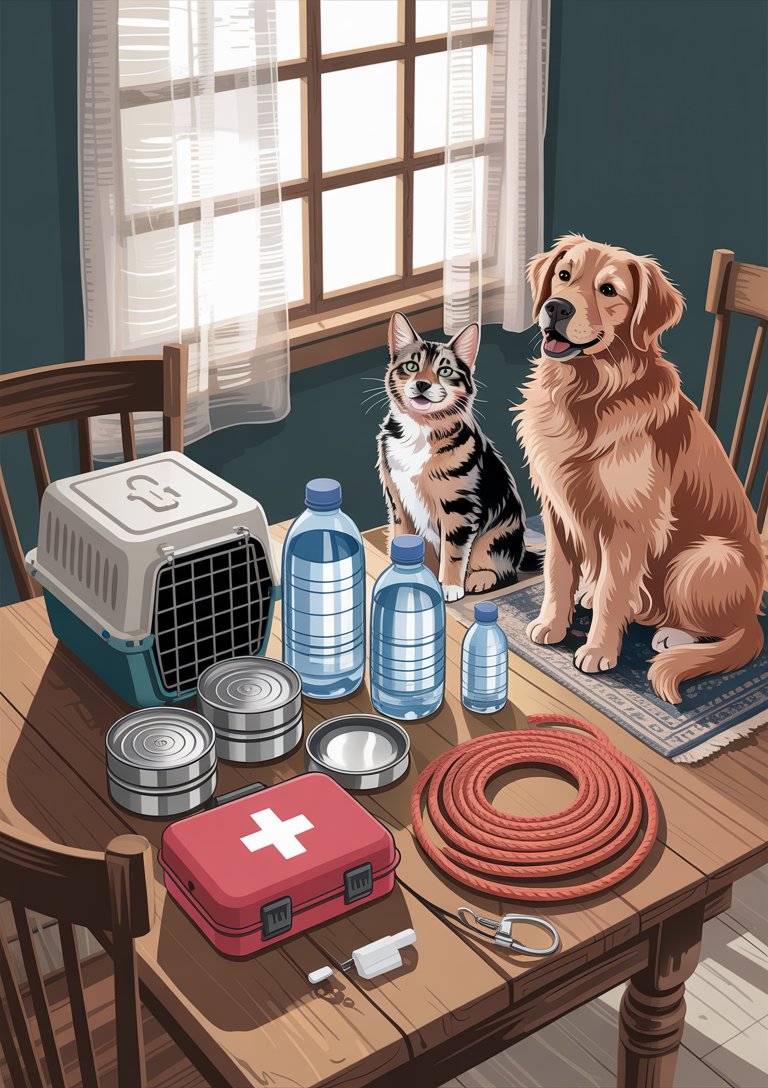
Here is where we get practical: creating an emergency kit tailored to your pet’s needs. If it sounds like a monumental task, we can break it down together. Many pet owners follow guidelines like those from the American Veterinary Medical Association [3] or the Red Cross [4] to make sure they cover the basics. You can also check out our pet first aid kit list if you want a detailed breakdown of useful items.
Here is a brief rundown of what you might gather:
- At least three days’ supply of pet food (dry or wet)
- Three days’ worth of water specifically for your pets
- Medications, including extras in case you cannot refill right away
- Pet first aid supplies (gauze, non-stick bandages, antiseptic wipes)
- Necessary documents, including proof of ownership and vaccination records
- Comfort items, like a favorite blanket or a towel that smells like home
- Extra collar and leash, or a harness for safety
- A sturdy, comfortable carrier large enough for your pet to turn around in
Tips to Keep Your Kit Ready
One common pitfall is letting your emergency kit gather dust and become outdated. Make a plan to rotate items—especially food, water, and medications—so nothing expires. If you prefer a fail-safe method, set a phone reminder every six months to check all kit contents. Switch out anything that is nearing its expiration date. Not sure which items are easy to forget about? You might find ideas in forgotten pet emergency supplies.
Two Kits for Flexibility
Experts recommend creating two types of kits [2]. One is a large kit for sheltering in place. The other is lighter and more portable for evacuations. The portable kit might only hold a couple of days’ worth of supplies, while the stay-at-home kit might cover a longer period. This two-kit approach means you can adapt effortlessly to different disasters, whether you end up staying home or leaving in a hurry.
Plan For Evacuations
Creating a Pet Evacuation Protocol
Evacuating with pets can feel complicated, especially if you have multiple animals or very large companions like horses. A bit of planning goes a long way. Start by identifying pet-friendly hotels or shelters in your region. Keep a list of phone numbers and addresses handy. In a worst-case scenario, you do not want to scramble for lodging that actually accepts animals.
If you want a deeper dive into how to craft a thorough plan, check out our guide on pet evacuation planning. You will find ideas for what to pack, how to transport your pets, and ways to ensure they stay calm during the journey. Remember, do not leave your pets behind if authorities say to go. If it is unsafe for you, it is unsafe for them too [4].
Getting Pets Comfortable with Carriers
Trying to load a stressed-out cat into a carrier at the last minute is no fun for anyone. One tip is to practice positive associations with the carrier weeks or even months beforehand. Place a favorite blanket or treats in there so your pet sees the carrier as a cozy nook. That way, when or if evacuation time comes, you are not wrestling a terrified pet who has never stepped inside that container before.
Securing Large Animals
Horses, goats, pigs, and other big livestock require especially careful planning. The folks at Ready.gov recommend extra feed, stable or pen arrangements, and a trustworthy trailer for quick transport. If you are pressed for time, focus on how you will keep these animals physically safe during a sudden evacuation. It can be helpful to network with neighbors who have livestock. That way, you can coordinate efforts or share resources if the need arises.
Stay Informed About Hazards
Tuning In to Weather and Alerts
Keeping an eye on local news and weather channels is essential. Sign up for text alerts from your city or county emergency management office, too. By staying on top of current conditions, you reduce the risk of being caught off guard if a storm, wildfire, or power outage is on the way. You can also check out earthquake pet preparedness or hurricane pet preparedness, depending on the common disasters in your region.
Recognizing Potential Dangers
Sometimes the hazard is right under your nose. Poisoning from household chemicals or rodent baits is unfortunately quite common in pets [5]. The same goes for certain foods, like chocolate or onions. If you need an in-depth reference of what your pets should avoid, our toxic foods for pets list might help. Another big concern is heatstroke in dogs, particularly if they stay outside in high temperatures too long [6]. Understanding these risks before an emergency strikes can save you and your pet a great deal of distress.
Using Rescue Stickers
Rescue alert stickers on your front door can be lifesavers. They inform first responders about how many pets are inside and any special details—like if you have an exotic bird, a rabbit, or even a reptile. According to the Red Cross [4], these stickers should be visible and updated if you move or adopt new pets.
Practice First Aid Basics
Why First Aid Training Matters
Accidents can happen anytime, and a few minutes of basic first aid can drastically improve your pet’s odds before you get them to a vet [7]. Picture a choking dog or a cat that has a severe cut. If you know how to do CPR or stop bleeding, those precious moments of help might save a life. The Red Cross even offers an official Pet First Aid app, complete with instructional videos and checklists.
Essentials of a Pet First Aid Kit
While many standard human first aid items can also work for pets, some extra components are wise to have on hand. For example, an appropriately sized muzzle or leash can keep an injured pet from lashing out if they are in pain. Gauze pads, styptic powder for minor bleeding, tweezers for splinters, and saline for flushing wounds or eyes are also good to include [5]. If your pet has a known condition, your veterinarian may suggest additional items.
Practice Makes Perfect
The last thing you want is to open a first aid kit for the first time during a high-stress crisis. Consider rehearsing basic skills. Maybe watch a demonstration video on pet CPR or recommended bandaging techniques. If there is a pet first aid class in your area, taking it can give you and your family members an extra dose of confidence. This also applies if you have kids around. Teaching them age-appropriate first aid steps can make a big difference, which is why resources like kids pet emergency preparedness can be helpful.
Address Large And Exotic Animals
Specialized Care Needs
Large animals, such as horses or livestock, require extra planning. You will need a trailer to transport them, alternate housing if your property is compromised, and enough feed to last through disruptions. Preparing extra water and a backup generator for barn ventilation might also be important if you live in a rural area. For more tips on managing unique rural setups, you can explore rural pet emergency preparedness.
Exotic Pet Considerations
Parrots, reptiles, ferrets, and other exotic pets each have their own housing, dietary, and heating or cooling requirements. An iguana might need a heat lamp, while a parrot usually requires a carrier that lets in plenty of ventilation. If you have exotic pets, planning specifically for their evacuation and in-home safety is a must. Our post on exotic pet emergency preparedness offers a more detailed look. If you have multiple exotic species, you might consider separate carriers and labeled supplies for each.
Veterinarian Input
Exotic pet care can be more specialized than standard dog or cat care, so do not be shy about consulting your veterinarian. They can give you suggestions on diet, temperature regulation, or how to handle stress in these animals during high-anxiety moments like storms or power outages. If your exotic friend needs medication, keep extra doses on hand in case you can’t refill quickly.
Review And Refresh Often
Rotating and Updating Supplies
Yes, gathering an emergency kit is an awesome first step, but your work does not end there. Foods can expire, medication needs change, and even microchip info might become outdated if you move or switch phone numbers. Setting a reminder to review your kit—at least twice a year—helps keep everything fresh and relevant [8]. You can also look into rotating pet emergency supplies for a more systematic approach.
Checking for Changes in Pet Health
Pets age, and their needs evolve. Your young Labrador who only needs flea meds today, could need prescription joint support three years from now. If your pet is a senior, you might have to adjust your emergency plan or collection of supplies accordingly. In that case, look at our senior pet emergency preparedness. It covers topics like extra bedding for arthritic joints or ways to minimize stress for older pets that do not handle change well.
Updating Paperwork
Printed copies of medical records, vaccination documents, and identification photos should match your pet’s current status. If you have recently visited the vet, check whether you have the latest vaccination papers. If your address or phone number changes, update the microchip’s registration. It is an easy detail to overlook until you need it.
Stay Motivated All Year
Make It a Routine
Instead of tackling everything at once, sprinkle smaller tasks across the calendar. For instance, on one weekend, you might swap out the old cans of dog food. Another weekend, you could practice crate-loading with your cat. Building these steps into your daily or weekly routines makes the process feel less daunting. You can even set a monthly or quarterly “pet safety day” to cross off a few to-dos. If you are on a tight budget, see our budget pet emergency preparedness guide for saving tips.
Rally Your Support Network
We all feel more secure knowing we are not alone. Chat to friends, neighbors, or your local community group about forming a support system. Maybe you can share boarding or transport resources, especially if you have limited transportation options. If you have multiple species, check out multi pet emergency preparedness for pointers on managing different animals under one roof. Exchanging ideas and experiences helps everyone stay prepared.
Keep Encouraging Yourself
Maintaining your pet’s emergency readiness can feel like a never-ending project, but remember why you are doing it. You want your companions to be safe, secure, and comfortable, no matter what life tosses your way. Some days, you will crush your to-do list with no trouble. Other days, you might push tasks back. That is completely normal. The point is to keep taking those baby steps—and celebrate each small success.
Extra Tips and Tricks
- Create a digital file on your phone for quick access to your pet’s records. You might also store these documents in the cloud.
- Train your pets in basic commands that might help during emergencies, like “Come,” “Stay,” or “Leave it.” Our post on emergency training commands pets breaks this down further.
- Consider having a separate travel kit if you often hit the road with your furry friends. For road trips, check travel emergency preparedness pets.
- For each kit—whether you store it at home or in your car—include a few comfort items, like a favorite toy, soft bedding, or pet emergency comfort items. A little familiarity can calm them (and you) in an otherwise stressful situation.
A Quick Checklist
Below is a simple bullet list you can reference. Tailor it to your pet’s specific requirements:
- Two days’ to two weeks’ worth of food (depending on shelter-in-place vs. evacuation)
- Clean water supply matching the food quantity
- Any prescription medications should be in an easy-to-seal container
- Basic first aid kit (gauze, bandages, antiseptic, tweezers)
- Travel crate or carrier that fits your pet comfortably
- Extra leashes, collars, harnesses, or muzzles
- Copies of medical records and vaccination proofs
- Pet identification tags and a microchip update
- Waste bags, litter, or bedding material for cats and small animals
- Comfort items (blankets, toys, treats) to help reduce stress
- Contact list with local vets, emergency clinics, poison control hotlines, and pet-friendly accommodations
Cross-check this list regularly with your veterinarian’s recommendations to ensure you are not missing anything essential. Time and again, experts mention that correct preparation can save everyone from panic and heartbreak.
Keep Up the Momentum
As the seasons roll on, you may see more or fewer natural disasters in your region. But that does not mean your planning goes to the back burner. By keeping your kit fresh, practicing first aid skills, and staying aware of potential dangers, you continue to build a lasting safety net for your pets. If you do find your routine slipping, or you struggle to keep your supplies updated, remind yourself that even five minutes spent organizing or checking items can keep you on track.
Nobody is perfect, and life is busy. If you miss a step here or there, just pick up where you left off. Maintaining a sense of humor and a can-do attitude will help you keep going. And if you ever feel stuck or uncertain, remember that we are all in this together, sharing stories and tips so we can love and protect our pets even better.
Final reminder: you are already doing great by reading, learning, and taking steps to help your furry (or feathered, or scaled) companions thrive. Every little effort adds up toward a more confident, prepared household. Stay inspired, keep tackling those mini tasks, and know you always have resources to lean on when you need them. Your pets are counting on you, and trust me, you are up to the task. You have got this!
References
- (CDC)
- (Ready.gov)
- (AVMA)
- (Red Cross)
- (AVMA)
- (BluePearl Vet)
- (American Red Cross)
- (Wales Animal Clinic)