Protect Your Pup in Any Crisis: Dog Emergency Preparedness Guide
Understand Pet Emergency Preparedness
So here’s the thing: pet emergency preparedness for dogs is more than just remembering to grab a leash on your way out the door during a tornado warning. It’s a thoughtful process where you, your family, and your four-legged friend all know what to do and where to go before disaster strikes. Trust me, I know it can feel overwhelming at first, especially if you’re juggling a busy schedule or trying to keep your budget in check. But that’s exactly why we’re here, side by side, mapping out a plan that keeps your dog safe and your mind a little calmer when the unexpected happens.
“Unexpected” can mean anything from a minor storm knocking out power for a day to a more serious event—like floods, wildfires, or evacuations ordered by local officials. According to the experts at Ready.gov, if it’s not safe for you, it’s not safe for your pet either. That alone is reason enough to get organized now. Let’s walk through each step together, making sure you feel prepared to protect your furry best friend even when circumstances take a turn for the worse. And keep in mind: worry is normal, but we’ll redirect that energy toward practical actions. This journey doesn’t have to be scary.
Below, we’ll explore building an emergency kit, planning evacuations, training your dog for crisis situations, and more. Each section is designed to ease your concerns and help you move forward with confidence. Ready? Let’s do this.
Start With A Clear Plan
Before we dive into your dog’s specific needs, let’s talk about the overall structure of a solid emergency plan. Think of it as the “big picture” that prevents last-minute fumbling:
- Identify potential risks in your area (floods, earthquakes, wildfires).
- Decide whether your family is more likely to shelter-in-place or evacuate in these scenarios.
- Determine safe exits from your home and neighborhood.
- List any hotels or shelters that accept pets (or keep a friend’s home in mind where your dog might be welcome).
Many families choose to create a single plan that factors in both the humans and the pets under one roof. You’re probably used to hearing suggestions like “plan multiple escape routes” and “store enough food,” but it’s easy to overlook dog-specific essentials, like having an extra crate or preparing them mentally for strangers who might help during rescue efforts. Don’t worry, we’ll address all of that.
If you have a multi-pet family, you might also want to check out our tips on multi pet emergency preparedness. For now, though, let’s focus on our canine pals.
Assemble A Dog-Friendly Kit
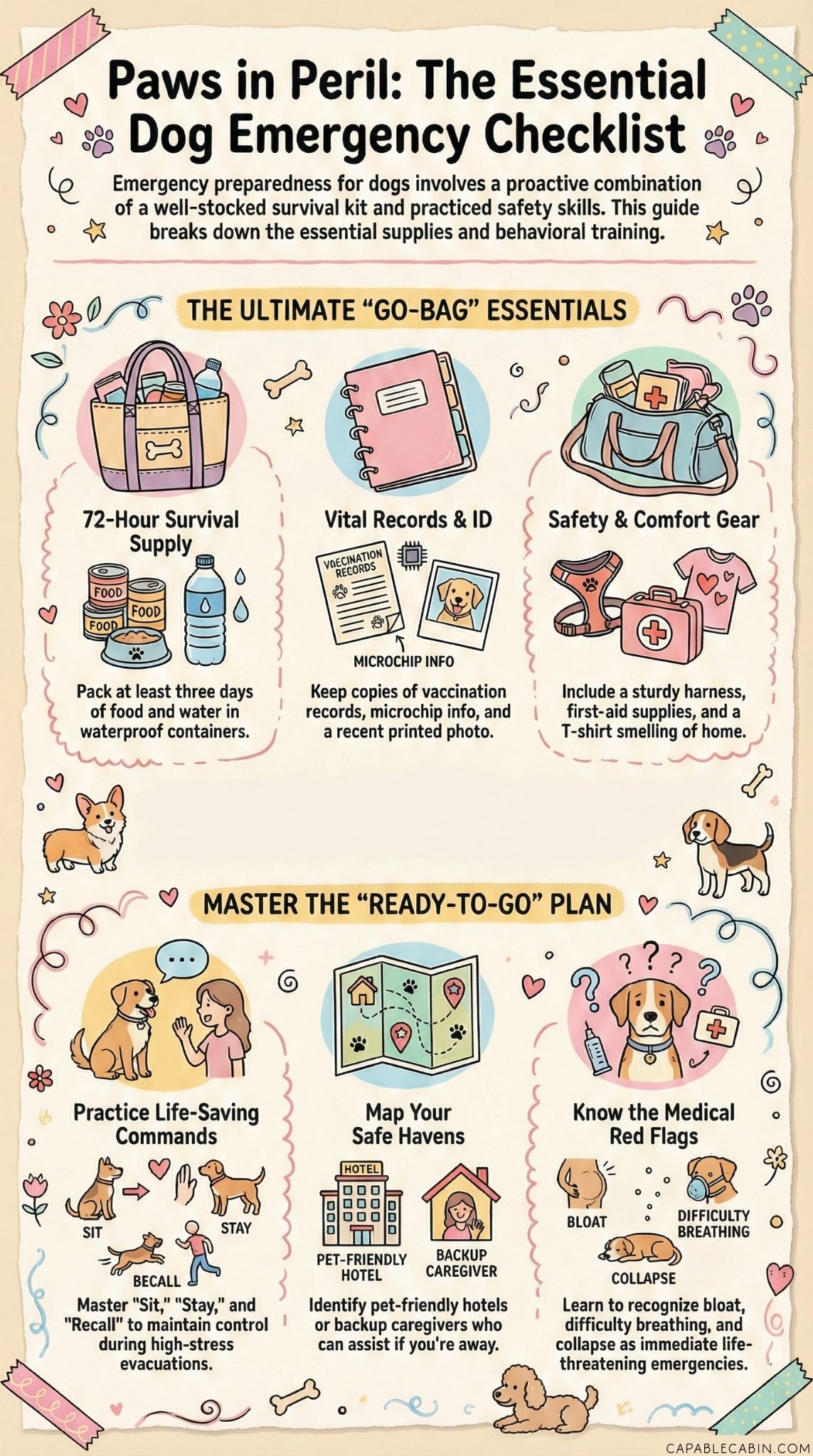
Putting together a pet emergency kit for dogs doesn’t have to break the bank. In fact, the Centers for Disease Control and Prevention (CDC) suggests starting with just the necessities, then updating and adding extras as you go. Think of it like a puzzle—you’ll keep adding pieces until the entire picture is complete. Plus, if you’re on a tight budget, you can prioritize immediate must-haves and gradually include those “nice-to-have” items.
Core Items To Include
Here are the basics to keep in a sturdy, waterproof container. A lightweight version is helpful if you must move fast. This approach aligns well with guidance from Ready.gov:
Food and Water
- At least three days’ worth for short-term emergencies.
- Don’t forget bowls or collapsible dishes.
Medications
- Enough prescription meds to last a week, if possible.
- Include heartworm preventatives or other vet-recommended treatments.
Identification and Documents
- Photocopies of vet records, microchip details, and vaccination status.
- A recent photo of your dog (digital and printed).
First-Aid Supplies
- Gauze pads, blunt-tipped scissors, tweezers, tape, gloves.
- A pet-safe antimicrobial spray or ointment.
- For a comprehensive list, visit our pet first aid kit list.
Leash, Harness, Carrier
- Ideally, a well-fitting harness prevents escapes in stressful moments.
- Familiarize your dog with their crate beforehand.
Comfort Items
- Favorite toys, blanket, or an old T-shirt that smells like home.
- These items can soothe anxiety during chaotic times.
Cleanup Supplies
- Waste bags, puppy pads, paper towels.
Emergency Contacts
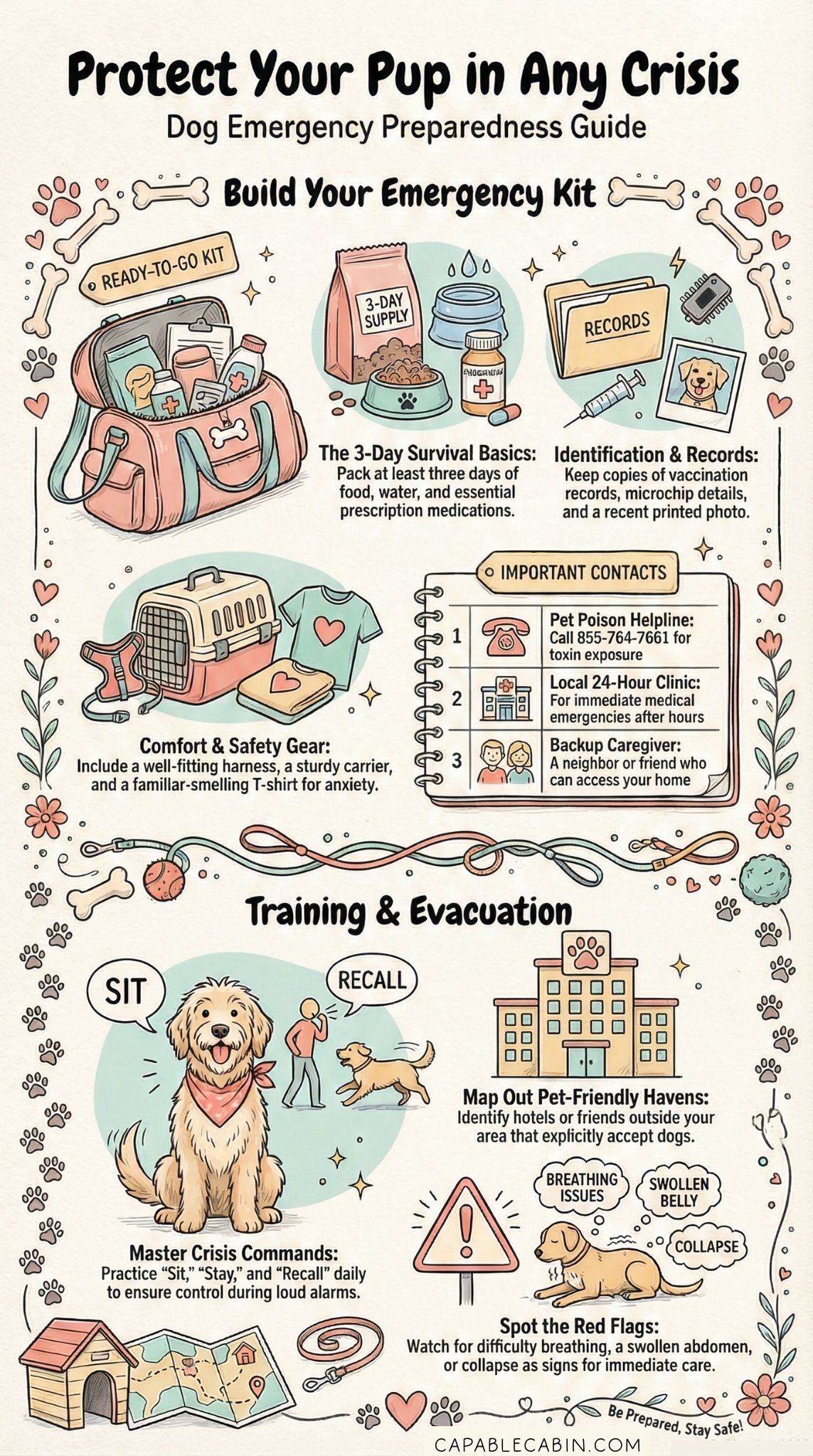
- Vet’s number, nearest 24-hour clinic, Pet Poison Helpline (855-764-7661).
Take a look at your kit every six months or so. Are the meds expired? Is the dog food still fresh? Expired or moldy supplies won’t do you much good in a crisis. This routine check doesn’t have to be complicated—just mark a date on your calendar to remind yourself, or pair it with another regular task, like rotating out winter clothes.
Add-On Items
Once you have the basics, you can expand into more specialized supplies:
- Training Treats: Great for reinforcing good behavior under stress.
- Extra Collars and ID Tags: Tags can fall off at the worst possible moment.
- Cooling Towel: For heat emergencies, especially if you live in a hot climate.
And if you’re concerned about cost, it may help to browse budget-friendly suggestions in our budget pet emergency preparedness resources. You can find ideas for DIY food containers, cheaper alternatives to pricey carriers, and more tips to keep your dog’s kit both robust and wallet-friendly.
Train Essential Skills
Building your dog’s confidence and obedience is just as crucial as stocking up on physical supplies. If you’ve ever tried to coax a panicked dog into the car during an emergency, you know it’s easier said than done. According to the American Kennel Club (AKC), familiarizing dogs with crates, new environments, and basic commands can significantly reduce chaos.
Basic Commands
- Sit/Stay: Helps keep your dog controlled while you open doors or pack the car.
- Recall (Come): Especially important in case your dog slips out or gets distracted.
- Leave It: Useful if there are unsafe items or substances around.
Advanced Training
- Settle/Relax: Encourages your dog to stay calm near you, even if sirens are blaring.
- Place Training: Teaching them to remain on a specific spot like a blanket.
- Handling By Strangers: Vets, rescue workers, or friends might need to hold your dog if you’re injured.
If you’re working on these skills, a little every day goes a long way. Consider setting a timer for short training sessions, using positive reinforcement. Believe me, it’s worth it to avoid frantic chases when sirens or alarms are going off. For more pointers, check out our emergency training commands pets guide.
Prepare For Evacuations
Sometimes, you won’t get the option of “riding it out” at home. Local officials might strongly recommend or even order you to leave the area for your own safety. In that case, your dog’s safety depends on how well you’ve planned ahead. Ready.gov tells us that if you must evacuate, always take pets with you. Leaving them behind in a disaster can lead to them getting lost or injured, or worse.
Find Safe Havens
- Pet-Friendly Hotels: Research which hotels in nearby cities take animals.
- Friends and Family: A buddy who’s already comfortable with your dog can offer a calmer environment than a crowded shelter.
- Emergency Shelters: Some accept pets, but policies vary. Your dog may need updated vaccines and proof of health.
Evacuation Tips
- Practice Loading Up: If you’re driving, teach your dog to hop into the car quickly and comfortably.
- Grab-and-Go Kits: Keep a lightweight version of your emergency supplies near your exit.
- Carriers: Let your dog hang out in the carrier for short sessions at home, so it feels less scary during an actual evacuation.
If you want a more detailed approach, try our pet evacuation planning guide. Even if your plan seems rock-solid, set aside time to do a mini “drill” once a year—treat it like a fire drill, but with your pup included. It might feel silly, but muscle memory can save valuable seconds when it matters.
Recognize Common Emergencies
A well-prepared dog owner also needs to spot red flags quickly. Some health emergencies are obvious (heavy bleeding, broken bones), while others creep up on you (bloat, anaphylaxis). The folks at VCA Hospitals stress the importance of knowing when to act right away. Time is everything if your dog starts showing alarming symptoms.
Red Flags
- Difficulty Breathing: Labored or rapid breathing can signal shock or lung problems.
- Bloat (GDV): Swollen abdomen, retching without vomiting, collapse. Immediate vet attention needed.
- Severe Allergic Reaction: Hives, facial swelling, vomiting, or collapse.
- Hemorrhagic Diarrhea: Red-tinged diarrhea, vomiting, weakness.
- Unconsciousness or Collapse: Could be heart issues, toxins, low blood sugar, or other critical events.
Basic First-Aid Steps
- Stay Calm: Dogs sense your panic and may become more agitated.
- Muzzle If Safe: Even gentle dogs can bite when in pain.
- Call Ahead: Notify your vet or the emergency clinic so they can prepare.
For a deeper dive into urgent scenarios, see our common pet emergencies or signs of pet medical emergency. Keeping a calm head and making a swift decision can literally save your dog’s life.
Include Backup Caregivers
Picture this: something unexpected prevents you from getting home to your dog—a road closure, personal injury, or even a sudden flight delay. That’s where backup caregivers come in. A friend, neighbor, or family member who has a copy of your house key and knows your dog’s routine can be a lifesaver. The experts at Tier 1 Vet recommend leaving feeding and medication instructions in plain sight, such as taped to the fridge.
When You Need A Backup
- Illness or Injury: If you’re hospitalized, someone needs to feed, walk, and comfort your dog.
- Travel Issues: Delayed flights or unexpected work trips can leave your pup alone longer than planned.
- Community-Wide Disasters: If you must evacuate separately from your dog, or you’re stuck elsewhere.
A short note or text message goes a long way. Let your backup caretaker know where you keep supplies, how to reach your vet, and any quirks your dog might have (like being terrified of thunderstorms or refusing to eat from a metal bowl). This type of planning might feel minor, but it can be crucial.
Consider Special Situations
No two dogs are alike, and certain circumstances demand extra attention. Large breed dogs, for example, can be prone to bloat, so you might plan their mealtimes and activity levels more carefully. Senior dogs might have mobility challenges that require ramps or special harnesses. Even if your dog is healthy right now, it never hurts to think ahead.
Senior Dogs
- Medication Schedules: Keep a strict timetable for administering meds.
- Mobility Aids: Ramps, orthopedic beds, grips for slippery floors.
- Gentle Handling: Seniors can have achy joints, so practice slow and careful lifting.
If you need more insight, check our senior pet emergency preparedness for detailed tips.
Dogs With Chronic Illness
- Refrigeration: Some meds need to stay chilled, so figure out how to keep them cold if power fails.
- Extra Supplies: Stock up on any daily prescriptions in case of supply chain disruptions.
- Vet Communication: Identify a back-up vet or pharmacy if yours closes during a disaster.
Rural or Apartment Living
- Rural Areas: Distance from veterinary services means extra planning. Consider reading rural pet emergency preparedness.
- Apartments: Evacuation can be trickier with multiple floors and shared exits. Pet emergency prep apartments covers strategies to maneuver through hallways, stairs, and elevators.
When you’re confident about special-needs planning, you’ll breathe easier knowing you’re ready for tough scenarios.
Minimize Stress For Everyone
Emergencies are as tough on your family as they are on your dog. Think about the emotional side of things—barking, whining, restless pacing. Your own adrenaline spikes can cause your dog to feel anxious. Having a plan that accounts for their comfort can help both of you.
Quick Anxiety Busters
- Familiar Scents: Bring an old T-shirt or blanket that smells like home.
- Calming Aids: Certain dog-safe pheromone sprays or chews may soothe nerves.
- Short Training Breaks: Use “sit” or “stay” as a quick focus exercise if your dog is frantic.
Don’t forget about yourself, too. A few deep breaths or stepping away for a moment can do wonders for your state of mind, which in turn helps your pup. Feel free to keep a small personal comfort item in the kit—no shame in that.
Safeguard Against Potential Injuries
One of the last things you want to deal with is your dog getting hurt in the middle of a larger crisis. But it does happen, and being ready turns a stressful event into a manageable one. The American Veterinary Medical Association (AVMA) advises having a first-aid plan for everything from minor cuts to serious incidents like choking or fractures.
First-Aid at a Glance
- Using a Muzzle: Even a friendly dog can lash out when in pain.
- Wound Care: Clean with pet-safe antimicrobial wipes or solution.
- Heatstroke: Look for rapid breathing, confusion, or unusual gum color. Cool your dog safely, then see a vet.
- Winter Hazards: Frostbite can be subtle, so keep an eye on exposed ears or paws in freezing temps.
If you’re looking for specific instructions about bandaging or dealing with doggie scrapes, you can find them in our pet first aid wounds guide or pet emergency medical preparedness.
Rotate And Refresh Supplies
You don’t want to find out in the middle of a power outage that the extra dog food you stashed a year ago is now stale. Or that your vet’s phone number has changed. The simplest fix is to schedule reminders to rotate items. As the USDA suggests, staying informed and making periodic updates to your kit and plan can really lower stress.
Rotation Tips
- Food: Use older supplies first and replace them with newly purchased products.
- Medications: Check expiry dates every few months.
- Documents: Keep your pet’s information (microchip, vaccine records) up to date.
- Equipment: Inspect leashes, harnesses, and crates for wear.
A quick check can save you from last-minute panic. For a deeper look at how to store things properly, head over to pet emergency supply storage for hanger ideas, shelving setups, or even creative closet systems.
Account For Other Disasters
Living in a region prone to hurricanes, wildfires, floods, or earthquakes? Each disaster type has its own set of complications. For instance, earthquake pet preparedness might emphasize securing heavy furniture and having easily accessible carriers, while wildfire pet evacuation focuses on air quality and quick getaways. By customizing your approach, you’ll be ready for scenario-specific challenges.
Examples Of Specialized Planning
- Floods: Invest in a dog life vest if flash floods are common.
- Hurricanes: Plan for possible extended displacement and more robust water storage.
- Winter Storms: Keep a safe heat source, and be mindful of salt on icy sidewalks.
If you want a curated approach, disaster specific pet preparedness offers checklists for each type of emergency.
Avoid Common Pitfalls
Look, we’re all human. Sometimes we think, “I’ll assemble that kit tomorrow,” or we buy fancy gear but forget to test it. Then a real crisis arrives, and we’re unprepared. Don’t worry, I’ve been there too.
Typical Mistakes
- Procrastination: Not practicing evacuation drills or skipping kit checks.
- Relying Solely On Memory: Jot down important details in your phone and on paper, because your mind might blank under strain.
- Ignoring Stress Behaviors: Overlooking how your dog might act out when routines change abruptly.
Feel free to skim through our pet emergency preparedness mistakes to steer clear of the big ones.
Encourage Family Involvement
If you share a home with family members, roommates, or children, everyone should know the basics of your emergency plan. Kids, in particular, love to help build the kit or lead small training sessions with the dog. This can make them feel responsible and less frightened if an actual emergency occurs.
Ways Kids Can Help
- Stocking The Kit: Let them hand you items as you pack.
- Practice Drills: They can hold the leash or command the dog to “sit” during pretend evacuations.
- Feeding Or Watering: Simple tasks keep them engaged.
For even more ideas, see kids pet emergency preparedness. Sharing duties lightens the load and fosters teamwork.
Rehearse And Stay Flexible
You’ve likely heard the advice “practice makes perfect,” and it rings true here. Even if you have a foolproof plan on paper, walking through each step can reveal hidden snags—maybe your dog hates the car ramp or an old door latch jams.
Mini-Drills
- Alarm Practice: Set off your smoke alarm to gauge your dog’s reaction.
- Car Loading: Pretend you’re evacuating and see how quickly you can load supplies and pets.
- Stranger Test: Invite a friend the dog doesn’t know well to see if your pup remains calm.
Take notes, tweak the plan, and do it again a few weeks later. Over time, these exercises become second nature.
Stay In The Loop
Emergencies evolve quickly, and you’ll want the latest information. Apps like the FEMA App or local emergency management alerts can notify you of incoming hazards. Also, keep track of your local veterinarian’s contact number in case their hours change or their building is affected.
- Local Alerts: City or county alerts often come via text or email.
- National Resources: Ready.gov, FEMA, or AVMA all update periodically.
- Community Plans: Some neighborhoods have volunteer emergency teams that can help pets.
[community pet emergency response] is a good starting point if you want to link arms with neighbors for a broader plan.
Maintain Regular Checkups
Even if your dog seems healthy, consider scheduling annual or semi-annual vet visits. Subtle issues—like early kidney disease or heart conditions—could worsen under stress. A quick check-up can catch these problems early and help you adjust your emergency plan accordingly.
Vet Checklist
- Update Vaccines: Some shelters require proof of vaccination.
- Dental Health: Infections can escalate when resources are limited.
- Weight Management: Overweight or underweight dogs might need special diets.
If your veterinarian has additional tips, jot them down and store them with your emergency info. This is a proactive step that keeps you from scrambling to manage an underlying condition mid-crisis.
Embrace Peace Of Mind
Whew, that was a lot to cover, right? But here’s the truth—you’re showing real love and responsibility by taking these steps. Pet emergency preparedness for dogs isn’t about living in constant worry. Rather, it’s about empowering yourself. You’re helping your dog by showing up for them, thinking through “what if” scenarios, and making sure they stay safe and happy even when life throws curveballs. And if you ever doubt yourself, remember that the biggest hurdle is simply getting started. You’re already past that point by reading this.
Take a moment to celebrate the progress you’ve made. Every time you update your kit, practice an evacuation drill, or reinforce a training command, you’re building a future where you can handle emergencies with a clearer head. You’ve got this, and your dog is lucky to have you. Still want more options? Check out our quick references, like pet emergency comfort items if you’re looking for ways to soothe anxious pups, or maintain pet emergency preparedness to keep fine-tuning your approach.
Above all, remember you’re never alone. Veterinarians, animal shelters, neighbors, and even online communities stand ready to help. Disasters are scary, but help is out there, and your dog can ride out these storms with you by their side. Keep going, keep learning, and keep loving that furry family member. You’re doing great, and that’s something to be truly proud of.